
 Business License

What are the differences between stainless steel decorative pipes and stainless steel water pipes?
Although both stainless steel decorative pipes and stainless steel water pipes are made of stainless steel, there are various differences in their actual applications due to different functions and scenarios. Below, we will provide a detailed analysis from multiple perspectives for you:
I. Purpose and Design Objective Stainless steel decorative pipe
Core application: Primarily used in fields such as architectural decoration, furniture manufacturing, and landscape engineering, including stair handrails, guardrails, door frames, billboard supports, etc.
Design focus: Places greater emphasis on appearance aesthetics, with higher requirements for surface treatment and shape design, while having lower requirements for fluid transmission's sealing performance and pressure resistance.
Stainless steel water pipe
Core application: Specifically used for transporting drinking water, domestic water, and industrial fluids (such as gas, chemical liquids), and must meet the safety and stability of fluid transmission.
Design focus: Centered on functionality, emphasizing corrosion resistance, pressure resistance, sealing performance, and hygiene standards to ensure that water quality is not contaminated or fluid does not leak.
II. Differences in Materials and Specifications
1. Material Grades
Decorative Pipe
Common materials: 304, 201, etc. In some scenarios, 201 stainless steel (with low nickel content and weaker corrosion resistance but little difference in appearance) may be used to reduce costs.
Features: The requirement for the corrosion resistance of the material is relatively relaxed. Cost and appearance are more concerned.
Water Pipe
Common materials: Food-grade stainless steel such as 304, 316L, especially 316L which contains molybdenum and has stronger resistance to acid and alkali corrosion, suitable for transporting special fluids or in humid environments.
Features: Must comply with hygiene standards (such as GB/T 19228.2), ensuring that the material does not release harmful substances and avoiding water pollution.
2. Specifications and Wall Thickness
Decorative Pipe
Specifications: Wide range of diameters, common from 4 mm (DN15) to 12 inches (DN300), various shapes (round pipe, square pipe, elliptical pipe, etc.).
Wall Thickness: Generally thin, usually between 0.3 and 2 mm, some decorative thin-walled pipes may be even lower than 0.3 mm to reduce weight and cost.
Water Pipe
Specifications: Mainly based on nominal diameter (DN), such as DN15, DN20, DN50, etc., mostly round pipes.
Wall Thickness: Designed according to pressure levels, generally between 1 and 4 mm. High-pressure pipes (such as industrial use) have thicker walls, meeting pressure resistance tests (such as above 1.6 MPa pressure).
III. Surface Treatment and Processes
Decorative Pipes
Surface Treatment: More diverse. Common processes include:
Mirror Polishing (mirror effect, strong reflectivity), Sanding (hazy texture, scratch-resistant), Brushing (fine texture, good decorative effect), Titanium Plating (gold, rose gold, etc. colored coatings), Electroplating (anti-oxidation, long-lasting color) etc.
Process Focus: The main focus of surface treatment is on aesthetics and rust prevention, with relatively low precision requirements.
Water Pipes
Surface Treatment: Generally, both the inside and outside are polished (inner wall smooth, reducing fluid resistance and dirt accumulation). Some may require passivation treatment (enhancing corrosion resistance), to avoid rough surfaces leading to bacterial growth or fluid contamination.
Process Focus: The inner wall has high smoothness (roughness Ra ≤ 0.8 μm). The welding process is strict (such as automatic argon arc welding to ensure no leakage in the weld seam), and it needs to pass pressure resistance and leakage tests.
IV. Performance Requirements
Decorative Pipe
Corrosion Resistance: Sufficient to meet the rust prevention requirements in general environments (such as indoor dry environments), outdoor use may require additional spraying of anti-rust paint.
Strength: Mainly withstands static loads (such as its own weight, slight collisions), and the strength requirement is lower than that of water pipes.
Water Pipe
Corrosion Resistance: Must have excellent corrosion resistance, not rusting or releasing metal ions when in contact with water or fluids for a long time, and comply with drinking water hygiene standards (such as GB 5749).
Compressive Resistance: Needs to withstand the pressure during fluid transportation (such as municipal water supply pressure, generally 0.3 - 0.6 MPa), high-pressure pipes need to pass burst test (pressure can reach 3 - 5 times the working pressure).
Sealing: The connection method (such as compression type, ring compression type, threaded connection) needs to ensure zero leakage, avoiding water leakage or fluid leakage.
V. Connection Methods
Decorative Pipe
The connection is simple. Common methods include: welding (such as argon arc welding, suitable for fixed installation), bolt connection (easy to disassemble), sleeve connection (hidden appearance), etc. The requirement for sealing is low.
Water Pipe
Professional connection methods to ensure sealing and pressure resistance:
Compression type: Using a special tool to press the pipe fitting and the pipeline together, the seal is reliable and is often used for drinking water pipes.
Ring pressing type: Using a ring-shaped mold to press the pipeline to form a sealing surface, with good vibration resistance.
Groove connection: Suitable for large-diameter pipes, connected through rubber sealing rings and groove pipe fittings, facilitating installation and maintenance.
VI. Cost and Price
Decorative Pipe: Due to its thin wall thickness and low material requirements, the price is relatively low. It is usually priced by the meter or weight, with the price ranging from several dozen yuan to several hundred yuan per meter (depending on the material and specification).
Water Pipe: With high material requirements (food-grade stainless steel), thicker wall thickness, and more complex processes (such as welding and testing), the price is higher. The price per meter is usually above a hundred yuan, and the cost of large-diameter or high-pressure pipes is even higher.
VII. Standards and Certifications
Decorative Pipes: There is no specific national standard for decorative pipes. Most follow enterprise standards or industry standards, with a focus on appearance and basic rust prevention performance.
Water Pipes: They must comply with national standards, such as GB/T 19228.2 (Stainless Steel Compression-Type Pipe Fittings), GB/T 29038 (Thin-Walled Stainless Steel Pipeline Technical Specifications), CJ/T 152 (Stainless Steel Pipe Materials for Building Water Supply), etc. In some scenarios, they need to obtain health permit certification (such as water-related approval documents).
Summary: How to quickly distinguish?
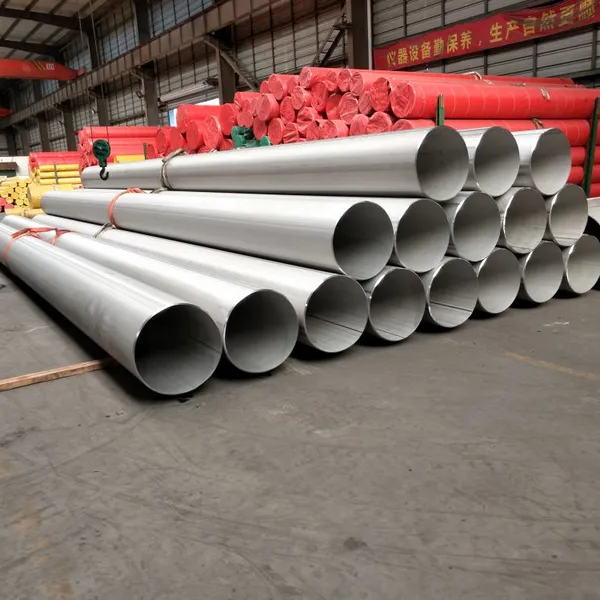
Image 1
Note: In practical applications, if decorative pipes are mistakenly used as water pipes, they may leak or cause water quality pollution due to insufficient corrosion resistance and too thin wall thickness. Therefore, it is necessary to select the appropriate pipes based on their intended use.
Recently Posted
-
Does the stainless steel welded pipe have specific temperature requirements during the solution heat
January 20, 2026Solution heat treatment involves heating stainless steel to a high temperature and then rapidly cooling it to achieve an oversatur Read More
 -
Can stainless steel welded pipes be made into thick pipes
January 20, 2026With the improvement of high-quality welding technology and increasingly strict weld inspection, the application fields of s Read More
 -
Three types of commonly available food-grade stainless steel on the market
January 20, 2026The common food-grade stainless steel pipes are mainly composed of iron, chromium and carbon and other elements. Household stainle Read More
 -
What are the requirements for stainless steel welding pipe production equipment
January 20, 2026As is well known, stainless steel welded pipes have been widely used in various industries such as machinery, chemical engineering Read More

Contact Us
Recommended Products
-
 Stainless Steel Elbow Welded Elbow 45/90/180-degree Seamless Pressed Elbow Long Radius Elbow Short Radius Elbow WholesaleNegotiableMOQ: 1 Piece
 -
316L/1.4405 Seamless Stainless Steel PipeNegotiableMOQ: 2 Meters
-
310s 440 Seamless Sanitary Piping Price 321 904l 201 20 Inch Seamless Steel Pipe A554 Stainless Steel PipeNegotiableMOQ: 1 Piece
-
China Brand ZZ Wholesale 304L 316 316L Welded Austenitic Piping Stainless Steel Pipe SupplierNegotiableMOQ: 2 Meters
-
304/304L/316/409/410/904L/2205/2507/310H Premium Stainless Steel Sheets Supplier Custom Sizes & FinishesUS$ 1.72MOQ: 1 Ton
-
Stainless Steel ASME B16.9 Sch 45 90 Degree Pipe Fittings ElbowUS$ 8MOQ: 1 Piece
-
China Brand Zz 304L 316/316L GB En JIS Standard Thin Wall Welded Stainless Steel Water Pipe/TubeNegotiableMOQ: 2 Meters
-
BA 4 Inch 6 Inch 8 Inch 201 304 304L 316 316L Welded Seamless Stainless Steel PipeNegotiableMOQ: 2 Meters
-
ASME B36.19M-2004 SCH40S Stainless Steel Pipe - Complies With EU 3.1 CertificationUS$ 1 - 650MOQ: 1 Piece
-
Factory TP309/TP309S/TP309H (UNS30900) Seamless Stainless Steel Pipe and Tube for Boiler BafflesUS$ 8MOQ: 200 Kilograms
-
TP347/TP347H/1.4961/S34709 Seamless Stainless Steel Pipe for UseNegotiableMOQ: 2 Meters
-
China 304 316 Stainless Steel Sanitary Welded Tube Food Grade Sanitary Grade Welded Pipe PolishingNegotiableMOQ: 1 Piece
-
China Manufacture Stainless Steel 316L Ba Seamless Welded Steel Pipe TubesUS$ 1760 - 1860MOQ: 5 Tons
-
316L/1.4405 Seamless Stainless Steel PipeNegotiableMOQ: 2 Meters
-
Stainless Steel Globe Valve – High Durability & Corrosion ResistanceNegotiableMOQ: 1 Piece
-
1.4529 Stainless Steel Flat Plate for Chemical Processing EquipmentUS$ 25 - 35MOQ: 1 Kilogram
-
Color Coated Steel Panels for Warehouse Partition Walls (Fireproof Grade)US$ 1 - 1.2MOQ: 50 Kilograms
-
Custom Width (600mm-1250mm) Colored Steel Coil With Scratch ResistanceUS$ 1 - 1.2MOQ: 50 Kilograms
-
0.5mm-3.0mm Colored Coated Steel Sheet With PVDF/Polyester CoatingUS$ 1 - 1.2MOQ: 50 Kilograms
-
JIS G 3322 Compliant Colored Coils With Third-Party Inspection ReportUS$ 1 - 1.2MOQ: 50 Kilograms