
 Business License

What are the differences in corrosion resistance between 316L stainless steel welded pipes and 304
The difference in corrosion resistance between 316L stainless steel welded pipes and 304 stainless steel welded pipes mainly stems from the differences in composition, especially the addition of molybdenum (Mo) and the control of carbon content. The specific comparison is as follows:
1. Core Component Differences
Picture 1
II. Corrosion Resistance Comparison
1. Resistance to Chloride Ion Corrosion (Cl⁻ environment)
316L: Molybdenum forms MoO₄²⁻, which, in combination with Cr₂O₃, forms a dense passivation film that inhibits Cl⁻ penetration. In seawater, salt water, or chemical media containing Cl⁻, the corrosion rate is only 1/3 - 1/5 of that of 304. For example, in a 3.5% NaCl solution, the critical crevice corrosion temperature (CCT) of 316L reaches 60 - 80℃, while that of 304 is only 40 - 50℃.
304: Without molybdenum, the passivation film is easily destroyed by Cl⁻, and long-term exposure to high-salt environments (such as seawater) is prone to pitting and local corrosion.
2. Resistance to High-Temperature Oxidation and Corrosion
316L: Molybdenum and Cr form a Cr₂O₃-MoO₃ composite oxide film, which remains stable at 600 - 700℃ and inhibits the volatilization of CrCl₃, reducing oxidation weight loss (annual weight loss of 10 - 15g/m² at 700℃, while 304 reaches 30 - 40g/m²).
304: At high temperatures (>800℃), Cr₂O₃ easily volatilizes, and the oxidation rate increases, and without molybdenum to inhibit the "active oxidation" caused by Cl⁻.
3. Resistance to Pitting and Crevice Corrosion
316L: The equivalent value for resistance to pitting (PREN = 32 - 38) is significantly higher than that of 304 (PREN = 20 - 24), the pitting incubation period is prolonged by 3 - 5 times, and the corrosion depth growth rate is only 1/4 - 1/3 of that of 304.
304: In a weak acid environment containing Cl⁻ (such as pH 3 - 5), pitting is prone to occur at surface defects and rapidly expand.
4. Intergranular Corrosion Resistance
316L: Low-carbon design (C ≤ 0.03%) reduces the precipitation of chromium carbide during welding, avoiding chromium depletion at the grain boundaries, and has better intergranular corrosion resistance than 304.
304: The welding heat-affected zone is prone to the precipitation of chromium carbide, leading to increased intergranular corrosion sensitivity, and requires annealing treatment to alleviate.
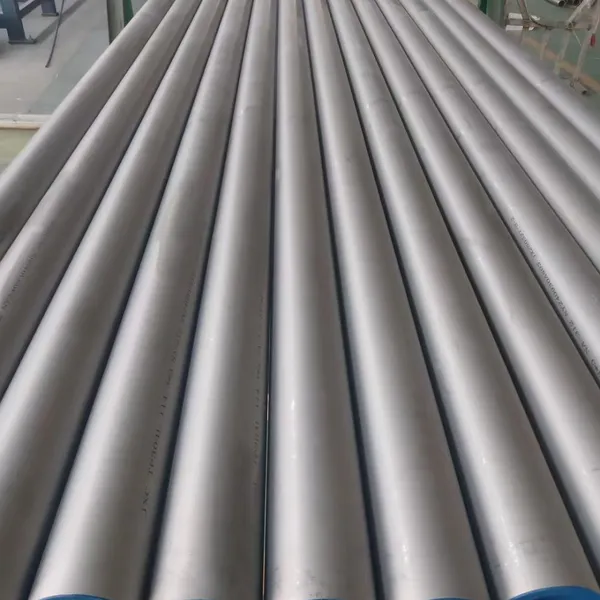
III. Typical Corrosion Scenarios Presentation
Image 2
IV. Selection Suggestions
316L: Suitable for scenarios involving seawater, high salt spray, chemical media containing Cl⁻, high-temperature acidic environments, or those requiring frequent welding (such as marine engineering, pharmaceutical equipment).
Consider 304: Applicable to dry atmosphere, fresh water, weakly acidic and weakly alkaline environments (such as ordinary building decoration, non-corrosive sections of food processing).
V. Cost and Lifespan Trade-off
Cost: The 316L has a higher price than the 304 due to its higher content of molybdenum and nickel, with a price increase of 30% to 50%.
Lifespan: In an environment with Cl⁻ ions, the lifespan of 316L can reach 3 to 5 times that of 304. Long-term use results in a lower overall cost.
In conclusion, the 316L, with its molybdenum element and low-carbon design, exhibits significantly better corrosion resistance in environments containing chlorine, high temperatures, and complex corrosive conditions compared to the 304. While the 304 is suitable for regular non-corrosive scenarios due to its economic nature.
Recently Posted
-
Does the stainless steel welded pipe have specific temperature requirements during the solution heat
January 20, 2026Solution heat treatment involves heating stainless steel to a high temperature and then rapidly cooling it to achieve an oversatur Read More
 -
Can stainless steel welded pipes be made into thick pipes
January 20, 2026With the improvement of high-quality welding technology and increasingly strict weld inspection, the application fields of s Read More
 -
Three types of commonly available food-grade stainless steel on the market
January 20, 2026The common food-grade stainless steel pipes are mainly composed of iron, chromium and carbon and other elements. Household stainle Read More
 -
What are the requirements for stainless steel welding pipe production equipment
January 20, 2026As is well known, stainless steel welded pipes have been widely used in various industries such as machinery, chemical engineering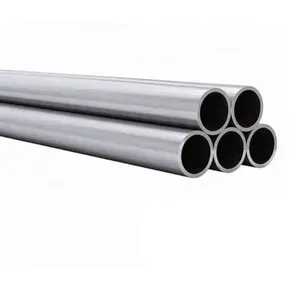 Read More

Contact Us
Recommended Products
-
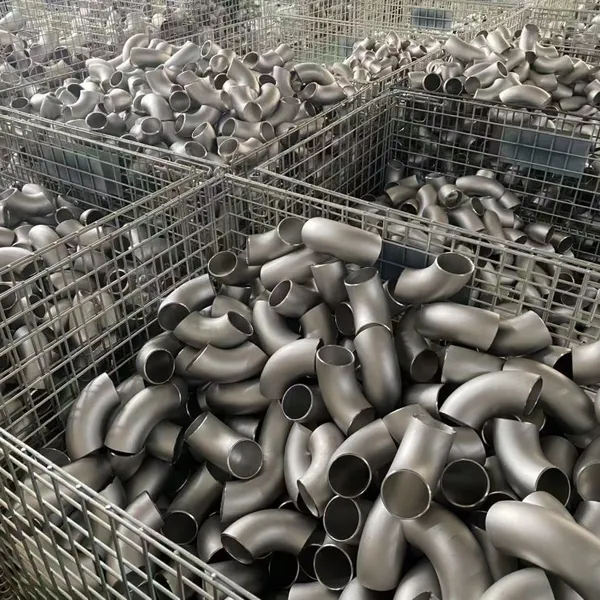
 Stainless Steel Elbow Welded Elbow 45/90/180-degree Seamless Pressed Elbow Long Radius Elbow Short Radius Elbow WholesaleNegotiableMOQ: 1 Piece
 -
316L/1.4405 Seamless Stainless Steel PipeNegotiableMOQ: 2 Meters
-
310s 440 Seamless Sanitary Piping Price 321 904l 201 20 Inch Seamless Steel Pipe A554 Stainless Steel PipeNegotiableMOQ: 1 Piece
-
China Brand ZZ Wholesale 304L 316 316L Welded Austenitic Piping Stainless Steel Pipe SupplierNegotiableMOQ: 2 Meters
-
304/304L/316/409/410/904L/2205/2507/310H Premium Stainless Steel Sheets Supplier Custom Sizes & FinishesUS$ 1.72MOQ: 1 Ton
-
Stainless Steel ASME B16.9 Sch 45 90 Degree Pipe Fittings ElbowUS$ 8MOQ: 1 Piece
-
China Brand Zz 304L 316/316L GB En JIS Standard Thin Wall Welded Stainless Steel Water Pipe/TubeNegotiableMOQ: 2 Meters
-
BA 4 Inch 6 Inch 8 Inch 201 304 304L 316 316L Welded Seamless Stainless Steel PipeNegotiableMOQ: 2 Meters
-
ASME B36.19M-2004 SCH40S Stainless Steel Pipe - Complies With EU 3.1 CertificationUS$ 1 - 650MOQ: 1 Piece
-
Factory TP309/TP309S/TP309H (UNS30900) Seamless Stainless Steel Pipe and Tube for Boiler BafflesUS$ 8MOQ: 200 Kilograms
-
TP347/TP347H/1.4961/S34709 Seamless Stainless Steel Pipe for UseNegotiableMOQ: 2 Meters
-
China 304 316 Stainless Steel Sanitary Welded Tube Food Grade Sanitary Grade Welded Pipe PolishingNegotiableMOQ: 1 Piece
-
China Manufacture Stainless Steel 316L Ba Seamless Welded Steel Pipe TubesUS$ 1760 - 1860MOQ: 5 Tons
-
316L/1.4405 Seamless Stainless Steel PipeNegotiableMOQ: 2 Meters
-
Stainless Steel Globe Valve – High Durability & Corrosion ResistanceNegotiableMOQ: 1 Piece
-
1.4529 Stainless Steel Flat Plate for Chemical Processing EquipmentUS$ 25 - 35MOQ: 1 Kilogram
-
Color Coated Steel Panels for Warehouse Partition Walls (Fireproof Grade)US$ 1 - 1.2MOQ: 50 Kilograms
-
Custom Width (600mm-1250mm) Colored Steel Coil With Scratch ResistanceUS$ 1 - 1.2MOQ: 50 Kilograms
-
0.5mm-3.0mm Colored Coated Steel Sheet With PVDF/Polyester CoatingUS$ 1 - 1.2MOQ: 50 Kilograms
-
JIS G 3322 Compliant Colored Coils With Third-Party Inspection ReportUS$ 1 - 1.2MOQ: 50 Kilograms