
 Business License

What are the specific applications of 2205 material stainless steel welded pipes in the process of
In the oil and gas extraction process, the core application of 2205 stainless steel pipe lies in "withstanding harsh corrosion + withstanding high pressure loads" - in the extraction scenarios, there are always corrosive media with high salt content (seawater / formation water), high sulfur content (H₂S), and high carbon content (CO₂), and the wellheads, pipe strings, etc. need to withstand tens of megapascals (MPa) of formation pressure. The dual-phase structure (austenite + ferrite) of 2205 precisely meets the requirements of "corrosion resistance" and "high strength", and the specific application scenarios are as follows:
1. Offshore oilfield extraction: The core solution to "seawater corrosion + high-pressure formation fluids"
Offshore oilfields are a key application scenario for 2205 welded pipes. Due to the continuous contact with seawater throughout the extraction process, and the formation fluids (crude oil / natural gas / formation water) containing high concentrations of chloride ions (Cl⁻), H₂S, and CO₂, conventional stainless steel (such as 316L) is prone to "chloride stress corrosion cracking (SCC)" or "pitting corrosion", while 2205 welded pipes can address this issue. Specific applications include:
Wellhead equipment pipelines: Branch pipelines for the "Christmas tree" (wellhead oil production tree) of offshore platforms, and connection pipes for choke & kill manifolds.
Operating conditions: With a ground pressure range of 10-70 MPa, they are exposed to seawater (for cooling / rinsing purposes) and sulfur-containing formation fluids. The high strength of 2205 can reduce the pipe wall thickness (lowering the platform's load), and its corrosion resistance can prevent wellhead leakage (the consequences of offshore leakage are severe).
Injection water pipelines: Offshore oilfields commonly adopt "water injection development" (injecting water into the formation to maintain formation pressure and increase oil recovery rate). Injection water pipelines need to transport filtered seawater or chloride-containing formation water (with chloride ion concentrations often reaching 10,000-30,000 mg/L).
2205 welded pipes can withstand long-term immersion corrosion in high-chloride water bodies, preventing insufficient injection water due to pitting corrosion of the pipeline, and their high strength can adapt to the pressure requirements for long-distance transportation (usually 15-30 MPa).
Subsea wellhead risers: For some shallow offshore oilfields, the wellhead risers (vertical pipes connecting the subsea wellhead to the platform) use large-diameter 2205 welded pipes, which need to withstand seawater corrosion (external) and formation fluid corrosion (internal), as well as external forces from waves and currents. The corrosion resistance and fatigue strength of 2205 can meet the requirements for long-term service.
2. Land high-sulfur gas fields / oil fields: Core response to "H₂S/CO₂ corrosion"
In land oil fields, high-sulfur blocks (such as the Sichuan Basin, Central Asia gas fields) have particularly harsh mining environments - the H₂S content in the formation fluids often exceeds 1000 ppm (some even exceed 10,000 ppm), and the CO₂ partial pressure is over 1 MPa, which can easily lead to "sulfide stress corrosion cracking (SSCC)" and "electrochemical corrosion". The sulfur-resistant corrosion capability of 2205 welded pipes becomes crucial. Specific applications include:
Production tree process pipelines: Main pipelines and valve connection pipes of the production tree for high-sulfur gas wells, directly transporting high-pressure natural gas containing H₂S/CO₂ (pressure often reaches 30-60 MPa).
Compared to traditional carbon steel (requiring the addition of corrosion inhibitors) or 316L stainless steel (insufficient in resisting SSCC), 2205 welded pipes do not rely on corrosion inhibitors and can withstand H₂S corrosion for a long time, reducing maintenance costs.
Collection and transportation branch pipelines: Short-distance transportation pipelines from the wellhead to the gas gathering station / oil gathering station (diameter usually 50-DN200), transporting crude oil / natural gas mixtures containing formation water (formation water contains high chloride and high sulfur).
The gap corrosion resistance of 2205 welded pipes can prevent local corrosion at pipeline interfaces and flanges due to liquid accumulation, and its high strength can reduce the number of pipeline supports (lowering land construction costs).
Downhole screen pipes (in some scenarios): In the extraction of deep wells and ultra-deep wells, some downhole screen pipes (filtering formation sand and ensuring smooth flow of fluids into the pipe string) are made of 2205 welded pipes, needing to withstand downhole high temperatures (80-150°C), high pressure (50-100 MPa), and high-salt formation water corrosion. The high-temperature corrosion resistance and wear resistance of 2205 can extend the service life of the screen pipes (traditional screen pipes often fail due to corrosion perforation).
3. Auxiliary System for Mining: Addressing "Corrosion by Circulating Water/Wastewater"
Apart from the core pipelines that directly come into contact with crude oil/gas, 2205 welded pipes are also used in the auxiliary systems of the mining platform. These systems also face harsh corrosive environments:
Circulating cooling water pipelines: Large amounts of cold water (for cooling wellhead equipment and compressors) are needed in oil and gas extraction. Offshore platforms use seawater for cooling, while onshore platforms often use chlorinated groundwater or treated wastewater. 2205 welded pipes can prevent leakage in cooling water pipelines caused by chloride ion pitting, ensuring the stable operation of the cooling system.
Wastewater containing oil treatment pipelines: During extraction, wastewater containing oil (such as wellhead flushing water and wastewater after separation of formation water) is produced. This type of wastewater contains crude oil, sulfides, and chloride ions, and is highly corrosive. 2205 welded pipes are used for collecting and transporting the wastewater to the treatment unit to prevent leakage and soil/water pollution.
Fire water pipelines: Fire water pipelines on offshore platforms and onshore oil extraction areas need to be kept ready for a long time and often come into contact with seawater (offshore) or groundwater with impurities (onshore). 2205 welded pipes can prevent the fire water pipelines from rusting and clogging due to long-term idleness, ensuring normal water supply in emergencies.
Summary: The core value of 2205 stainless steel welded pipes in the mining process
In oil and gas extraction, the application of 2205 stainless steel welded pipes is essentially "using material properties to solve operational pain points":
Resisting high-chloride, high-sulfur, and high-carbon corrosive media, avoiding premature failure of the pipelines (the lifespan of traditional materials is usually only 1-3 years, while 2205 can reach 8-15 years);
Reducing pipeline wall thickness by high strength (yield strength is more than twice that of 316L) to lower transportation and installation costs (especially for offshore platforms, which are sensitive to weight);
Reducing reliance on anti-corrosion agents and coatings, reducing long-term maintenance costs, and avoiding secondary pollution of chemical agents to the formation or the environment.
Therefore, it has become one of the core pipe materials used as an alternative to conventional stainless steel and carbon steel in "demanding extraction scenarios" such as offshore oil fields and high-sulfur onshore blocks.
Recently Posted
-
Does the stainless steel welded pipe have specific temperature requirements during the solution heat
January 20, 2026Solution heat treatment involves heating stainless steel to a high temperature and then rapidly cooling it to achieve an oversatur Read More
 -
Can stainless steel welded pipes be made into thick pipes
January 20, 2026With the improvement of high-quality welding technology and increasingly strict weld inspection, the application fields of s Read More
 -
Three types of commonly available food-grade stainless steel on the market
January 20, 2026The common food-grade stainless steel pipes are mainly composed of iron, chromium and carbon and other elements. Household stainle Read More
 -
What are the requirements for stainless steel welding pipe production equipment
January 20, 2026As is well known, stainless steel welded pipes have been widely used in various industries such as machinery, chemical engineering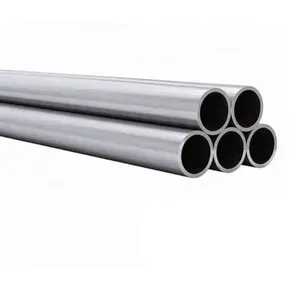 Read More

Contact Us
Recommended Products
-
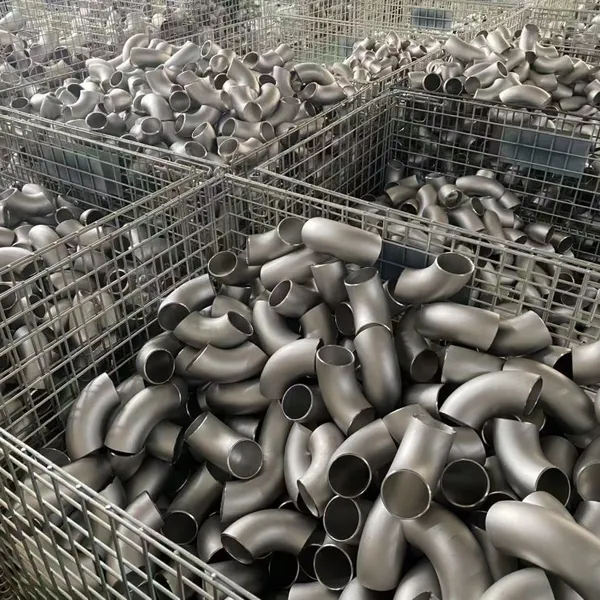
 Stainless Steel Elbow Welded Elbow 45/90/180-degree Seamless Pressed Elbow Long Radius Elbow Short Radius Elbow WholesaleNegotiableMOQ: 1 Piece
 -
316L/1.4405 Seamless Stainless Steel PipeNegotiableMOQ: 2 Meters
-
310s 440 Seamless Sanitary Piping Price 321 904l 201 20 Inch Seamless Steel Pipe A554 Stainless Steel PipeNegotiableMOQ: 1 Piece
-
China Brand ZZ Wholesale 304L 316 316L Welded Austenitic Piping Stainless Steel Pipe SupplierNegotiableMOQ: 2 Meters
-
304/304L/316/409/410/904L/2205/2507/310H Premium Stainless Steel Sheets Supplier Custom Sizes & FinishesUS$ 1.72MOQ: 1 Ton
-
Stainless Steel ASME B16.9 Sch 45 90 Degree Pipe Fittings ElbowUS$ 8MOQ: 1 Piece
-
China Brand Zz 304L 316/316L GB En JIS Standard Thin Wall Welded Stainless Steel Water Pipe/TubeNegotiableMOQ: 2 Meters
-
BA 4 Inch 6 Inch 8 Inch 201 304 304L 316 316L Welded Seamless Stainless Steel PipeNegotiableMOQ: 2 Meters
-
ASME B36.19M-2004 SCH40S Stainless Steel Pipe - Complies With EU 3.1 CertificationUS$ 1 - 650MOQ: 1 Piece
-
Factory TP309/TP309S/TP309H (UNS30900) Seamless Stainless Steel Pipe and Tube for Boiler BafflesUS$ 8MOQ: 200 Kilograms
-
TP347/TP347H/1.4961/S34709 Seamless Stainless Steel Pipe for UseNegotiableMOQ: 2 Meters
-
China 304 316 Stainless Steel Sanitary Welded Tube Food Grade Sanitary Grade Welded Pipe PolishingNegotiableMOQ: 1 Piece
-
China Manufacture Stainless Steel 316L Ba Seamless Welded Steel Pipe TubesUS$ 1760 - 1860MOQ: 5 Tons
-
316L/1.4405 Seamless Stainless Steel PipeNegotiableMOQ: 2 Meters
-
Stainless Steel Globe Valve – High Durability & Corrosion ResistanceNegotiableMOQ: 1 Piece
-
1.4529 Stainless Steel Flat Plate for Chemical Processing EquipmentUS$ 25 - 35MOQ: 1 Kilogram
-
Color Coated Steel Panels for Warehouse Partition Walls (Fireproof Grade)US$ 1 - 1.2MOQ: 50 Kilograms
-
Custom Width (600mm-1250mm) Colored Steel Coil With Scratch ResistanceUS$ 1 - 1.2MOQ: 50 Kilograms
-
0.5mm-3.0mm Colored Coated Steel Sheet With PVDF/Polyester CoatingUS$ 1 - 1.2MOQ: 50 Kilograms
-
JIS G 3322 Compliant Colored Coils With Third-Party Inspection ReportUS$ 1 - 1.2MOQ: 50 Kilograms