
 Business License

What effects will the hybrid crystals have on the performance of the materials
Analysis of the Impact of Inclusions on Material Properties
Inclusions, as an uneven phenomenon in the microstructure of materials, have negative impacts on mechanical properties, physical properties, and service reliability from multiple aspects. The specific impacts are as follows:
1. Degradation of mechanical properties
Inhomogeneity of strength and plasticity
The coarse-grained region has fewer grain boundaries and lower resistance to dislocation movement, resulting in lower strength compared to the fine-grained region; while the fine-grained region has higher strength due to the grain boundary strengthening effect (Hall-Petch effect), leading to the overall material exhibiting a "localized weakness" characteristic.
During tensile tests, the yield strength of the mixed-grain material can fluctuate by 10% to 20% of the normal structure (for example, the yield strength of uniform fine-grained steel is 450 MPa, and the mixed-grain material may fluctuate between 400 and 500 MPa).
The plasticity indicators (elongation, reduction of area) decrease, and the deformation ability varies greatly in different regions, making it prone to necking or fracture in the coarse-grained area first, such as the elongation of a certain mixed-grain aluminum alloy being reduced by 15% to 20% compared to the uniform structure.
Hardenability and fatigue resistance decrease
The crack propagation resistance in the coarse-grained region is low, and the impact absorption energy (AKV) significantly decreases. For example, the low-temperature impact energy of mixed-grain steel may be more than 30% lower than that of uniform structure, increasing the risk of brittle fracture.
Fatigue cracks are prone to initiate at the interface between coarse and fine grains (stress concentration effect), and the fatigue strength limit decreases (for example, the fatigue strength of mixed-grain titanium alloy is 10% to 15% lower than that of uniform structure), shortening the service life.
Anisotropy intensifies
The grain sizes in different orientations of the mixed-grain structure vary greatly, resulting in significant anisotropy in mechanical properties. For example, the lateral and longitudinal strengths of rolled plates can differ by up to 20%, affecting the uniformity of component load-bearing.
II. Effects on Physical and Process Properties
Thermal and electrical conductivity fluctuations
The scattering effect of grain boundaries on phonons and electrons is weaker in coarse-grained regions and stronger in fine-grained regions. This leads to local differences in the thermal conductivity and electrical conductivity of mixed crystal materials (such as a ±5% fluctuation in electrical conductivity in copper alloy mixed crystal regions), affecting the performance of precision components.
Reduced adaptability to processing techniques
During hot processing, the mixed crystal structure is prone to cracking or internal cracks due to uneven deformation (for example, in forging mixed crystal steel, the deformation resistance of the coarse-grained region is low, and folding defects are likely to occur).
In cutting processing, the mixed crystal material has uneven hardness, and the wear rate of the cutting tool is inconsistent, which affects the surface roughness (Ra value may increase by 50%) and dimensional accuracy.
III. Service Reliability and Safety Risks
Stress Concentration Leads to Early Failure
There are differences in the elastic modulus and thermal expansion coefficient between the coarse and fine grains in the mixed crystal structure. During service, when subjected to loads or temperature changes, internal stress is generated, which concentrates at the grain boundaries and accelerates crack initiation. For example, in mixed crystal stainless steel under alternating loads, the coarse grain area is more prone to stress corrosion cracking.
Uneven Corrosion Resistance
Grain boundary composition segregation may be more severe in the coarse grain area (such as in the mixed crystal area of aluminum alloys, where the distribution of precipitated phases at the grain boundaries is uneven), resulting in a decrease in local corrosion resistance and the formation of preferential areas for pitting corrosion or intergranular corrosion.
IV. Typical Cases and Data Comparison
Picture 1
Summary of the Influence Mechanism
The core hazard of heterogeneous crystals stems from "uneven microstructure":
Imbalance of grain boundary strengthening effect: The difference in strength between fine-grained and coarse-grained regions leads to uneven load distribution, and the coarse-grained region becomes a weak link in bearing.
Poor deformation coordination: The plastic deformation capabilities of fine and coarse grains are different, and microcracks are prone to form at the interface during deformation.
Increased defect sensitivity: Whether it is metallurgical defects (such as inclusions) or processing defects (such as microcracks), they are more likely to expand in heterogeneous crystal structures.
Therefore, in high-reliability fields such as aerospace and nuclear power, heterogeneous crystal structures are usually classified as "unqualified structures" and need to be eliminated through strict process control to ensure the safety of component operation.
Recently Posted
-
Does the stainless steel welded pipe have specific temperature requirements during the solution heat
January 20, 2026Solution heat treatment involves heating stainless steel to a high temperature and then rapidly cooling it to achieve an oversatur Read More
 -
Can stainless steel welded pipes be made into thick pipes
January 20, 2026With the improvement of high-quality welding technology and increasingly strict weld inspection, the application fields of s Read More
 -
Three types of commonly available food-grade stainless steel on the market
January 20, 2026The common food-grade stainless steel pipes are mainly composed of iron, chromium and carbon and other elements. Household stainle Read More
 -
What are the requirements for stainless steel welding pipe production equipment
January 20, 2026As is well known, stainless steel welded pipes have been widely used in various industries such as machinery, chemical engineering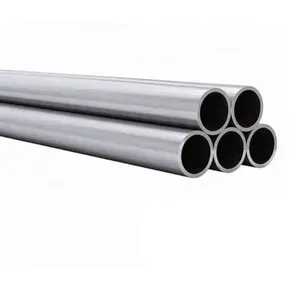 Read More

Contact Us
Recommended Products
-
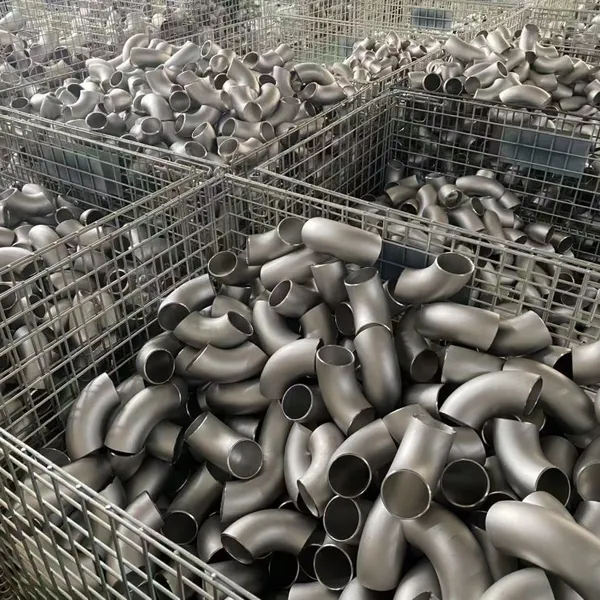
 Stainless Steel Elbow Welded Elbow 45/90/180-degree Seamless Pressed Elbow Long Radius Elbow Short Radius Elbow WholesaleNegotiableMOQ: 1 Piece
 -
316L/1.4405 Seamless Stainless Steel PipeNegotiableMOQ: 2 Meters
-
310s 440 Seamless Sanitary Piping Price 321 904l 201 20 Inch Seamless Steel Pipe A554 Stainless Steel PipeNegotiableMOQ: 1 Piece
-
China Brand ZZ Wholesale 304L 316 316L Welded Austenitic Piping Stainless Steel Pipe SupplierNegotiableMOQ: 2 Meters
-
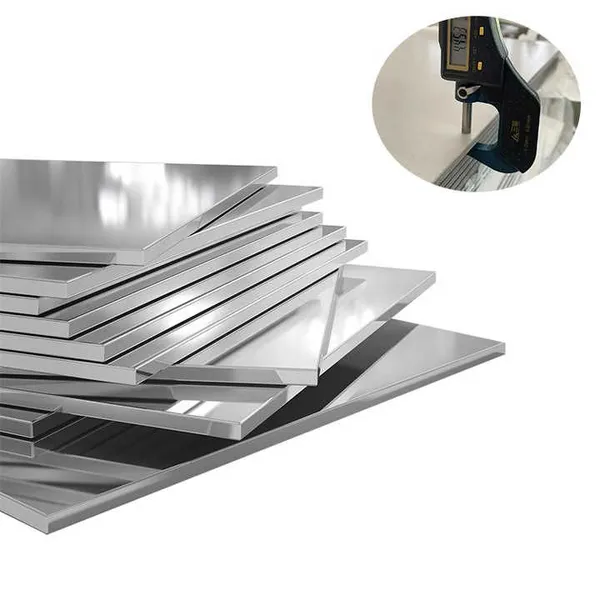
304/304L/316/409/410/904L/2205/2507/310H Premium Stainless Steel Sheets Supplier Custom Sizes & FinishesUS$ 1.72MOQ: 1 Ton
-
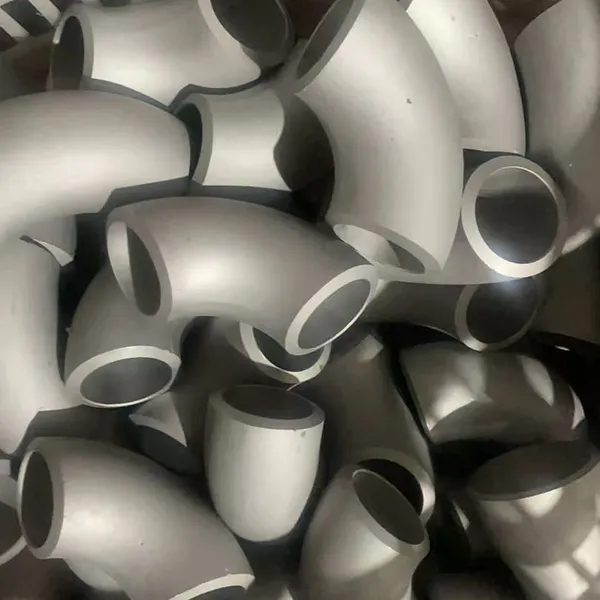
Stainless Steel ASME B16.9 Sch 45 90 Degree Pipe Fittings ElbowUS$ 8MOQ: 1 Piece
-
China Brand Zz 304L 316/316L GB En JIS Standard Thin Wall Welded Stainless Steel Water Pipe/TubeNegotiableMOQ: 2 Meters
-
BA 4 Inch 6 Inch 8 Inch 201 304 304L 316 316L Welded Seamless Stainless Steel PipeNegotiableMOQ: 2 Meters
-
ASME B36.19M-2004 SCH40S Stainless Steel Pipe - Complies With EU 3.1 CertificationUS$ 1 - 650MOQ: 1 Piece
-
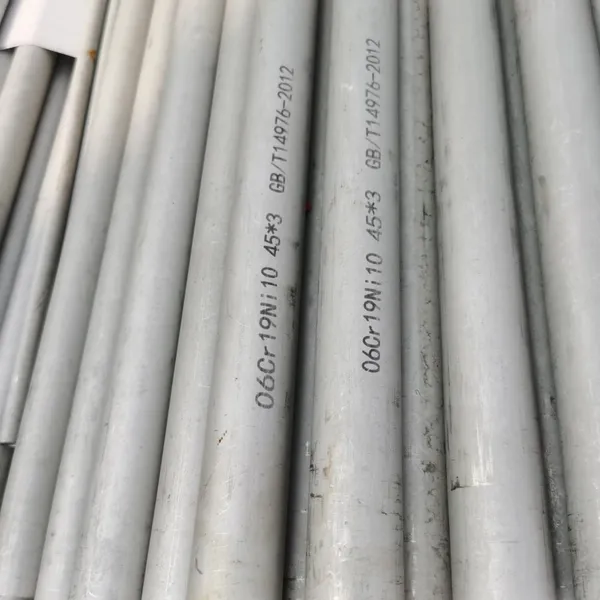
Factory TP309/TP309S/TP309H (UNS30900) Seamless Stainless Steel Pipe and Tube for Boiler BafflesUS$ 8MOQ: 200 Kilograms
-
TP347/TP347H/1.4961/S34709 Seamless Stainless Steel Pipe for UseNegotiableMOQ: 2 Meters
-
China 304 316 Stainless Steel Sanitary Welded Tube Food Grade Sanitary Grade Welded Pipe PolishingNegotiableMOQ: 1 Piece
-
China Manufacture Stainless Steel 316L Ba Seamless Welded Steel Pipe TubesUS$ 1760 - 1860MOQ: 5 Tons
-
316L/1.4405 Seamless Stainless Steel PipeNegotiableMOQ: 2 Meters
-
Stainless Steel Globe Valve – High Durability & Corrosion ResistanceNegotiableMOQ: 1 Piece
-
1.4529 Stainless Steel Flat Plate for Chemical Processing EquipmentUS$ 25 - 35MOQ: 1 Kilogram
-
Color Coated Steel Panels for Warehouse Partition Walls (Fireproof Grade)US$ 1 - 1.2MOQ: 50 Kilograms
-
Custom Width (600mm-1250mm) Colored Steel Coil With Scratch ResistanceUS$ 1 - 1.2MOQ: 50 Kilograms
-
0.5mm-3.0mm Colored Coated Steel Sheet With PVDF/Polyester CoatingUS$ 1 - 1.2MOQ: 50 Kilograms
-
JIS G 3322 Compliant Colored Coils With Third-Party Inspection ReportUS$ 1 - 1.2MOQ: 50 Kilograms