
 Business License

What is a mixed crystal? What are the causes of its formation
Abstract
Amorphous crystals, as a special type of crystal structure phenomenon, hold significant importance in numerous fields such as materials science, geology, and chemical engineering. This article delves deeply into the basic concepts of amorphous crystals, and thoroughly analyzes the various reasons for their formation, including thermodynamic factors, kinetic factors, external condition interference, and intrinsic properties of substances. Through a comprehensive understanding of amorphous crystals, it is possible to better comprehend the properties of related materials, geological evolution processes, and chemical reaction mechanisms, thereby providing a solid theoretical foundation for research and application in these fields.
Definition of mixed crystal
A mixed crystal refers to the phenomenon where two or more different crystal grain sizes exist within the microstructure of a metal or alloy. Normally, the crystal grain size of a material should be relatively uniform. However, in a mixed crystal state, fine grains and coarse grains are mixed and distributed. This organizational inhomogeneity can have adverse effects on the mechanical properties of the material (such as strength, toughness, plasticity, etc.), potentially leading to unstable material performance or the occurrence of local defects.
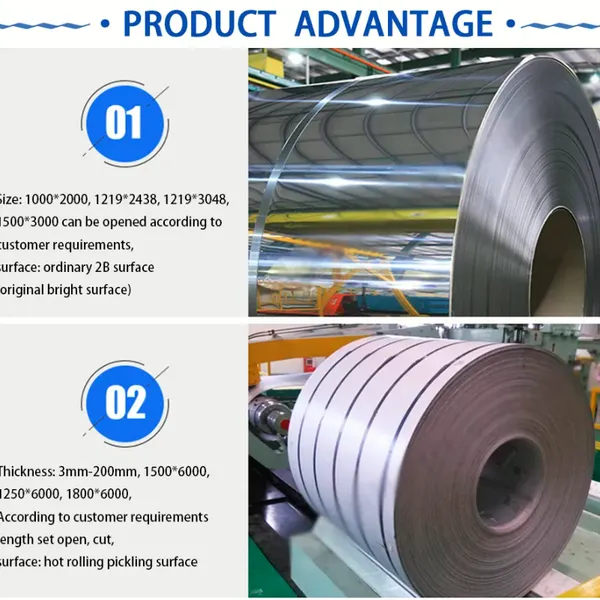
Image 1
The causes of mixed crystals
The formation of mixed crystals is usually related to improper control of process parameters during material preparation, processing, and heat treatment. The specific reasons can be summarized into the following categories:
I. Raw Materials and Casting Process Factors
Uneven chemical composition: The segregation of solute elements in the alloy (such as dendritic segregation) can lead to differences in melting points in local areas. During solidification, the growth rates of crystal grains are not consistent, resulting in the coexistence of coarse and fine grains in the microstructure.
Uneven cooling conditions during casting: During the casting process, significant differences in local cooling rates (such as uneven mold temperature, excessively high or low pouring temperatures) can cause variations in the nucleation rate and grain growth rate in different areas, thereby resulting in mixed crystals.
II. Factors of Heat Processing Techniques
Insufficient or uneven deformation:
During hot processing (such as forging and rolling), if the deformation amount does not reach the "critical deformation amount" (usually 5% to 15%), the local areas of the metal grains will undergo abnormal growth due to insufficient deformation, forming coarse grains that mix with the fine-grained areas that have not been fully deformed.
Uneven deformation of the workpiece cross-section (such as a large difference in deformation amount at the edge and center of the forging) can also lead to inconsistent grain sizes.
Improper control of the processing temperature:
If the processing temperature is too high, approaching or exceeding the "re-crystallization temperature" of the material, the grains tend to grow rapidly; if the temperature fluctuates greatly, the degree of grain growth in different areas will vary, resulting in mixed grains.
Excessive holding time during the processing also exacerbates the abnormal growth of grains.
III. Heat Treatment Process Factors
The annealing or normalizing process is unreasonable:
If the annealing temperature is too low or the holding time is insufficient, it will result in some grains not undergoing complete recrystallization, and the original coarse grains will remain; while if the temperature is too high or the holding time is too long, the already recrystallized fine grains will grow again, forming mixed crystals.
Uneven cooling speed (such as due to the different positions of the workpiece in the furnace causing differences in heat dissipation) may also cause inconsistent grain sizes.
Improper pre-treatment before quenching:
If the pre-treatment before quenching (such as annealing or normalizing) fails to eliminate the unevenness of the microstructure of the raw material (such as banded structure, carbide segregation), during quenching, due to the non-uniform austenitization, mixed crystals will form.
IV. Other Factors
Original material influence: The raw material itself has a mixed crystal structure. If the subsequent processing does not thoroughly improve this (such as not achieving sufficient deformation or through insufficient heat treatment for homogenization), the mixed crystals will remain.
Stress effect: During processing or usage, the material is subjected to local stress concentration (such as mechanical processing stress, welding stress), which may cause local grain deformation or recrystallization, resulting in differences in grain size.
The Hazards and Improvement Measures of Hybrid Crystals
Harm: Inhomogeneous crystal structure will intensify the anisotropy of material mechanical properties, reduce toughness and fatigue strength, and even cause cracks due to local stress concentration during service.
Improvement measures: By optimizing the hot processing technology (such as controlling deformation amount and temperature), adjusting the heat treatment parameters (such as using homogenization annealing and appropriate recrystallization annealing temperature), and improving the casting or smelting process (such as reducing component segregation), the inhomogeneous crystal structure can be eliminated or alleviated, and the grain size can be made uniform.
In summary, amorphous crystals represent the uneven microstructure of materials. Their formation is closely related to the multi-stage process parameters and requires full control from raw materials to the processing procedure to avoid or improve the situation.
Recently Posted
-
Does the stainless steel welded pipe have specific temperature requirements during the solution heat
January 20, 2026Solution heat treatment involves heating stainless steel to a high temperature and then rapidly cooling it to achieve an oversatur Read More
 -
Can stainless steel welded pipes be made into thick pipes
January 20, 2026With the improvement of high-quality welding technology and increasingly strict weld inspection, the application fields of s Read More
 -
Three types of commonly available food-grade stainless steel on the market
January 20, 2026The common food-grade stainless steel pipes are mainly composed of iron, chromium and carbon and other elements. Household stainle Read More
 -
What are the requirements for stainless steel welding pipe production equipment
January 20, 2026As is well known, stainless steel welded pipes have been widely used in various industries such as machinery, chemical engineering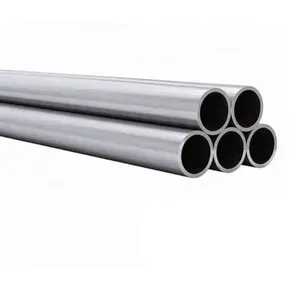 Read More

Contact Us
Recommended Products
-
 Stainless Steel Elbow Welded Elbow 45/90/180-degree Seamless Pressed Elbow Long Radius Elbow Short Radius Elbow WholesaleNegotiableMOQ: 1 Piece
 -
316L/1.4405 Seamless Stainless Steel PipeNegotiableMOQ: 2 Meters
-
310s 440 Seamless Sanitary Piping Price 321 904l 201 20 Inch Seamless Steel Pipe A554 Stainless Steel PipeNegotiableMOQ: 1 Piece
-
China Brand ZZ Wholesale 304L 316 316L Welded Austenitic Piping Stainless Steel Pipe SupplierNegotiableMOQ: 2 Meters
-
304/304L/316/409/410/904L/2205/2507/310H Premium Stainless Steel Sheets Supplier Custom Sizes & FinishesUS$ 1.72MOQ: 1 Ton
-
Stainless Steel ASME B16.9 Sch 45 90 Degree Pipe Fittings ElbowUS$ 8MOQ: 1 Piece
-
China Brand Zz 304L 316/316L GB En JIS Standard Thin Wall Welded Stainless Steel Water Pipe/TubeNegotiableMOQ: 2 Meters
-
BA 4 Inch 6 Inch 8 Inch 201 304 304L 316 316L Welded Seamless Stainless Steel PipeNegotiableMOQ: 2 Meters
-
ASME B36.19M-2004 SCH40S Stainless Steel Pipe - Complies With EU 3.1 CertificationUS$ 1 - 650MOQ: 1 Piece
-
Factory TP309/TP309S/TP309H (UNS30900) Seamless Stainless Steel Pipe and Tube for Boiler BafflesUS$ 8MOQ: 200 Kilograms
-
TP347/TP347H/1.4961/S34709 Seamless Stainless Steel Pipe for UseNegotiableMOQ: 2 Meters
-
China 304 316 Stainless Steel Sanitary Welded Tube Food Grade Sanitary Grade Welded Pipe PolishingNegotiableMOQ: 1 Piece
-
China Manufacture Stainless Steel 316L Ba Seamless Welded Steel Pipe TubesUS$ 1760 - 1860MOQ: 5 Tons
-
316L/1.4405 Seamless Stainless Steel PipeNegotiableMOQ: 2 Meters
-
Stainless Steel Globe Valve – High Durability & Corrosion ResistanceNegotiableMOQ: 1 Piece
-
1.4529 Stainless Steel Flat Plate for Chemical Processing EquipmentUS$ 25 - 35MOQ: 1 Kilogram
-
Color Coated Steel Panels for Warehouse Partition Walls (Fireproof Grade)US$ 1 - 1.2MOQ: 50 Kilograms
-
Custom Width (600mm-1250mm) Colored Steel Coil With Scratch ResistanceUS$ 1 - 1.2MOQ: 50 Kilograms
-
0.5mm-3.0mm Colored Coated Steel Sheet With PVDF/Polyester CoatingUS$ 1 - 1.2MOQ: 50 Kilograms
-
JIS G 3322 Compliant Colored Coils With Third-Party Inspection ReportUS$ 1 - 1.2MOQ: 50 Kilograms