
 Business License

How to select the appropriate stainless steel pipe of BA grade for a specific application scenario
When choosing BA grade (bright annealing) stainless steel pipes suitable for specific application scenarios, it is necessary to comprehensively consider multiple aspects such as material properties, surface treatment standards, application environment requirements, and industry regulations. The following is the systematic selection process and key points:
I. Core Characteristics and Standards of BA Grade Stainless Steel Tubes
1. Definition of BA Grade Surface Treatment
Process principle: Through bright annealing (annealing in a protective gas atmosphere), to avoid the formation of oxide scale, the surface presents a mirror-like bright state, with a roughness (Ra) typically controlled within 0.4-0.8 μm.
Comparison with EP Grade (Electrolytic Polishing):
Image 1
2. Industry Standards Reference
Pharmaceutical / Food: The BA grade in ASME BPE standards is applicable to non-critical contact areas; FDA 21 CFR Part 117 requires no adsorption and easy cleaning of the surface.
Semiconductor: The SEMI standard stipulates that BA grade is used for general gas transportation (such as N₂, compressed air), and the surface particle count (≥0.5 μm particles ≤ 100 per ft²) needs to be controlled.
II. Application Scenario Classification and Selection Key Points
Scenario 1: Food and Beverage, Dairy Product Production
Typical Requirements: Prevent microbial growth, easy to clean, tolerant to organic acids (such as lactic acid, citric acid).
Selection Key Points:
Material: Prefer 316L (resistant to chloride ion corrosion, such as trace Cl⁻ in milk), 304 suitable for non-acidic media.
Surface Requirements: BA level ≤ Ra 0.6μm, must pass FDA food contact material certification (such as 3A hygiene standards).
Application Case: Pasteurized milk pipelines, juice concentrate equipment conveying pipes (non-sterile filling lines).
Scenario 2: Pharmaceutical Industry Non-Critical Systems
Typical Requirements: Meet basic GMP cleanliness requirements, non-direct contact with sterile drug solutions.
Selection Key Points:
Material: 316L (such as pre-filter pipes for purified water systems), 304 only for low-risk scenarios like pure steam condensate recovery.
Surface Treatment: BA level must comply with ASME BPE Level 1 standards (≤ Ra 0.8μm), support CIP cleaning (not SIP sterilization).
Prohibited Scenarios: WFI (Water for Injection) main pipelines, sterile liquid mixing tanks must use EP level, BA level is limited to pre-treatment stages of purified water (such as pipelines after multi-media filters).
Scenario 3: Semiconductor General Gas Transportation
Typical Requirements: Control particle contamination, tolerant to dry gases (such as N₂, compressed air).
Selection Key Points:
Material: 316L BA (avoid 304 rusting in humid oxygen environment), must meet SEMI S23 gas purity requirements.
Surface Inspection: Helium mass spectrometry leak detection (leak rate ≤ 1×10⁻⁹ atm・cc/s), particle test (≥ 0.3μm particles ≤ 50 per ft²).
Application Case: Nitrogen pipelines in wafer fabrication plant, non-corrosive gas sweeping pipes.
Scenario 4: Cosmetics and Health Supplements Production
Typical Requirements: Prevent organic component adsorption, tolerant to surfactants (such as sodium dodecyl sulfate).
Selection Key Points:
Material: 304 BA level (cost priority), if in contact with fruit acids (such as citric acid), upgrade to 316L.
Surface Treatment: ≤ Ra 0.6μm, must pass ISO 10993 biocompatibility test (avoid skin irritants to be released).
III. Selection Decision Process: Four-step Screening Method
1. Determine the Material Characteristics
Corrosion assessment:
Non-corrosive (such as water, air): 304 BA grade is sufficient.
Weak corrosion (such as dilute acid, Cl⁻-containing solutions): Must be 316L BA grade (molybdenum element enhances corrosion resistance).
Strong corrosion (such as concentrated nitric acid, hydrogen peroxide): BA grade is not applicable; an upgrade to EP grade + passivation treatment is required.
2. Cleanliness and Compliance with Regulations
Pharmaceutical Industry:
Non-aseptic areas (C/D grade clean areas): BA grade 316L (e.g., pipeline for granulation in oral solid dosage form production).
Aseptic areas (A/B grade): Must be EP grade; BA grade is only used for auxiliary systems (e.g., condensate water pipes in clean areas).
Semiconductor Industry:
General gases (Class 1000 clean rooms): 316L BA; Special gases (such as NF₃): Must be EP grade.
3. Surface Treatment Precision Verification
Testing Methods:
Roughness meter measurement (pharmaceuticals require Ra ≤ 0.6 μm, semiconductor ≤ 0.4 μm).
Visual inspection: No scratches or oxidation spots on the surface. Welding areas need online annealing (to avoid intergranular corrosion).
4. Cost and Risk Balance
Cost-performance scenarios: BA grade is suitable for "non-critical contact + medium cleanliness" scenarios (such as non-sterilized production lines in food factories), saving about 40% in equipment costs compared to EP grade.
Non-negotiable scenarios: If the medium contains strong oxidants (such as F⁻ ions) or requires frequent SIP sterilization, BA grade may cause corrosion due to surface defects, and EP grade must be selected.
IV. Avoidance of Common Errors
Misconception 1: BA grade can be used instead of EP grade for sterile liquid
Correction: The surface of BA grade still has microscopic pits (Ra ≥ 0.4 μm), which may retain microorganisms from the liquid and the sterile preparation must use EP grade (Ra ≤ 0.2 μm).
Misconception 2: 304 BA grade can be used in water systems with chloride ions
Correction: Even if the surface of BA grade is smooth, 304 may still suffer pitting corrosion in water with Cl⁻ concentration > 50 ppm. 316L BA grade (molybdenum content ≥ 2.0%) must be used.
Misconception 3: BA grade does not require passivation treatment
Correction: Although BA grade has undergone bright annealing, it still needs nitric acid passivation (20% HNO₃ solution immersion for 30 minutes) after welding to restore the integrity of the passivation film.
V. Comparison of Industry Application Cases
Image 2
Summary: Core Principles for BA Level Selection
Applicable Premise: The medium has no strong corrosiveness, the cleanliness requirement is moderate (non-sterile core area), and regulations allow the use of non-EP level surfaces.
Decision Formula: BA Level Feasibility = Low medium corrosivity × Non-highest cleanliness level × Cost Sensitivity
Final Verification: After selection, a material report (such as ASTM A270 certification) and a surface roughness test report must be submitted, and industry simulation conditions tests (such as CIP cycle tests in a pharmaceutical factory) must be passed.
By precisely matching the scene requirements with the BA level characteristics, cost optimization can be achieved while ensuring compliance, and at the same time avoiding contamination risks or premature equipment failure due to improper selection.
Recently Posted
-
Does the stainless steel welded pipe have specific temperature requirements during the solution heat
January 20, 2026Solution heat treatment involves heating stainless steel to a high temperature and then rapidly cooling it to achieve an oversatur Read More
 -
Can stainless steel welded pipes be made into thick pipes
January 20, 2026With the improvement of high-quality welding technology and increasingly strict weld inspection, the application fields of s Read More
 -
Three types of commonly available food-grade stainless steel on the market
January 20, 2026The common food-grade stainless steel pipes are mainly composed of iron, chromium and carbon and other elements. Household stainle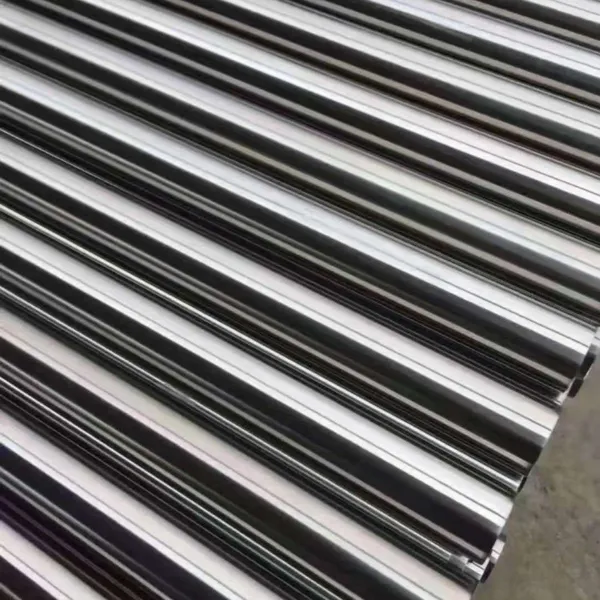 Read More
 -
What are the requirements for stainless steel welding pipe production equipment
January 20, 2026As is well known, stainless steel welded pipes have been widely used in various industries such as machinery, chemical engineering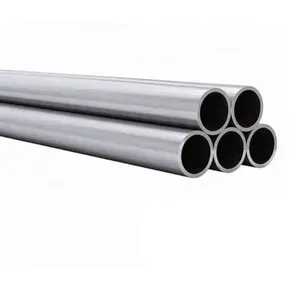 Read More

Contact Us
Recommended Products
-
 Stainless Steel Elbow Welded Elbow 45/90/180-degree Seamless Pressed Elbow Long Radius Elbow Short Radius Elbow WholesaleNegotiableMOQ: 1 Piece
 -
316L/1.4405 Seamless Stainless Steel PipeNegotiableMOQ: 2 Meters
-
310s 440 Seamless Sanitary Piping Price 321 904l 201 20 Inch Seamless Steel Pipe A554 Stainless Steel PipeNegotiableMOQ: 1 Piece
-
China Brand ZZ Wholesale 304L 316 316L Welded Austenitic Piping Stainless Steel Pipe SupplierNegotiableMOQ: 2 Meters
-
304/304L/316/409/410/904L/2205/2507/310H Premium Stainless Steel Sheets Supplier Custom Sizes & FinishesUS$ 1.72MOQ: 1 Ton
-
Stainless Steel ASME B16.9 Sch 45 90 Degree Pipe Fittings ElbowUS$ 8MOQ: 1 Piece
-
China Brand Zz 304L 316/316L GB En JIS Standard Thin Wall Welded Stainless Steel Water Pipe/TubeNegotiableMOQ: 2 Meters
-
BA 4 Inch 6 Inch 8 Inch 201 304 304L 316 316L Welded Seamless Stainless Steel PipeNegotiableMOQ: 2 Meters
-
ASME B36.19M-2004 SCH40S Stainless Steel Pipe - Complies With EU 3.1 CertificationUS$ 1 - 650MOQ: 1 Piece
-
Factory TP309/TP309S/TP309H (UNS30900) Seamless Stainless Steel Pipe and Tube for Boiler BafflesUS$ 8MOQ: 200 Kilograms
-
TP347/TP347H/1.4961/S34709 Seamless Stainless Steel Pipe for UseNegotiableMOQ: 2 Meters
-
China 304 316 Stainless Steel Sanitary Welded Tube Food Grade Sanitary Grade Welded Pipe PolishingNegotiableMOQ: 1 Piece
-
China Manufacture Stainless Steel 316L Ba Seamless Welded Steel Pipe TubesUS$ 1760 - 1860MOQ: 5 Tons
-
316L/1.4405 Seamless Stainless Steel PipeNegotiableMOQ: 2 Meters
-
Stainless Steel Globe Valve – High Durability & Corrosion ResistanceNegotiableMOQ: 1 Piece
-
1.4529 Stainless Steel Flat Plate for Chemical Processing EquipmentUS$ 25 - 35MOQ: 1 Kilogram
-
Color Coated Steel Panels for Warehouse Partition Walls (Fireproof Grade)US$ 1 - 1.2MOQ: 50 Kilograms
-
Custom Width (600mm-1250mm) Colored Steel Coil With Scratch ResistanceUS$ 1 - 1.2MOQ: 50 Kilograms
-
0.5mm-3.0mm Colored Coated Steel Sheet With PVDF/Polyester CoatingUS$ 1 - 1.2MOQ: 50 Kilograms
-
JIS G 3322 Compliant Colored Coils With Third-Party Inspection ReportUS$ 1 - 1.2MOQ: 50 Kilograms