
 Business License

Don't let corrosion bring down the equipment! 304H stainless steel pipe: The "anti-aging ace" for
304H grade stainless steel pipe is an austenitic stainless steel pipe characterized by a high carbon content. Its chemical composition is optimized on the basis of 304 stainless steel, with the carbon content increased to 0.04% - 0.1% (compared to ≤0.08% for regular 304), while maintaining the core ratio of 18% - 20% chromium and 8% - 10.5% nickel. This adjustment endows it with unique advantages in high-temperature performance, mechanical strength, and processing adaptability, making it widely used in fields with high requirements for high-temperature resistance and structural stability.
I. Core Performance and Advantages
Outstanding high-temperature stability
The high carbon content of 304H significantly enhances its high-temperature mechanical properties, allowing it to operate for long periods at temperatures below 650°C and withstand short-term temperatures up to 850°C. For instance, in ultra-supercritical boilers, its creep rupture strength is approximately 30% higher than that of regular 304, effectively resisting deformation and stress relaxation at high temperatures. This characteristic makes it the preferred material for petrochemical cracking furnace tubes and heating furnace components.
Mechanical strength and work hardening characteristics
At room temperature, the tensile strength of 304H can reach 580 MPa, and the yield strength is 230 MPa, which is superior to that of ordinary 304 (tensile strength 520 MPa, yield strength 205 MPa). Its work hardening rate is moderate. During cold forming, it can not only maintain good plasticity (elongation ≥ 30%), but also further enhance the strength through cold working. It is suitable for manufacturing high-pressure pipes, pressure vessels, etc.
Corrosion resistance balance
Conventional Environment
In neutral or weakly acidic media (such as organic acids in food processing and industrial water), the corrosion resistance of 304H is comparable to that of 304, and the surface passivation film can effectively resist oxidative corrosion.
Special Scenarios
In environments with chloride ion concentrations ≤ 200 ppm (such as some chemical cooling water systems), its resistance to pitting corrosion is slightly inferior to that of 316L, but it can still operate stably by controlling water quality (such as adding corrosion inhibitors).
High Temperature Oxidation
In an oxidizing atmosphere below 850°C, the Cr₂O₃ oxide layer formed on its surface can effectively prevent further corrosion, making it suitable for use in heat treatment furnace roller tracks, radiant tubes, etc.
Welding and Forming Process Compatibility
Welding
Conventional welding methods such as TIG and MIG can be adopted. It is recommended to use ER308H welding wire (with a carbon content of 0.04% - 0.08%) to reduce the risk of sensitization in the weld seam. During welding, the interlayer temperature should be controlled at ≤ 150℃ to prevent carbide precipitation and intergranular corrosion.
Processing
The recommended cold bending radius is ≥ 2 times the wall thickness. The temperature for hot working should be controlled at 900 - 1150℃ to prevent grain coarsening.
II. Typical Application Fields
The energy and power industry
Boilers and Heat Exchangers
As superheater and reheater pipes, they perform stably in high-temperature steam environments of 600-650℃, with a service life of over 100,000 hours.
Nuclear Power Equipment
Used as heat transfer tubes in steam generators in nuclear reactors, they meet the strict requirements for radiation resistance and high-temperature strength.
Petroleum, Chemical, and Coal Chemical Industries
Cracking furnace tubes
In ethylene cracking units, they withstand temperatures above 1000°C and corrosion from hydrocarbon media, and need to undergo carburization detection regularly to assess their remaining lifespan.
Hydrogenation reactors
In high-pressure hydrogen environments, their resistance to hydrogen embrittlement is superior to that of ordinary 304, reducing the frequency of equipment maintenance.
Industrial furnaces and heat treatment
Muffle furnace inner liner
In the heat treatment process at 800-900℃, it is subject to long-term cyclic heating and cooling. Fine-grained 304H should be selected to enhance the resistance to thermal fatigue.
Glass annealing kiln roller track
High surface finish is required. The resistance to oxide scale spalling of 304H can prevent surface contamination of glass products.
Food and pharmaceutical machinery
Dairy equipment
During the CIP (Cleaning In Place) process, it can withstand alkaline cleaning agents (such as NaOH solution) and high-temperature steam sterilization, and meets the FDA food contact standards.
Pharmaceutical reaction vessels
Remain stable in acidic media (such as citric acid) and can be polished to a mirror finish with Ra ≤ 0.4 μm, meeting GMP cleanliness requirements.
III. Comparison with Similar Materials
Picture (Figure 1)
IV. Precautions for Use
Environmental Adaptation
In strong oxidizing acids (such as nitric acid), 304H has better corrosion resistance than 316L. However, in environments containing Cl⁻, the concentration should be controlled at ≤200ppm.
Heat Treatment Specifications
Solution treatment temperature is 1010-1150℃, followed by water cooling or air cooling. Avoid holding at temperatures between 450-850℃ to prevent intergranular corrosion.
Surface Treatment
Corrosion resistance can be enhanced after pickling and passivation. It is recommended to use a mixture of nitric acid and hydrofluoric acid for pickling, and control the thickness of the passivation film at 20-50nm.
Post-Weld Treatment
For thick-walled tubes (≥10mm), it is suggested to perform stabilization annealing at 850-900℃ to eliminate residual welding stress.
V. Economic Analysis
The cost of 304H is approximately 15% - 20% higher than that of regular 304, but 30% - 40% lower than that of 316H. In high-temperature scenarios, its life cycle cost advantage is significant. For instance, in the application of boiler pipes at 650℃, the wall thickness of 304H can be reduced by 20% compared to 304, while also cutting maintenance costs by 20%.
VI. Industry Standards and Certifications
International Standards
ASTM A240 (American Standard), EN 10088-2 (European Standard), JIS G4305 (Japanese Standard).
Domestic Standards
GB/T 14976 (Seamless Steel Pipes for Fluid Conveyance), GB/T 13296 (Seamless Steel Pipes for Boiler Heat Exchangers).
Certifications
304H certified by ASME SA-240 can be used in ASME VIII pressure vessels and complies with PED 2014/68/EU Pressure Equipment Directive.
304H stainless steel tubes have become a core material in high-temperature industries due to the balance of their high-temperature strength, corrosion resistance, and processing adaptability. When making a selection, it is necessary to comprehensively evaluate their applicability in comparison with materials such as 316H and 321H, taking into account specific working conditions (such as temperature, medium, and pressure) and cost requirements.
Recently Posted
-
Does the stainless steel welded pipe have specific temperature requirements during the solution heat
January 20, 2026Solution heat treatment involves heating stainless steel to a high temperature and then rapidly cooling it to achieve an oversatur Read More
 -
Can stainless steel welded pipes be made into thick pipes
January 20, 2026With the improvement of high-quality welding technology and increasingly strict weld inspection, the application fields of s Read More
 -
Three types of commonly available food-grade stainless steel on the market
January 20, 2026The common food-grade stainless steel pipes are mainly composed of iron, chromium and carbon and other elements. Household stainle Read More
 -
What are the requirements for stainless steel welding pipe production equipment
January 20, 2026As is well known, stainless steel welded pipes have been widely used in various industries such as machinery, chemical engineering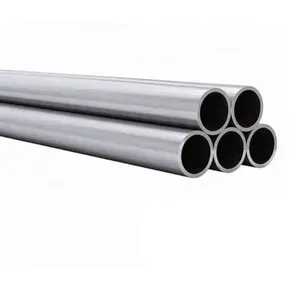 Read More

Contact Us
Recommended Products
-
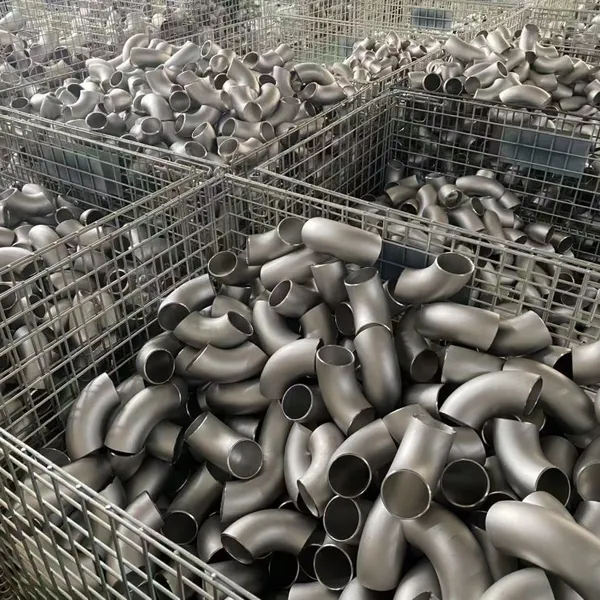
 Stainless Steel Elbow Welded Elbow 45/90/180-degree Seamless Pressed Elbow Long Radius Elbow Short Radius Elbow WholesaleNegotiableMOQ: 1 Piece
 -
316L/1.4405 Seamless Stainless Steel PipeNegotiableMOQ: 2 Meters
-
310s 440 Seamless Sanitary Piping Price 321 904l 201 20 Inch Seamless Steel Pipe A554 Stainless Steel PipeNegotiableMOQ: 1 Piece
-
China Brand ZZ Wholesale 304L 316 316L Welded Austenitic Piping Stainless Steel Pipe SupplierNegotiableMOQ: 2 Meters
-
304/304L/316/409/410/904L/2205/2507/310H Premium Stainless Steel Sheets Supplier Custom Sizes & FinishesUS$ 1.72MOQ: 1 Ton
-
Stainless Steel ASME B16.9 Sch 45 90 Degree Pipe Fittings ElbowUS$ 8MOQ: 1 Piece
-
China Brand Zz 304L 316/316L GB En JIS Standard Thin Wall Welded Stainless Steel Water Pipe/TubeNegotiableMOQ: 2 Meters
-
BA 4 Inch 6 Inch 8 Inch 201 304 304L 316 316L Welded Seamless Stainless Steel PipeNegotiableMOQ: 2 Meters
-
ASME B36.19M-2004 SCH40S Stainless Steel Pipe - Complies With EU 3.1 CertificationUS$ 1 - 650MOQ: 1 Piece
-
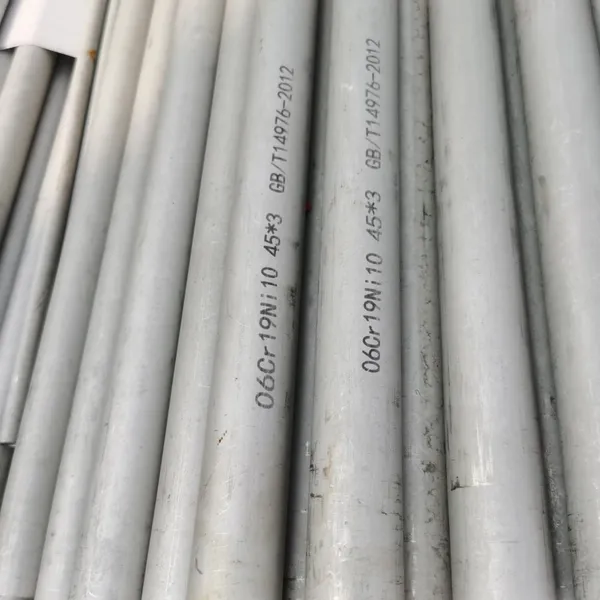
Factory TP309/TP309S/TP309H (UNS30900) Seamless Stainless Steel Pipe and Tube for Boiler BafflesUS$ 8MOQ: 200 Kilograms
-
TP347/TP347H/1.4961/S34709 Seamless Stainless Steel Pipe for UseNegotiableMOQ: 2 Meters
-
China 304 316 Stainless Steel Sanitary Welded Tube Food Grade Sanitary Grade Welded Pipe PolishingNegotiableMOQ: 1 Piece
-
China Manufacture Stainless Steel 316L Ba Seamless Welded Steel Pipe TubesUS$ 1760 - 1860MOQ: 5 Tons
-
316L/1.4405 Seamless Stainless Steel PipeNegotiableMOQ: 2 Meters
-
Stainless Steel Globe Valve – High Durability & Corrosion ResistanceNegotiableMOQ: 1 Piece
-
1.4529 Stainless Steel Flat Plate for Chemical Processing EquipmentUS$ 25 - 35MOQ: 1 Kilogram
-
Color Coated Steel Panels for Warehouse Partition Walls (Fireproof Grade)US$ 1 - 1.2MOQ: 50 Kilograms
-
Custom Width (600mm-1250mm) Colored Steel Coil With Scratch ResistanceUS$ 1 - 1.2MOQ: 50 Kilograms
-
0.5mm-3.0mm Colored Coated Steel Sheet With PVDF/Polyester CoatingUS$ 1 - 1.2MOQ: 50 Kilograms
-
JIS G 3322 Compliant Colored Coils With Third-Party Inspection ReportUS$ 1 - 1.2MOQ: 50 Kilograms