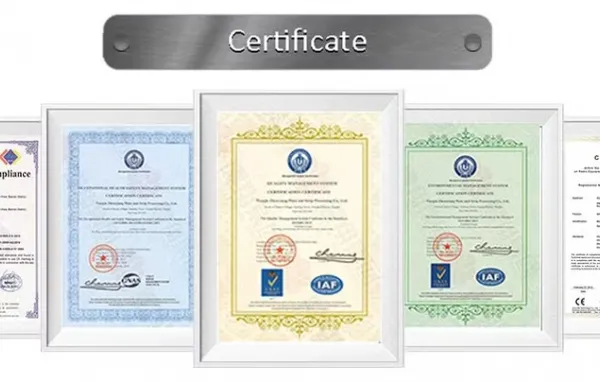

 Business License

The duplex stainless steel pipe has high strength and excellent impact resistance. What aspects does
The statements "high strength" and "excellent impact resistance" for duplex stainless steel tubes are not generalizations. Instead, they are reflected through specific mechanical performance indicators, microstructure characteristics, and actual application performance. The core lies in its microstructure of the coexistence of ferrite and austenite (typically with a ratio of approximately 50:50) - ferrite provides the foundation for high strength, while austenite improves toughness and impact resistance, and the two work together to give it superior comprehensive mechanical properties compared to traditional austenitic stainless steel (such as 304, 316) and ferritic stainless steel. Specific manifestations can be explored from the following aspects:
1. The core of "high strength": Mechanical indicators and application compatibility
The "high strength" of duplex stainless steel tubes is not a single dimension but encompasses various scenarios such as room temperature strength, high-temperature strength, and resistance to stress corrosion, and is quantified through clear standard indicators (such as GB/T 14976, ASTM A789, etc.). Specifically as follows:
The static strength at room temperature is much higher than that of traditional austenitic stainless steel.
Compared with traditional 304/316 austenitic stainless steel, the yield strength (Rp0.2) and tensile strength (Rm) of duplex stainless steel are significantly higher. The specific data comparison is shown in the table below:
Traditional austenitic stainless steel
Representative grade: 304
Yield strength Rp0.2 (MPa): ≥205
Tensile strength Rm (MPa): ≥515
Elongation A (%): ≥40
Traditional austenitic stainless steel
Representative grade: 316
Yield strength Rp0.2 (MPa): ≥ 205
Tensile strength Rm (MPa): ≥ 515
Elongation A (%): ≥ 40
Duplex stainless steel
Representative grade: 2205 (most commonly used)
Yield strength Rp0.2 (MPa): ≥ 450
Tensile strength Rm (MPa): ≥ 620
Elongation A (%): ≥ 25
Dual-phase stainless steel
Representative grade: 2507 (ultra-high strength)
Yield strength Rp0.2 (MPa): ≥ 550
Tensile strength Rm (MPa): ≥ 795
Elongation A (%): ≥ 20
From the data, it can be seen that the yield strength of 2205 duplex steel is more than twice that of 304, and its tensile strength is also about 20% higher. This means that under the same load-bearing requirements, duplex stainless steel pipes can use thinner wall thicknesses (for example, the original 304 requires a 6mm wall thickness, while 2205 only needs 3-4mm), which not only reduces the weight of the pipe material (reducing transportation/installation costs) but also saves material usage. It is particularly suitable for scenarios that require "lightweight + high strength" (such as bridge guardrail posts, high-pressure pipelines).
Higher temperature strength stability is better.
Traditional austenitic stainless steel will experience a rapid decrease in strength as the temperature rises within the range of 300-600℃; however, because of the "high-temperature strengthening effect" of ferrite in duplex stainless steel, it can still maintain a relatively high yield strength and creep resistance (creep: slow deformation caused by long-term stress at high temperatures) within this temperature range.
For example, at a 400℃ condition, the yield strength of 2205 duplex steel can still reach above 300 MPa, while 304 stainless steel is only about 150 MPa - thus duplex stainless steel pipes are more suitable for high-temperature industrial pipelines (such as the outlet pipes of chemical reaction vessels, waste heat recovery pipelines), avoiding pipeline deformation or rupture caused by insufficient high-temperature strength.
Higher stress corrosion resistance (anti-cracking ability)
Traditional austenitic stainless steel (such as 304) is prone to "stress corrosion cracking (SCC)" in an environment of "chloride ions + tensile stress" (such as in coastal areas, chemical wastewater pipelines); while the duplex structure of duplex stainless steel can inhibit the initiation and propagation of corrosion cracks, and its critical stress corrosion resistance strength (i.e., the maximum stress value without cracking) is 3-5 times that of 304.
For example: In a water solution containing 5% NaCl (simulating the seawater environment), 304 stainless steel begins to crack when the stress reaches 150 MPa, while 2205 duplex steel may only crack when the stress exceeds 400 MPa - this is the key reason why duplex stainless steel pipes have become the core material for marine engineering and seawater desalination pipelines.
II. The core manifestation of "Excellent Impact Resistance": Resilience Index and Adaptability to Extreme Scenarios
"Resistance to Impact" fundamentally refers to the material's ability to absorb energy and avoid fracture when subjected to sudden external forces (such as impact, vibration, and low-temperature shock). It is mainly measured by impact toughness (Shakey impact energy Ak). The advantages of duplex stainless steel pipes lie in "High Resilience at Normal Temperature" and "Stability of Low-Temperature Resilience" aspects:
The impact toughness at room temperature of ferritic stainless steel is significantly higher than that of ferritic stainless steel, comparable to that of austenitic stainless steel.
Ferritic stainless steel (such as 430) has relatively high strength, but its impact toughness at room temperature is poor (Ak is usually below 20J), and it is prone to "brittle fracture"; traditional austenitic stainless steel (304) has excellent impact toughness at room temperature (Ak ≥ 100J), while duplex stainless steel (such as 2205) can achieve an impact energy of 80-120J, retaining the high toughness similar to austenitic steel while maintaining high strength - for example: in scenarios such as municipal road lift columns and parking lot anti-collision columns, when the duplex stainless steel pipe is slightly impacted by a vehicle, it can absorb energy through deformation (not cracking), and after the impact, it can recover to a certain form, avoiding the pipe from directly breaking and being scrapped.
The low-temperature impact toughness stability is far superior to that of traditional stainless steel.
Traditional austenitic stainless steel (such as 304) will experience a decrease in toughness due to the "austenite to martensite transformation" in low-temperature environments (below -40℃); while the dual-phase structure of duplex stainless steel can inhibit the martensite transformation, and even at the extreme low temperature of -60℃, its impact energy can still remain above 50J (much higher than the brittle fracture critical value of 20J).
For example: In outdoor pipelines in cold regions (such as oil pipelines for oil extraction in northern areas and water supply pipelines for polar research stations), low temperatures in winter may cause the pipe materials to be subjected to freezing expansion shocks or external impacts. Duplex stainless steel pipes can prevent fractures due to low-temperature embrittlement and ensure the stable operation of the system.
Stronger anti-fatigue impact resistance
In scenarios such as the lifting column and the mechanical arm connecting rods, the stainless steel tubes need to endure "repeated lifting/vibration" fatigue impacts (i.e., "alternating stress") over a long period of time. The fatigue strength of duplex stainless steel (i.e., the maximum stress that does not cause fatigue fracture under long-term alternating stress) is 1.5-2 times that of 304.
For example: A brand test of an elevator column shows that an elevator column made of 2205 duplex steel, when operated "100 times per day", can have a service life of up to 8 years; while the same type of product made of 304 steel has a service life of only about 4 years - the core reason is that the duplex structure of the duplex steel can delay the initiation of fatigue cracks and enhance the ability to resist repeated impacts.
Summary: The fundamental logic of duplex stainless steel tubes - "high strength + excellent impact resistance"
The core of its performance advantages stems from the **microscopic synergistic effect of "ferrite strengthening + austenite toughening"**:
Ferrite offers high yield strength and high temperature stability, addressing the problem of "low strength" in traditional austenitic steel;
Austenite provides high impact toughness and low-temperature resistance to embrittlement, compensating for the deficiency of "poor toughness" in traditional ferritic steel;
Ultimately, a comprehensive performance is achieved, with "strength not lower than low-alloy structural steel and toughness comparable to austenitic stainless steel", making it the preferred material in marine engineering, low-temperature environments, high-pressure pipelines, impact-resistant structural components (such as lifting columns, crash barriers), and other scenarios.
Recently Posted
-
Does the stainless steel welded pipe have specific temperature requirements during the solution heat
January 20, 2026Solution heat treatment involves heating stainless steel to a high temperature and then rapidly cooling it to achieve an oversatur Read More
 -
Can stainless steel welded pipes be made into thick pipes
January 20, 2026With the improvement of high-quality welding technology and increasingly strict weld inspection, the application fields of s Read More
 -
Three types of commonly available food-grade stainless steel on the market
January 20, 2026The common food-grade stainless steel pipes are mainly composed of iron, chromium and carbon and other elements. Household stainle Read More
 -
What are the requirements for stainless steel welding pipe production equipment
January 20, 2026As is well known, stainless steel welded pipes have been widely used in various industries such as machinery, chemical engineering Read More

Contact Us
Recommended Products
-
 Stainless Steel Elbow Welded Elbow 45/90/180-degree Seamless Pressed Elbow Long Radius Elbow Short Radius Elbow WholesaleNegotiableMOQ: 1 Piece
 -
316L/1.4405 Seamless Stainless Steel PipeNegotiableMOQ: 2 Meters
-
310s 440 Seamless Sanitary Piping Price 321 904l 201 20 Inch Seamless Steel Pipe A554 Stainless Steel PipeNegotiableMOQ: 1 Piece
-
China Brand ZZ Wholesale 304L 316 316L Welded Austenitic Piping Stainless Steel Pipe SupplierNegotiableMOQ: 2 Meters
-
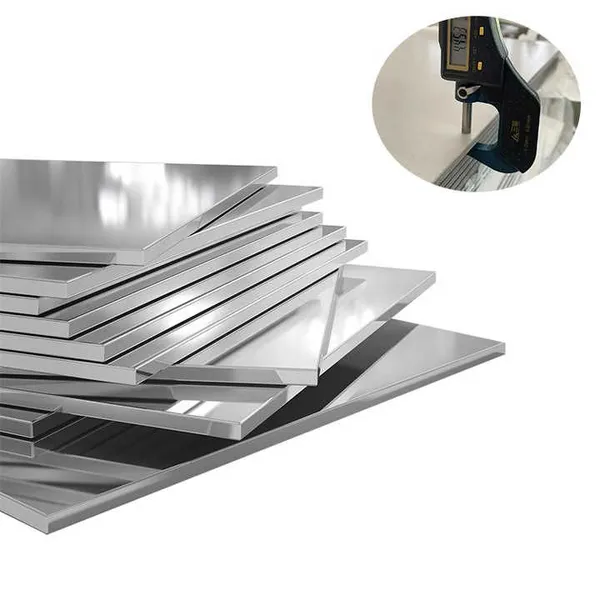
304/304L/316/409/410/904L/2205/2507/310H Premium Stainless Steel Sheets Supplier Custom Sizes & FinishesUS$ 1.72MOQ: 1 Ton
-
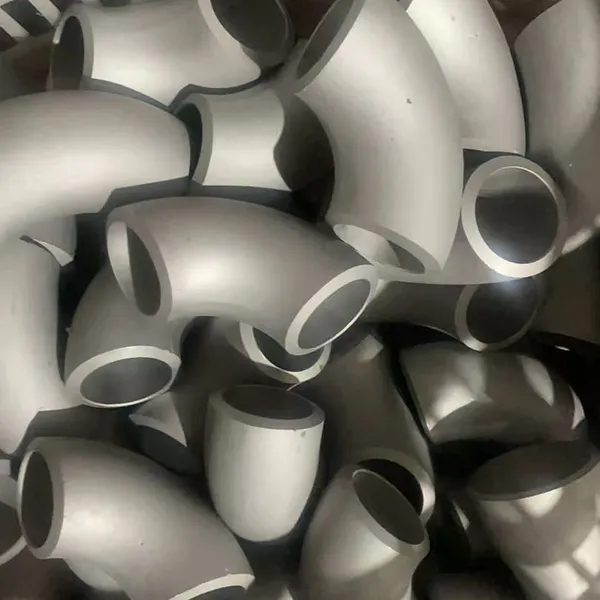
Stainless Steel ASME B16.9 Sch 45 90 Degree Pipe Fittings ElbowUS$ 8MOQ: 1 Piece
-
China Brand Zz 304L 316/316L GB En JIS Standard Thin Wall Welded Stainless Steel Water Pipe/TubeNegotiableMOQ: 2 Meters
-
BA 4 Inch 6 Inch 8 Inch 201 304 304L 316 316L Welded Seamless Stainless Steel PipeNegotiableMOQ: 2 Meters
-
ASME B36.19M-2004 SCH40S Stainless Steel Pipe - Complies With EU 3.1 CertificationUS$ 1 - 650MOQ: 1 Piece
-
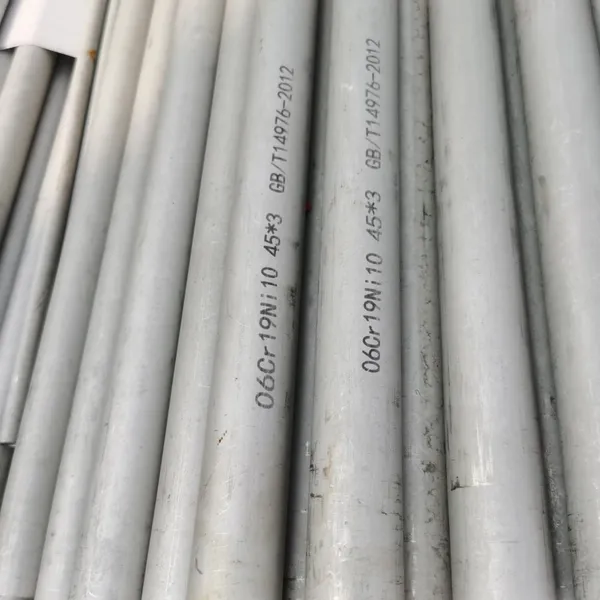
Factory TP309/TP309S/TP309H (UNS30900) Seamless Stainless Steel Pipe and Tube for Boiler BafflesUS$ 8MOQ: 200 Kilograms
-
TP347/TP347H/1.4961/S34709 Seamless Stainless Steel Pipe for UseNegotiableMOQ: 2 Meters
-
China 304 316 Stainless Steel Sanitary Welded Tube Food Grade Sanitary Grade Welded Pipe PolishingNegotiableMOQ: 1 Piece
-
China Manufacture Stainless Steel 316L Ba Seamless Welded Steel Pipe TubesUS$ 1760 - 1860MOQ: 5 Tons
-
316L/1.4405 Seamless Stainless Steel PipeNegotiableMOQ: 2 Meters
-
Stainless Steel Globe Valve – High Durability & Corrosion ResistanceNegotiableMOQ: 1 Piece
-
World's Most Affordable Color-Coated Steel Sheets - 0.3mm to 3mm Thickness - Mill Test Report IncludedUS$ 1102MOQ: 10 Kilograms
-
Color-Coated Steel Sheets With 15-Year Fade Warranty - JIS G 3322 Standard CompliantUS$ 1102MOQ: 10 Kilograms
-
Prefab Building Material - 0.4mm Color-Coated Corrugated Sheets - 100,000㎡ Monthly OutputUS$ 1102MOQ: 10 Kilograms
-
Industrial-Grade Color-Coated Sheets - 150-250g/m² Zinc Coating - Weather & UV ResistantUS$ 1102MOQ: 10 Kilograms
-
Factory-Direct Color-Coated Steel Plates - PVDF/Polyester Coating - 1220mm Standard WidthUS$ 1102MOQ: 10 Kilograms