
 Business License

Does the polishing process of stainless steel seamless pipes affect their corrosion resistance
Does the polishing process of stainless steel seamless pipes affect their corrosion resistance?
The polishing process of stainless steel seamless pipes has a dual impact on corrosion resistance. Different processing principles and effects can lead to variations in corrosion resistance. The specific impacts are as follows:
I. Positive Impact of Polishing Process on Corrosion Resistance
Reduced surface roughness, fewer corrosion sites
Mechanical polishing (such as cloth wheel polishing), electrolytic polishing (EP), chemical polishing (CP) and other processes can significantly reduce surface roughness (from 1.6 μm to below 0.1 μm), reduce the occurrence of liquid and dust accumulation on the surface micro-undulations, and lower the probability of electrochemical corrosion (such as pitting corrosion, crevice corrosion).
Case: When the surface roughness after electrolytic polishing is less than or equal to 0.4 μm, the corrosion time in the salt spray test is more than 30% longer than that of the un-polished pipe materials.
Form a denser passivation film
Electrolytic polishing achieves this by means of electrochemical dissolution, causing the surface grains to rearrange and forming a uniform (approximately 5-10 nm thick) Cr₂O₃ passivation film. This film has a higher density than that of mechanically polished or unpolished surfaces and significantly improves corrosion resistance.
Data: The corrosion potential of the pipe material after electrolytic polishing in a 3.5% NaCl solution is 150-200 mV higher than that of the mechanically polished material, and the corrosion current density is reduced by more than 50%.
II. Corrosion Resistance Risks Caused by Polishing Processes
Mechanical Polishing: Hazards of Stress and Residual Abrasive
Mechanical Stress: If the pressure in rough polishing (such as grinding with a grinding wheel) is too high (>0.5 MPa) or the rotational speed is too high (>2000 r/min), it may cause micro-cracks on the surface or work hardening, forming stress concentration points, thereby increasing the risk of stress corrosion cracking (SCC).
Abrasive residue: If the cleaning is not thorough after polishing, the remaining grinding paste (such as Fe-based abrasive) or emulsion may cause galvanic corrosion (a microbattery is formed between Fe and stainless steel).
Chemical polishing: Acid residue and intergranular corrosion risk
If the chemical polishing solution (such as nitric acid - phosphoric acid system) is not thoroughly cleaned, the residual acid may penetrate the grain boundaries, especially in austenitic stainless steels like 304 and 316. This may cause intergranular corrosion (the residual acid needs to be neutralized through passivation treatment).
Excessive polishing leads to a lack of chromium on the surface.
If the current density in electrolytic polishing is too high (>30A/dm²) or the time is too long (>20min), it may cause excessive dissolution of chromium elements on the surface, forming a "poor chromium layer", and the corrosion resistance will decrease instead (the chromium content loss under normal process should be controlled within 0.5%).
III. Comparison of Corrosion Resistance Effects of Different Polishing Processes
Electrolytic Polishing (EP)
Impact on corrosion resistance: Significant improvement (most dense passivation film)
Key control factors: Current density (10 - 30 A/dm²), temperature (50 - 80 °C)
Mechanical polishing (fine polishing)
Impact on corrosion resistance: improves (reduces roughness), but stress control is required
Key control factors: pressure (<0.3 MPa), cooling (no abrasive residue)
Chemical polishing (CP)
Impact on corrosion resistance: Moderate improvement, but there is a risk of acid residue remaining
Key control factors: Thorough cleaning, subsequent passivation treatment
Magnetic grinding / Ultrasonic
Impact on corrosion resistance: Slight improvement (surface roughness improved)
Key control factors: Abrasive selection (non-iron-based), cleaning process
IV. Process Optimization Suggestions for Enhancing Corrosion Resistance
Post-polishing treatment must include passivation
Regardless of the polishing method, it is necessary to passivate for 20 to 30 minutes using a 20% to 30% nitric acid solution. Neutralize the residual acid and repair the passivation film (for example, passivation after electrolytic polishing can further enhance corrosion resistance by 15% to 20%).
Control the mechanical polishing parameters
For rough polishing, use abrasive with a grit size of 80 to 120. For fine polishing, use a wool wheel combined with diamond micro-powder (particle size <5μm), with a rotational speed of ≤ 1500 r/min. Cool with deionized water to avoid stress and abrasive residue.
Process optimization of electrolytic polishing
By using pulsed electrolytic polishing (with a pulse frequency of 100 to 500 Hz), the dissolution of chromium elements can be reduced, while improving the uniformity of the film layer. Compared with direct current electrolytic polishing, the corrosion resistance can be further enhanced by about 10%.
Conclusion
The influence of polishing processes on the corrosion resistance of stainless steel seamless pipes depends on the type of process and the control accuracy: Electrolytic polishing has the most significant improvement in corrosion resistance. Mechanical polishing and chemical polishing need to control process parameters and undergo subsequent passivation to eliminate risks. Improper polishing processes (such as stress, residue, and chromium deficiency) may reduce corrosion resistance. Reasonable selection of polishing processes combined with passivation treatment can enhance both surface quality and corrosion resistance.
Recently Posted
-
Does the stainless steel welded pipe have specific temperature requirements during the solution heat
January 20, 2026Solution heat treatment involves heating stainless steel to a high temperature and then rapidly cooling it to achieve an oversatur Read More
 -
Can stainless steel welded pipes be made into thick pipes
January 20, 2026With the improvement of high-quality welding technology and increasingly strict weld inspection, the application fields of s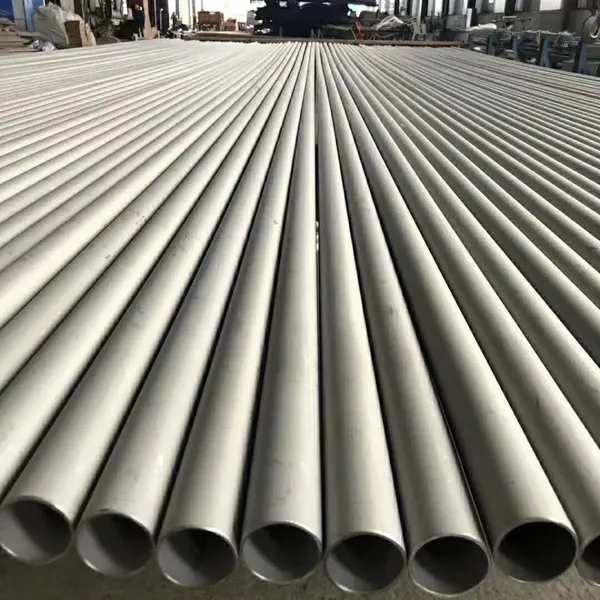 Read More
 -
Three types of commonly available food-grade stainless steel on the market
January 20, 2026The common food-grade stainless steel pipes are mainly composed of iron, chromium and carbon and other elements. Household stainle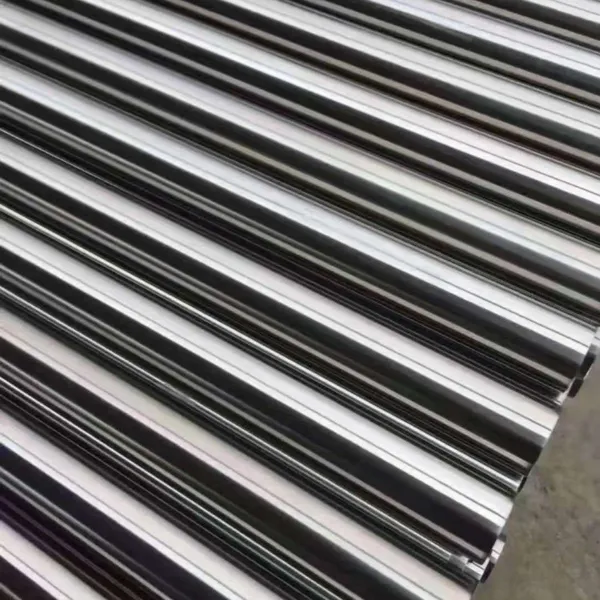 Read More
 -
What are the requirements for stainless steel welding pipe production equipment
January 20, 2026As is well known, stainless steel welded pipes have been widely used in various industries such as machinery, chemical engineering Read More

Contact Us
Recommended Products
-
 Stainless Steel Elbow Welded Elbow 45/90/180-degree Seamless Pressed Elbow Long Radius Elbow Short Radius Elbow WholesaleNegotiableMOQ: 1 Piece
 -
316L/1.4405 Seamless Stainless Steel PipeNegotiableMOQ: 2 Meters
-
310s 440 Seamless Sanitary Piping Price 321 904l 201 20 Inch Seamless Steel Pipe A554 Stainless Steel PipeNegotiableMOQ: 1 Piece
-
China Brand ZZ Wholesale 304L 316 316L Welded Austenitic Piping Stainless Steel Pipe SupplierNegotiableMOQ: 2 Meters
-
304/304L/316/409/410/904L/2205/2507/310H Premium Stainless Steel Sheets Supplier Custom Sizes & FinishesUS$ 1.72MOQ: 1 Ton
-
Stainless Steel ASME B16.9 Sch 45 90 Degree Pipe Fittings ElbowUS$ 8MOQ: 1 Piece
-
China Brand Zz 304L 316/316L GB En JIS Standard Thin Wall Welded Stainless Steel Water Pipe/TubeNegotiableMOQ: 2 Meters
-
BA 4 Inch 6 Inch 8 Inch 201 304 304L 316 316L Welded Seamless Stainless Steel PipeNegotiableMOQ: 2 Meters
-
ASME B36.19M-2004 SCH40S Stainless Steel Pipe - Complies With EU 3.1 CertificationUS$ 1 - 650MOQ: 1 Piece
-
Factory TP309/TP309S/TP309H (UNS30900) Seamless Stainless Steel Pipe and Tube for Boiler BafflesUS$ 8MOQ: 200 Kilograms
-
TP347/TP347H/1.4961/S34709 Seamless Stainless Steel Pipe for UseNegotiableMOQ: 2 Meters
-
China 304 316 Stainless Steel Sanitary Welded Tube Food Grade Sanitary Grade Welded Pipe PolishingNegotiableMOQ: 1 Piece
-
China Manufacture Stainless Steel 316L Ba Seamless Welded Steel Pipe TubesUS$ 1760 - 1860MOQ: 5 Tons
-
316L/1.4405 Seamless Stainless Steel PipeNegotiableMOQ: 2 Meters
-
Stainless Steel Globe Valve – High Durability & Corrosion ResistanceNegotiableMOQ: 1 Piece
-
1.4529 Stainless Steel Flat Plate for Chemical Processing EquipmentUS$ 25 - 35MOQ: 1 Kilogram
-
Color Coated Steel Panels for Warehouse Partition Walls (Fireproof Grade)US$ 1 - 1.2MOQ: 50 Kilograms
-
Custom Width (600mm-1250mm) Colored Steel Coil With Scratch ResistanceUS$ 1 - 1.2MOQ: 50 Kilograms
-
0.5mm-3.0mm Colored Coated Steel Sheet With PVDF/Polyester CoatingUS$ 1 - 1.2MOQ: 50 Kilograms
-
JIS G 3322 Compliant Colored Coils With Third-Party Inspection ReportUS$ 1 - 1.2MOQ: 50 Kilograms