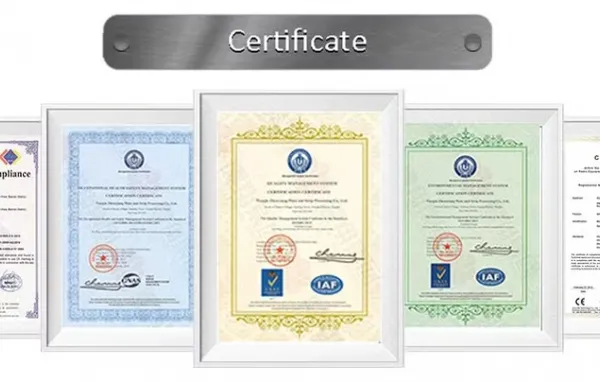

 Business License

How to ensure the service life of stainless steel pipes in the gas pipelines of medical laboratories
In the gas pipeline system of medical laboratories, the service life of stainless steel pipes is influenced by various factors such as material selection, processing technology, installation quality and daily maintenance. From the perspective of full-cycle management, the following are key measures to ensure the service life:
1. Source control: Material and processing technology optimization
1.1 Strict material selection and certification
2. High-precision surface treatment
The inner wall is treated with electrolytic polishing (EP) instead of mechanical polishing. The surface roughness Ra is ≤ 0.4 μm (≤ 0.2 μm for high-purity gas pipelines), reducing the adsorption of impurities and the growth of bacteria in the gas;
After polishing, a nitric acid passivation treatment is carried out to form a Cr₂O₃ passivation film with a thickness of 5-10 nm. The passivation effect is verified through the blue spot test (no blue spots indicate complete passivation).
3. Cleanliness control before leaving the factory
The pipelines need to undergo ultrasonic degreasing cleaning (using ethanol or acetone as the solvent), and then be purged with high-purity nitrogen gas (with a purity of ≥ 99.99%) to ensure that there are no visible particles on the inner walls;
The packaging uses vacuum sealing + moisture-proof paper to prevent dust and moisture from contaminating the inner walls during transportation.
II. Installation Phase: Eliminate Human Damage and Hidden Hazards
1. Standardization of Welding Process
Use automatic TIG rail welding. During welding, pure argon gas (flow rate 5-10L/min) is introduced into the pipe to protect the inner wall from oxidation and discoloration (the oxide layer will accelerate corrosion);
Each weld seam must undergo 100% helium mass spectrometry leak detection (leakage rate ≤ 1×10⁻¹⁰ Pa・m³/s) and X-ray flaw detection to eliminate false welding, pores, and other defects.
2. Installation details: The anti-corrosion pipeline supports are made of stainless steel. When in contact with carbon steel supports, a PTFE isolation pad should be added to prevent electrochemical corrosion.
The installation slope is controlled within 0.5% to 1%. Stainless steel drain valves are set at the concentrated areas of condensate water to prevent acidic condensate (such as carbonic acid formed when CO₂ dissolves in water) from remaining for a long time and corroding the inner walls.
3. Special treatment of oxygen pipelines
All pipelines and valves in contact with oxygen must undergo degreasing certification (using white cloth to wipe and ensuring no oil residue), and tools containing oil must not be used for installation to avoid explosion risks and damage to the passivation film caused by oil.
III. Operation and Maintenance: Dynamic Monitoring and Preventive Maintenance
1. Regular Leak Detection
Use a helium mass spectrometer leak detector to conduct quarterly inspections at welds and joints, with particular attention to stress concentration areas such as valves, elbows, and three-way fittings;
For oxygen pipelines, monthly inspections of sealing performance are carried out using the soap water coating method. Any bubbles detected should be marked for repair immediately.
2. Monitoring of gas purity and corrosive media
Online monitoring of the dew point (≤ -40℃) and oxygen content (≤ 1 ppm) of high-purity gases (such as N₂, Ar), to prevent internal wall corrosion caused by water vapor and oxygen;
When transporting corrosive gases (such as Cl₂, SO₂), a corrosion sensor is installed at the end of the pipeline to monitor the gas concentration in real time. If the concentration exceeds the limit, the ventilation system will be activated in a manner.
3. Inner Wall Cleaning and Passivation Repair
Every year, high-purity nitrogen gas (containing 0.1% nitric acid solution) is used for cyclic purging to passivate and repair the slightly damaged passivation film;
If rust spots are found on the inner wall of the pipeline, it is necessary to dismantle the section and then perform electrolytic polishing and passivation. In severe cases, the pipeline segment needs to be replaced.
IV. Environmental and System Design Optimization
1. Laboratory Environmental Control
Maintain the humidity in the laboratory at ≤ 60% RH to prevent condensation of humid air on the outer walls of the pipes. If there is acid mist (such as the volatilization of hydrochloric acid), enhance ventilation or apply corrosion-resistant coatings (such as Teflon) to the outer walls of the pipes.
2. System Redundancy and Segmented Control
The critical gas pipelines (such as medical oxygen) are designed with dual backup systems to facilitate switching during single-line maintenance;
Cut-off valves are set according to functional areas, allowing for isolation and maintenance of local pipelines in case of damage, thus avoiding the entire system being shut down.
3. Anti-static and Grounding Design
When transporting flammable gases (such as H₂), the pipeline needs to be grounded every 100 meters (grounding resistance ≤ 4Ω). Copper braided strips are used to connect at the flange joints to prevent the accumulation of static electricity from breaking through the passivation film.
V. Special Gas Specific Measures
High-purity gas
Life assurance key points: Every six months, use a particle counter to detect internal wall particles (particles larger than 20.5um should be ≤ 100 per liter), to prevent impurities from wearing away the passivation film;
Corrosive gases
Key points for life assurance: Use 316L + passivation + Teflon inner lining pipes, and adopt bellows seal type for valves to reduce medium contact leakage;
Medical oxygen
Key points for life cycle protection: Do not lay together with oil-based or flammable gas pipelines. Regularly disinfect with ozone (concentration ≤ 0.3 ppm) to prevent biological contamination;
Inert gases
Key points for life cycle protection: Pay close attention to the aging of the sealing gaskets at the pipe connections (PTFE gaskets are recommended to be replaced every 3 years), and prevent moisture from seeping in from the outside.
VI. Standardized Management and Personnel Training
1. Establish a Full Life Cycle Archive
Record the material batch number, welding date, inspection report, and maintenance record for each section of the pipeline. Implement traceability management through QR code identification;
Based on GB 50751 "Technical Specifications for Medical Gas Engineering", formulate a lifespan assessment standard. Pipelines that have exceeded 15 years of service need to undergo comprehensive flaw detection testing.
2. Operator Training
Prohibit overpressure operation (working pressure ≤ 80% of design pressure). Regularly conduct training on emergency handling of pipeline leaks (such as using special tapes for temporary plugging);
Maintenance personnel need to master the surface repair technology for stainless steel (such as the use of local electrolytic polishing equipment) to avoid secondary damage caused by non-professional operations.
Summary
The service life of stainless steel pipes in medical laboratories (typically 10-15 years) needs to be controlled throughout the entire process of "material - process - installation - maintenance": based on high-purity corrosion-resistant materials, combined with high-precision surface treatment and defect-free welding, along with environmental adaptation design and dynamic monitoring, ultimately achieving long-term operation of the system with low maintenance costs. For critical medical gases (such as oxygen and nitrous oxide), it is recommended to entrust a third-party institution to conduct a comprehensive non-destructive testing + material aging assessment every 5 years, and replace potential risky sections in advance. How to ensure the service life of stainless steel pipes in medical laboratory gas pipelines?
In the gas pipeline system of medical laboratories, the service life of stainless steel pipes is affected by various factors such as material selection, processing technology, installation quality and daily maintenance. From the perspective of full-cycle management, the following are key measures to ensure the service life:
1. Source control: Material and processing technology optimization
1. Strict material selection and certification
Preferentially use 316L stainless steel (containing Mo element, resistant to chloride ion corrosion), and avoid using 304L (slightly weaker corrosion resistance) when transporting high-purity gases or corrosive gases;
Require suppliers to provide intergranular corrosion test reports (such as ASTM A262 E method) and chemical composition analysis certificates to ensure that the carbon content is ≤ 0.03% and sulfur and phosphorus content is ≤ 0.03%, and eliminate inferior recycled materials.
2. High-precision surface treatment
The inner wall is treated with electrolytic polishing (EP) instead of mechanical polishing. The surface roughness Ra is ≤ 0.4 μm (≤ 0.2 μm for high-purity gas pipelines), reducing the adsorption of impurities and the growth of bacteria in the gas;
After polishing, a nitric acid passivation treatment is carried out to form a Cr₂O₃ passivation film with a thickness of 5-10 nm. The passivation effect is verified through the blue spot test (no blue spots indicate complete passivation).
3. Cleanliness control before leaving the factory
The pipelines need to undergo ultrasonic degreasing cleaning (with solvent being ethanol or acetone), and then be blown with high-purity nitrogen (purity ≥ 99.99%) to ensure there are no visible particles on the inner walls;
The packaging uses vacuum sealing + moisture-proof paper to prevent dust and moisture from contaminating the inner walls during transportation.
II. Installation Phase: Eliminate Human Damage and Hidden Hazards
1. Standardization of Welding Process
Use automatic TIG rail welding. During welding, pure argon gas (flow rate 5-10L/min) is introduced into the pipe to protect the inner wall from oxidation and discoloration (the oxide layer will accelerate corrosion);
Each weld seam must undergo 100% helium mass spectrometry leak testing (leakage rate ≤ 1×10⁻¹⁰ Pa・m³/s) and X-ray flaw detection to eliminate false welding, pores, and other defects.
2. Installation details: The anti-corrosion pipeline supports are made of stainless steel. When in contact with carbon steel supports, a PTFE isolation pad needs to be added to prevent electrochemical corrosion.
The installation slope is controlled within 0.5% to 1%. Stainless steel drain valves are set at the concentrated areas of condensate water to prevent acidic condensate (such as carbonic acid formed when CO₂ dissolves in water) from remaining for a long time and corroding the inner walls.
3. Special treatment of oxygen pipelines
All pipelines and valves in contact with oxygen must undergo degreasing certification (using white cloth to wipe and ensuring no oil residue), and tools containing oil must not be used for installation to avoid explosion risks and damage to the passivation film caused by oil.
III. Operation and Maintenance: Dynamic Monitoring and Preventive Maintenance
1. Regular Leak Detection
Use a helium mass spectrometer leak detector to conduct quarterly inspections at welds and joints, with particular attention to stress concentration areas such as valves, elbows, and three-way fittings;
For oxygen pipelines, monthly inspections of sealing performance are carried out using the soap water coating method. Any bubbles detected should be marked for repair immediately.
2. Monitoring of gas purity and corrosive media
Online monitoring of the dew point (≤ -40℃) and oxygen content (≤ 1 ppm) of high-purity gases (such as N₂, Ar), to prevent internal wall corrosion caused by water vapor and oxygen;
When transporting corrosive gases (such as Cl₂, SO₂), a corrosion sensor is installed at the end of the pipeline to monitor the gas concentration in real time. If the concentration exceeds the limit, the ventilation system will be activated in a manner.
3. Inner Wall Cleaning and Passivation Repair
Every year, high-purity nitrogen gas (containing 0.1% nitric acid solution) is used for cyclic purging to passivate and repair the slightly damaged passivation film;
If rust spots are found on the inner wall of the pipeline, it is necessary to dismantle the section and then perform electrolytic polishing and passivation. In severe cases, the pipeline segment needs to be replaced.
IV. Environmental and System Design Optimization
1. Laboratory Environmental Control
Maintain the humidity in the laboratory at ≤ 60% RH to prevent condensation of humid air on the outer walls of the pipes; if there is acid mist (such as the evaporation of hydrochloric acid), enhanced ventilation is required, or the outer walls of the pipes should be sprayed with corrosion-resistant coatings (such as Teflon).
2. System Redundancy and Segmented Control
The critical gas pipelines (such as medical oxygen) are designed with dual backup systems to facilitate switching during single-line maintenance;
Cut-off valves are set according to functional areas, allowing for isolation and maintenance of local pipelines in case of damage, thus avoiding the entire system being shut down.
3. Anti-static and Grounding Design
When transporting flammable gases (such as H₂), the pipeline needs to be grounded every 100 meters (grounding resistance ≤ 4Ω). At the flange connection points, copper braided straps are used for cross-connection to prevent the accumulation of static electricity from breaking through the passivation film.
V. Special Gas Specific Measures
High-purity gas
Life assurance key points: Every six months, use a particle counter to detect internal wall particles (particles larger than 20.5um should be ≤ 100 per liter), to prevent impurities from wearing away the passivation film;
Corrosive gases
Key points for life assurance: Use 316L + passivation + Teflon inner lining pipes, and adopt bellows seal type for valves to reduce medium contact leakage;
Medical oxygen
Key points for life cycle protection: Do not lay together with oil-based or flammable gas pipelines. Regularly disinfect with ozone (concentration ≤ 0.3 ppm) to prevent biological contamination;
Inert gases
Key points for life cycle protection: Pay close attention to the aging of the sealing gaskets at the pipe connections (PTFE gaskets are recommended to be replaced every 3 years), and prevent moisture from seeping in from the outside.
VI. Standardized Management and Personnel Training
1. Establish a full life cycle archive
Record the material batch number, welding date, inspection report, and maintenance record for each section of the pipeline. Implement traceability management through QR code identification;
Based on GB 50751 "Technical Specifications for Medical Gas Engineering", formulate a lifespan assessment standard. Pipelines that have exceeded 15 years of service need to undergo comprehensive flaw detection testing.
2. Operator Training
Prohibit overpressure operation (working pressure ≤ 80% of design pressure). Regularly conduct training on emergency handling of pipeline leaks (such as using special tapes for temporary plugging);
Maintenance personnel need to master the surface repair technology for stainless steel (such as the use of local electrolytic polishing equipment), to avoid secondary damage caused by non-professional operations.
Summary
The service life of stainless steel tubes in medical laboratories (typically 10-15 years) needs to be controlled throughout the entire process of "material - process - installation - maintenance": based on high-purity corrosion-resistant materials, combined with high-precision surface treatment and defect-free welding, along with environmental adaptation design and dynamic monitoring, ultimately achieving long-term operation of the system with low maintenance costs. For critical medical gases (such as oxygen and nitrous oxide), it is recommended to entrust a third-party institution to conduct a comprehensive non-destructive testing + material aging assessment every 5 years, and replace potential risky sections in advance.
Recently Posted
-
Does the stainless steel welded pipe have specific temperature requirements during the solution heat
January 20, 2026Solution heat treatment involves heating stainless steel to a high temperature and then rapidly cooling it to achieve an oversatur Read More
 -
Can stainless steel welded pipes be made into thick pipes
January 20, 2026With the improvement of high-quality welding technology and increasingly strict weld inspection, the application fields of s Read More
 -
Three types of commonly available food-grade stainless steel on the market
January 20, 2026The common food-grade stainless steel pipes are mainly composed of iron, chromium and carbon and other elements. Household stainle Read More
 -
What are the requirements for stainless steel welding pipe production equipment
January 20, 2026As is well known, stainless steel welded pipes have been widely used in various industries such as machinery, chemical engineering Read More

Contact Us
Recommended Products
-
 Stainless Steel Elbow Welded Elbow 45/90/180-degree Seamless Pressed Elbow Long Radius Elbow Short Radius Elbow WholesaleNegotiableMOQ: 1 Piece
 -
316L/1.4405 Seamless Stainless Steel PipeNegotiableMOQ: 2 Meters
-
310s 440 Seamless Sanitary Piping Price 321 904l 201 20 Inch Seamless Steel Pipe A554 Stainless Steel PipeNegotiableMOQ: 1 Piece
-
China Brand ZZ Wholesale 304L 316 316L Welded Austenitic Piping Stainless Steel Pipe SupplierNegotiableMOQ: 2 Meters
-
304/304L/316/409/410/904L/2205/2507/310H Premium Stainless Steel Sheets Supplier Custom Sizes & FinishesUS$ 1.72MOQ: 1 Ton
-
Stainless Steel ASME B16.9 Sch 45 90 Degree Pipe Fittings ElbowUS$ 8MOQ: 1 Piece
-
China Brand Zz 304L 316/316L GB En JIS Standard Thin Wall Welded Stainless Steel Water Pipe/TubeNegotiableMOQ: 2 Meters
-
BA 4 Inch 6 Inch 8 Inch 201 304 304L 316 316L Welded Seamless Stainless Steel PipeNegotiableMOQ: 2 Meters
-
ASME B36.19M-2004 SCH40S Stainless Steel Pipe - Complies With EU 3.1 CertificationUS$ 1 - 650MOQ: 1 Piece
-
Factory TP309/TP309S/TP309H (UNS30900) Seamless Stainless Steel Pipe and Tube for Boiler BafflesUS$ 8MOQ: 200 Kilograms
-
TP347/TP347H/1.4961/S34709 Seamless Stainless Steel Pipe for UseNegotiableMOQ: 2 Meters
-
China 304 316 Stainless Steel Sanitary Welded Tube Food Grade Sanitary Grade Welded Pipe PolishingNegotiableMOQ: 1 Piece
-
China Manufacture Stainless Steel 316L Ba Seamless Welded Steel Pipe TubesUS$ 1760 - 1860MOQ: 5 Tons
-
316L/1.4405 Seamless Stainless Steel PipeNegotiableMOQ: 2 Meters
-
Stainless Steel Globe Valve – High Durability & Corrosion ResistanceNegotiableMOQ: 1 Piece
-
World's Most Affordable Color-Coated Steel Sheets - 0.3mm to 3mm Thickness - Mill Test Report IncludedUS$ 1102MOQ: 10 Kilograms
-
Color-Coated Steel Sheets With 15-Year Fade Warranty - JIS G 3322 Standard CompliantUS$ 1102MOQ: 10 Kilograms
-
Prefab Building Material - 0.4mm Color-Coated Corrugated Sheets - 100,000㎡ Monthly OutputUS$ 1102MOQ: 10 Kilograms
-
Industrial-Grade Color-Coated Sheets - 150-250g/m² Zinc Coating - Weather & UV ResistantUS$ 1102MOQ: 10 Kilograms
-
Factory-Direct Color-Coated Steel Plates - PVDF/Polyester Coating - 1220mm Standard WidthUS$ 1102MOQ: 10 Kilograms