
 Business License

How to determine the quality of stainless steel heat exchange tubes or stainless steel fluid tubes
To assess the quality of stainless steel heat exchange tubes or stainless steel fluid tubes, a comprehensive evaluation from multiple dimensions such as materials, processes, performance, and testing is necessary. The specific methods are as follows:
1. Material Composition Testing
1. Material Certification
The supplier is required to provide a material certificate (such as furnace number, chemical composition analysis report), and verify whether it complies with the target standards (such as GB/T 14976, ASTM A213, JIS G3463, etc.).
The key points to focus on include the content of elements such as chromium (Cr), nickel (Ni), and molybdenum (Mo) (for example, for 304, Cr should be ≥18% and Ni should be ≥8%; for 316L, Mo should be ≥2.0%). Also, check whether the impurities (C, S, P) exceed the standard. Avoid using recycled materials or inferior pipe materials with inconsistent composition.
The authenticity of the components can be quickly verified on-site using a spectrometer (such as a handheld X-ray fluorescence spectrometer).
2. Grain size and uniformity of structure
High-quality pipes have fine and uniform grains with no large grains or segregation (which can be observed through a metallographic microscope).
Special attention should be paid to the effect of solution treatment for the heat exchange tubes: Tubes that have not undergone sufficient solution treatment are prone to intergranular corrosion.
II. Manufacturing Process and Surface Quality
1. Visual Inspection
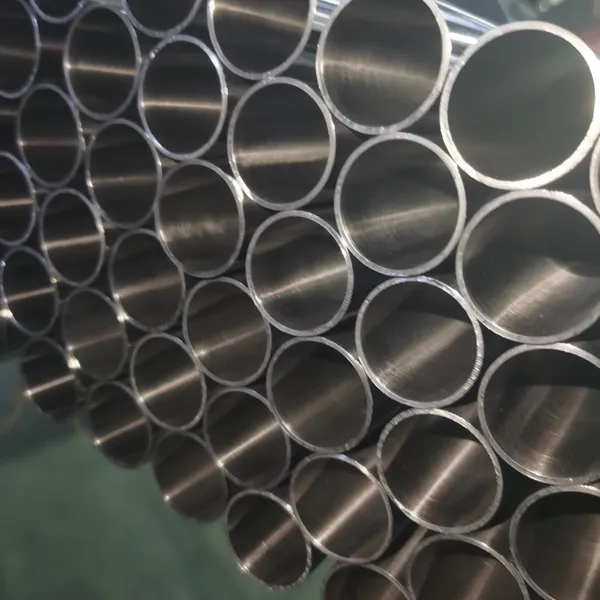
The surface should be smooth, free of cracks, folds, depressions, scratches or oxide layers (the roughness of the heat exchange tube surface affects the heat transfer efficiency, and defects on the fluid tube surface may become the starting point of corrosion).
The welded pipes need to be inspected to ensure that the weld seams are smooth, free of air holes, slag inclusions or weld spurs (which can be observed through visual inspection or with a magnifying glass).
2. Dimension Accuracy
Measure the outer diameter, wall thickness, and length to ensure they comply with the standard tolerances (for example, the tolerance for the outer diameter of heat exchange tubes as specified in GB/T 14976 is ±0.10mm to ±0.20mm).
Wall thickness uniformity: Use a wall thickness micrometer to measure multiple points to avoid local thinning that could lead to insufficient pressure resistance.
3. Forming Process
Seamless Tube: Check the surface finish after cold drawing / hot rolling to avoid internal cracks generated during the stretching process.
Welded pipe: Verify the welding process (such as TIG welding, laser welding). The weld seam area of the high-quality welded pipe has a strength close to that of the base material, and there is no significant difference in mechanical properties.
III. Mechanical Properties and Corrosion Resistance Testing
1. Mechanical Performance Test
Tensile Test: Determine the tensile strength (σb), yield strength (σ0.2), and elongation (δ). These values must comply with the standard requirements (for example, the tensile strength of 304 stainless steel at room temperature should be ≥ 520 MPa).
Compression / Expansion Test (for fluid pipes): This test assesses the pipe material's ability to resist cracking when deformed, particularly applicable in scenarios where the pipe needs to be bent or connected.
Impact test (for use in low-temperature environment): Measures the toughness of the pipe material at low temperatures to prevent brittle fractures.
2. Corrosion Resistance Test
Intergranular Corrosion Test (GB/T 4334): Applicable to austenitic stainless steels such as 304 and 316. It simulates the corrosion risk at sensitization temperatures (450 - 850℃) to determine if there is an intergranular corrosion tendency.
Pitting/Crevice Corrosion Test (such as ASTM G48): For environments containing Cl⁻ (such as seawater, chemical media), this test assesses the pipe material's resistance to localized corrosion (316L, due to its Mo content, has better corrosion resistance than 304).
Actual condition simulation test: Place the sample in the target medium (such as high temperature and high pressure, acidic / alkaline solutions), and observe the corrosion rate and surface changes.
IV. Non-destructive Testing and Functional Verification
1. Non-destructive Testing (NDT)
Hydrostatic Test: To test the pressure resistance and sealing performance of the pipe material (heating pipe is commonly used. The test pressure is usually 1.5 times the working pressure, and it is maintained for 30 minutes without leakage).
Eddy current testing (ET) / Ultrasonic testing (UT): Used to detect internal defects such as cracks, inclusions, and uneven wall thickness in pipe materials (particularly suitable for seamless pipes or high-demand scenarios).
Penetrant Testing (PT): For surface-opening defects (such as weld micro-cracks), it is determined by the color reaction of the penetrant liquid.
2. Functional Testing (for Heat Exchanger Tubes)
Heat Transfer Efficiency Test: Under simulated conditions (such as specific flow rate and temperature difference), measure the heat transfer coefficient (K value) of the tube material and compare it with the design value or industry standards.
Pressure drop test: Measures the pressure loss when the fluid passes through the pipe, and verifies whether the flow resistance meets the system requirements.
V. Certification and Qualification Review
1. Compliance Certification
For domestic products, they must comply with standards such as GB/T 14976 (Fluid Pipes) and GB/T 24593 (Heat Exchanger Pipes); for export products, they must meet international standards such as ASTM, ASME, and EN.
Special industries (such as chemical and nuclear power) require additional certifications (such as TSG D0001 Pressure Vessel Component Manufacturing License, ASME BPVC Section VIII, etc.).
2. Manufacturer qualifications
Evaluate the advanced nature of the production equipment (such as high-precision cold drawing machines, automatic welding lines), the quality control system (ISO 9001 certification), and the industry performance (whether there is experience in supplying similar projects).
Avoid choosing products from small workshops or unqualified manufacturers, as their process stability and testing capabilities are usually insufficient.
VI. Other Practical Tips
Weight Comparison: Under the same specifications, a significantly lighter weight may indicate insufficient wall thickness or a mismatch in material density (such as using a low-nickel material to pass off as 304).
Price reference: Products with prices significantly lower than the market average should be cautious of (the cost of stainless steel raw materials is transparent, and low prices often indicate potential quality issues).
Long-term usage feedback: Consult users in the same industry or review the manufacturer's after-sales records to understand the service life and failure cases of the pipe materials under actual working conditions.
Summary
High-quality stainless steel heat exchange tubes / fluid tubes must meet four core elements: component compliance, rigorous process, performance standards, and complete testing. It is recommended to adopt a combined approach of "material verification + process inspection + performance testing + qualification review", and based on specific usage scenarios (such as temperature, pressure, and corrosive nature of the medium), formulate a testing plan. In case of necessity, entrust a third-party testing institution for a comprehensive assessment to avoid safety risks or efficiency losses caused by quality issues.
Recently Posted
-
Does the stainless steel welded pipe have specific temperature requirements during the solution heat
January 20, 2026Solution heat treatment involves heating stainless steel to a high temperature and then rapidly cooling it to achieve an oversatur Read More
 -
Can stainless steel welded pipes be made into thick pipes
January 20, 2026With the improvement of high-quality welding technology and increasingly strict weld inspection, the application fields of s Read More
 -
Three types of commonly available food-grade stainless steel on the market
January 20, 2026The common food-grade stainless steel pipes are mainly composed of iron, chromium and carbon and other elements. Household stainle Read More
 -
What are the requirements for stainless steel welding pipe production equipment
January 20, 2026As is well known, stainless steel welded pipes have been widely used in various industries such as machinery, chemical engineering Read More

Contact Us
Recommended Products
-
 Stainless Steel Elbow Welded Elbow 45/90/180-degree Seamless Pressed Elbow Long Radius Elbow Short Radius Elbow WholesaleNegotiableMOQ: 1 Piece
 -
316L/1.4405 Seamless Stainless Steel PipeNegotiableMOQ: 2 Meters
-
310s 440 Seamless Sanitary Piping Price 321 904l 201 20 Inch Seamless Steel Pipe A554 Stainless Steel PipeNegotiableMOQ: 1 Piece
-
China Brand ZZ Wholesale 304L 316 316L Welded Austenitic Piping Stainless Steel Pipe SupplierNegotiableMOQ: 2 Meters
-
304/304L/316/409/410/904L/2205/2507/310H Premium Stainless Steel Sheets Supplier Custom Sizes & FinishesUS$ 1.72MOQ: 1 Ton
-
Stainless Steel ASME B16.9 Sch 45 90 Degree Pipe Fittings ElbowUS$ 8MOQ: 1 Piece
-
China Brand Zz 304L 316/316L GB En JIS Standard Thin Wall Welded Stainless Steel Water Pipe/TubeNegotiableMOQ: 2 Meters
-
BA 4 Inch 6 Inch 8 Inch 201 304 304L 316 316L Welded Seamless Stainless Steel PipeNegotiableMOQ: 2 Meters
-
ASME B36.19M-2004 SCH40S Stainless Steel Pipe - Complies With EU 3.1 CertificationUS$ 1 - 650MOQ: 1 Piece
-
Factory TP309/TP309S/TP309H (UNS30900) Seamless Stainless Steel Pipe and Tube for Boiler BafflesUS$ 8MOQ: 200 Kilograms
-
TP347/TP347H/1.4961/S34709 Seamless Stainless Steel Pipe for UseNegotiableMOQ: 2 Meters
-
China 304 316 Stainless Steel Sanitary Welded Tube Food Grade Sanitary Grade Welded Pipe PolishingNegotiableMOQ: 1 Piece
-
China Manufacture Stainless Steel 316L Ba Seamless Welded Steel Pipe TubesUS$ 1760 - 1860MOQ: 5 Tons
-
316L/1.4405 Seamless Stainless Steel PipeNegotiableMOQ: 2 Meters
-
Stainless Steel Globe Valve – High Durability & Corrosion ResistanceNegotiableMOQ: 1 Piece
-
1.4529 Stainless Steel Flat Plate for Chemical Processing EquipmentUS$ 25 - 35MOQ: 1 Kilogram
-
Color Coated Steel Panels for Warehouse Partition Walls (Fireproof Grade)US$ 1 - 1.2MOQ: 50 Kilograms
-
Custom Width (600mm-1250mm) Colored Steel Coil With Scratch ResistanceUS$ 1 - 1.2MOQ: 50 Kilograms
-
0.5mm-3.0mm Colored Coated Steel Sheet With PVDF/Polyester CoatingUS$ 1 - 1.2MOQ: 50 Kilograms
-
JIS G 3322 Compliant Colored Coils With Third-Party Inspection ReportUS$ 1 - 1.2MOQ: 50 Kilograms