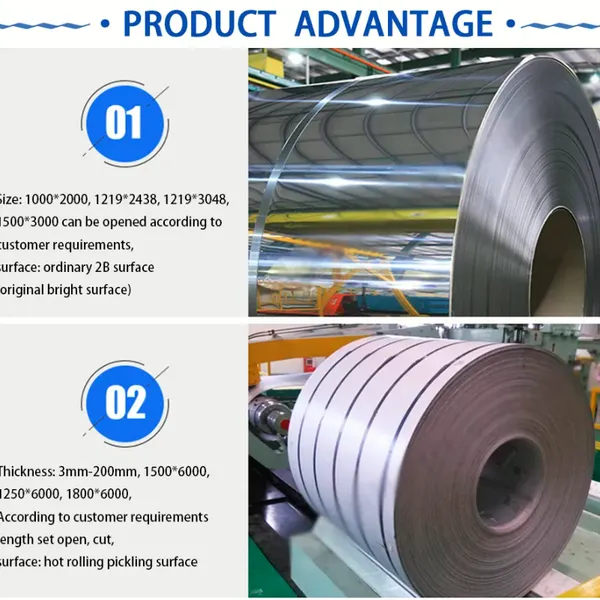

 Business License

The influence of austenitic stainless steel microstructure on mechanical properties
The austenitic stainless steels include the iron-chromium-nickel series or the iron-chromium-manganese series. Their mechanical properties exhibit stable and excellent performance within both high and low temperature ranges. There is no transformation point during solid solution heat treatment at 920 - 1150℃. The rapid cooling results in non-magnetic stable 301 (17 chromium - 7 nickel), which is the most prone to hardening. The processing hardening performance exhibited according to the steel type is determined by the stability of the austenite structure within the steel.
The stability of the austenite structure can be determined by a calculation formula that includes the crystalline grain size (GSN): Md30 = 551 - 462(Carbon + Nitrogen) - 92Si - 81Mn - 137Cr - 29(Nickel + Copper) - 18.5Mo - 68Nb - 14(ASTMG.S.N - 8.0) The Md30 value (the temperature at which 50% martensite is formed after 30% deformation) is smaller. Then the austenite microstructure becomes more stable, and the work hardening property is lower. This phenomenon is caused by the processing-induced anomaly. In terms of the microstructure, the face-centered cubic crystal form (γ) is subjected to cold processing and transforms into the body-centered cubic crystal form (α) to form martensite anomaly. This anomaly is also affected by the processing temperature and processing speed, indicating that the work hardening performance is influenced by processing conditions. Now, by ingeniously adjusting the processing temperature, the ultra-deep drawing that was previously impossible can be successfully carried out under certain temperature conditions.
During the processing of the material, the processing hardening coefficient (n value) is used as an indicator of processing performance. The maximum processing hardening coefficient for austenitic stainless steel 304 is 0.50, while that for ferritic series stainless steel 430 is only 0.22.
The representative steel type of the austenitic stainless steel, 304, belongs to the quasi-stable austenite series. After solution heat treatment, it has no magnetism. After processing at room temperature, it easily transforms into a martensitic structure and acquires magnetism. However, for 305 stainless steel, due to its relatively stable austenite microstructure, even after cold processing, there will be no transformation into martensite, and after processing, it remains non-magnetic. In practical applications, if the processing hardening characteristics of 301 are effectively utilized to transform it into a high-strength stainless steel, it can be widely used to manufacture springs or automotive components.
The austenitic stainless steel does not have the problems of low notch toughness or 475℃ brittleness that are common in the ferritic stainless steel. However, in the application environment of 600-800℃, it will precipitate the a phase or carbides. The precipitation of the a phase is related to its chemical composition, microstructure, and processing conditions. 304 stainless steel does not cause II-type embrittlement, but 309S or 310S stainless steels with high chromium and high nickel content may also precipitate the a phase during long-term heating at 600-800℃. Therefore, it is necessary to pay attention to its embrittlement tendency.
It should also be noted that during the processing of austenitic stainless steel, phenomena such as delayed cracking or fracture may occur during use. For stainless steels like 301 or 304 that undergo deep drawing and deep processing, if left at room temperature for a short period of time, severe cases may result in crack formation accompanied by sounds. This is actually a delayed rupture phenomenon. The cause of this is due to hydrogen, residual stress, and martensitic transformation. The solutions are to use the austenitic phase to stabilize the stainless steel, or to remove the residual stress through post-processing heat treatment and other methods.
Recently Posted
-
Does the stainless steel welded pipe have specific temperature requirements during the solution heat
January 20, 2026Solution heat treatment involves heating stainless steel to a high temperature and then rapidly cooling it to achieve an oversatur Read More
 -
Can stainless steel welded pipes be made into thick pipes
January 20, 2026With the improvement of high-quality welding technology and increasingly strict weld inspection, the application fields of s Read More
 -
Three types of commonly available food-grade stainless steel on the market
January 20, 2026The common food-grade stainless steel pipes are mainly composed of iron, chromium and carbon and other elements. Household stainle Read More
 -
What are the requirements for stainless steel welding pipe production equipment
January 20, 2026As is well known, stainless steel welded pipes have been widely used in various industries such as machinery, chemical engineering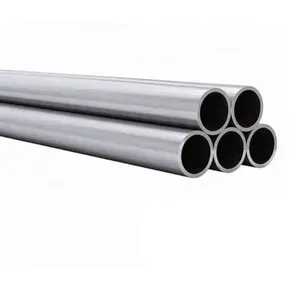 Read More

Contact Us
Recommended Products
-
 Stainless Steel Elbow Welded Elbow 45/90/180-degree Seamless Pressed Elbow Long Radius Elbow Short Radius Elbow WholesaleNegotiableMOQ: 1 Piece
 -
316L/1.4405 Seamless Stainless Steel PipeNegotiableMOQ: 2 Meters
-
310s 440 Seamless Sanitary Piping Price 321 904l 201 20 Inch Seamless Steel Pipe A554 Stainless Steel PipeNegotiableMOQ: 1 Piece
-
China Brand ZZ Wholesale 304L 316 316L Welded Austenitic Piping Stainless Steel Pipe SupplierNegotiableMOQ: 2 Meters
-
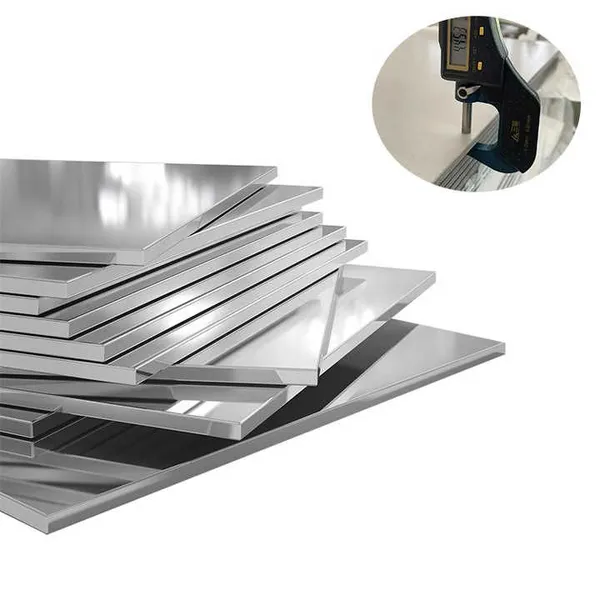
304/304L/316/409/410/904L/2205/2507/310H Premium Stainless Steel Sheets Supplier Custom Sizes & FinishesUS$ 1.72MOQ: 1 Ton
-
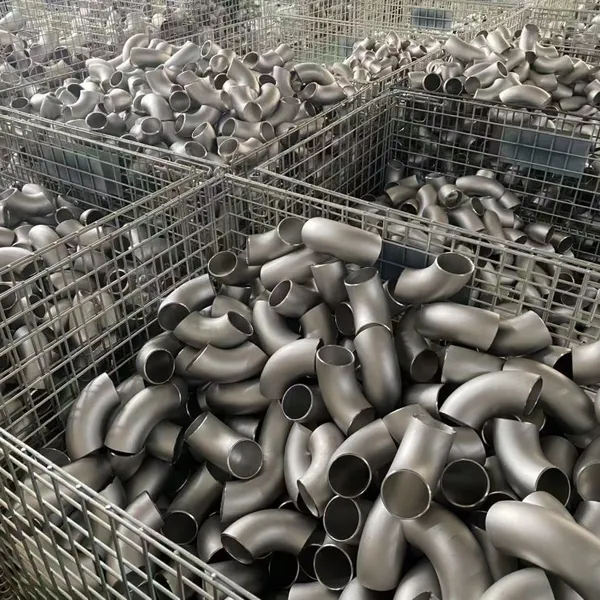
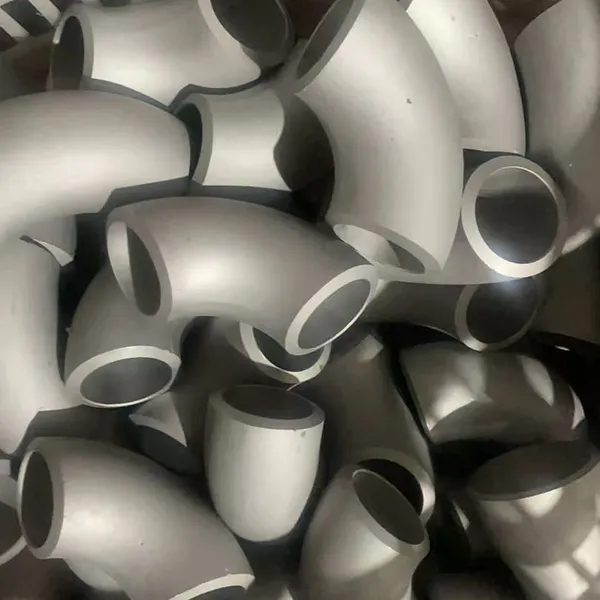
Stainless Steel ASME B16.9 Sch 45 90 Degree Pipe Fittings ElbowUS$ 8MOQ: 1 Piece
-
China Brand Zz 304L 316/316L GB En JIS Standard Thin Wall Welded Stainless Steel Water Pipe/TubeNegotiableMOQ: 2 Meters
-
BA 4 Inch 6 Inch 8 Inch 201 304 304L 316 316L Welded Seamless Stainless Steel PipeNegotiableMOQ: 2 Meters
-
ASME B36.19M-2004 SCH40S Stainless Steel Pipe - Complies With EU 3.1 CertificationUS$ 1 - 650MOQ: 1 Piece
-
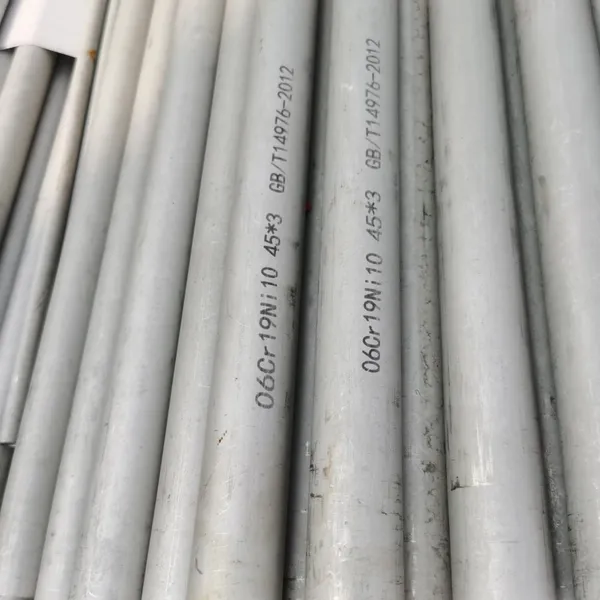
Factory TP309/TP309S/TP309H (UNS30900) Seamless Stainless Steel Pipe and Tube for Boiler BafflesUS$ 8MOQ: 200 Kilograms
-
TP347/TP347H/1.4961/S34709 Seamless Stainless Steel Pipe for UseNegotiableMOQ: 2 Meters
-
China 304 316 Stainless Steel Sanitary Welded Tube Food Grade Sanitary Grade Welded Pipe PolishingNegotiableMOQ: 1 Piece
-
China Manufacture Stainless Steel 316L Ba Seamless Welded Steel Pipe TubesUS$ 1760 - 1860MOQ: 5 Tons
-
316L/1.4405 Seamless Stainless Steel PipeNegotiableMOQ: 2 Meters
-
Stainless Steel Globe Valve – High Durability & Corrosion ResistanceNegotiableMOQ: 1 Piece
-
1.4529 Stainless Steel Flat Plate for Chemical Processing EquipmentUS$ 25 - 35MOQ: 1 Kilogram
-
Color Coated Steel Panels for Warehouse Partition Walls (Fireproof Grade)US$ 1 - 1.2MOQ: 50 Kilograms
-
Custom Width (600mm-1250mm) Colored Steel Coil With Scratch ResistanceUS$ 1 - 1.2MOQ: 50 Kilograms
-
0.5mm-3.0mm Colored Coated Steel Sheet With PVDF/Polyester CoatingUS$ 1 - 1.2MOQ: 50 Kilograms
-
JIS G 3322 Compliant Colored Coils With Third-Party Inspection ReportUS$ 1 - 1.2MOQ: 50 Kilograms