
 Business License

What are the precautions for storing stainless steel pipes
Do you think that stainless steel is like its name suggests and won't rust? Actually, stainless steel doesn't completely avoid rusting; it's just more resistant to corrosion and less prone to rust. If it is not stored or handled properly, it can still rust. So, how should we store it to ensure it lasts longer? Here are some knowledge about the storage of stainless steel for you!
Here are some knowledge about the storage of stainless steel:
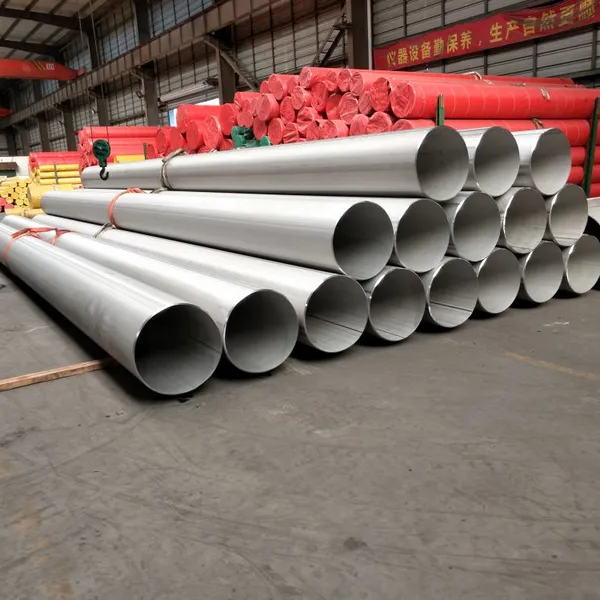
1. Select an appropriate site and warehouse for storing stainless steel pipes: The site or warehouse for storing stainless steel pipes should be chosen in a clean and dry area with good drainage, far away from factories or mines that produce harmful gases or dust. On the site, weeds and all kinds of debris should be removed to keep the steel clean; in the warehouse, materials that are corrosive to stainless steel pipes such as acids, alkalis, salts, and cement should not be stacked together; different varieties of stainless steel pipes should be stored separately to prevent confusion and corrosion contact; large steel sections, rails, steel plates, large-diameter pipes, forgings, etc. can be stored outdoors; medium and small-sized steel sections, wire rods, reinforcing bars, medium-diameter pipes, steel wires and steel wire ropes, etc., can be stored in a well-ventilated material shed, but must be padded on the ground and in the warehouse; some small-sized steel materials, thin steel plates, steel belts, silicon steel sheets, small-diameter or thin-walled stainless steel pipes, various cold-rolled and cold-drawn steel materials, as well as expensive and easily corroded metal products, can be stored in the warehouse; the warehouse should be selected based on geographical conditions, and generally, an ordinary closed-type warehouse is adopted, that is, a warehouse with a roof, walls, doors and windows that are tightly sealed, and equipped with ventilation devices; the warehouse requires attention to ventilation on sunny days and closing to prevent moisture on rainy days, and should always maintain an appropriate storage environment.
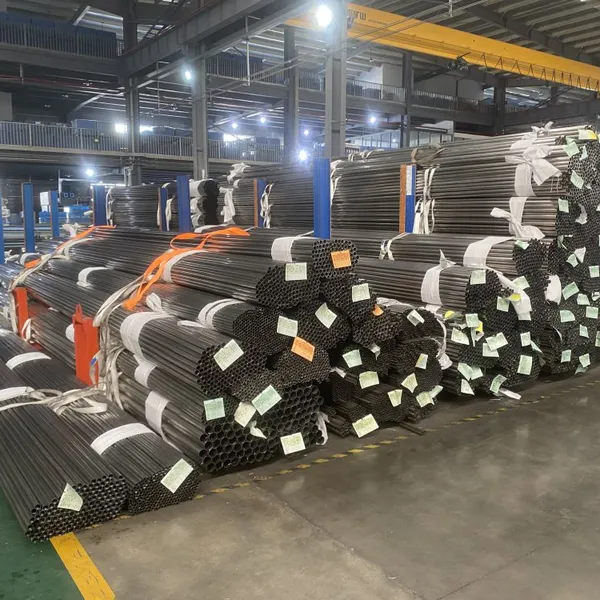
2. Proper stacking and first-in-first-out principle: The principle of stacking requires that, under the condition of stable stacking and ensuring safety, materials should be stacked by type and specification. Different types of materials should be stacked separately to prevent confusion and mutual corrosion; it is prohibited to store items that are corrosive to steel near the stack position; the bottom of the stack should be elevated, firm and flat to prevent materials from getting damp or deformed; the same type of materials should be stacked separately according to the order of entry into the warehouse to facilitate the implementation of the first-in-first-out principle; for steel sections stored outdoors, there must be wooden pads or stone slabs at the bottom of the stack, and the stack surface should be slightly inclined to facilitate drainage, and attention should be paid to placing the materials straight to prevent bending and deformation; the stacking height should not exceed 1.2m for manual operation and 1.5m for mechanical operation, and the width of the stack should not exceed 2.5m; there should be a certain passage between stacks, with the inspection passage being 0.5m, and the access passage depends on the size of the materials and the transportation machinery, generally ranging from 1.5 to 2.0m; the bottom of the stack should be elevated; if the warehouse floor is an exposed cement surface, it can be elevated by 0.1m; if it is a muddy surface, it should be elevated by 0.2 to 0.5m; if it is an open-air area, the cement surface should be elevated by 0.3 to 0.5m, and the sandy soil surface should be elevated by 0.5 to 0.7m; for angle steel and channel steel stored outdoors, they should be placed upside down, with the opening facing down, I-shaped steel should be placed upright, the I-shaped surface of the steel cannot face upwards to avoid water accumulation and rusting.
3. Packaging and protective layers for the materials
The anti-corrosion agents or other coatings and packaging applied to the stainless steel pipes before leaving the factory are repeated measures to prevent material corrosion. During transportation and handling, care must be taken to protect the materials and prevent any damage, which can extend the storage period of the materials.
4. Maintain the cleanliness of the warehouse and strengthen material preservation: When storing steel pipes, be sure to prevent them from getting wet or being contaminated with impurities. For those that have been exposed to rain or contaminated, different methods should be used to clean them according to their properties. For example, for hard materials, a steel wire brush can be used; for soft materials, cloth or cotton can be employed. After the stainless steel pipes are stored, regular inspections should be conducted. If there is rust, the rust layer should be removed. Generally, after cleaning the surface of ordinary steel, no oil needs to be applied. However, for high-quality steel, alloy thin plates, thin-walled stainless steel pipes, and alloy steel pipes, after desalination, both the inner and outer surfaces need to be coated with anti-rust oil before storage. For stainless steel pipes with severe rust, after rust removal, they should not be stored for a long time but should be used as soon as possible.
Recently Posted
-
Does the stainless steel welded pipe have specific temperature requirements during the solution heat
January 20, 2026Solution heat treatment involves heating stainless steel to a high temperature and then rapidly cooling it to achieve an oversatur Read More
 -
Can stainless steel welded pipes be made into thick pipes
January 20, 2026With the improvement of high-quality welding technology and increasingly strict weld inspection, the application fields of s Read More
 -
Three types of commonly available food-grade stainless steel on the market
January 20, 2026The common food-grade stainless steel pipes are mainly composed of iron, chromium and carbon and other elements. Household stainle Read More
 -
What are the requirements for stainless steel welding pipe production equipment
January 20, 2026As is well known, stainless steel welded pipes have been widely used in various industries such as machinery, chemical engineering Read More

Contact Us
Recommended Products
-
 Stainless Steel Elbow Welded Elbow 45/90/180-degree Seamless Pressed Elbow Long Radius Elbow Short Radius Elbow WholesaleNegotiableMOQ: 1 Piece
 -
316L/1.4405 Seamless Stainless Steel PipeNegotiableMOQ: 2 Meters
-
310s 440 Seamless Sanitary Piping Price 321 904l 201 20 Inch Seamless Steel Pipe A554 Stainless Steel PipeNegotiableMOQ: 1 Piece
-
China Brand ZZ Wholesale 304L 316 316L Welded Austenitic Piping Stainless Steel Pipe SupplierNegotiableMOQ: 2 Meters
-
304/304L/316/409/410/904L/2205/2507/310H Premium Stainless Steel Sheets Supplier Custom Sizes & FinishesUS$ 1.72MOQ: 1 Ton
-
Stainless Steel ASME B16.9 Sch 45 90 Degree Pipe Fittings ElbowUS$ 8MOQ: 1 Piece
-
China Brand Zz 304L 316/316L GB En JIS Standard Thin Wall Welded Stainless Steel Water Pipe/TubeNegotiableMOQ: 2 Meters
-
BA 4 Inch 6 Inch 8 Inch 201 304 304L 316 316L Welded Seamless Stainless Steel PipeNegotiableMOQ: 2 Meters
-
ASME B36.19M-2004 SCH40S Stainless Steel Pipe - Complies With EU 3.1 CertificationUS$ 1 - 650MOQ: 1 Piece
-
Factory TP309/TP309S/TP309H (UNS30900) Seamless Stainless Steel Pipe and Tube for Boiler BafflesUS$ 8MOQ: 200 Kilograms
-
TP347/TP347H/1.4961/S34709 Seamless Stainless Steel Pipe for UseNegotiableMOQ: 2 Meters
-
China 304 316 Stainless Steel Sanitary Welded Tube Food Grade Sanitary Grade Welded Pipe PolishingNegotiableMOQ: 1 Piece
-
China Manufacture Stainless Steel 316L Ba Seamless Welded Steel Pipe TubesUS$ 1760 - 1860MOQ: 5 Tons
-
316L/1.4405 Seamless Stainless Steel PipeNegotiableMOQ: 2 Meters
-
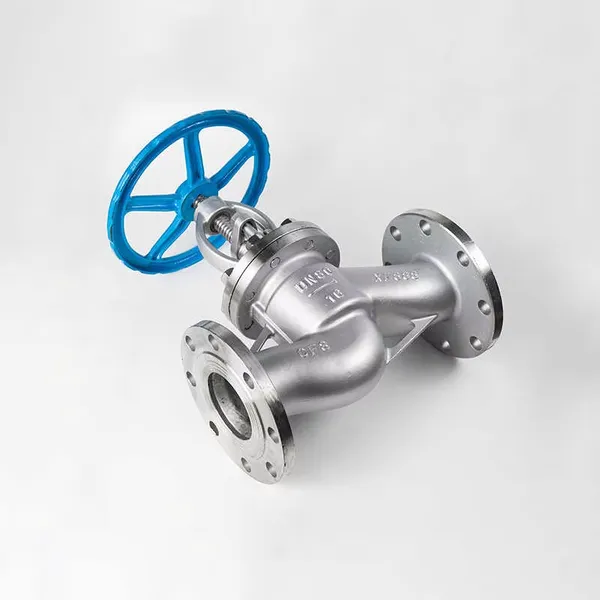
Stainless Steel Globe Valve – High Durability & Corrosion ResistanceNegotiableMOQ: 1 Piece
-
1.4529 Stainless Steel Flat Plate for Chemical Processing EquipmentUS$ 25 - 35MOQ: 1 Kilogram
-
Color Coated Steel Panels for Warehouse Partition Walls (Fireproof Grade)US$ 1 - 1.2MOQ: 50 Kilograms
-
Custom Width (600mm-1250mm) Colored Steel Coil With Scratch ResistanceUS$ 1 - 1.2MOQ: 50 Kilograms
-
0.5mm-3.0mm Colored Coated Steel Sheet With PVDF/Polyester CoatingUS$ 1 - 1.2MOQ: 50 Kilograms
-
JIS G 3322 Compliant Colored Coils With Third-Party Inspection ReportUS$ 1 - 1.2MOQ: 50 Kilograms