
 Business License

What requirements do medical oxygen pipelines have for degreased stainless steel pipes?
The requirements for medical oxygen pipelines on degreased stainless steel tubes are extremely strict. They must meet the standards of safety, cleanliness, corrosion resistance and medical application. The specific requirements are as follows:
I. Material and Specification Requirements
1. Material Standards
Preferred materials are 316L stainless steel (containing molybdenum, with stronger corrosion resistance) or 304L stainless steel. Avoid using ordinary 304 stainless steel as its high carbon content may cause intergranular corrosion during welding.
The material must meet medical grade standards, such as ASTM A270 (medical grade stainless steel tubes) in the United States or GB/T 14976 (fluid transportation stainless steel seamless tubes) in China, ensuring no heavy metal leaching.
2. Specification Requirements
The pipe diameter is designed based on the oxygen demand of the hospital (commonly DN15-DN100). The wall thickness must meet the pressure requirements (usually working pressure 0.2-0.8 MPa), and the inner wall should be smooth (roughness Ra ≤ 0.8 μm) to reduce oxygen flow resistance and impurity deposition.
II. Decontamination Standards
1. Decontamination Process Requirements
Decontamination Method: Use solvent decontamination (such as industrial alcohol, trichloroethylene) or alkaline decontamination. Chlorinated solvents must not be used (as they may corrode stainless steel or leave harmful residues).
Decontamination Procedure
Pre-treatment: Remove visible oil stains, welding slag, etc. from the surface;
Soak in decontaminant or perform cyclic cleaning to ensure complete contact of the pipe inner wall with the decontaminant;
High-pressure pure water rinsing (conductivity ≤ 10 μS/cm), removing residual decontaminant;
Drying Treatment: Use high-purity nitrogen gas (purity ≥ 99.99%) to blow, avoiding residual moisture that may breed microorganisms.
2. Cleanliness Inspection
Oil Residue: Detected by ultraviolet light (no fluorescence reaction on the surface) or by weight method (residue ≤ 50mg/m²).
Particle Pollutants: Inspected by visual inspection or particle counter to ensure there are no visible particles on the pipe inner wall (≥ 5μm particles ≤ 10 per L).
III. Safety and Pressure Resistance Requirements
1. Pressure Resistance and Leakage Test
Pressure Test: A water pressure test is required (1.5 times the working pressure, such as a 0.8 MPa pipeline needs to be tested at 1.2 MPa), maintaining pressure for 30 minutes without leakage; an air pressure test (1.15 times the working pressure) should use high-purity nitrogen to prevent contamination from oil mist in the air.
Air Tightness Test: Use helium mass spectrometry leak detection, with a leakage rate of ≤ 1×10⁻⁹ Pa·m³/s to avoid oxygen leakage that could cause safety hazards (such as possible explosion in the presence of open flames).
2. Anti-static and Grounding
The pipeline needs to be continuously grounded for static electricity (grounding resistance ≤ 10 Ω) to prevent static sparks caused by the high-speed flow of oxygen, and use flange bonding (conductive gaskets) to ensure the conduction of electric charge.
IV. Installation and Welding Requirements
1. Welding Process
Use automatic orbital welding (TIG welding) to avoid the formation of welding slag and oxide scale from manual welding. During welding, high-purity argon gas (purity ≥ 99.99%) is filled in the pipe to protect the weld (to prevent oxidation of the weld seam (the oxide layer may fall off and contaminate the oxygen)).
The weld seam needs to undergo acid washing and passivation treatment to remove the surface oxide film, enhancing corrosion resistance, and the roughness Ra of the weld seam should be ≤ 1.6 μm.
2. Installation Environment Control
The installation process should be carried out in a clean environment (such as a clean workshop or a temporary dust-proof shed). Operators should wear dust-free suits, and tools should be degreased and cleaned to avoid secondary pollution.
The pipe supports should be made of stainless steel to avoid rusting of carbon steel supports and contamination of the pipes. A polytetrafluoroethylene gasket should be used to isolate the support from the pipe to prevent electrochemical corrosion.
V. Hygiene and Certification Requirements
1. Microbial Control
After degreasing, the pipelines need to undergo microbial testing (such as the total bacterial colony count ≤ 100 CFU/m²) to prevent bacterial growth from affecting the purity of medical oxygen.
2. Industry Certification
It is necessary to obtain ISO 13485 (Medical Device Quality Management System) and GMP (Good Manufacturing Practice for Pharmaceuticals) certifications. In some countries, it is also required to comply with FDA (U.S. Food and Drug Administration) or CE (European Union Certification) standards.
VI. Maintenance and Testing Requirements
1. Regular Cleaning
During operation, the pipelines should be purged with high-purity nitrogen gas regularly to remove possible deposits. A degreasing recheck (such as the detection of grease residue) should be conducted every 1-2 years.
2. Condition Monitoring
Install pressure sensors and temperature sensors to monitor the operating condition of the pipelines in real time, to avoid material performance degradation due to overpressure or high temperature.
Summary
For medical oxygen pipelines, the use of degreased stainless steel tubes requires strict control throughout the entire process, including material selection, degreasing process, welding and installation, as well as certification and testing. The core objective is to ensure the purity of oxygen (≥99.5%), prevent safety risks caused by grease, and meet the hygiene standards of the medical industry. Any oversight at any stage could lead to oxygen contamination or safety incidents, so it is necessary to strictly follow relevant norms (such as the "Medical Gas Engineering Technical Specifications" GB 50751 of China).
Recently Posted
-
Does the stainless steel welded pipe have specific temperature requirements during the solution heat
January 20, 2026Solution heat treatment involves heating stainless steel to a high temperature and then rapidly cooling it to achieve an oversatur Read More
 -
Can stainless steel welded pipes be made into thick pipes
January 20, 2026With the improvement of high-quality welding technology and increasingly strict weld inspection, the application fields of s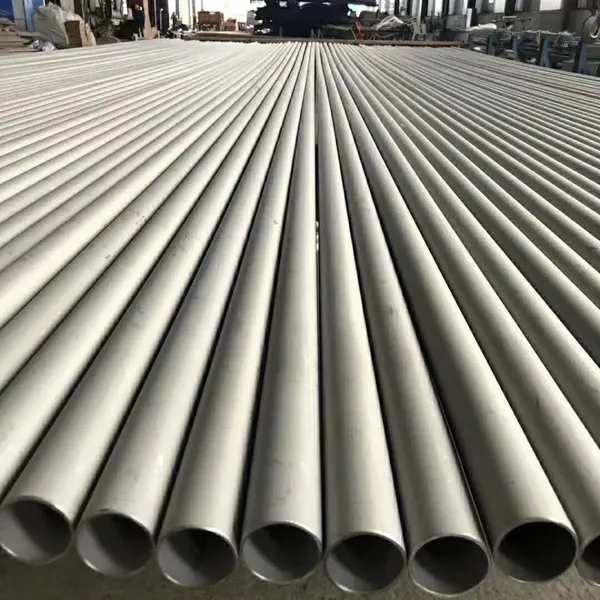 Read More
 -
Three types of commonly available food-grade stainless steel on the market
January 20, 2026The common food-grade stainless steel pipes are mainly composed of iron, chromium and carbon and other elements. Household stainle Read More
 -
What are the requirements for stainless steel welding pipe production equipment
January 20, 2026As is well known, stainless steel welded pipes have been widely used in various industries such as machinery, chemical engineering Read More

Contact Us
Recommended Products
-
 Stainless Steel Elbow Welded Elbow 45/90/180-degree Seamless Pressed Elbow Long Radius Elbow Short Radius Elbow WholesaleNegotiableMOQ: 1 Piece
 -
316L/1.4405 Seamless Stainless Steel PipeNegotiableMOQ: 2 Meters
-
310s 440 Seamless Sanitary Piping Price 321 904l 201 20 Inch Seamless Steel Pipe A554 Stainless Steel PipeNegotiableMOQ: 1 Piece
-
China Brand ZZ Wholesale 304L 316 316L Welded Austenitic Piping Stainless Steel Pipe SupplierNegotiableMOQ: 2 Meters
-
304/304L/316/409/410/904L/2205/2507/310H Premium Stainless Steel Sheets Supplier Custom Sizes & FinishesUS$ 1.72MOQ: 1 Ton
-
Stainless Steel ASME B16.9 Sch 45 90 Degree Pipe Fittings ElbowUS$ 8MOQ: 1 Piece
-
China Brand Zz 304L 316/316L GB En JIS Standard Thin Wall Welded Stainless Steel Water Pipe/TubeNegotiableMOQ: 2 Meters
-
BA 4 Inch 6 Inch 8 Inch 201 304 304L 316 316L Welded Seamless Stainless Steel PipeNegotiableMOQ: 2 Meters
-
ASME B36.19M-2004 SCH40S Stainless Steel Pipe - Complies With EU 3.1 CertificationUS$ 1 - 650MOQ: 1 Piece
-
Factory TP309/TP309S/TP309H (UNS30900) Seamless Stainless Steel Pipe and Tube for Boiler BafflesUS$ 8MOQ: 200 Kilograms
-
TP347/TP347H/1.4961/S34709 Seamless Stainless Steel Pipe for UseNegotiableMOQ: 2 Meters
-
China 304 316 Stainless Steel Sanitary Welded Tube Food Grade Sanitary Grade Welded Pipe PolishingNegotiableMOQ: 1 Piece
-
China Manufacture Stainless Steel 316L Ba Seamless Welded Steel Pipe TubesUS$ 1760 - 1860MOQ: 5 Tons
-
316L/1.4405 Seamless Stainless Steel PipeNegotiableMOQ: 2 Meters
-
Stainless Steel Globe Valve – High Durability & Corrosion ResistanceNegotiableMOQ: 1 Piece
-
1.4529 Stainless Steel Flat Plate for Chemical Processing EquipmentUS$ 25 - 35MOQ: 1 Kilogram
-
Color Coated Steel Panels for Warehouse Partition Walls (Fireproof Grade)US$ 1 - 1.2MOQ: 50 Kilograms
-
Custom Width (600mm-1250mm) Colored Steel Coil With Scratch ResistanceUS$ 1 - 1.2MOQ: 50 Kilograms
-
0.5mm-3.0mm Colored Coated Steel Sheet With PVDF/Polyester CoatingUS$ 1 - 1.2MOQ: 50 Kilograms
-
JIS G 3322 Compliant Colored Coils With Third-Party Inspection ReportUS$ 1 - 1.2MOQ: 50 Kilograms