
 Business License

What are the common methods for the seamless treatment of stainless steel pipes
The core of the seamless treatment of stainless steel pipes is to optimize the weld defects (such as weld spurs, incomplete penetration, welding stress) of welded pipes (straight seam welded pipes, spiral welded pipes). Through methods such as "physical trimming, heat treatment, and surface strengthening", the internal surface flatness, pressure resistance, and mechanical uniformity of the pipes are made to approach those of the original seamless pipes. Common methods can be divided into four categories: physical mechanical treatment, heat treatment, chemical treatment, and composite treatment. The details are as follows:
I. Physical Mechanical Treatment Method (Core: Adjusting weld seam shape, improving surface smoothness)
Physical mechanical treatment is the fundamental step for seamless processing. It directly removes weld defects and optimizes the surface shape through mechanical action, without altering the overall structure of the pipe material. It is suitable for scenarios where "surface flatness" is required (such as fluid transportation pipes).
1. Mechanical Removal Method for Inner Weld Spur (Weld Bulge)
Principle: After welding, the inner surface of the welded pipe forms a raised "weld spur" (inner weld rib), which leads to high fluid resistance, easy accumulation of dirt, and is a weak point of stress concentration. By using a dedicated mechanical cutter or grinder to precisely cut or polish the weld spur, the raised part is removed, making the inner surface flush with the pipe body.
Operation method:
For straight seam welded pipes: Use an "inner scraper" (a cylindrical tool with a guiding mechanism) to insert from one end of the pipe and move along the weld seam direction at a constant speed to cut the weld spur;
For spiral welded pipes: Use a "rotary file + synchronous tracking mechanism", adjusting the tool trajectory according to the angle of the spiral weld seam to ensure uniform cutting.
Core effect: Eliminate the raised part on the inner surface, reducing fluid resistance; reduce stress concentration in the weld area, laying the foundation for subsequent heat treatment.
Applicable scenarios: All welded pipes that need to be seamless (especially those transporting water, gas, or slurry).
2. Mechanical Polishing Method for Inner and Outer Surfaces
Principle: After removing the weld spur, the weld area may still have cutting marks or unevenness. Through mechanical polishing tools, the surface is gradually refined to reduce roughness (Ra value), making the surface smoothness of the weld area consistent with that of the pipe body.
Operation method:
Outer surface: Use tools such as sand wheels, perforated wheels, or cloth wheels to polish along the weld seam direction or circularly, removing weld slag and scratches from the outer surface of the weld;
Inner surface: Use "flexible grinding heads" (such as nylon brushes with abrasive materials, rotating cloth wheels) or "pipe internal polishing machines" (with guide rods for the grinding mechanism), grinding the weld area inside the pipe to avoid steps on the inner surface.
Advanced method: For higher smoothness (such as food-grade pipes), an electrolytic polishing assistance can be used - through electrochemical action, the tiny protrusions in the weld area are dissolved to achieve "mirror-like" inner surface (roughness Ra ≤ 0.8 μm).
Core effect: Improve surface smoothness, reduce impurity adhesion; avoid fluid stagnation in the weld area, reducing corrosion risk.
Applicable scenarios: Food, pharmaceutical use pipes (requiring high cleanliness), precision mechanical structure pipes.
II. Heat Treatment Method (Core: Eliminate welding stress, enhance weld strength uniformity)
During the welding process, the weld area generates welding residual stress due to "local high temperature - rapid cooling", and the weld structure (such as columnar crystals) differs significantly from that of the base material, resulting in uneven mechanical properties (welds are prone to cracking). Heat treatment, through heating - holding - cooling, optimizes the weld structure, releases stress, and is a key step in enhancing the pressure resistance of welded pipes.
1. Overall Stress Relief Annealing (SA)
Principle: Place the entire welded pipe in a heating furnace, slowly heat it to 250-400°C (martensitic stainless steel) or 800-900°C (austenitic stainless steel), hold for a certain period of time (depending on the wall thickness, usually 0.5-2 hours), and then slowly cool in the furnace (cooling rate ≤ 50°C/hour). Through atomic diffusion, release the residual stress in the weld area, and make the structure tend to be stable.
Key parameters: The heating temperature should avoid the "sensitization temperature range" (austenitic stainless steel 450-850°C, avoiding carbide precipitation leading to intergranular corrosion).
Core function: Reduce welding stress (can eliminate 60%-80% of residual stress); prevent the pipe from cracking due to stress concentration in pressurized or low-temperature environments.
Applicable scenarios: Medium and high-pressure transportation pipelines (such as chemical and oil pipelines), low-temperature working conditions pipes (such as refrigeration pipelines).
2. Local Heating and Fusion of Welding Area (Medium Frequency Induction Heating)
Principle: Target the welding area for "precise local heating", rather than heating the entire pipe - use a medium-frequency induction coil (frequency 1-10 kHz) to surround the welding area, using electromagnetic induction to rapidly heat the welding area and the surrounding 10-20mm area to 1050-1150°C (solvent temperature of austenitic stainless steel), hold for a few seconds, and then quickly spray water for cooling.
Core advantages:
Heating only the welding area, with low energy consumption and high efficiency (compared to overall annealing, time is shortened by more than 50%);
Reunite the columnar crystals in the welding area into a uniform austenitic structure, eliminating "undersized penetration, slag inclusion" and other microscopic defects, and improving the mechanical consistency between the weld and the base material.
Applicable scenarios: Thin-walled straight seam welded pipes (such as decorative pipes, low-pressure fluid pipes), batch-produced welded pipes (requiring cost control).
III. Chemical Treatment Method (Core: Surface Cleanliness and Corrosion Resistance Enhancement, Auxiliary Seamless Effect)
Chemical treatment does not directly alter the weld structure. Instead, it addresses surface issues resulting from physical/thermal treatment (such as oxide scale and micro scratches) by "dissolving impurities and forming a passivation film". This further enhances the corrosion resistance of seamless pipes.
Acid washing and passivation treatment (often used in conjunction with physical/thermal treatment)
Principle:
Acid washing: Soak the seamless treated welded pipes in a mixture of nitric acid and hydrofluoric acid (or citric acid solution, eco-friendly) to dissolve the oxide scale produced during heat treatment, mechanical polishing residues of metal debris, and tiny pits in the weld area.
Passivation: Rinse with clean water after acid washing, then soak in nitric acid solution to form a dense Cr₂O₃ oxide film (passivation film) on the surface of the pipe, enhancing corrosion resistance.
Core function: Remove surface contaminants to prevent "secondary corrosion"; compensate for the corrosion weakness in the weld area (welding may cause local chromium depletion, and passivation can re-enrich chromium elements).
Applicable scenarios: All seamless welded pipes, especially suitable for corrosive environments such as chemical and marine environments.
IV. Composite Processing Method (Mainstream in actual production: Multi-method collaboration, maximizing seamless effect)
A single method is insufficient to meet high requirements (such as pressure resistance + high cleanliness + corrosion resistance). In actual production, a "physical + thermal + chemical" composite process is often adopted. The typical combinations are as follows:
1. Mainstream Combination 1: "Mechanical deburring → Local induction heating → Internal and external polishing → Acid washing and passivation"
Process analysis:
First, the inner welds are removed using an internal scraper to ensure a flat base;
Medium-frequency induction heating is applied to the weld seam to eliminate stress and optimize the structure;
Mechanical polishing is performed on the internal and external surfaces to reduce the roughness to Ra ≤ 1.6 μm;
Acid washing and passivation are carried out to remove the oxide layer and form a passivation film.
Applicable scenarios: Medium and high-pressure fluid transmission pipes (such as petrochemical pipelines), which need to balance pressure resistance and corrosion resistance.
2. Mainstream Combination 2: "Mechanical deburring → Electrolytic polishing → Passivation"
Process analysis:
After mechanical deburring, electrolytic polishing is directly applied (no mechanical grinding is needed), using electrochemical action to dissolve the tiny protrusions in the weld area, achieving a high smoothness of Ra ≤ 0.4 μm on the inner surface;
Passivation treatment strengthens the corrosion-resistant film.
Applicable scenarios: Food, pharmaceutical use clean pipes (such as liquid drug transportation pipes), which require extreme internal surface cleanliness (to avoid microbial growth).
Recently Posted
-
Does the stainless steel welded pipe have specific temperature requirements during the solution heat
January 20, 2026Solution heat treatment involves heating stainless steel to a high temperature and then rapidly cooling it to achieve an oversatur Read More
 -
Can stainless steel welded pipes be made into thick pipes
January 20, 2026With the improvement of high-quality welding technology and increasingly strict weld inspection, the application fields of s Read More
 -
Three types of commonly available food-grade stainless steel on the market
January 20, 2026The common food-grade stainless steel pipes are mainly composed of iron, chromium and carbon and other elements. Household stainle Read More
 -
What are the requirements for stainless steel welding pipe production equipment
January 20, 2026As is well known, stainless steel welded pipes have been widely used in various industries such as machinery, chemical engineering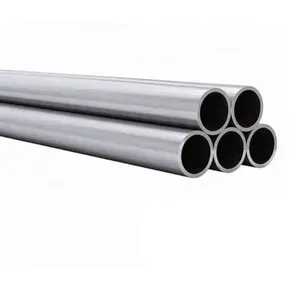 Read More

Contact Us
Recommended Products
-
 Stainless Steel Elbow Welded Elbow 45/90/180-degree Seamless Pressed Elbow Long Radius Elbow Short Radius Elbow WholesaleNegotiableMOQ: 1 Piece
 -
316L/1.4405 Seamless Stainless Steel PipeNegotiableMOQ: 2 Meters
-
310s 440 Seamless Sanitary Piping Price 321 904l 201 20 Inch Seamless Steel Pipe A554 Stainless Steel PipeNegotiableMOQ: 1 Piece
-
China Brand ZZ Wholesale 304L 316 316L Welded Austenitic Piping Stainless Steel Pipe SupplierNegotiableMOQ: 2 Meters
-
304/304L/316/409/410/904L/2205/2507/310H Premium Stainless Steel Sheets Supplier Custom Sizes & FinishesUS$ 1.72MOQ: 1 Ton
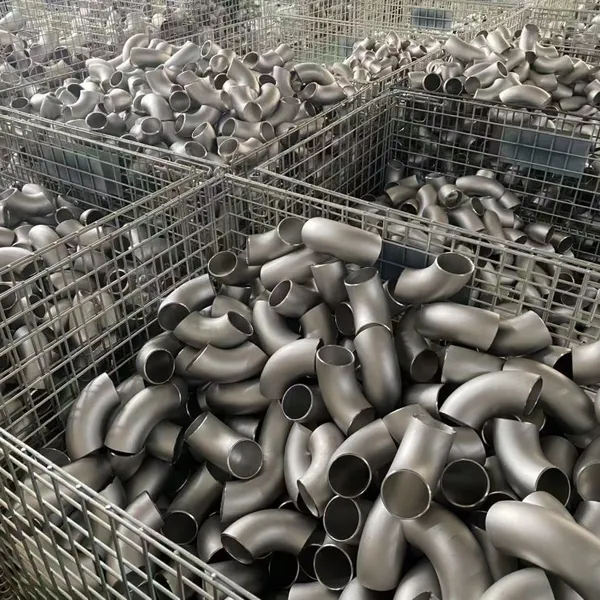
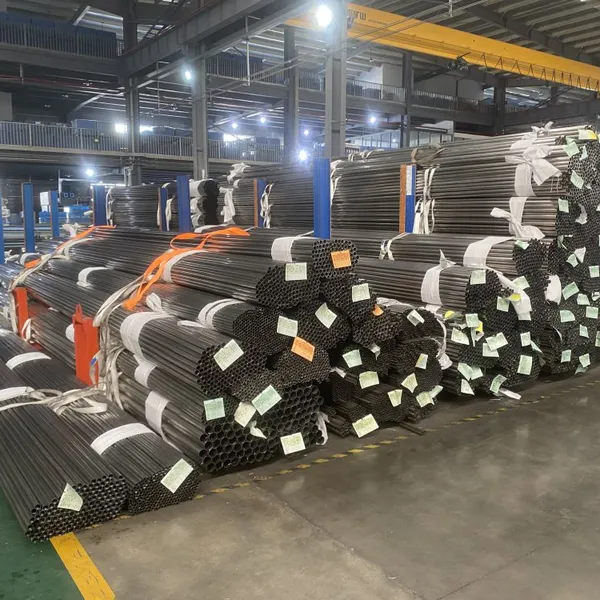
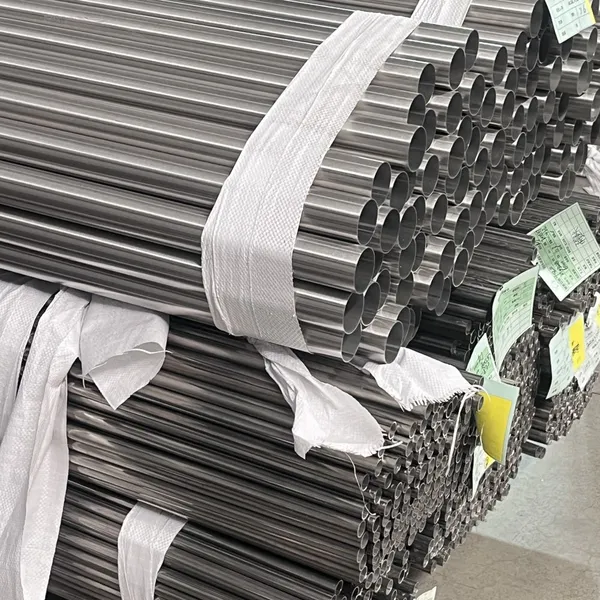
-
Stainless Steel ASME B16.9 Sch 45 90 Degree Pipe Fittings ElbowUS$ 8MOQ: 1 Piece
-
China Brand Zz 304L 316/316L GB En JIS Standard Thin Wall Welded Stainless Steel Water Pipe/TubeNegotiableMOQ: 2 Meters
-
BA 4 Inch 6 Inch 8 Inch 201 304 304L 316 316L Welded Seamless Stainless Steel PipeNegotiableMOQ: 2 Meters
-
ASME B36.19M-2004 SCH40S Stainless Steel Pipe - Complies With EU 3.1 CertificationUS$ 1 - 650MOQ: 1 Piece
-
Factory TP309/TP309S/TP309H (UNS30900) Seamless Stainless Steel Pipe and Tube for Boiler BafflesUS$ 8MOQ: 200 Kilograms
-
TP347/TP347H/1.4961/S34709 Seamless Stainless Steel Pipe for UseNegotiableMOQ: 2 Meters
-
China 304 316 Stainless Steel Sanitary Welded Tube Food Grade Sanitary Grade Welded Pipe PolishingNegotiableMOQ: 1 Piece
-
China Manufacture Stainless Steel 316L Ba Seamless Welded Steel Pipe TubesUS$ 1760 - 1860MOQ: 5 Tons
-
316L/1.4405 Seamless Stainless Steel PipeNegotiableMOQ: 2 Meters
-
Stainless Steel Globe Valve – High Durability & Corrosion ResistanceNegotiableMOQ: 1 Piece
-
1.4529 Stainless Steel Flat Plate for Chemical Processing EquipmentUS$ 25 - 35MOQ: 1 Kilogram
-
Color Coated Steel Panels for Warehouse Partition Walls (Fireproof Grade)US$ 1 - 1.2MOQ: 50 Kilograms
-
Custom Width (600mm-1250mm) Colored Steel Coil With Scratch ResistanceUS$ 1 - 1.2MOQ: 50 Kilograms
-
0.5mm-3.0mm Colored Coated Steel Sheet With PVDF/Polyester CoatingUS$ 1 - 1.2MOQ: 50 Kilograms
-
JIS G 3322 Compliant Colored Coils With Third-Party Inspection ReportUS$ 1 - 1.2MOQ: 50 Kilograms