
 Business License

What are the benefits of the seamless treatment of stainless steel pipes
The "seamless treatment" of stainless steel pipes is aimed at addressing the "weak weld areas" problem existing in welded pipes (such as straight seam welded pipes and spiral welded pipes). Through processes such as hot processing (hot expansion, overall heat treatment), cold processing (cold drawing, cold rolling), and internal weld repair (grinding, polishing), the defects in the welds (such as slag, pores, intergranular corrosion tendency) are eliminated, and the structure and surface condition of the pipe body are optimized, making its performance close to or even surpassing that of seamless pipes. The core benefits revolve around "solving the shortcomings of welded pipes, expanding application scenarios, and improving cost performance", and can be specifically broken down into 6 key values:
1. Eliminate the mechanical weak areas of the weld seam and significantly enhance the overall strength and toughness
The biggest drawback of welded pipes is the weld seam and the heat affected zone (HAZ) - the high temperature during welding causes the grain size of the weld seam to become coarse and leads to defects such as "inclusions" and "gas pores", while the HAZ will have significantly lower mechanical properties (strength and toughness) than the base material due to uneven microstructure (such as the "temper zone" in austenitic steel and the σ phase precipitation in duplex steel), as the mechanical properties are lower than the base material. Seamless treatment completely solves this problem through "structure optimization + defect repair":
1. Improve tensile strength and pressure resistance performance
Cold drawing / cold rolling seamless treatment: Through cold plastic deformation, the grain size of the weld seam is refined (from 50-100 μm after welding to 10-20 μm), and the tiny gas pores and porosity inside the weld seam are eliminated, making the tensile strength of the weld seam consistent with the base material (for example, for 316L welded pipes, the tensile strength before treatment is 520 MPa, after cold drawing it reaches 580 MPa, the same as the base material);
Heat expansion seamless treatment: Through heating (temperature 900-1100°C) and expansion, the weld metal and the base material are fully fused, eliminating the "weld seam layer separation" defect, and improving the overall pressure resistance of the pipe body - for example, for DN200 straight seam welded pipe, before treatment the pressure resistance grade is PN1.6MPa, after heat expansion seamless treatment it can reach PN2.5MPa, which can be used for high-pressure steam transportation (pressure 2.0MPa).
2. Improve impact toughness and avoid brittle fracture at low temperatures
The heat affected zone of welding is prone to a decrease in impact toughness due to microstructure hardening (such as martensitic transformation) (for example, at -40°C, the impact energy of the untreated weld seam is ≤ 20J), and the overall annealing treatment in seamless treatment (temperature 800-900°C, holding for 1-2 hours) can:
Eliminate the internal stress in the heat affected zone (internal stress from 300 MPa to below 50 MPa);
Convert the hardened structure (such as martensite, σ phase) into uniform austenite / ferrite structure, improving the low-temperature impact toughness (-40°C impact energy ≥ 60J), meeting the application requirements for cold regions (such as Northeast, Siberia) (avoiding brittle fracture in winter).
II. Enhance the corrosion resistance of weld seams and adapt to high-corrosion scenarios
The weld seams of welded pipes are vulnerable areas for corrosion - the surface of the weld seams is prone to residual oxide scales and welding slag, and the heat-affected zone may suffer intergranular corrosion due to Cr depletion (in austenitic steel, after welding, Cr combines with C to form carbides, resulting in local Cr content <12%). Seamless treatment significantly improves corrosion resistance through "surface cleaning + microstructure repair":
1. Remove corrosion risks in weld seams
Internal weld grinding / polishing: During seamless treatment, a dedicated internal grinder (with a grinding wheel or louvre wheel) is used to remove the weld bulges, oxide scales, and welding slag on the inner side of the weld seam, reducing the surface roughness from Ra 5-10μm to Ra 1.6-3.2μm. This avoids "accumulation of dirt in the weld depression" that causes crevice corrosion;
Integrated acid washing and passivation: Some seamless treatment processes (such as after cold drawing) are accompanied by acid washing and passivation, dissolving the Cr carbides in the weld seam area, restoring the uniform distribution of Cr elements (Cr content ≥ 18%), forming a continuous and dense passivation film (Cr₂O₃ layer), with salt spray resistance performance improving from 72 hours without corrosion to 300 hours without corrosion.
2. Adapt to high-corrosion environments
Seamless-treated stainless steel pipes can replace seamless pipes for high-corrosion scenarios:
Marine environment: Piping for transporting seawater or in salt spray environments (such as cooling water pipes on offshore platforms), untreated welded pipes show point corrosion within 3 months, while seamless-treated pipes show no corrosion after 12 months;
Chemical environment: Piping for transporting media containing Cl⁻ and H₂S (such as hydrochloric acid, sulfur-containing wastewater), the corrosion rate of seamless pipes decreases from 0.05mm/a to 0.01mm/a, and the corrosion life is extended by 5 times.
III. Improve the smoothness of the inner wall and enhance the efficiency of fluid transportation
The weld beads on the inner wall of the welded pipe (with a height typically ranging from 0.2 to 1.0 mm) can disrupt the fluid flow pattern, increase the frictional resistance along the pipeline, leading to increased energy consumption and decreased transportation efficiency. At the same time, the weld bead depressions are prone to accumulation of dirt and the growth of microorganisms (such as bacteria in hygienic scenarios). Seamless treatment addresses this issue through "inner wall smoothing":
1. Reduce frictional resistance and energy consumption
After cold drawing / internal polishing for seamless treatment, the inner wall roughness Ra decreases from 5 μm to 1.6 μm. According to the Nicolasz experiment, the friction coefficient λ decreases from 0.028 to 0.018 - for a DN150 pipeline transporting water (flow rate 2 m/s) as an example, the total pressure loss over 1000 meters of pipeline decreases from 0.56 MPa to 0.36 MPa, the pump shaft power decreases from 22.5 kW to 15 kW, and annual energy savings amount to 36,000 yuan (calculated based on 8,000 hours of operation and 0.6 yuan/kWh).
2. Avoid accumulation and microbial contamination, suitable for hygienic scenarios
In hygienic scenarios such as food, pharmaceuticals, and ultra-pure water, it is required that the inner wall of the pipeline be free of dead corners and easy to clean. The inner wall after seamless treatment is smooth without weld beads, which can:
Reduce the residue of food juices and pharmaceutical liquids (residue amount from 0.5 mg/cm² to 0.05 mg/cm²), prevent the growth of microorganisms (bacterial count ≤ 10 CFU/cm², in line with GMP standards);
Facilitate the flushing by the CIP (in-line cleaning) system, reducing the cleaning time from 1 hour to 30 minutes, and improving production efficiency.
IV. Eliminating Leakage Risks in Weld Joints and Enhancing Sealing Reliability
The weld joints of welded pipes are high-risk areas for leakage - defects such as "undersized penetration", "cracks", and "pores" during the welding process can cause leakage of the medium when the pipeline is subjected to pressure fluctuations or temperature changes (for example, in the case of transporting flammable or explosive media, leakage may trigger safety accidents). Seamless treatment eliminates leakage at its source through "defect detection + repair":
1. Full-process Defect Control
Seamless treatment includes the non-destructive testing (NDT) stage:
After welding: Through eddy current testing (ET) and ultrasonic testing (UT) to detect internal defects in the weld (such as pores and slag inclusions);
After seamless treatment: The sealing performance is verified through a hydraulic test (with a pressure of 1.5 times the design pressure and holding for 30 minutes) to ensure no leakage (the leakage rate of untreated welded pipes is approximately 1%-2%, while that of seamless treatment is ≤ 0.1%).
2. Adaptation to High-Pressure Sealing Scenarios
High-pressure hydraulic systems, oil and gas transportation pipelines, etc., have extremely high requirements for sealing performance. The seamless-treated pipeline, with the weld joint integrated with the base material, can directly connect to high-pressure valves and joints (without the need for additional welding reinforcement), avoiding system failures caused by weld joint leakage (such as sudden drop in hydraulic system pressure, oil and gas leakage leading to explosion).
V. Expand application scenarios and replace seamless pipes to reduce costs
Although seamless pipes have excellent performance, they have the drawbacks of high cost and difficulty in producing large diameters (for example, the price of seamless pipes larger than DN300 is 2-3 times that of welded pipes). After seamless treatment, welded pipes have performance close to seamless pipes and can be used as substitutes for seamless pipes in most scenarios, while also having the advantages of "low cost of welded pipes + high performance of seamless pipes":
1. Large-diameter pipeline scenarios
For municipal water supply, sewage treatment, and main pipelines in chemical industrial parks (with diameters ranging from DN300 to DN1000), the production of seamless pipes is difficult and the delivery cycle is long (about 30-60 days), while seamless welded pipes (such as spiral welded pipes with cold expansion seamless treatment) can be mass-produced, reducing the delivery cycle to 10-15 days and lowering costs by 40%-50%, while meeting pressure resistance (PN1.6MPa) and corrosion resistance requirements.
2. Precision scenarios
For medical devices (such as surgical instrument pipelines) and semiconductor ultra-pure water pipelines (with diameters ranging from DN10 to DN50), there are high requirements for dimensional accuracy (wall thickness deviation ≤ ±5%) and surface smoothness (Ra ≤ 0.8μm). Cold drawing seamless treatment can increase the dimensional accuracy of welded pipes from ±10% to ±3%, and the surface smoothness meets the standards, replacing seamless pipes after which costs are reduced by 30%.
VI. Improve the dimensional accuracy of the pipe body to meet the requirements of precise installation
During the welding and forming processes of welded pipes, problems such as excessive ellipticity (such as diameter deviation > 1%) and uneven wall thickness (deviation > 10%) may occur, which leads to difficulties in pipe connection (such as inability to align the flanges) and uneven force distribution (local thin-wall areas are prone to rupture). Seamless treatment improves dimensional accuracy through "plastic deformation + gauge control":
1. Control ellipticity and wall thickness deviation
During hot expansion seamless treatment, by using "mold gauge control", the ellipticity is reduced from 1.5% to below 0.5% (in line with GB/T 14976 standards);
For cold drawing seamless treatment, through "multiple passes of drawing + gauge mold", the wall thickness deviation is reduced from 10% to within 5%, ensuring that the sealing surface of the flange is in close contact (gap ≤ 0.1mm) and avoiding sealing leakage caused by dimensional deviations.
2. Adapt to precise equipment installation
For pipelines in automated production lines and precision instruments (such as sensor connection pipes), it is required that the pipe dimensions be highly consistent (the deviation of pipe diameters in the same batch ≤ 0.2mm). The welded pipes after seamless treatment have dimensional accuracy comparable to seamless pipes, meeting the requirements of precise installation (no need for on-site adjustment, installation efficiency increased by 50%).
Core Summary: The "Essential Value" of Seamless Processing
The core benefit of seamless processing for stainless steel pipes is that **"based on welded pipes, through process upgrades, it compensates for their performance shortcomings to achieve 'seamless pipe-level' mechanical properties, corrosion resistance, and dimensional accuracy, while retaining the cost advantages and production flexibility of welded pipes."** It is not simply "eliminating welds", but through organizational optimization, surface repair, and defect control, it upgrades welded pipes from "ordinary transportation pipes" to "high-performance structural/functional pipes", which can widely replace seamless pipes for high-pressure, high-corrosion, sanitary, precision, and other mid-to-high-end scenarios. It is one of the optimal solutions for balancing "performance requirements" and "cost control".
Note: Different seamless processing methods have different focuses (such as cold drawing focuses on precision and strength, hot expansion focuses on diameter and toughness), and the appropriate process needs to be selected based on the application scenario (such as pressure, corrosion environment, size) to maximize its value.
Recently Posted
-
Does the stainless steel welded pipe have specific temperature requirements during the solution heat
January 20, 2026Solution heat treatment involves heating stainless steel to a high temperature and then rapidly cooling it to achieve an oversatur Read More
 -
Can stainless steel welded pipes be made into thick pipes
January 20, 2026With the improvement of high-quality welding technology and increasingly strict weld inspection, the application fields of s Read More
 -
Three types of commonly available food-grade stainless steel on the market
January 20, 2026The common food-grade stainless steel pipes are mainly composed of iron, chromium and carbon and other elements. Household stainle Read More
 -
What are the requirements for stainless steel welding pipe production equipment
January 20, 2026As is well known, stainless steel welded pipes have been widely used in various industries such as machinery, chemical engineering Read More

Contact Us
Recommended Products
-
 Stainless Steel Elbow Welded Elbow 45/90/180-degree Seamless Pressed Elbow Long Radius Elbow Short Radius Elbow WholesaleNegotiableMOQ: 1 Piece
 -
316L/1.4405 Seamless Stainless Steel PipeNegotiableMOQ: 2 Meters
-
310s 440 Seamless Sanitary Piping Price 321 904l 201 20 Inch Seamless Steel Pipe A554 Stainless Steel PipeNegotiableMOQ: 1 Piece
-
China Brand ZZ Wholesale 304L 316 316L Welded Austenitic Piping Stainless Steel Pipe SupplierNegotiableMOQ: 2 Meters
-
304/304L/316/409/410/904L/2205/2507/310H Premium Stainless Steel Sheets Supplier Custom Sizes & FinishesUS$ 1.72MOQ: 1 Ton
-
Stainless Steel ASME B16.9 Sch 45 90 Degree Pipe Fittings ElbowUS$ 8MOQ: 1 Piece
-
China Brand Zz 304L 316/316L GB En JIS Standard Thin Wall Welded Stainless Steel Water Pipe/TubeNegotiableMOQ: 2 Meters
-
BA 4 Inch 6 Inch 8 Inch 201 304 304L 316 316L Welded Seamless Stainless Steel PipeNegotiableMOQ: 2 Meters
-
ASME B36.19M-2004 SCH40S Stainless Steel Pipe - Complies With EU 3.1 CertificationUS$ 1 - 650MOQ: 1 Piece
-
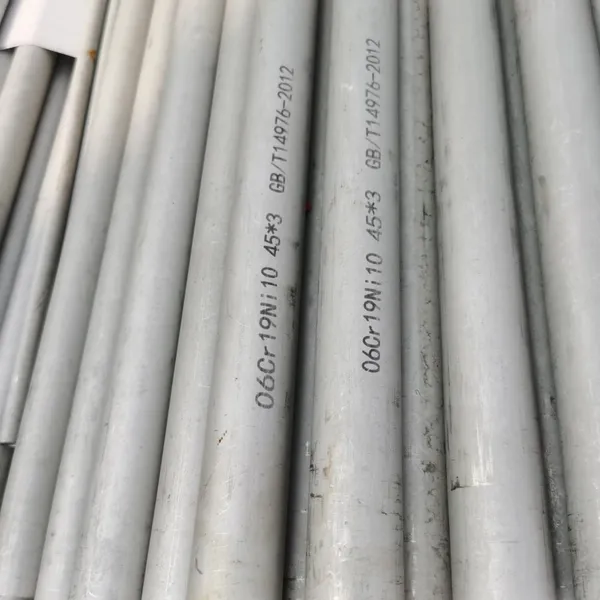
Factory TP309/TP309S/TP309H (UNS30900) Seamless Stainless Steel Pipe and Tube for Boiler BafflesUS$ 8MOQ: 200 Kilograms
-
TP347/TP347H/1.4961/S34709 Seamless Stainless Steel Pipe for UseNegotiableMOQ: 2 Meters
-
China 304 316 Stainless Steel Sanitary Welded Tube Food Grade Sanitary Grade Welded Pipe PolishingNegotiableMOQ: 1 Piece
-
China Manufacture Stainless Steel 316L Ba Seamless Welded Steel Pipe TubesUS$ 1760 - 1860MOQ: 5 Tons
-
316L/1.4405 Seamless Stainless Steel PipeNegotiableMOQ: 2 Meters
-
Stainless Steel Globe Valve – High Durability & Corrosion ResistanceNegotiableMOQ: 1 Piece
-
1.4529 Stainless Steel Flat Plate for Chemical Processing EquipmentUS$ 25 - 35MOQ: 1 Kilogram
-
Color Coated Steel Panels for Warehouse Partition Walls (Fireproof Grade)US$ 1 - 1.2MOQ: 50 Kilograms
-
Custom Width (600mm-1250mm) Colored Steel Coil With Scratch ResistanceUS$ 1 - 1.2MOQ: 50 Kilograms
-
0.5mm-3.0mm Colored Coated Steel Sheet With PVDF/Polyester CoatingUS$ 1 - 1.2MOQ: 50 Kilograms
-
JIS G 3322 Compliant Colored Coils With Third-Party Inspection ReportUS$ 1 - 1.2MOQ: 50 Kilograms