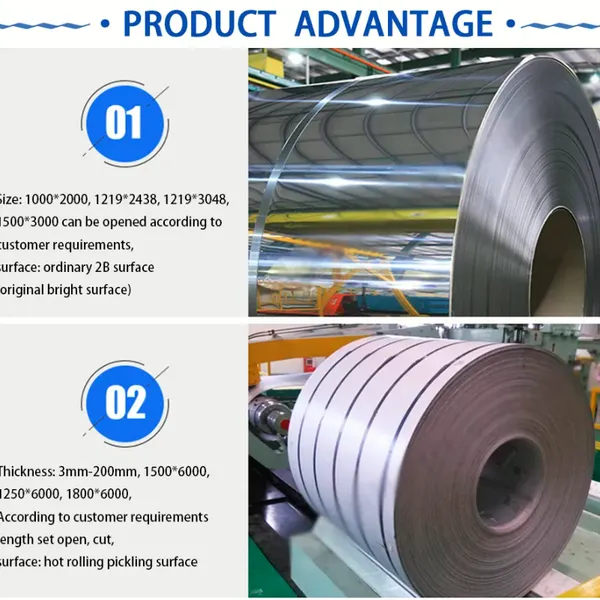

 Business License

What is the manufacturing process for LNG stainless steel pipes
The manufacturing process of LNG stainless steel pipes (mainly used in -162°C low-temperature LNG storage and transportation systems) needs to meet four core requirements: low-temperature toughness, corrosion resistance, dimensional accuracy and sealing performance. The process includes key steps such as raw material selection, forming, welding, heat treatment and testing. The details are as follows:
1. Selection and Pre-treatment of Raw Materials: Ensuring the Foundation of Low Temperature Performance
Selection of base material grade
The commonly used stainless steel in LNG systems is 316L (containing 2-3% Mo, which enhances resistance to low-temperature corrosion and toughness) and 304Lmod (modified 304L) (ultra-low carbon + stabilizing elements, reducing the risk of intergranular corrosion). It must meet the following requirements:
Carbon content ≤ 0.03% (to prevent low-temperature embrittlement and sensitization);
Low-temperature impact toughness: -196° Vickers impact energy ≥ 47J (in accordance with ASTM A370 standard);
The grade of non-metallic inclusions is ≤ 2 (to prevent the inclusions from becoming crack sources at low temperatures).
Raw material inspection
For the incoming stainless steel plates / strips:
Chemical composition analysis (using a spectrometer to detect key elements such as Cr, Ni, and Mo, ensuring compliance with ASTM A240 standards);
Mechanical property test (tensile test: tensile strength ≥ 515 MPa, elongation ≥ 40%)
Non-destructive testing (ultrasonic flaw detection, to identify internal defects such as voids and cracks).
II. Forming Process: Select based on pipe diameter and wall thickness
Seamless pipe forming (suitable for medium and small diameters, such as DN15-DN200)
Hot piercing + Cold drawing / Cold rolling:
The round billet is heated to 1100 - 1250 degrees (the austenitizing temperature), and then rolled into a tube by a piercing machine.
Cold drawing / Cold rolling: Through multiple extrusions (or rolling) using molds, the deformation amount is controlled (15-30% each time) to ensure dimensional accuracy (outer diameter tolerance ±0.1mm, wall thickness tolerance ±5%).
Intermediate annealing: Perform 1050-1100 degree solid solution treatment (water cooling) every 2-3 passes to eliminate work hardening and restore plasticity.
Advantages: No welds, excellent integrity, suitable for high-pressure LNG pipelines (such as pump outlet pipes, storage tank connection pipes).
Welded pipe forming (suitable for large diameters, such as DN200 - DN1000)
UOE Forming + TIG/MIG Welding:
After the steel plates are edge-milled (with a bevel angle of 60 ± 5 to ensure welding quality) and pre-bent, they are pressed into an U-shape by a U-shaped press, and then pressed into a circular shape (tube blank) using an O-shaped press.
Welding: Double-sided butt welding is adopted. The inner side is welded using TIG welding (tungsten inert gas arc welding) for the base layer (to ensure full penetration at the root), and the outer side is filled and covered using MIG welding (welding with a consumable electrode and gas protection) with pure argon gas (99.99% pure argon) as the shielding gas (to prevent the loss of alloy elements).
Post-weld rounding: The pipe diameter is expanded by 1-3% using a diameter-expanding machine to eliminate welding stress and ensure roundness (ellipticity ≤ 0.5% and outer diameter).
Key point: The weld seams must undergo 100% radiographic testing (RT) and pressure tests to ensure there are no defects such as pores or incomplete fusion.
III. Heat Treatment: Optimizing Structure and Properties
Solid solution treatment (core process)
Objective: To dissolve carbides (such as Cr₂₃C₆) into the austenite, homogenize the microstructure, and enhance the low-temperature toughness and corrosion resistance.
Process:
Heating temperature: 1050 - 1100 (For 316L, the temperature should be slightly higher to ensure uniform distribution of the Mo element);
Insulation time: Calculated based on wall thickness (1-2 minutes per millimeter), ensuring complete austenitization;
Cooling: Water quenching (cooling rate ≥ 50/s), avoiding the formation of carbides (preventing sensitization).
Effect: After solid solution treatment, the microstructure is a single austenite, with grain size ≥ 7 (grain refinement, enhancing low-temperature impact toughness).
Strain-relief annealing (optional)
For large-diameter welded pipes or seamless pipes with significant cold processing volume, they should be kept at a temperature of 250-300 for 1-2 hours, then slowly cooled to eliminate the residual stress caused by cold processing or welding (to prevent stress concentration and cracking at low temperatures).
IV. Surface Treatment: Enhancing Corrosion Resistance and Cleanliness
Pickling and Passivation
Remove surface oxide scale and oil stains: Soak in a 10-15% nitric acid + 2-5% hydrofluoric acid mixture (at a temperature of 20-40) for 10-30 minutes, then rinse with pure water until the pH is 6-7.
Passivation: Forms a uniform Cr₂O₃ passivation film (thickness 5-10 nm), enhancing the corrosion resistance to trace amounts of moisture and impurities in LNG.
Inner wall polishing (suitable for precision pipes)
For the connection pipes and metering pipes of the LNG pump, mechanical polishing (with Ra ≤ 0.8 μm) or electrolytic polishing is adopted to reduce the internal wall roughness and prevent liquid accumulation and impurity deposition (to avoid local corrosion).
V. Final Inspection: Strict Quality Control
Size and appearance inspection
Outer diameter and wall thickness: Measured using a laser diameter gauge and an ultrasonic thickness gauge, and they comply with the ASTM A312 (for seamless pipes) or ASTM A249 (for welded pipes) standards.
Surface quality: Visual inspection shows no cracks, dents, or scratches (depth ≤ 0.05mm).
Performance testing
Low-temperature impact test: Samples are taken from the pipe material and subjected to the Schaeffler V-notch impact test at -196°C. The impact energy should be ≥ 47J.
Flattening test: Flatten the pipe section to 1/3 of its outer diameter, and there are no cracks in the weld (to verify plasticity).
Non-destructive testing and pressure resistance test
100% Ultrasonic Testing (UT): Detecting internal defects;
Hydrostatic test: Maintain pressure at 1.5 times the design pressure (for LNG systems, it is typically 1.6 - 4.0 MPa) for 30 minutes, with no leakage.
Helium leak detection (for high cleanliness requirements pipelines): Leakage rate ≤ 1×10⁻⁹ Pa·m³/s.
VI. Special Requirements (Applicable to LNG Operating Conditions)
Low-temperature sealing performance: The processing accuracy of the pipe end bevel (angle, fillet) should be controlled within ±0.5 to ensure complete penetration at the root during welding and to prevent low-temperature leakage.
Low-temperature dimensional stability: By strictly controlling the solution temperature and cooling rate, the linear expansion coefficient of the pipe material is ensured to be stable (around 16×10⁻⁶/), thereby reducing the shrinkage stress at low temperatures.
Through the above process, LNG stainless steel pipes can meet the long-term operation requirements at -162°C. Their service life usually exceeds 20 years (requiring regular maintenance). Different manufacturers may adjust the process parameters according to product specifications (such as wall thickness and diameter), but the core principle remains to ensure low-temperature toughness, corrosion resistance and structural integrity.
Recently Posted
-
Does the stainless steel welded pipe have specific temperature requirements during the solution heat
January 20, 2026Solution heat treatment involves heating stainless steel to a high temperature and then rapidly cooling it to achieve an oversatur Read More
 -
Can stainless steel welded pipes be made into thick pipes
January 20, 2026With the improvement of high-quality welding technology and increasingly strict weld inspection, the application fields of s Read More
 -
Three types of commonly available food-grade stainless steel on the market
January 20, 2026The common food-grade stainless steel pipes are mainly composed of iron, chromium and carbon and other elements. Household stainle Read More
 -
What are the requirements for stainless steel welding pipe production equipment
January 20, 2026As is well known, stainless steel welded pipes have been widely used in various industries such as machinery, chemical engineering Read More

Contact Us
Recommended Products
-
 Stainless Steel Elbow Welded Elbow 45/90/180-degree Seamless Pressed Elbow Long Radius Elbow Short Radius Elbow WholesaleNegotiableMOQ: 1 Piece
 -
316L/1.4405 Seamless Stainless Steel PipeNegotiableMOQ: 2 Meters
-
310s 440 Seamless Sanitary Piping Price 321 904l 201 20 Inch Seamless Steel Pipe A554 Stainless Steel PipeNegotiableMOQ: 1 Piece
-
China Brand ZZ Wholesale 304L 316 316L Welded Austenitic Piping Stainless Steel Pipe SupplierNegotiableMOQ: 2 Meters
-
304/304L/316/409/410/904L/2205/2507/310H Premium Stainless Steel Sheets Supplier Custom Sizes & FinishesUS$ 1.72MOQ: 1 Ton
-
Stainless Steel ASME B16.9 Sch 45 90 Degree Pipe Fittings ElbowUS$ 8MOQ: 1 Piece
-
China Brand Zz 304L 316/316L GB En JIS Standard Thin Wall Welded Stainless Steel Water Pipe/TubeNegotiableMOQ: 2 Meters
-
BA 4 Inch 6 Inch 8 Inch 201 304 304L 316 316L Welded Seamless Stainless Steel PipeNegotiableMOQ: 2 Meters
-
ASME B36.19M-2004 SCH40S Stainless Steel Pipe - Complies With EU 3.1 CertificationUS$ 1 - 650MOQ: 1 Piece
-
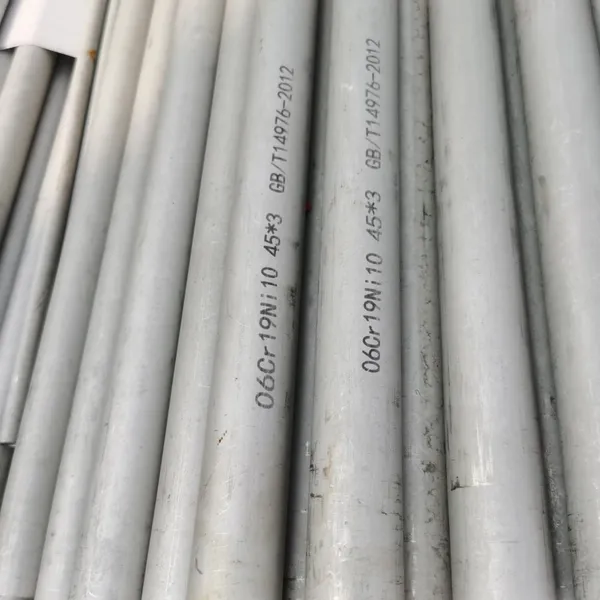
Factory TP309/TP309S/TP309H (UNS30900) Seamless Stainless Steel Pipe and Tube for Boiler BafflesUS$ 8MOQ: 200 Kilograms
-
TP347/TP347H/1.4961/S34709 Seamless Stainless Steel Pipe for UseNegotiableMOQ: 2 Meters
-
China 304 316 Stainless Steel Sanitary Welded Tube Food Grade Sanitary Grade Welded Pipe PolishingNegotiableMOQ: 1 Piece
-
China Manufacture Stainless Steel 316L Ba Seamless Welded Steel Pipe TubesUS$ 1760 - 1860MOQ: 5 Tons
-
316L/1.4405 Seamless Stainless Steel PipeNegotiableMOQ: 2 Meters
-
Stainless Steel Globe Valve – High Durability & Corrosion ResistanceNegotiableMOQ: 1 Piece
-
1.4529 Stainless Steel Flat Plate for Chemical Processing EquipmentUS$ 25 - 35MOQ: 1 Kilogram
-
Color Coated Steel Panels for Warehouse Partition Walls (Fireproof Grade)US$ 1 - 1.2MOQ: 50 Kilograms
-
Custom Width (600mm-1250mm) Colored Steel Coil With Scratch ResistanceUS$ 1 - 1.2MOQ: 50 Kilograms
-
0.5mm-3.0mm Colored Coated Steel Sheet With PVDF/Polyester CoatingUS$ 1 - 1.2MOQ: 50 Kilograms
-
JIS G 3322 Compliant Colored Coils With Third-Party Inspection ReportUS$ 1 - 1.2MOQ: 50 Kilograms