
 Business License

How to ensure the sealing performance of stainless steel pipes in new energy equipment
In new energy equipment, the sealing performance of stainless steel pipes directly affects system safety (such as hydrogen leakage at high pressure, battery coolant leakage) and operational efficiency (such as thermal management failure, energy loss). The sealing performance guarantee needs to be controlled throughout the entire process chain, including material properties, connection design, seal component matching, process control, and full life cycle verification. It also requires targeted optimization based on different scenarios (such as high-pressure hydrogen, battery cooling, energy storage pipelines) and extreme conditions (high pressure, corrosion, vibration, high and low temperatures).
I. Materials and Base Design of Sealing Surfaces
1. Material Corrosion Resistance: Preventing Sealing Surface Failure
The sealing surfaces of stainless steel pipes (such as flange surfaces, welding notches, and contact areas of sleeves) may corrode (point corrosion, intergranular corrosion), which directly damages the sealing integrity. The choice of material should be based on the characteristics of the medium:
For ordinary coolant (ethylene glycol) scenarios: 304 stainless steel requires passivation treatment (forming Cr₂O₃ oxide film), with the roughness of the sealing surface controlled at Ra1.6-3.2 μm to avoid corrosion pits causing micro-leakage;
For high-pressure hydrogen / electrolyte scenarios: 316L stainless steel (containing Mo) can resist hydrogen embrittlement and LiPF₆ electrolyte corrosion. The sealing surface needs to undergo electrolytic polishing (Ra ≤ 0.8 μm), reducing the "dead corners" where corrosive media adhere;
For coastal / high-salt fog environments: The sealing surfaces of duplex steel (such as 2205) need to be subjected to shot peening (hardness ≥ 300HV) to enhance the ability to resist stress corrosion.
2. Design of Sealing Surfaces: Eliminating "Leakage Channels"
Planar Sealing: The sealing surfaces of flanges or end caps adopt "concave-convex" or "mortise-slot" designs (instead of smooth planes), enhancing the seal through mechanical interlocking of the metal surfaces. For example, the flange sealing surface of hydrogen storage pipeline for hydrogen is designed with a mortise-slot structure, combined with a metal-covered gasket, which can withstand 70 MPa pressure without leakage;
Conical Sealing: For high-pressure threaded connections (such as hydrogen valve interfaces), a 60° conical sealing surface is used. The stainless steel pipe end and the joint have an interference fit (interference amount 0.05-0.1 mm) of the conical surfaces, achieving "self-sealing" through metal plastic deformation;
Avoiding Right Angles / Acute Angles: The edges of the sealing surfaces are rounded (R ≥ 0.5 mm) to prevent stress concentration that causes cracking of the sealing surface (especially in low-temperature scenarios, such as - 40°C energy storage pipelines).
II. Optimization of Sealing Performance for Connection Methods
The connection methods of stainless steel pipes in new energy equipment need to match pressure levels (0.1 MPa to 70 MPa), medium characteristics (gaseous / liquid, corrosive), and working conditions (vibration / static), with the core being achieved through structural design or auxiliary sealing for "zero leakage".
1. Welding Connection: Metal Fusion Sealing (suitable for high-pressure / high-temperature scenarios)
Welding is the core method for permanent sealing of stainless steel pipes, and it is necessary to avoid weld defects (gas holes, incomplete fusion) that cause leakage:
Welding process selection:
High-pressure hydrogen pipeline (35 MPa / 70 MPa) uses laser welding (energy density 10⁴ - 10⁵ W/cm²), with weld width ≤ 0.5 mm, heat affected zone (HAZ) ≤ 1 mm, reducing intergranular corrosion risk;
Battery cooling pipeline (low pressure ≤ 2 MPa) can use high-frequency induction welding, with weld fillet height controlled at 0.1 - 0.3 mm, avoiding local wear caused by fluid disturbance;
Post-welding treatment:
For austenitic stainless steel (304/316L), after welding, it needs to undergo solution treatment (1050 - 1100°C water cooling) to eliminate sensitization zones (Cr₂₃C₆ precipitation), preventing corrosion leakage at the weld zone;
For duplex steel (2205), after welding, it needs to undergo low-temperature annealing (800 - 850°C air cooling) to restore the balance ratio of ferrite - austenite (50:50), ensuring the strength and sealing performance of the weld zone.
2. Mechanical Connection: Sealing Enhancement for Removable Scenarios (suitable for systems with high maintenance requirements)
Socket connection (low pressure ≤ 10 MPa, such as battery cooling pipeline):
The "cutting edge" of the socket and the stainless steel pipe need to be embedded in the pipe wall (embedded depth 0.1 - 0.2 mm), forming a metal - metal seal through pre-tightening force (torque controlled at 25 - 35 N·m), and achieving secondary sealing through the rubber O-ring (such as EPDM) at the end of the socket, avoiding "micro gap leakage";
Flange connection (medium high pressure 10 - 35 MPa, such as energy storage system pipelines):
The roughness of the flange sealing surface is controlled at Ra0.8 - 1.6 μm, using a metal-coated gasket (core is flexible graphite, outer layer is 316L stainless steel), uniform pre-tightening force (using a torque wrench for step-by-step tightening, deviation ≤ 5%), preventing local non-contact of the sealing surface;
Threaded Connection (low pressure ≤ 5 MPa, such as photovoltaic cleaning pipeline):
Use "conical pipe thread" (such as NPT thread), combined with anaerobic sealant (temperature resistance - 50 - 200°C) or metal wound tape (thickness 0.1 mm), with thread engagement length ≥ 8 teeth, avoiding thread gap leakage.
3. Flexible Connection: Resisting Vibration and Thermal Expansion (suitable for dynamic scenarios)
New energy vehicle chassis pipelines, wind turbine tower pipelines, etc. need to withstand continuous vibration or temperature fluctuations. Rigid connections are prone to failure due to stress relaxation, so flexible structures are required:
Wave Tube Sealing: Embed a wave tube (316L material, wall thickness 0.3 - 0.5 mm) at the connection point of the stainless steel pipe, using the elastic deformation of the wave tube to absorb vibration (amplitude ≤ 5 mm) and thermal expansion (linear expansion coefficient 17 × 10⁻⁶/℃), with the flange sealing surfaces at both ends cooperating with fluororubber O-ring (resistant to oil, coolant) at the end;
Clamp-type Flexible Joint: Used at the turning point of the battery pack cooling pipeline, the clamp is made of 304 stainless steel (tensile strength ≥ 500 MPa), with a silicone rubber sealing ring (Shore A hardness 60 ± 5), achieving dynamic sealing through the radial clamping force of the clamp (≥ 20 kN), capable of withstanding 100,000 vibration cycles (10 - 2000 Hz) without leakage.
III. Compatibility of Sealing Components with the Medium
The compatibility between the sealing components (O-rings, gaskets, packing) and the stainless steel pipe as well as the transported medium is crucial for ensuring reliable sealing. It is necessary to avoid "swelling, aging, and electrochemical corrosion":
Medium compatibility:
Battery coolant (containing ethylene glycol and corrosion inhibitor): Select EPDM rubber sealing components (with a temperature resistance range of -40 to 120°C, swelling rate ≤ 5%), avoid using nitrile rubber (easily swollen by ethylene glycol);
High-pressure hydrogen: Use fluorine-containing ether rubber (FFKM) sealing components (resistant to hydrogen permeation, volume expansion rate ≤ 1%), or metal C-shaped rings (316L material, suitable for extreme temperatures ranging from -200 to 600°C);
Electrolyte (such as LiPF₆): Need to be resistant to fluorine-based corrosion, select silicone rings coated with ethylene-tetrafluoroethylene copolymer (ETFE), avoid the sealing components being corroded and causing particle contamination to the battery;
Electrochemical compatibility: The sealing components and the stainless steel pipe should be of "the same potential" materials (such as stainless steel + nickel-plated metal gasket), avoid the contact of different metals resulting in electrochemical corrosion (such as copper gasket contacting 304 stainless steel will cause rusting of the sealing surface of the stainless steel pipe).
IV. Precision Control of Processing and Installation Processes
1. Pre-treatment of Stainless Steel Pipes
Internal cleanliness: For stainless steel pipes used in hydrogen/oxygen pipelines for fuel cells, they need to undergo ultrasonic cleaning (80℃ pure water + neutral detergent) + high-pressure air blowing (0.6MPa dry nitrogen), with internal particles ≤ 50μm (in accordance with ISO 16232 standards), to avoid scratches on the sealing surface caused by impurities;
Sealing surface processing: The sealing surfaces of flanges are processed using "mirror grinding" (Ra ≤ 0.8μm), and the pipe ends of the socket connection need to be precisely chamfered (30° ± 1°, with chamfer depth 0.5-1mm) to ensure a perfect fit with the socket edge.
2. "Stress-Free Sealing" during Installation
Avoid forced alignment: The coaxiality deviation between the stainless steel pipe and the joint should be ≤ 0.1mm/m. If there is misalignment, it should be corrected by adjusting the support instead of forcibly tightening the flange bolts (otherwise, the sealing surface may be subjected to uneven force, resulting in gaps);
Torque control: For threaded or socket connection, use a torque-controlled wrench. For example, the pre-tightening torque of 316L stainless steel M16 threads should be controlled at 45-50N·m (refer to the table according to the thread specification), too loose may lead to insufficient sealing, and too tight may cause plastic deformation of the pipe end or thread slippage;
Welding deformation control: When using laser welding, adopt "pulse mode" (frequency 50-100Hz), to avoid pipe end deformation caused by continuous high temperature (ellipticity ≤ 0.2mm), and after welding, use a dial indicator to detect the flatness of the sealing surface (deviation ≤ 0.05mm).
V. Environmental Adaptability Enhancement: Resistance to Extreme Conditions
1. Sealing Enhancement in High-Pressure Scenarios (e.g., hydrogen 70MPa system)
Employ "Metal-Metal" multi-stage sealing: The pipe end is first in contact with the joint through a conical surface with interference fit (the first stage of sealing), and then is sealed by an O-ring (FFKM) at the rear end, with the leakage rate required to be ≤ 1×10⁻⁹ Pa·m³/s (equivalent to an annual leakage volume of <0.1L H₂);
Sealing Surface "Hardening Treatment": The 316L stainless steel sealing surface undergoes nitriding treatment (surface hardness ≥ 600HV), enhancing wear resistance (avoiding wear of the sealing surface due to repeated disassembly);
2. Vibration and Impact Scenarios (e.g., chassis of new energy vehicles)
Employ "Anti-loosening Sealing": Add anti-loosening washers (such as disc spring washers, material 304) to the threaded connection, using the elastic force to compensate for the pre-tightening force attenuation caused by vibration (attenuation rate ≤ 10%/100,000 cycles);
Pipeline Fixation Optimization: Fix the stainless steel pipe with elastic supports (silicone sleeves), with the support spacing ≤ 1.5m, avoiding pipeline resonance (resonance frequency avoiding the vehicle vibration frequency band of 10-200Hz);
3. High and Low Temperature Cycling Scenarios (e.g., battery thermal management - 40~85℃)
Selection of Sealing Materials Resistant to Temperature Fatigue: For example, the silicone O-ring needs to pass a -40℃ freezing / 85℃ baking cycle test (1000 times), with a Shore A hardness change ≤ 10 degrees, to avoid aging and hardening resulting in loss of elasticity;
Thermal Compensation Design: Long-distance pipelines (> 5m) need to be equipped with expansion joints (stainless steel corrugated pipes), absorbing the length expansion caused by temperature changes (for a temperature difference of 100℃ per meter of pipeline, the expansion amount is approximately 1.7mm), reducing the tensile force on the sealing joint.
VI. Testing and Verification of Sealing Performance
1. Rigorous Tests Before Leaving the Factory
Pressure Test:
Hydraulic Test: Fill the pipeline with deionized water, with a pressure 1.5 times the working pressure (if the working pressure is 10 MPa, the test pressure is 15 MPa), maintain the pressure for 30 minutes, and the pressure drop should be ≤ 0.1 MPa;
Air Pressure Test (applicable to water-avoidance systems, such as hydrogen pipelines): Fill with nitrogen to the working pressure, maintain the pressure for 24 hours, and the leakage rate should be ≤ 0.5%/24h;
High Precision Leak Detection:
Helium Mass Spectrometry Leak Detection: For the hydrogen pipeline of the fuel cell, fill helium into the pipeline (pressure 0.1 MPa), and detect externally with a helium detector, the leakage rate should be ≤ 5×10⁻¹⁰ Pa·m³/s (industry's highest standard);
Bubble Method: For low-pressure pipelines, fill with 0.2 MPa compressed air, apply soap water on the sealing surface, and observe for 30 seconds without bubble formation.
2. Long-Term Reliability Verification
Accelerated Aging Test: Simulate a 10-year service life, conduct temperature cycling (-40~85℃, 1000 times), vibration test (10-2000Hz, 100,000 times), and salt spray test (5% NaCl, 1000 hours) before re-testing the sealing performance, and the leakage rate should remain within 1.5 times the initial value;
Burst Pressure Verification: Sample for burst pressure test, the burst pressure of the stainless steel pipe sealing system should be ≥ 3 times the working pressure (if the working pressure is 35 MPa, the burst pressure should be ≥ 105 MPa), to ensure that it will not suddenly fail in extreme situations.
VII. Maintenance and Life Management: Extension of Sealing Period
Regular Inspection: Conduct a pressure recheck at key sealing points (such as hydrogen storage tank interfaces, battery cooling pipe joints) every 6 months (at 0.8 times the working pressure, maintaining pressure for 10 minutes), and record the pressure drop;
Sealing Component Replacement Period: Rubber sealing components (such as EPDM, FFKM) are typically designed for a lifespan of 5-8 years. They should be replaced uniformly during major vehicle/equipment overhauls to prevent aging and failure;
Corrosion Monitoring: For stainless steel pipe sealing surfaces in coastal or high-humidity environments, conduct a penetration test (PT) every 2 years to promptly detect pitting or cracks (when the depth is greater than 0.1mm, repair or replacement is required).
Summary: Full-chain sealing guarantee logic
The sealing performance of stainless steel pipes in new energy equipment needs to achieve a closed-loop control of "design - material - process - inspection - maintenance": starting from the foundation of material corrosion resistance, precise matching of connection structures and sealing components, micrometer-level precision control during processing and installation, and enhanced adaptability to extreme conditions, and finally through rigorous inspections and full life-cycle management, it can meet the safety requirements of "zero leakage" for new energy systems (such as hydrogen energy, batteries, and energy storage). The core differences in different scenarios lie in: high-pressure systems focus on metal sealing and anti-hydrogen permeation, vibration scenarios focus on anti-loosening and flexible compensation, corrosion scenarios focus on material compatibility and sealing surface protection, and specific design solutions are required for each scenario.
Recently Posted
-
Does the stainless steel welded pipe have specific temperature requirements during the solution heat
January 20, 2026Solution heat treatment involves heating stainless steel to a high temperature and then rapidly cooling it to achieve an oversatur Read More
 -
Can stainless steel welded pipes be made into thick pipes
January 20, 2026With the improvement of high-quality welding technology and increasingly strict weld inspection, the application fields of s Read More
 -
Three types of commonly available food-grade stainless steel on the market
January 20, 2026The common food-grade stainless steel pipes are mainly composed of iron, chromium and carbon and other elements. Household stainle Read More
 -
What are the requirements for stainless steel welding pipe production equipment
January 20, 2026As is well known, stainless steel welded pipes have been widely used in various industries such as machinery, chemical engineering Read More

Contact Us
Recommended Products
-
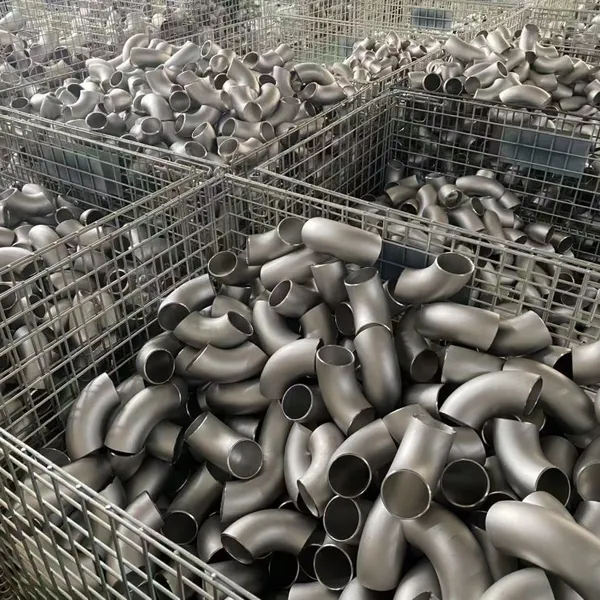
 Stainless Steel Elbow Welded Elbow 45/90/180-degree Seamless Pressed Elbow Long Radius Elbow Short Radius Elbow WholesaleNegotiableMOQ: 1 Piece
 -
316L/1.4405 Seamless Stainless Steel PipeNegotiableMOQ: 2 Meters
-
310s 440 Seamless Sanitary Piping Price 321 904l 201 20 Inch Seamless Steel Pipe A554 Stainless Steel PipeNegotiableMOQ: 1 Piece
-
China Brand ZZ Wholesale 304L 316 316L Welded Austenitic Piping Stainless Steel Pipe SupplierNegotiableMOQ: 2 Meters
-
304/304L/316/409/410/904L/2205/2507/310H Premium Stainless Steel Sheets Supplier Custom Sizes & FinishesUS$ 1.72MOQ: 1 Ton
-
Stainless Steel ASME B16.9 Sch 45 90 Degree Pipe Fittings ElbowUS$ 8MOQ: 1 Piece
-
China Brand Zz 304L 316/316L GB En JIS Standard Thin Wall Welded Stainless Steel Water Pipe/TubeNegotiableMOQ: 2 Meters
-
BA 4 Inch 6 Inch 8 Inch 201 304 304L 316 316L Welded Seamless Stainless Steel PipeNegotiableMOQ: 2 Meters
-
ASME B36.19M-2004 SCH40S Stainless Steel Pipe - Complies With EU 3.1 CertificationUS$ 1 - 650MOQ: 1 Piece
-
Factory TP309/TP309S/TP309H (UNS30900) Seamless Stainless Steel Pipe and Tube for Boiler BafflesUS$ 8MOQ: 200 Kilograms
-
TP347/TP347H/1.4961/S34709 Seamless Stainless Steel Pipe for UseNegotiableMOQ: 2 Meters
-
China 304 316 Stainless Steel Sanitary Welded Tube Food Grade Sanitary Grade Welded Pipe PolishingNegotiableMOQ: 1 Piece
-
China Manufacture Stainless Steel 316L Ba Seamless Welded Steel Pipe TubesUS$ 1760 - 1860MOQ: 5 Tons
-
316L/1.4405 Seamless Stainless Steel PipeNegotiableMOQ: 2 Meters
-
Stainless Steel Globe Valve – High Durability & Corrosion ResistanceNegotiableMOQ: 1 Piece
-
1.4529 Stainless Steel Flat Plate for Chemical Processing EquipmentUS$ 25 - 35MOQ: 1 Kilogram
-
Color Coated Steel Panels for Warehouse Partition Walls (Fireproof Grade)US$ 1 - 1.2MOQ: 50 Kilograms
-
Custom Width (600mm-1250mm) Colored Steel Coil With Scratch ResistanceUS$ 1 - 1.2MOQ: 50 Kilograms
-
0.5mm-3.0mm Colored Coated Steel Sheet With PVDF/Polyester CoatingUS$ 1 - 1.2MOQ: 50 Kilograms
-
JIS G 3322 Compliant Colored Coils With Third-Party Inspection ReportUS$ 1 - 1.2MOQ: 50 Kilograms