
 Business License

What types of stainless steel heat exchange tubes are there
The types of stainless steel heat exchange tubes can be classified from various perspectives, such as shape and structure, manufacturing process, and surface treatment method. Different types of heat exchange tubes have their own characteristics in terms of heat exchange efficiency, applicable scenarios, and fluid resistance. The specific classifications are as follows:
I. Classification by Shape and Structure
This is the most common classification method, mainly based on the geometric shape of the heat exchange tubes, which directly affects their layout in the heat exchanger and the heat exchange performance.
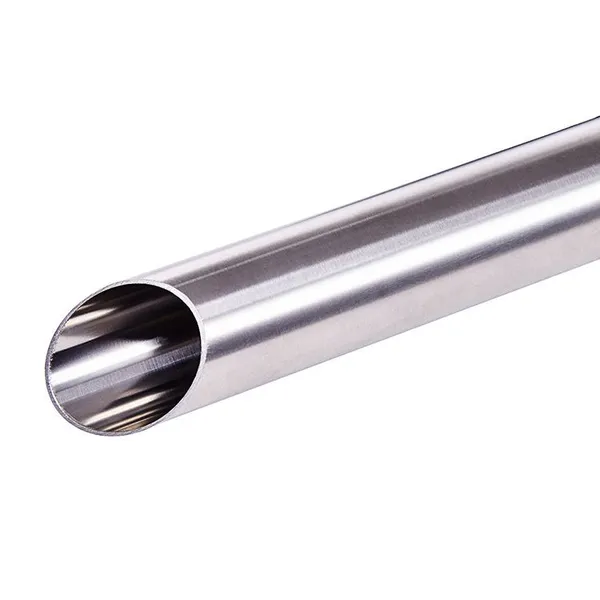
1. Straight tube
Structural characteristics: The tube body is in a straight shape, with a length usually ranging from 1 to 6 meters (customizable according to equipment requirements), and both ends are flush, facilitating welding or expansion connection with the tube plate.
Advantages: The manufacturing process is simple (no bending processing required), and the cost is low; the fluid flows smoothly inside the tube, with low resistance; installation and maintenance are convenient, and cleaning is possible (can use mechanical cleaning or high-pressure water flushing).
Application scenarios: Plate-fin heat exchangers, fixed tube-sheet heat exchangers, etc., especially suitable for scenarios where the medium is clean and does not easily form deposits (such as steam condensation, water exchange).
2. U-shaped Tube
Structural Feature: The straight tube is bent into a "U" shape, with both ends opening on the same side. It can be directly fixed on a tube plate (the other end can freely expand and contract).
Advantages: It can solve the problem of thermal expansion and contraction of the heat exchanger due to temperature changes (the free end can compensate for deformation), suitable for working conditions with large temperature differences; saves tube plate material (only one tube plate is needed), and the equipment structure is more compact.
Limitations: The cleaning of the tube interior is difficult (it is not easy to clean at the bend), not suitable for media prone to scaling.
Application Scenarios: Floating head heat exchangers, U-shaped tube heat exchangers, commonly used in high-temperature and high-pressure working conditions (such as power station condensers, chemical reaction vessel jacket heat exchange).
3. Special-shaped tubes
By altering the shape of the tube body to enhance fluid turbulence and improve heat transfer efficiency, common types include:
Wave-shaped tubes: The tube body has periodic wave-like protrusions (such as spiral waves, circular waves). The waves cause the fluid inside the tube to generate turbulence, breaking the boundary layer and enhancing heat transfer.
Advantages: The heat transfer efficiency is 30%-50% higher than that of straight tubes, with strong anti-scaling ability (turbulent flushing reduces fouling attachment); they have certain elasticity and can compensate for thermal expansion.
Application scenarios: High-viscosity media (such as crude oil, syrup), and conditions prone to scaling (such as cooling water heat exchange).
Spiral groove tube: The inner or outer wall of the tube is machined with spiral-shaped grooves. When fluid flows, it advances along the spiral line, forming a swirling flow, which enhances heat exchange.
Advantages: At the same flow rate, the heat transfer coefficient is 20%-40% higher than that of a straight tube, and the pressure loss increases less.
Applicable scenarios: Air conditioning condensers, refrigeration equipment evaporators, and other occasions that require efficient heat exchange.
Finned tubes: Metal fins (such as helical fins or straight fins) are added outside or inside the tube to increase the heat exchange area (the fins can expand the surface area by 2 to 10 times).
Advantages: Suitable for "gas - liquid" heat exchange (the heat transfer coefficient of the gas side is low, so the area needs to be expanded), such as air coolers and boiler economizers.
Material matching: The fins are usually made of the same material as the tube body (such as 304 stainless steel), to avoid corrosion caused by contact between different metals.
U-shaped corrugated tube: Combining the expansion property of the U-shaped tube and the efficient heat exchange feature of the corrugated tube, it is suitable for scenarios with large temperature differences and the need for enhanced heat transfer (such as chemical high-pressure heat exchangers).
II. Classification by Manufacturing Process
It is mainly classified based on whether there are seams in the tube body, which affects its strength and pressure resistance performance.
1. Seamless stainless steel heat exchange tube
Manufacturing process: The stainless steel billet is processed into a seamless tube body through hot rolling or cold drawing, with no welding process throughout the process.
Advantages: Overall strength is high (no weak points from welding), can withstand higher pressure (usually above 10MPa); inner wall is smooth, fluid resistance is low, and scaling is not easy.
Limitations: The manufacturing cost is high, especially for large-diameter (diameter > 50mm) seamless tubes, the processing is difficult.
Application scenarios: High-pressure conditions (such as power station boilers, hydrogenation reactors), corrosive media with high pressure (such as high-pressure chemical reaction liquids).
2. Welding of Stainless Steel Heat Exchanger Tubes
Manufacturing Process: Roll the stainless steel sheet into a tubular shape, and weld the seams using TIG welding (tungsten inert gas protection welding) or plasma welding to form the tube body.
Advantages: Lower cost (10%-30% lower than seamless tubes), capable of producing large-diameter and long-length tubes, and the surface accuracy is easy to control.
Limitations: There may be minor defects at the weld seams (such as incomplete penetration), and the pressure resistance performance is slightly lower than that of seamless tubes (usually applicable to ≤ 6MPa conditions).
Application Scenarios: Medium and low-pressure heat exchangers (such as food coolers, air conditioning evaporators), non-corrosive or low-corrosive media (such as cooling water, steam).
III. Classification by Surface Treatment Method
By surface processing, the physical properties of the pipe body are altered to optimize the heat exchange efficiency or corrosion resistance.
1. Smooth Tube
Features: The inner and outer surfaces of the tube are in a smooth state after original rolling or polishing, with a low roughness (Ra ≤ 0.8 μm).
Advantages: Low fluid resistance, suitable for high flow rate media; easy to clean, suitable for hygienic scenarios (such as medicine, food).
Application scenarios: Pure water heat exchange, aseptic pharmaceutical equipment, beer cooling system, etc.
2. Roughened Surface Tube (or Porous Surface Tube)
Features: Through processes such as sandblasting, electrolysis or chemical etching, the surface of the tube is made to have tiny depressions or porous structures, increasing the surface area and fluid turbulence.
Advantages: The heat transfer area is increased by 10% - 30% compared to the smooth surface tube, especially in boiling or condensation conditions, it can enhance the heat transfer at the vapor-liquid interface (such as refrigerant evaporation, steam condensation).
Application scenarios: Evaporators in refrigeration equipment, steam condensers in boilers, etc.
3. Coated Tube
Features: A special coating (such as ceramic coating, nickel-based alloy coating) is applied on the surface of the tube to enhance corrosion resistance or wear resistance.
Advantages: Suitable for harsh corrosive environments (such as seawater containing chloride ions) or high wear conditions (such as mineral slurry containing particles), extending service life.
Application scenarios: Seawater desalination equipment, mine wastewater heat exchangers, etc.
IV. Classification by Section Shape
In addition to the conventional circular cross-section, the special cross-section heat exchange tubes can enhance efficiency by altering the flow pattern of the fluid.
1. Circular Tube
Features: The cross-section is circular, which is the most commonly used type. The manufacturing process is simple and the fluid flow is good.
Advantages: Stronger pressure-bearing capacity, good sealing performance when connected to the tube plate, and the widest application range.
2. Special-shaped tubes
Elliptical tubes: The cross-section is elliptical. Under the same cross-sectional area, the perimeter is longer (increasing the heat exchange area), and the fluid is more likely to form turbulence inside the tube, resulting in a 15%-20% higher heat exchange efficiency compared to circular tubes, making them suitable for compact heat exchangers.
Flat tubes: The cross-section is flat. They can reduce the volume of the heat exchanger and are often used in scenarios with limited space such as air conditioners and car radiators.
Summary
The types of stainless steel heat exchange tubes are diverse. When choosing, one needs to consider the requirements of heat exchange efficiency (such as corrugated tubes and finned tubes are suitable for efficient heat exchange), working conditions (such as seamless tubes are suitable for high pressure, U-shaped tubes are suitable for scenarios with large temperature differences), medium characteristics (such as smooth tubes are suitable for clean media, coated tubes are suitable for highly corrosive media), and cost budget (such as welded tubes are more economical than seamless tubes). Different combinations (such as "U-shaped corrugated tube + 316L material") can further optimize the performance of the equipment and meet the needs of complex industrial scenarios.
Recently Posted
-
Does the stainless steel welded pipe have specific temperature requirements during the solution heat
January 20, 2026Solution heat treatment involves heating stainless steel to a high temperature and then rapidly cooling it to achieve an oversatur Read More
 -
Can stainless steel welded pipes be made into thick pipes
January 20, 2026With the improvement of high-quality welding technology and increasingly strict weld inspection, the application fields of s Read More
 -
Three types of commonly available food-grade stainless steel on the market
January 20, 2026The common food-grade stainless steel pipes are mainly composed of iron, chromium and carbon and other elements. Household stainle Read More
 -
What are the requirements for stainless steel welding pipe production equipment
January 20, 2026As is well known, stainless steel welded pipes have been widely used in various industries such as machinery, chemical engineering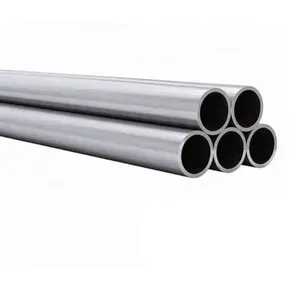 Read More

Contact Us
Recommended Products
-
 Stainless Steel Elbow Welded Elbow 45/90/180-degree Seamless Pressed Elbow Long Radius Elbow Short Radius Elbow WholesaleNegotiableMOQ: 1 Piece
 -
316L/1.4405 Seamless Stainless Steel PipeNegotiableMOQ: 2 Meters
-
310s 440 Seamless Sanitary Piping Price 321 904l 201 20 Inch Seamless Steel Pipe A554 Stainless Steel PipeNegotiableMOQ: 1 Piece
-
China Brand ZZ Wholesale 304L 316 316L Welded Austenitic Piping Stainless Steel Pipe SupplierNegotiableMOQ: 2 Meters
-
304/304L/316/409/410/904L/2205/2507/310H Premium Stainless Steel Sheets Supplier Custom Sizes & FinishesUS$ 1.72MOQ: 1 Ton
-
Stainless Steel ASME B16.9 Sch 45 90 Degree Pipe Fittings ElbowUS$ 8MOQ: 1 Piece
-
China Brand Zz 304L 316/316L GB En JIS Standard Thin Wall Welded Stainless Steel Water Pipe/TubeNegotiableMOQ: 2 Meters
-
BA 4 Inch 6 Inch 8 Inch 201 304 304L 316 316L Welded Seamless Stainless Steel PipeNegotiableMOQ: 2 Meters
-
ASME B36.19M-2004 SCH40S Stainless Steel Pipe - Complies With EU 3.1 CertificationUS$ 1 - 650MOQ: 1 Piece
-
Factory TP309/TP309S/TP309H (UNS30900) Seamless Stainless Steel Pipe and Tube for Boiler BafflesUS$ 8MOQ: 200 Kilograms
-
TP347/TP347H/1.4961/S34709 Seamless Stainless Steel Pipe for UseNegotiableMOQ: 2 Meters
-
China 304 316 Stainless Steel Sanitary Welded Tube Food Grade Sanitary Grade Welded Pipe PolishingNegotiableMOQ: 1 Piece
-
China Manufacture Stainless Steel 316L Ba Seamless Welded Steel Pipe TubesUS$ 1760 - 1860MOQ: 5 Tons
-
316L/1.4405 Seamless Stainless Steel PipeNegotiableMOQ: 2 Meters
-
Stainless Steel Globe Valve – High Durability & Corrosion ResistanceNegotiableMOQ: 1 Piece
-
1.4529 Stainless Steel Flat Plate for Chemical Processing EquipmentUS$ 25 - 35MOQ: 1 Kilogram
-
Color Coated Steel Panels for Warehouse Partition Walls (Fireproof Grade)US$ 1 - 1.2MOQ: 50 Kilograms
-
Custom Width (600mm-1250mm) Colored Steel Coil With Scratch ResistanceUS$ 1 - 1.2MOQ: 50 Kilograms
-
0.5mm-3.0mm Colored Coated Steel Sheet With PVDF/Polyester CoatingUS$ 1 - 1.2MOQ: 50 Kilograms
-
JIS G 3322 Compliant Colored Coils With Third-Party Inspection ReportUS$ 1 - 1.2MOQ: 50 Kilograms