
 Business License

How does the performance of duplex stainless steel pipes fare in high-temperature and high-pressure
Biphasic stainless steel tubes (such as S32205, 2507, etc.) possess the characteristics of both austenitic and ferritic stainless steels, and exhibit unique performance advantages in high-temperature and high-pressure environments. However, they also have certain limitations. The following provides a detailed analysis from key performance dimensions:
I. Core Performance in High-Temperature Environments
1. Mechanical Properties: High Strength and Resistance to Creep
Advantages at normal and medium temperatures: The yield strength of duplex stainless steel (typically 400-600 MPa) is 1.5-2 times that of austenitic stainless steel (such as 304, 316L, with a yield strength of 200-300 MPa). It can maintain high tensile strength and deformation resistance even at high temperatures (≤300°C), making it suitable for withstanding mechanical loads from high pressure.
Limitations of high-temperature strength: When the temperature exceeds 350°C, the strength of duplex stainless steel will gradually decrease with increasing temperature, and its creep resistance (the ability to resist slow deformation at high temperatures) is weaker than that of high-alloy austenitic stainless steel (such as 310S). For example, at temperatures above 400°C, its creep limit is significantly lower than that of 310S, so it is not suitable for long-term use in ultra-high temperatures above 400°C.
2. Organizational Stability: Temperature-sensitive "Phase Equilibrium"
The core advantage of duplex stainless steel relies on the balance ratio of austenite and ferrite (typically each accounting for 40%-60%), but high temperatures will disrupt this balance:
300-400°C range: Ferrite may gradually decompose into brittle σ phase (a metal interphase), resulting in decreased toughness and increased brittleness, and prone to low-temperature impact fracture.
Above 450°C: The austenite phase may precipitate carbides or intermetallic phases, further deteriorating mechanical properties, and even causing "high-temperature embrittlement" phenomenon.
Therefore, the recommended long-term use temperature of duplex stainless steel is usually no more than 300-350°C, and short-term (such as start-up and shutdown conditions) can withstand 400°C, but the time must be strictly controlled.
3. Corrosion Resistance: Resistance to High-Temperature Corrosion in Harsh Media
In high-temperature and high-pressure environments, the corrosiveness of media (such as water containing chloride ions, sulfides, or steam) will significantly increase. The corrosion resistance of duplex stainless steel is as follows:
Resistance to Stress Corrosion Cracking (SCC): Superior to austenitic stainless steel (such as 316L), especially in high-temperature and high-pressure water containing chloride ions (such as seawater desalination, chemical high-pressure heat exchangers), due to the presence of ferrite phase, it can inhibit the chloride stress corrosion that occurs easily in austenitic stainless steel.
Resistance to pitting and crevice corrosion: High chromium and molybdenum content (such as 2507 with 25% Cr and 4% Mo), the pitting resistance equivalent (PREN) is usually >30, superior to 316L (PREN ≈ 25), can resist local corrosion in high-temperature and high-concentration salt fog, acidic media.
High-temperature oxidation performance: The chromium content (typically 21%-25%) is higher than that of ordinary austenitic stainless steel, and it can form a dense oxide film at 300-400°C, with good oxidation resistance; but above 600°C, the oxidation rate significantly accelerates, not as good as high-chromium-nickel austenitic stainless steel (such as 310S, containing 25% Cr and 20% Ni).
II. Core Performance in High-Pressure Environments
1. Resistance to Pressure: The wall thickness advantage brought by high strength
The high strength (tensile strength ≥ 600 MPa) of duplex stainless steel enables it to withstand higher design pressures. Under the same working pressure, the wall thickness of duplex stainless steel pipes can be reduced by 30%-50% compared to austenitic stainless steel pipes, which not only lowers material costs but also reduces heat transfer resistance (thin walls are more conducive to heat transfer), making it suitable for high-pressure boiler heat exchangers (such as in conditions with a pressure > 10 MPa).
2. Resistance to Fatigue and Impact
In high-pressure environments, the pipeline may experience periodic loads due to pressure fluctuations. The fatigue strength of duplex stainless steel (about 200-300 MPa after 10⁷ cycles) is higher than that of austenitic stainless steel, and it has excellent low-temperature toughness (-40°C impact energy ≥ 40 J), which can prevent brittle fracture under high-pressure impact.
III. Applicable Scenarios and Limitations Applicable scenarios
Medium-temperature and high-pressure + corrosive medium: such as chemical high-pressure reaction vessel heat exchangers (temperature 200-350℃, pressure 10-30MPa, medium containing chloride ions and hydrogen sulfide), seawater desalination high-pressure evaporators, etc.
Working conditions that require both strength and corrosion resistance: such as high-pressure heat exchange equipment in oil and gas extraction (containing salt water, CO₂/H₂S high-temperature fluids).
Limitations
Not applicable for ultra-high temperature: when the temperature exceeds 400℃, the mechanical stability and oxidation resistance decrease. In this case, 310S and other high-temperature-resistant austenitic stainless steels need to be used instead.
High welding process requirements: During welding, the heat input must be strictly controlled to avoid excessive ferrite content or σ phase precipitation. Otherwise, the toughness and corrosion resistance of the joint will be reduced. Post-weld heat treatment (such as 1050-1100℃ solution treatment) is required.
High cost: The alloy content (nickel, molybdenum) of duplex stainless steel is higher than that of 304/316L. The procurement cost is approximately 1.5-2 times that of 316L, and the selection should be based on the cost-performance ratio of the working conditions.
Summary
The duplex stainless steel pipe performs exceptionally well in environments below 300-350℃, under high pressure (≤ 30 MPa), and in the presence of corrosive media (such as chloride ions, sulfides). It possesses high strength (resistant to high pressure), excellent corrosion resistance (resistant to stress corrosion / pitting corrosion), and good toughness. It is an ideal choice for demanding conditions. However, it should avoid extremely high temperatures (> 400℃) and attention must be paid to welding quality control to ensure stable performance.
Recently Posted
-
Does the stainless steel welded pipe have specific temperature requirements during the solution heat
January 20, 2026Solution heat treatment involves heating stainless steel to a high temperature and then rapidly cooling it to achieve an oversatur Read More
 -
Can stainless steel welded pipes be made into thick pipes
January 20, 2026With the improvement of high-quality welding technology and increasingly strict weld inspection, the application fields of s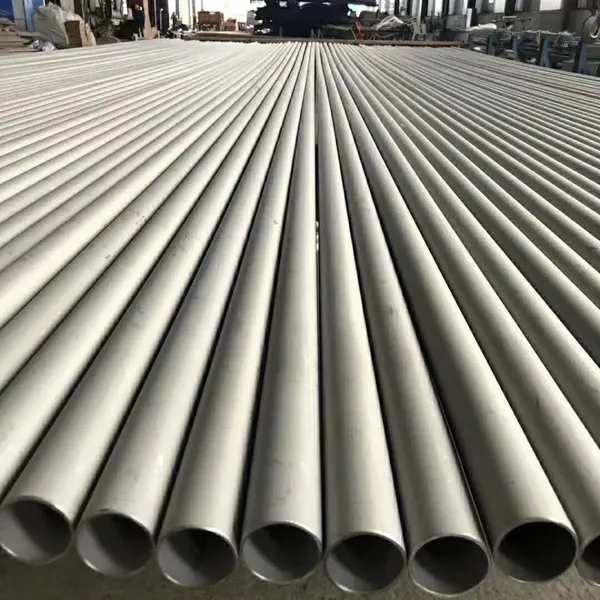 Read More
 -
Three types of commonly available food-grade stainless steel on the market
January 20, 2026The common food-grade stainless steel pipes are mainly composed of iron, chromium and carbon and other elements. Household stainle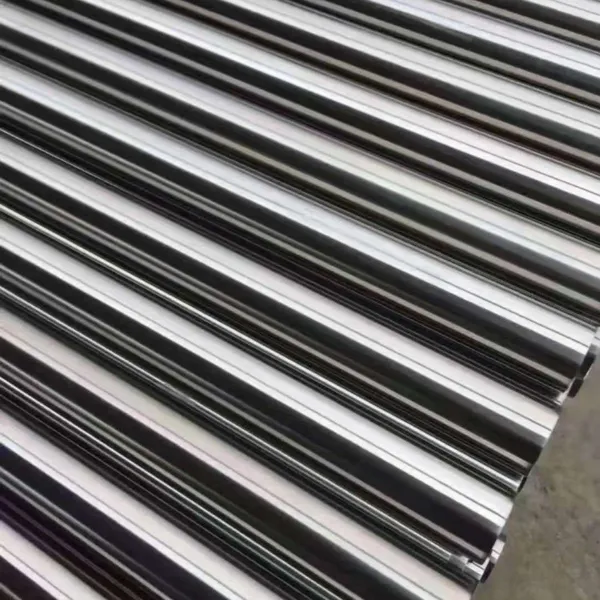 Read More
 -
What are the requirements for stainless steel welding pipe production equipment
January 20, 2026As is well known, stainless steel welded pipes have been widely used in various industries such as machinery, chemical engineering Read More

Contact Us
Recommended Products
-
 Stainless Steel Elbow Welded Elbow 45/90/180-degree Seamless Pressed Elbow Long Radius Elbow Short Radius Elbow WholesaleNegotiableMOQ: 1 Piece
 -
316L/1.4405 Seamless Stainless Steel PipeNegotiableMOQ: 2 Meters
-
310s 440 Seamless Sanitary Piping Price 321 904l 201 20 Inch Seamless Steel Pipe A554 Stainless Steel PipeNegotiableMOQ: 1 Piece
-
China Brand ZZ Wholesale 304L 316 316L Welded Austenitic Piping Stainless Steel Pipe SupplierNegotiableMOQ: 2 Meters
-
304/304L/316/409/410/904L/2205/2507/310H Premium Stainless Steel Sheets Supplier Custom Sizes & FinishesUS$ 1.72MOQ: 1 Ton
-
Stainless Steel ASME B16.9 Sch 45 90 Degree Pipe Fittings ElbowUS$ 8MOQ: 1 Piece
-
China Brand Zz 304L 316/316L GB En JIS Standard Thin Wall Welded Stainless Steel Water Pipe/TubeNegotiableMOQ: 2 Meters
-
BA 4 Inch 6 Inch 8 Inch 201 304 304L 316 316L Welded Seamless Stainless Steel PipeNegotiableMOQ: 2 Meters
-
ASME B36.19M-2004 SCH40S Stainless Steel Pipe - Complies With EU 3.1 CertificationUS$ 1 - 650MOQ: 1 Piece
-
Factory TP309/TP309S/TP309H (UNS30900) Seamless Stainless Steel Pipe and Tube for Boiler BafflesUS$ 8MOQ: 200 Kilograms
-
TP347/TP347H/1.4961/S34709 Seamless Stainless Steel Pipe for UseNegotiableMOQ: 2 Meters
-
China 304 316 Stainless Steel Sanitary Welded Tube Food Grade Sanitary Grade Welded Pipe PolishingNegotiableMOQ: 1 Piece
-
China Manufacture Stainless Steel 316L Ba Seamless Welded Steel Pipe TubesUS$ 1760 - 1860MOQ: 5 Tons
-
316L/1.4405 Seamless Stainless Steel PipeNegotiableMOQ: 2 Meters
-
Stainless Steel Globe Valve – High Durability & Corrosion ResistanceNegotiableMOQ: 1 Piece
-
1.4529 Stainless Steel Flat Plate for Chemical Processing EquipmentUS$ 25 - 35MOQ: 1 Kilogram
-
Color Coated Steel Panels for Warehouse Partition Walls (Fireproof Grade)US$ 1 - 1.2MOQ: 50 Kilograms
-
Custom Width (600mm-1250mm) Colored Steel Coil With Scratch ResistanceUS$ 1 - 1.2MOQ: 50 Kilograms
-
0.5mm-3.0mm Colored Coated Steel Sheet With PVDF/Polyester CoatingUS$ 1 - 1.2MOQ: 50 Kilograms
-
JIS G 3322 Compliant Colored Coils With Third-Party Inspection ReportUS$ 1 - 1.2MOQ: 50 Kilograms