
 Business License

The transformation process of austenite during heat treatment
During the heat treatment process, the transformation of austenite (γ-Fe, face-centered cubic structure, a solid solution of carbon in γ-Fe) is the core step that determines the final microstructure and properties of steel materials. It mainly consists of two stages: the formation of austenite (austenitization) and the cooling transformation of austenite. The following is a detailed description of the transformation process and its characteristics:
I. Formation of Austenite (Austenitization)
Austenitization refers to the process where steel is heated above its critical temperature (Ac₁ or Ac₃), and pearlite (a mixture of ferrite and cementite) transforms into austenite. Its essence is the transformation of the crystal structure from body-centered cubic (ferrite) to face-centered cubic (austenite) through atomic diffusion. This process is divided into four stages:
1. Austenite nucleation
When the steel is heated above the Ac₁ temperature, austenite first nucleates at the interface between ferrite and cementite in the pearlite. This is because the interface has high energy (due to the presence of distortion energy) and the carbon concentration is uneven (the carbon content is lower in ferrite and higher in cementite), meeting the thermodynamic and kinetic conditions for nucleation.
2. Austenite growth
The nucleated austenite crystals continue to grow by "absorbing" ferrite and cementite from the surrounding area:
Ferrite (body-centered cubic) transforms into austenite through atomic rearrangement;
Cementite (Fe₃C) decomposes into carbon and iron atoms, with carbon atoms diffusing into the austenite (the solubility of carbon in austenite is much higher than that in ferrite).
3. Residual carbide dissolution
When the pearlite completely transforms into austenite, if the heating temperature is high enough or the holding time is long enough, the uncompletely decomposed cementite (residual carbides) will continue to dissolve into the austenite until it disappears completely.
4. Austenite composition homogenization
Due to the uneven carbon concentration distribution in the initial austenite (higher carbon content in the cementite area and lower carbon content in the ferrite area), composition homogenization through the diffusion of carbon atoms is required, ultimately forming a compositionally uniform austenite.
II. Cooling Transformation of Austenite
The cooling transformation of austenite is a key aspect in heat treatment (the core of processes such as quenching, annealing, and normalizing), and the transformation products depend on the cooling rate and transformation temperature. It can be divided into two main categories: isothermal transformation (transformation during constant temperature holding) and continuous cooling transformation (transformation during continuous cooling). Corresponding to different transformation products.
1. Isothermal Transformation (Based on TTT Curve)
Isothermal transformation refers to rapidly cooling austenite to a certain temperature (below A₁) and holding it at that temperature to complete the transformation under constant temperature. The transformation law can be described by the TTT curve (isothermal transformation kinetics curve). Depending on the transformation temperature, the products can be classified into three types:
(1) Pearlite Transformation (High Temperature Zone, A₁ to 550°C)
Transformation mechanism: Diffusion-type transformation (both iron atoms and carbon atoms undergo diffusion).
Product form: A layered mixture of ferrite (α-Fe) and cementite (Fe₃C), known as pearlite.
Based on the degree of refinement of the lamellar spacing, it can be classified as:
Pearlite: The lamellar spacing is relatively coarse (spacing > 0.5 μm), easily distinguishable under an optical microscope;
Spherite: The lamellar spacing is relatively fine (0.1 - 0.5 μm), requiring high-power microscopy for observation;
Triclinite: The lamellar spacing is extremely fine (<0.1 μm), only distinguishable through electron microscopy.
Performance characteristics: The finer the lamellar spacing, the higher the strength and hardness (such as triclinite hardness > spherite > pearlite), but the toughness is generally good.
(2) Bainite Transformation (Medium Temperature Zone, 550°C to Ms Point)
Transformation mechanism: Semi-diffusion-type transformation (iron atoms do not diffuse, carbon atoms undergo short-distance diffusion).
Product form: According to the formation temperature, it can be classified as:
Upper Bainite: Formed in the range of 550°C to 350°C, presenting a "feather-like" appearance (iron carbide strips are parallelly arranged, with carbonitrides distributed between the strips);
Lower Bainite: Formed in the range of 350°C to the Ms point, presenting a "needle-like" appearance (iron carbide needles are uniformly distributed within fine carbonitrides).
Performance characteristics: Upper Bainite has poor toughness (the interlamellar carbonitrides are prone to causing stress concentration); Lower Bainite has high strength (hardness 50 - 60 HRC) and good toughness (better than upper Bainite and pearlite), being an excellent composite material structure.
(3) Martensite Transformation (Low Temperature Zone, below the Ms Point)
Transformation mechanism: Non-diffusion-type transformation (atoms only undergo shear displacement, no long-distance diffusion), belonging to "shear-type" transformation.
Product form: Over-saturated carbon α-Fe solid solution (body-centered cubic structure), presenting needle-like or plate-like shapes:
High-carbon Martensite: When the carbon content is > 1.0%, it presents "needle-like" (intersecting and with microscopic cracks);
Low-carbon Martensite: When the carbon content is <0.2%, it presents "plate-like" (parallel arrangement, without cracks).
Performance characteristics: Extremely high hardness (low-carbon martensite ~ 30 - 50 HRC, high-carbon martensite ~ 60 - 65 HRC), but high brittleness (especially high-carbon martensite), and after transformation, there will be residual austenite (residual austenite).
Critical temperatures:
Ms Point: The starting temperature of martensite transformation (decreases with increasing carbon content, pure iron Ms ≈ 910°C, 1.0% carbon content Ms ≈ 210°C);
Mf Point: The end temperature of martensite transformation (with excessive carbon content, Mf may be lower than room temperature, resulting in residual austenite at room temperature). Slow cooling rate (such as normalizing): Under air cooling conditions, fine lamellar pearlite (spheroidite) is obtained;
Fast cooling rate (such as oil cooling): May result in bainite (medium-speed cooling);
Extremely fast cooling rate (such as water quenching): Beyond the "critical cooling speed", it is directly overcooled below the Ms point, resulting in martensite (+ residual austenite).
III. Key Factors Affecting Austenite Transformation
1. Chemical Composition:
Carbon content: Increasing the carbon content will lower the Ms and Mf points, increase the amount of residual austenite; accelerate the pearlite transformation and delay the bainite and martensite transformations.
Alloy elements: Elements such as Cr, Ni, and Mn lower the Ms point and delay the martensite transformation; elements such as Si and Mo refine the pearlite or bainite structure.
2. Austenitization Conditions:
The higher the heating temperature and the longer the holding time, the coarser the austenite grains, the more uniform the composition, and the slower the subsequent cooling transformation rate (coarse grains reduce the nucleation rate).
Cooling rate: It is the core factor determining the transformation products (for example, the key to quenching is "rapid cooling to avoid the pearlite / bainite transformation zone").
Summary
The transformation of austenite is the core of heat treatment. By controlling the austenitizing temperature, holding time and cooling rate, different structures such as pearlite, bainite and martensite can be obtained, thereby regulating the properties of steel materials such as strength, hardness and toughness (for example, quenching + tempering can result in tempering martensite with a balance of strength and toughness, and normalizing can produce a uniform sorbite structure).
Recently Posted
-
Does the stainless steel welded pipe have specific temperature requirements during the solution heat
January 20, 2026Solution heat treatment involves heating stainless steel to a high temperature and then rapidly cooling it to achieve an oversatur Read More
 -
Can stainless steel welded pipes be made into thick pipes
January 20, 2026With the improvement of high-quality welding technology and increasingly strict weld inspection, the application fields of s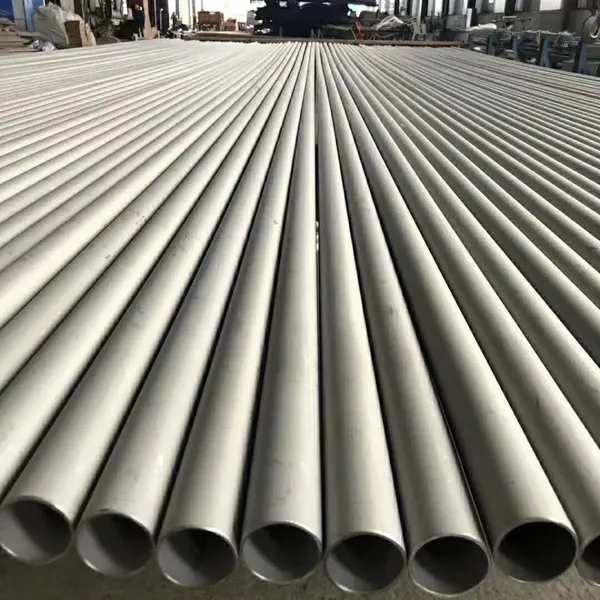 Read More
 -
Three types of commonly available food-grade stainless steel on the market
January 20, 2026The common food-grade stainless steel pipes are mainly composed of iron, chromium and carbon and other elements. Household stainle Read More
 -
What are the requirements for stainless steel welding pipe production equipment
January 20, 2026As is well known, stainless steel welded pipes have been widely used in various industries such as machinery, chemical engineering Read More

Contact Us
Recommended Products
-
 Stainless Steel Elbow Welded Elbow 45/90/180-degree Seamless Pressed Elbow Long Radius Elbow Short Radius Elbow WholesaleNegotiableMOQ: 1 Piece
 -
316L/1.4405 Seamless Stainless Steel PipeNegotiableMOQ: 2 Meters
-
310s 440 Seamless Sanitary Piping Price 321 904l 201 20 Inch Seamless Steel Pipe A554 Stainless Steel PipeNegotiableMOQ: 1 Piece
-
China Brand ZZ Wholesale 304L 316 316L Welded Austenitic Piping Stainless Steel Pipe SupplierNegotiableMOQ: 2 Meters
-
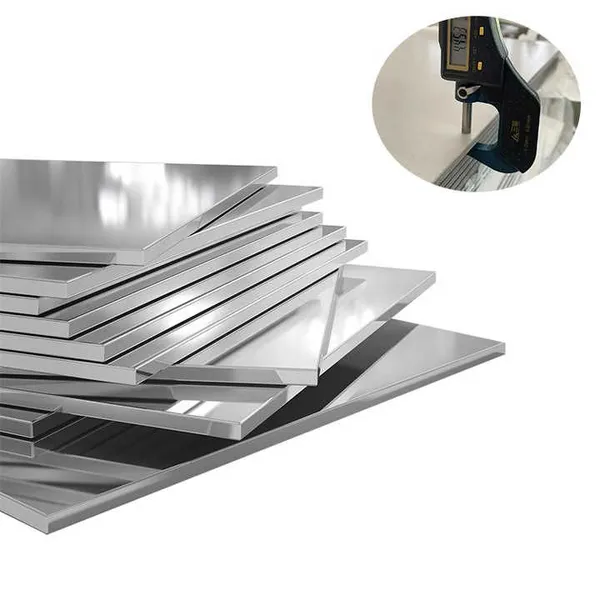
304/304L/316/409/410/904L/2205/2507/310H Premium Stainless Steel Sheets Supplier Custom Sizes & FinishesUS$ 1.72MOQ: 1 Ton
-
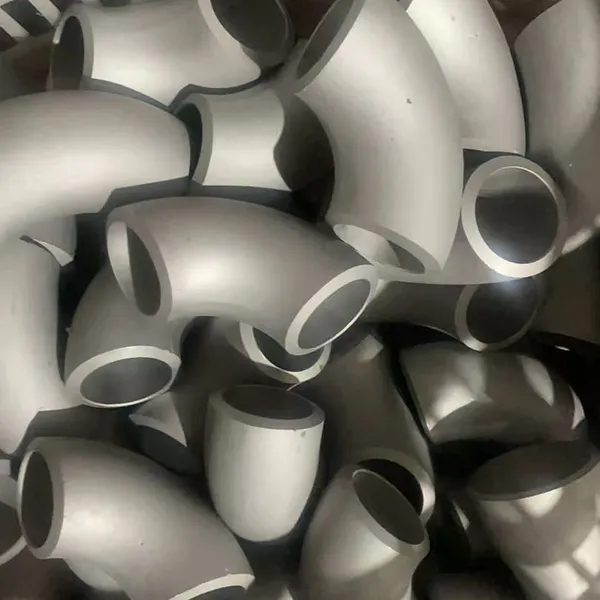
Stainless Steel ASME B16.9 Sch 45 90 Degree Pipe Fittings ElbowUS$ 8MOQ: 1 Piece
-
China Brand Zz 304L 316/316L GB En JIS Standard Thin Wall Welded Stainless Steel Water Pipe/TubeNegotiableMOQ: 2 Meters
-
BA 4 Inch 6 Inch 8 Inch 201 304 304L 316 316L Welded Seamless Stainless Steel PipeNegotiableMOQ: 2 Meters
-
ASME B36.19M-2004 SCH40S Stainless Steel Pipe - Complies With EU 3.1 CertificationUS$ 1 - 650MOQ: 1 Piece
-
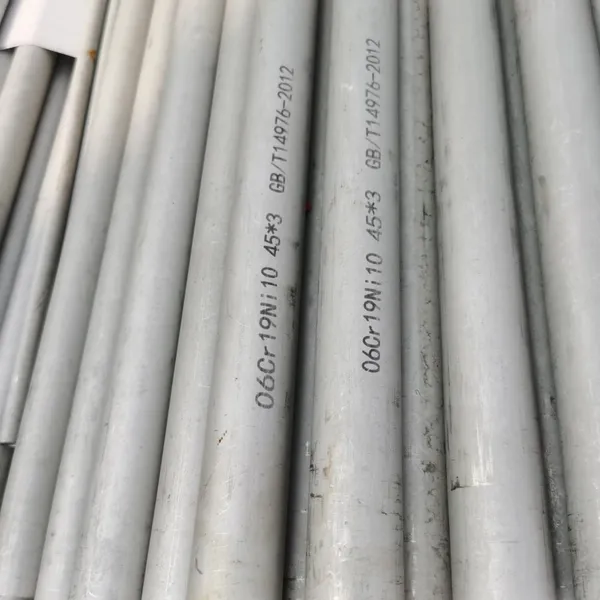
Factory TP309/TP309S/TP309H (UNS30900) Seamless Stainless Steel Pipe and Tube for Boiler BafflesUS$ 8MOQ: 200 Kilograms
-
TP347/TP347H/1.4961/S34709 Seamless Stainless Steel Pipe for UseNegotiableMOQ: 2 Meters
-
China 304 316 Stainless Steel Sanitary Welded Tube Food Grade Sanitary Grade Welded Pipe PolishingNegotiableMOQ: 1 Piece
-
China Manufacture Stainless Steel 316L Ba Seamless Welded Steel Pipe TubesUS$ 1760 - 1860MOQ: 5 Tons
-
316L/1.4405 Seamless Stainless Steel PipeNegotiableMOQ: 2 Meters
-
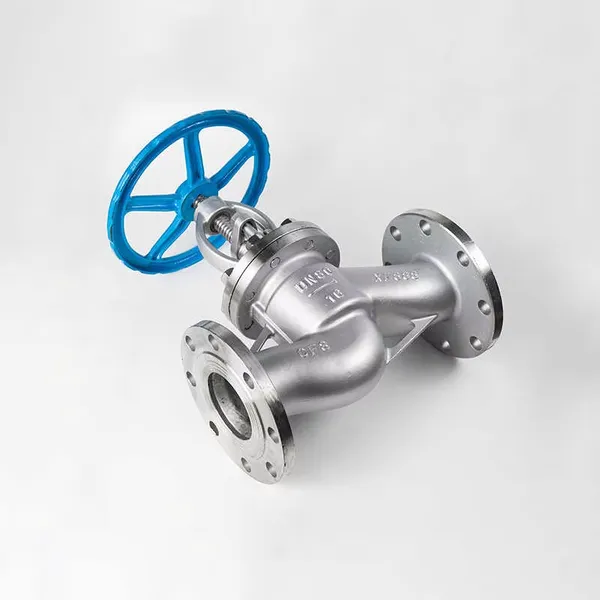
Stainless Steel Globe Valve – High Durability & Corrosion ResistanceNegotiableMOQ: 1 Piece
-
1.4529 Stainless Steel Flat Plate for Chemical Processing EquipmentUS$ 25 - 35MOQ: 1 Kilogram
-
Color Coated Steel Panels for Warehouse Partition Walls (Fireproof Grade)US$ 1 - 1.2MOQ: 50 Kilograms
-
Custom Width (600mm-1250mm) Colored Steel Coil With Scratch ResistanceUS$ 1 - 1.2MOQ: 50 Kilograms
-
0.5mm-3.0mm Colored Coated Steel Sheet With PVDF/Polyester CoatingUS$ 1 - 1.2MOQ: 50 Kilograms
-
JIS G 3322 Compliant Colored Coils With Third-Party Inspection ReportUS$ 1 - 1.2MOQ: 50 Kilograms