
 Business License

Comparison of the corrosion resistance of INCONEL alloy 625 and 725
The INCONEL alloys 625 and 725 both possess excellent corrosion resistance. They perform similarly in most corrosive environments. However, due to minor differences in composition, their corrosion resistance varies slightly in some specific conditions. Here is the detailed comparison:
Similar corrosion resistance: Both contain a large amount of nickel and chromium. The high content of nickel enables the alloy to have excellent resistance to corrosion by reducing media, while chromium can form a dense oxide film on the surface of the alloy, enhancing its resistance to oxidative media corrosion. Therefore, they both can provide corrosion resistance in both reducing and oxidizing environments, and both have good resistance to pitting and crevice corrosion, as well as resistance to chloride-ion stress corrosion cracking.
Differences in corrosion resistance in acidic solutions: The INCONEL alloy 625 and 725 both have certain corrosion resistance in non-oxidizing acids such as sulfuric acid, hydrochloric acid, and phosphoric acid. At room temperature, both have good corrosion resistance in hydrochloric acid, but as the temperature rises, the corrosion resistance of both will decrease, and neither is as good as nickel-molybdenum alloys. In phosphoric acid, both have good corrosion resistance, especially for wet-process phosphoric acid environments. However, due to the reduction of carbon content in 725 alloy and the addition of titanium and aluminum, its sensitivity to carbide precipitation is lower. In some acidic environments with higher requirements for intergranular corrosion resistance, the corrosion resistance of 725 alloy is slightly better than that of 625 alloy.
Differences in corrosion resistance in specific media: INCONEL alloy 725 exhibits outstanding resistance to corrosion, hydrogen embrittlement, and stress corrosion cracking in oil and gas media containing carbon dioxide, chloride, and hydrogen sulfide. Its corrosion resistance is particularly prominent in deep wells with acidic media, and it is commonly used in downhole tools and wellhead equipment in oil and gas extraction. Although alloy 625 can also withstand these media, it is more suitable for use when high strength is required while resisting corrosion from such media.
Differences in corrosion resistance under high temperatures: The 625 alloy, due to its solid solution strengthening property, can maintain good corrosion resistance under high-temperature conditions and can be used for a long time in environments above 800℃. It is commonly used in high-temperature components such as gas turbine combustion chambers and aircraft engine exhaust pipes. The 725 alloy mainly enhances its strength through precipitation hardening. Above 650℃, its strengthening phase may decompose, resulting in a decrease in strength and corrosion resistance. Therefore, its operating temperature is generally not more than 650℃.
The following is a comparison chart of the corrosion resistance of INCONEL® alloy 625 and 725. Based on the composition characteristics and environmental adaptability, it is analyzed from four dimensions: corrosion types, typical media, performance differences, and mechanism analysis.
Corrosion Resistance Comparison Chart of INCONEL® Alloy 625 vs. 725
Picture
Summary of Key Differences
Intergranular corrosion: 725 significantly outperforms 625 with a low C+Ti/Al ratio, making it suitable for direct use after welding.
Hydrogen sulfide environment: The 725 formulation's enhanced precipitation resistance combined with corrosion-resistant components makes it more reliable in H₂S/CO₂ gas environments.
High-temperature oxidation: The solid solution strengthening mechanism of 625 makes it more stable for long-term use at temperatures above 800℃.
Hydrogen embrittlement susceptibility: The low hydrogen diffusion rate of 625 offers a greater advantage in a strongly reducing environment.
Application Scenario Suggestions
Priority selection 625: High-temperature oxidative environment (such as in gas turbines), strong reducing acids (such as hydrochloric acid), complex welding structures.
Priority selection 725: Medium-temperature and high-pressure oil and gas extraction (in H₂S/CO₂ environment), deep-sea pipelines, high-strength corrosion-resistant fasteners.
Through the coordinated optimization of component design and strengthening mechanisms, the two alloys achieve complementary corrosion resistance properties. Therefore, the most suitable solution should be selected based on the specific working conditions.
Recently Posted
-
Does the stainless steel welded pipe have specific temperature requirements during the solution heat
January 20, 2026Solution heat treatment involves heating stainless steel to a high temperature and then rapidly cooling it to achieve an oversatur Read More
 -
Can stainless steel welded pipes be made into thick pipes
January 20, 2026With the improvement of high-quality welding technology and increasingly strict weld inspection, the application fields of s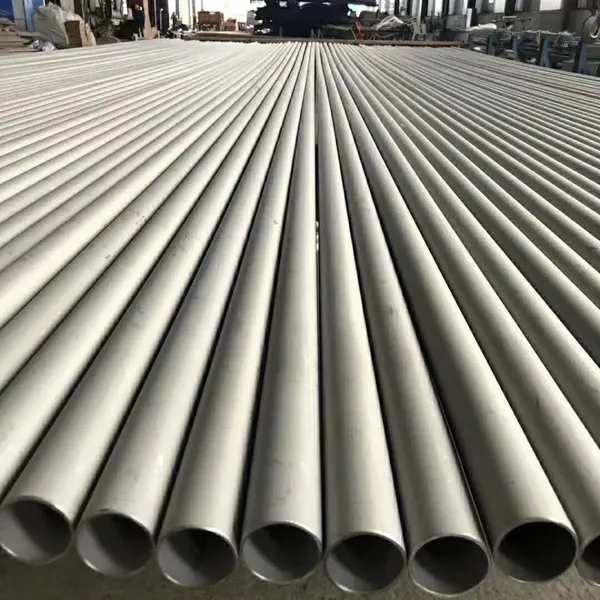 Read More
 -
Three types of commonly available food-grade stainless steel on the market
January 20, 2026The common food-grade stainless steel pipes are mainly composed of iron, chromium and carbon and other elements. Household stainle Read More
 -
What are the requirements for stainless steel welding pipe production equipment
January 20, 2026As is well known, stainless steel welded pipes have been widely used in various industries such as machinery, chemical engineering Read More

Contact Us
Recommended Products
-
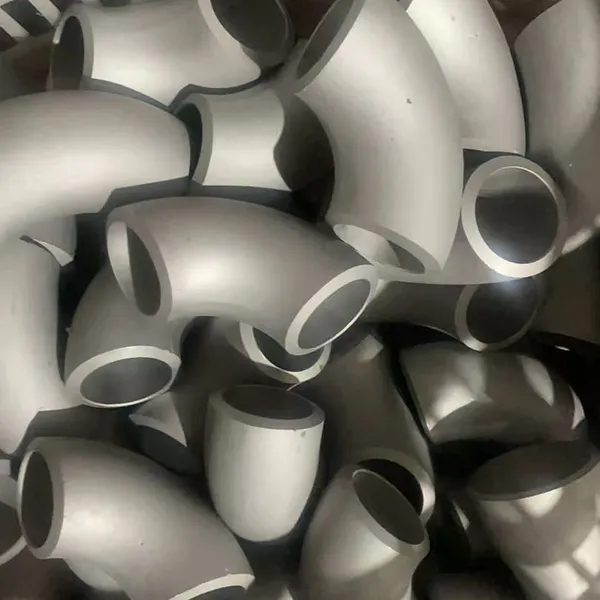
 Stainless Steel Elbow Welded Elbow 45/90/180-degree Seamless Pressed Elbow Long Radius Elbow Short Radius Elbow WholesaleNegotiableMOQ: 1 Piece
 -
316L/1.4405 Seamless Stainless Steel PipeNegotiableMOQ: 2 Meters
-
310s 440 Seamless Sanitary Piping Price 321 904l 201 20 Inch Seamless Steel Pipe A554 Stainless Steel PipeNegotiableMOQ: 1 Piece
-
China Brand ZZ Wholesale 304L 316 316L Welded Austenitic Piping Stainless Steel Pipe SupplierNegotiableMOQ: 2 Meters
-
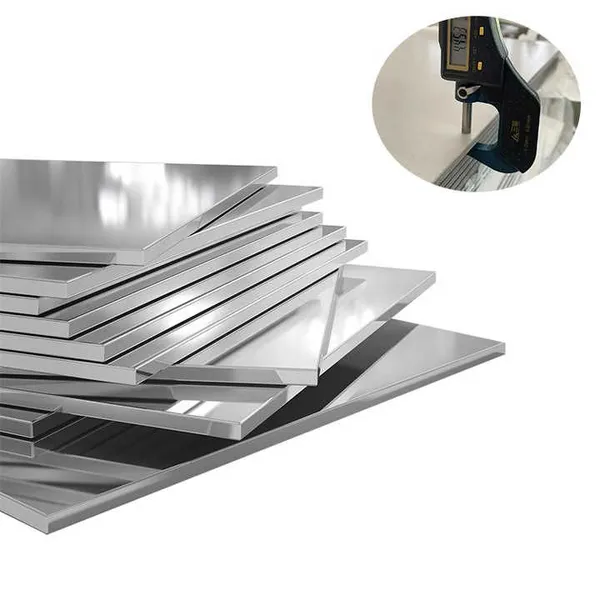
304/304L/316/409/410/904L/2205/2507/310H Premium Stainless Steel Sheets Supplier Custom Sizes & FinishesUS$ 1.72MOQ: 1 Ton
-
Stainless Steel ASME B16.9 Sch 45 90 Degree Pipe Fittings ElbowUS$ 8MOQ: 1 Piece
-
China Brand Zz 304L 316/316L GB En JIS Standard Thin Wall Welded Stainless Steel Water Pipe/TubeNegotiableMOQ: 2 Meters
-
BA 4 Inch 6 Inch 8 Inch 201 304 304L 316 316L Welded Seamless Stainless Steel PipeNegotiableMOQ: 2 Meters
-
ASME B36.19M-2004 SCH40S Stainless Steel Pipe - Complies With EU 3.1 CertificationUS$ 1 - 650MOQ: 1 Piece
-
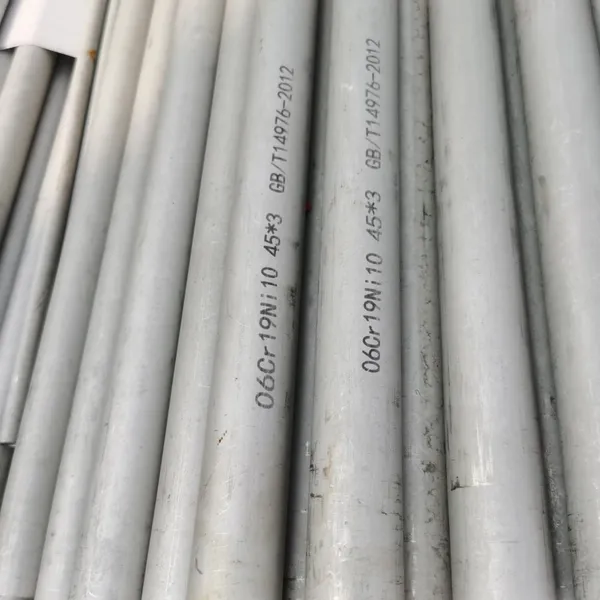
Factory TP309/TP309S/TP309H (UNS30900) Seamless Stainless Steel Pipe and Tube for Boiler BafflesUS$ 8MOQ: 200 Kilograms
-
TP347/TP347H/1.4961/S34709 Seamless Stainless Steel Pipe for UseNegotiableMOQ: 2 Meters
-
China 304 316 Stainless Steel Sanitary Welded Tube Food Grade Sanitary Grade Welded Pipe PolishingNegotiableMOQ: 1 Piece
-
China Manufacture Stainless Steel 316L Ba Seamless Welded Steel Pipe TubesUS$ 1760 - 1860MOQ: 5 Tons
-
316L/1.4405 Seamless Stainless Steel PipeNegotiableMOQ: 2 Meters
-
Stainless Steel Globe Valve – High Durability & Corrosion ResistanceNegotiableMOQ: 1 Piece
-
1.4529 Stainless Steel Flat Plate for Chemical Processing EquipmentUS$ 25 - 35MOQ: 1 Kilogram
-
Color Coated Steel Panels for Warehouse Partition Walls (Fireproof Grade)US$ 1 - 1.2MOQ: 50 Kilograms
-
Custom Width (600mm-1250mm) Colored Steel Coil With Scratch ResistanceUS$ 1 - 1.2MOQ: 50 Kilograms
-
0.5mm-3.0mm Colored Coated Steel Sheet With PVDF/Polyester CoatingUS$ 1 - 1.2MOQ: 50 Kilograms
-
JIS G 3322 Compliant Colored Coils With Third-Party Inspection ReportUS$ 1 - 1.2MOQ: 50 Kilograms