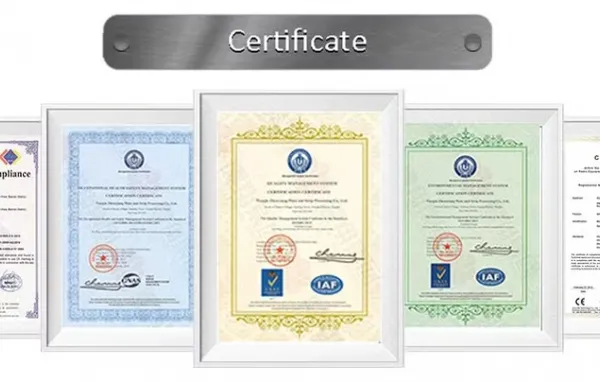
Business License

What preparations need to be made before using stainless steel pipes in the LNG system
Before using stainless steel pipes in the LNG system (where the low-temperature condition is typically -162℃), preparatory work needs to be carried out based on four core goals: material compliance verification, low-temperature performance guarantee, cleanliness control, and installation compatibility. The specific steps are as follows:
1. Material Quality and Compliance Verification
Confirm the low-temperature suitability of the base material
Choose 304L stainless steel pipes (with a carbon content of ≤0.03%) instead of ordinary 304 (with a carbon content of ≤0.08%), to reduce the risk of intergranular corrosion caused by the precipitation of carbides (Cr₂₃C₆) during welding and prevent brittle fracture along the grain boundaries at low temperatures.
Verify the material quality certificate (MTC) to confirm the key indicators:
Chemical composition: Cr content 18%-20%, Ni content 8%-10.5% (ensuring austenitic stability and avoiding brittle transformation of martensite at low temperatures);
Mechanical properties: Tensile strength at room temperature ≥ 515 MPa, yield strength ≥ 205 MPa. Additionally, a **report on low-temperature impact toughness at -162℃** must be provided (impact energy typically required to be ≥ 27 J, in accordance with ASME B31.3 or GB 50251 standards);
Heat treatment state: Must undergo solution treatment (water quenching at 1050-1100℃), ensuring uniform austenite grains, eliminating residual stress from cold processing, and enhancing low-temperature toughness.
Appearance and size inspection
Visual inspection of the pipe surface: No scratches, dents, oxide scale, rust, etc. (Defects are prone to become stress concentration sources at low temperatures, causing cracking);
Use calipers or micrometers to measure key dimensions: The outer diameter and wall thickness deviation must comply with the design standards (such as ASTM A312), with a wall thickness uniformity of ≤ 10%, to avoid insufficient local strength.
II. Pre-verification of Low Temperature Performance (Must be conducted for critical conditions)
Low Temperature Impact Test
Take samples from the same batch of pipes (cut longitudinal or transverse specimens according to the standard), conduct the Schmidt V-notch impact test at **-162℃ (LNG boiling point)**, to verify whether the impact energy meets the design requirements and ensure that there is no brittle fracture risk of the material at low temperatures.
Pressure Resistance and Leakage Test (Pre-installation Stage)
Carry out a water pressure test: The test pressure is 1.5 times the design pressure, and hold for 30 minutes. Check for no leakage and no visible deformation;
If the system has extremely high cleanliness requirements (such as LNG transportation pipes), an air pressure test can be conducted (using dry nitrogen, with a pressure of 1.15 times the design pressure), combined with a helium mass spectrometry leak detector to detect the leakage rate (≤1×10⁻⁹ Pa・m³/s), to avoid impurities or moisture residues.
III. Pipeline Cleaning and Degreasing Treatment (Core Step, Preventing Low-Temperature Blockage / Explosion)
The residual oil, water, and impurities in the LNG system can lead to two major risks: ① Water freezing at low temperatures will block the pipelines; ② The mixture of oil and LNG may cause safety hazards (such as combustion). Therefore, strict cleaning is necessary:
Decontamination treatment
Use carbon tetrachloride, trichloroethylene or a dedicated stainless steel degreasing agent (avoid using corrosive solvents), and perform degreasing through immersion, spraying or circulating rinsing;
After degreasing, dry with clean compressed air (or nitrogen) and take samples for testing: wipe the inner wall of the pipeline with white filter paper, and the filter paper should show no oil stains; or test using an oil analyzer, with the residual oil content ≤ 50mg/m².
Drying and Impurity Removal
Use dry nitrogen gas (with a dew point of ≤ -40℃) to blow through the interior of the pipeline to remove moisture and dust. The blowing time should be determined based on the length of the pipeline (usually 1-2 minutes per meter), until the nitrogen gas at the outlet meets the standard;
Seal and protect the ends of the pipeline (using plastic plugs or sealing covers) to prevent further contamination during subsequent storage and transportation.
IV. Pre-treatment before welding (for pipelines to be welded on-site)
Groove processing and cleaning
Process the grooves according to the welding process requirements (such as V-shaped or U-shaped grooves), with precise angles and edge thickness (e.g. 60° ± 5° groove, 1-2mm edge). Avoid incomplete fusion during welding;
Use stainless steel wire brushes and angle grinders to polish the grooves and the surrounding 20mm area, removing oxide scale and burrs; then wipe with acetone or alcohol to remove residual oil stains, ensuring that the welding area is free of impurities (impurities can cause weld porosity, slag inclusion, and reduce low-temperature toughness).
Welding material matching and pre-treatment
Select low-temperature welding materials that match 304L: such as ER308L welding wire (TIG welding), E308L-16 welding rod (manual arc welding). The welding materials must provide a low-temperature impact report (with impact energy meeting the standard at -162℃);
Welding materials should be dried as required before use: welding rods should be dried at 250-300℃ for 1-2 hours and stored in an 80-100℃ insulated cylinder for ready use; welding wires need to have the surface oil and rust removed to ensure stable arc during welding.
V. Storage and Transportation Protection (Prevention of Secondary Damage)
Storage Environment
Store in a dry, ventilated, and non-corrosive gas-free warehouse, avoiding outdoor storage (to prevent rust caused by rain and moisture);
Pipes should be placed on supports (using wooden or stainless steel brackets to avoid direct contact with the ground), and both ends should be sealed to prevent dust and moisture from entering.
Transportation Protection
Cover with waterproof fabric during transportation to avoid rain exposure; isolate pipes with soft materials (such as rubber pads) to prevent scratches or dents caused by collisions;
Do not mix with other metals such as carbon steel and copper; avoid contact with corrosion (such as rust on carbon steel contaminating stainless steel).
VI. Preparation of Process Documents Before Installation
Prepare construction process cards: specify welding parameters (such as TIG welding current, voltage, gas flow rate for protection), requirements for low-temperature performance testing, cleaning standards, etc., to ensure that the construction complies with ASME B31.3 (petrochemical pipeline) or GB 50251 (construction and acceptance specifications for gas pipelines);
Confirm the qualifications of welding personnel: welders must hold special equipment welding qualification certificates (such as AWS D1.6 or Chinese special equipment welder certificate), and have received specialized training in low-temperature stainless steel welding to avoid human operational errors.
Through the above preparations, it can be ensured that the 304 stainless steel pipes in the LNG system meet the requirements of low-temperature toughness, cleanliness and sealing performance. This helps to avoid risks such as cracking, blockage and leakage from the very beginning, and ensures the safe operation of the system.
Recently Posted
-
Does the stainless steel welded pipe have specific temperature requirements during the solution heat
January 20, 2026Solution heat treatment involves heating stainless steel to a high temperature and then rapidly cooling it to achieve an oversatur Read More
 -
Can stainless steel welded pipes be made into thick pipes
January 20, 2026With the improvement of high-quality welding technology and increasingly strict weld inspection, the application fields of s Read More
 -
Three types of commonly available food-grade stainless steel on the market
January 20, 2026The common food-grade stainless steel pipes are mainly composed of iron, chromium and carbon and other elements. Household stainle Read More
 -
What are the requirements for stainless steel welding pipe production equipment
January 20, 2026As is well known, stainless steel welded pipes have been widely used in various industries such as machinery, chemical engineering Read More

Contact Us
Recommended Products
-
 Stainless Steel Elbow Welded Elbow 45/90/180-degree Seamless Pressed Elbow Long Radius Elbow Short Radius Elbow WholesaleNegotiableMOQ: 1 Piece
 -
316L/1.4405 Seamless Stainless Steel PipeNegotiableMOQ: 2 Meters
-
310s 440 Seamless Sanitary Piping Price 321 904l 201 20 Inch Seamless Steel Pipe A554 Stainless Steel PipeNegotiableMOQ: 1 Piece
-
China Brand ZZ Wholesale 304L 316 316L Welded Austenitic Piping Stainless Steel Pipe SupplierNegotiableMOQ: 2 Meters
-
304/304L/316/409/410/904L/2205/2507/310H Premium Stainless Steel Sheets Supplier Custom Sizes & FinishesUS$ 1.72MOQ: 1 Ton





-
Stainless Steel ASME B16.9 Sch 45 90 Degree Pipe Fittings ElbowUS$ 8MOQ: 1 Piece
-
China Brand Zz 304L 316/316L GB En JIS Standard Thin Wall Welded Stainless Steel Water Pipe/TubeNegotiableMOQ: 2 Meters
-
BA 4 Inch 6 Inch 8 Inch 201 304 304L 316 316L Welded Seamless Stainless Steel PipeNegotiableMOQ: 2 Meters
-
ASME B36.19M-2004 SCH40S Stainless Steel Pipe - Complies With EU 3.1 CertificationUS$ 1 - 650MOQ: 1 Piece
-
Factory TP309/TP309S/TP309H (UNS30900) Seamless Stainless Steel Pipe and Tube for Boiler BafflesUS$ 8MOQ: 200 Kilograms





-
TP347/TP347H/1.4961/S34709 Seamless Stainless Steel Pipe for UseNegotiableMOQ: 2 Meters
-
China 304 316 Stainless Steel Sanitary Welded Tube Food Grade Sanitary Grade Welded Pipe PolishingNegotiableMOQ: 1 Piece
-
China Manufacture Stainless Steel 316L Ba Seamless Welded Steel Pipe TubesUS$ 1760 - 1860MOQ: 5 Tons
-
316L/1.4405 Seamless Stainless Steel PipeNegotiableMOQ: 2 Meters
-
Stainless Steel Globe Valve – High Durability & Corrosion ResistanceNegotiableMOQ: 1 Piece




-
World's Most Affordable Color-Coated Steel Sheets - 0.3mm to 3mm Thickness - Mill Test Report IncludedUS$ 1102MOQ: 10 Kilograms
-
Color-Coated Steel Sheets With 15-Year Fade Warranty - JIS G 3322 Standard CompliantUS$ 1102MOQ: 10 Kilograms
-
Prefab Building Material - 0.4mm Color-Coated Corrugated Sheets - 100,000㎡ Monthly OutputUS$ 1102MOQ: 10 Kilograms
-
Industrial-Grade Color-Coated Sheets - 150-250g/m² Zinc Coating - Weather & UV ResistantUS$ 1102MOQ: 10 Kilograms
-
Factory-Direct Color-Coated Steel Plates - PVDF/Polyester Coating - 1220mm Standard WidthUS$ 1102MOQ: 10 Kilograms