
 Business License

What is the purpose of sandblasting treatment for 201 stainless steel welding pipes
201 The main purpose of sandblasting treatment for stainless steel welded pipes is to achieve surface cleaning, strengthening, and roughening effects by subjecting the pipe surface to high-speed impact from abrasive materials (such as quartz sand, steel shot, glass beads, etc.). The specific functions and application scenarios are as follows:
I. Core Objective Analysis
1. Removal of Surface Impurities and Oxide Layers
Post-welding treatment: After welding, the surface of the welded pipe often contains oxide scales, welding slag, and splatter, etc. Sandblasting can thoroughly remove these impurities, exposing the fresh metal surface, and preparing for subsequent coating or passivation.
Example: After welding of 201 pipe, the oxide layer on the surface will reduce the corrosion resistance. Sandblasting can remove the oxide layer and activate the surface, enhancing the formation effect of the passivation film.
2. Improve surface roughness and enhance adhesion
Coating substrate treatment: Sandblasting creates a uniform microscopic rough structure on the surface (with a roughness Ra value ranging from 50 to 100 μm), significantly increasing the contact area between the coating (such as paint, powder coating) and the pipe, enhancing adhesion and preventing coating detachment.
Application scenarios: When used for outdoor decorative pipes (such as railings, curtain walls), spraying paint after sandblasting can extend the coating lifespan by 3 to 5 times.
3. Eliminate stress and enhance fatigue strength
Shot peening: Using hard abrasive materials such as steel balls for sandblasting (also known as "shot peening"), a compressive stress layer can be generated on the surface, counteracting the tensile stress caused during welding or processing, reducing the risk of cracks due to stress concentration, especially suitable for structural components subjected to vibration or impact loads.
Reference data: The fatigue life of 201 welded pipes after shot peening can be increased by 20% to 50%.
4. Beautify appearance, unify texture
Matte finish: Sandblasting can give the pipe surface a uniform matte texture, covering scratches, welds and other defects, enhancing the aesthetic appeal. It is commonly used in decorative fields (such as architectural decoration, furniture).
Color adjustment: Different abrasives (such as quartz sand, glass beads) can produce different surface tones (such as grayish white, silver gray), meeting diverse design requirements.
5. Special Pre-treatment Processes
Pre-treatment for coating: As the pre-process for spraying, galvanizing, electrophoretic coating, etc., sandblasting can ensure the cleanliness of the substrate and the appropriate roughness, thereby enhancing the corrosion resistance and durability of the subsequent coatings.
Composite treatment: When combined with the passivation process, sandblasting can remove surface impurities, allowing the passivation solution to more evenly contact the metal surface and form a dense passivation film.
II. Compatibility of Sandblasting with the Properties of 201 Stainless Steel
1. Leveraging Strengths and Avoiding Weaknesses
The corrosion resistance of 201 stainless steel is relatively weak. After sandblasting, it is necessary to promptly apply coating or passivation treatment to seal the surface pores and prevent corrosive media from penetrating.
Sandblasting can improve the microscopic defects (such as tiny cracks) on the surface of 201, but it cannot make up for the inherent insufficient corrosion resistance caused by its composition. Therefore, other protective measures (such as coatings) still need to be combined.
2. Process Risk Control
Iron contamination risk: If using ordinary steel sand for sandblasting, iron particles may remain on the surface of the pipe, accelerating rusting. It is necessary to use stainless steel sand or glass beads and conduct thorough cleaning after the sandblasting.
Surface hardening: Excessive sandblasting may cause surface hardening (an increase in hardness of 20%-30%), reducing the toughness of the pipe. The sandblasting pressure and time need to be controlled.
III. Typical Application Scenarios
Outdoor railings and handrails
Sandblasting purpose: Remove oxide layer + Achieve matte finish + Prepare coating base
Supporting process: After sandblasting, apply fluorocarbon paint or powder coating
Chemical equipment support
Sandblasting purpose: Remove impurities + Enhance coating adhesion
Supporting process: Sandblasting → Hot-dip galvanizing → Epoxy zinc-rich primer
Car exhaust pipe
Sandblasting purpose: Eliminate welding stress + Improve coating adhesion
Supporting process: Shot peening treatment → High-temperature resistant coating
Building decoration components
Purpose of sandblasting: To achieve uniform appearance texture and cover defects
Matching process: After sandblasting, electrochemical coloring or chemical passivation is carried out
IV. Impact of Process Parameters on Results
Grinding Material Type
Function: Determines the roughness and surface hardness
Recommended Range (for 201 Stainless Steel): Glass beads (fine matte finish), Stainless steel sand (reinforced)
Sandblasting pressure
Function: Affects roughness and processing efficiency
Recommended range (for 201 stainless steel): 0.4 - 0.6 MPa (Avoiding too high pressure which may cause surface brittleness)
Spray distance
Function: Controls the impact intensity of the abrasive
Recommended range (201 stainless steel): 100 - 150mm
Angle
Function: Affects surface uniformity
Recommended range (201 stainless steel): Mainly vertical spraying (90°), with consideration for multiple angles
Summary
201 stainless steel welded pipe sandblasting treatment is a multi-functional surface modification technology. It mainly enhances the performance of the pipe by cleaning, roughening and strengthening processes. It is particularly suitable for scenarios where there are requirements for appearance, coating adhesion or fatigue strength. However, it should be noted that sandblasting cannot alter the inherent corrosion resistance of 201 stainless steel. In high-corrosive environments, other protective measures (such as passivation and coating) need to be used in conjunction.
Recently Posted
-
Does the stainless steel welded pipe have specific temperature requirements during the solution heat
January 20, 2026Solution heat treatment involves heating stainless steel to a high temperature and then rapidly cooling it to achieve an oversatur Read More
 -
Can stainless steel welded pipes be made into thick pipes
January 20, 2026With the improvement of high-quality welding technology and increasingly strict weld inspection, the application fields of s Read More
 -
Three types of commonly available food-grade stainless steel on the market
January 20, 2026The common food-grade stainless steel pipes are mainly composed of iron, chromium and carbon and other elements. Household stainle Read More
 -
What are the requirements for stainless steel welding pipe production equipment
January 20, 2026As is well known, stainless steel welded pipes have been widely used in various industries such as machinery, chemical engineering Read More

Contact Us
Recommended Products
-
 Stainless Steel Elbow Welded Elbow 45/90/180-degree Seamless Pressed Elbow Long Radius Elbow Short Radius Elbow WholesaleNegotiableMOQ: 1 Piece
 -
316L/1.4405 Seamless Stainless Steel PipeNegotiableMOQ: 2 Meters
-
310s 440 Seamless Sanitary Piping Price 321 904l 201 20 Inch Seamless Steel Pipe A554 Stainless Steel PipeNegotiableMOQ: 1 Piece
-
China Brand ZZ Wholesale 304L 316 316L Welded Austenitic Piping Stainless Steel Pipe SupplierNegotiableMOQ: 2 Meters
-
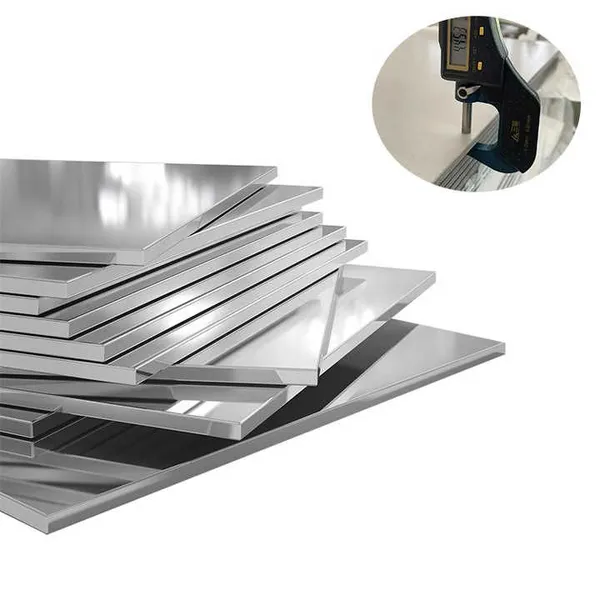
304/304L/316/409/410/904L/2205/2507/310H Premium Stainless Steel Sheets Supplier Custom Sizes & FinishesUS$ 1.72MOQ: 1 Ton
-
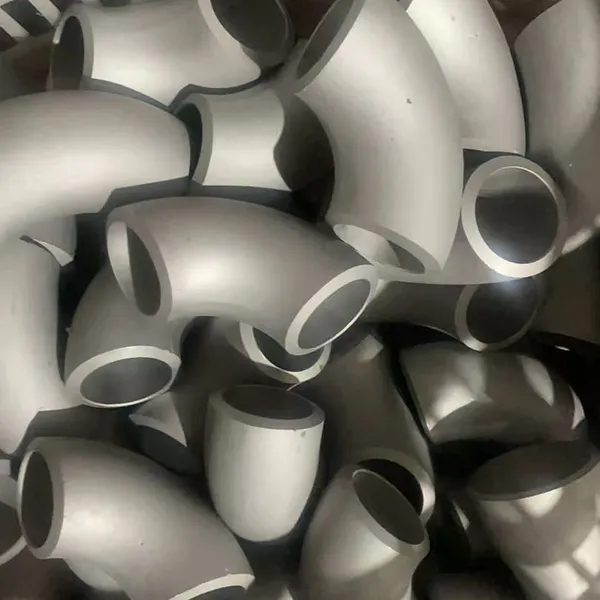
Stainless Steel ASME B16.9 Sch 45 90 Degree Pipe Fittings ElbowUS$ 8MOQ: 1 Piece
-
China Brand Zz 304L 316/316L GB En JIS Standard Thin Wall Welded Stainless Steel Water Pipe/TubeNegotiableMOQ: 2 Meters
-
BA 4 Inch 6 Inch 8 Inch 201 304 304L 316 316L Welded Seamless Stainless Steel PipeNegotiableMOQ: 2 Meters
-
ASME B36.19M-2004 SCH40S Stainless Steel Pipe - Complies With EU 3.1 CertificationUS$ 1 - 650MOQ: 1 Piece
-
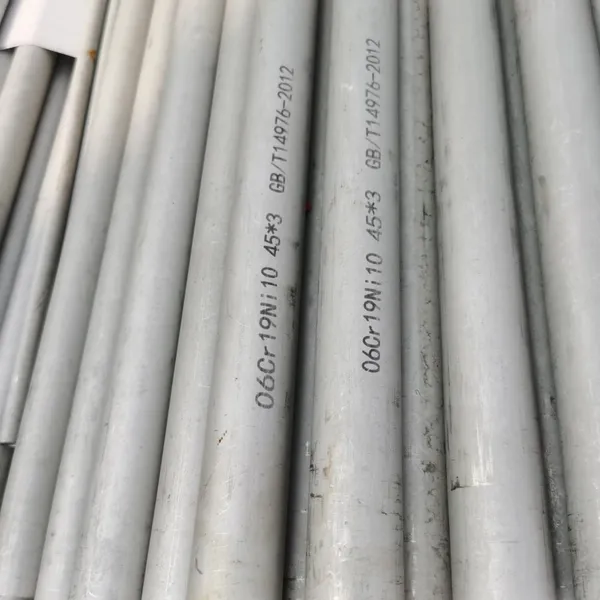
Factory TP309/TP309S/TP309H (UNS30900) Seamless Stainless Steel Pipe and Tube for Boiler BafflesUS$ 8MOQ: 200 Kilograms
-
TP347/TP347H/1.4961/S34709 Seamless Stainless Steel Pipe for UseNegotiableMOQ: 2 Meters
-
China 304 316 Stainless Steel Sanitary Welded Tube Food Grade Sanitary Grade Welded Pipe PolishingNegotiableMOQ: 1 Piece
-
China Manufacture Stainless Steel 316L Ba Seamless Welded Steel Pipe TubesUS$ 1760 - 1860MOQ: 5 Tons
-
316L/1.4405 Seamless Stainless Steel PipeNegotiableMOQ: 2 Meters
-
Stainless Steel Globe Valve – High Durability & Corrosion ResistanceNegotiableMOQ: 1 Piece
-
1.4529 Stainless Steel Flat Plate for Chemical Processing EquipmentUS$ 25 - 35MOQ: 1 Kilogram
-
Color Coated Steel Panels for Warehouse Partition Walls (Fireproof Grade)US$ 1 - 1.2MOQ: 50 Kilograms
-
Custom Width (600mm-1250mm) Colored Steel Coil With Scratch ResistanceUS$ 1 - 1.2MOQ: 50 Kilograms
-
0.5mm-3.0mm Colored Coated Steel Sheet With PVDF/Polyester CoatingUS$ 1 - 1.2MOQ: 50 Kilograms
-
JIS G 3322 Compliant Colored Coils With Third-Party Inspection ReportUS$ 1 - 1.2MOQ: 50 Kilograms