
 Business License

What are the differences between shot peening of austenitic stainless steel and ordinary shot peenin
What are the differences between shot peening of austenitic stainless steel and ordinary shot peening?
The core difference between shot peening of austenitic stainless steel and ordinary shot peening
1. Material characteristic adaptation difference
Shot peening of austenitic stainless steel
Material microstructure characteristics: face-centered cubic structure (austenite), high work hardening rate (ΔHV ≥ 80)
Tempering temperature range: need to avoid 450-850℃ (to prevent intergranular corrosion), shot peening temperature ≤ 60℃
Passivation film characteristics: contains Cr₂O₃ passivation film, after shot peening, the passivation needs to be reformed (to enhance corrosion resistance)
Common material shot peening (such as carbon steel, aluminum alloy)
Material microstructure characteristics: Body-centered cubic (for carbon steel) or close-packed hexagonal (for aluminum alloy), with a relatively low hardening rate
Annealing temperature range: No annealing risk, allows higher shot peening temperature (≤150℃)
Passivation film characteristics: No passivation film or only Fe₃O₄ oxide layer, no additional passivation required after shot peening
II. Differences in Process Parameter Control
Selection of Projectile Material
Austenitic steel: Preferentially use stainless steel balls (HV300-400) or glass beads to avoid contamination by carbon steel balls (which can cause electrochemical corrosion).
Common materials: Carbon steel balls or cast iron balls can be used, with lower costs.
Pressure and Coverage
Austenitic steel: Pressure 0.3 - 0.5 MPa, requires 100% coverage rate (to prevent local stress concentration), and the shot peening time is extended by 15% - 20%.
Common materials: Pressure 0.2 - 0.6 MPa, coverage rate ≥ 80% is sufficient, and the process tolerance is higher.
Temperature control
Austenitic steel: The shot peening process requires water cooling for temperature reduction (≤ 60℃) to prevent excessive work hardening that leads to a decrease in plasticity (elongation needs to be ≥ 35%).
Common materials: Generally, temperature control is not required, and the temperature rise is allowed to be ≤ 100℃.
III. Performance Enhancement Focus Differences
Austenitic Steel Shot Peening
Core Objective: Simultaneously enhance corrosion resistance (reconstruction of the passive film) and mechanical properties (compressive stress layer).
Typical Data: After shot peening of 316L, no pitting corrosion was observed in the salt spray test (5% NaCl) for 500 hours, and the fatigue strength increased by 40%.
Common material shot peening
Core objective: Mainly for mechanical strengthening (for example, the fatigue limit of carbon steel increases by 20%-30% after shot peening), with insignificant improvement in corrosion resistance.
IV. Post-treatment Process Differences
Austenitic Steel
Must undergo passivation treatment (such as nitric acid passivation), repair the passivation film damaged by shot blasting, and the Cr⁶⁺ content should be ≤ 0.1mg/L (in accordance with ASTM A967 standard).
Electrolytic polishing can be superimposed (Ra reduced to below 0.4μm), further enhancing the cleanliness (suitable for the pharmaceutical industry).
Common materials
Generally, no passivation is required; only rust prevention treatment (such as oil coating) is needed, which is less costly.
V. Application Differences
Application of Austenitic Shot Peening Tubes
Chemical Corrosion Prevention: Desalination pipelines, acid and alkali medium transportation
Food and Medicine: Sterile fluid pipelines (with Ra ≤ 0.8 μm)
High-end Equipment: Nuclear power steam generators, aviation fuel pipes
Common shot peening material applications
Chemical corrosion prevention: Ordinary industrial pipelines, mechanical structural components
Food and medicine: Non-clean environment equipment
High-end equipment: Automotive chassis parts, ordinary pressure vessels
Summary: Austenitic stainless steel shot peening is a special process that combines "corrosion resistance" and "mechanical strengthening". It requires targeted control in terms of material compatibility, process accuracy, and post-treatment. In contrast, ordinary shot peening focuses more on improving a single mechanical property and has a lower process threshold.
Recently Posted
-
Does the stainless steel welded pipe have specific temperature requirements during the solution heat
January 20, 2026Solution heat treatment involves heating stainless steel to a high temperature and then rapidly cooling it to achieve an oversatur Read More
 -
Can stainless steel welded pipes be made into thick pipes
January 20, 2026With the improvement of high-quality welding technology and increasingly strict weld inspection, the application fields of s Read More
 -
Three types of commonly available food-grade stainless steel on the market
January 20, 2026The common food-grade stainless steel pipes are mainly composed of iron, chromium and carbon and other elements. Household stainle Read More
 -
What are the requirements for stainless steel welding pipe production equipment
January 20, 2026As is well known, stainless steel welded pipes have been widely used in various industries such as machinery, chemical engineering Read More

Contact Us
Recommended Products
-
 Stainless Steel Elbow Welded Elbow 45/90/180-degree Seamless Pressed Elbow Long Radius Elbow Short Radius Elbow WholesaleNegotiableMOQ: 1 Piece
 -
316L/1.4405 Seamless Stainless Steel PipeNegotiableMOQ: 2 Meters
-
310s 440 Seamless Sanitary Piping Price 321 904l 201 20 Inch Seamless Steel Pipe A554 Stainless Steel PipeNegotiableMOQ: 1 Piece
-
China Brand ZZ Wholesale 304L 316 316L Welded Austenitic Piping Stainless Steel Pipe SupplierNegotiableMOQ: 2 Meters
-
304/304L/316/409/410/904L/2205/2507/310H Premium Stainless Steel Sheets Supplier Custom Sizes & FinishesUS$ 1.72MOQ: 1 Ton
-
Stainless Steel ASME B16.9 Sch 45 90 Degree Pipe Fittings ElbowUS$ 8MOQ: 1 Piece
-
China Brand Zz 304L 316/316L GB En JIS Standard Thin Wall Welded Stainless Steel Water Pipe/TubeNegotiableMOQ: 2 Meters
-
BA 4 Inch 6 Inch 8 Inch 201 304 304L 316 316L Welded Seamless Stainless Steel PipeNegotiableMOQ: 2 Meters
-
ASME B36.19M-2004 SCH40S Stainless Steel Pipe - Complies With EU 3.1 CertificationUS$ 1 - 650MOQ: 1 Piece
-
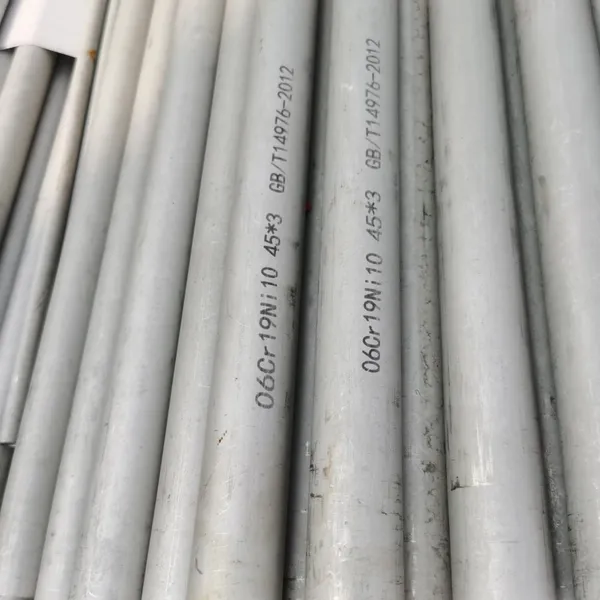
Factory TP309/TP309S/TP309H (UNS30900) Seamless Stainless Steel Pipe and Tube for Boiler BafflesUS$ 8MOQ: 200 Kilograms
-
TP347/TP347H/1.4961/S34709 Seamless Stainless Steel Pipe for UseNegotiableMOQ: 2 Meters
-
China 304 316 Stainless Steel Sanitary Welded Tube Food Grade Sanitary Grade Welded Pipe PolishingNegotiableMOQ: 1 Piece
-
China Manufacture Stainless Steel 316L Ba Seamless Welded Steel Pipe TubesUS$ 1760 - 1860MOQ: 5 Tons
-
316L/1.4405 Seamless Stainless Steel PipeNegotiableMOQ: 2 Meters
-
Stainless Steel Globe Valve – High Durability & Corrosion ResistanceNegotiableMOQ: 1 Piece
-
World's Most Affordable Color-Coated Steel Sheets - 0.3mm to 3mm Thickness - Mill Test Report IncludedUS$ 1102MOQ: 10 Kilograms
-
Color-Coated Steel Sheets With 15-Year Fade Warranty - JIS G 3322 Standard CompliantUS$ 1102MOQ: 10 Kilograms
-
Prefab Building Material - 0.4mm Color-Coated Corrugated Sheets - 100,000㎡ Monthly OutputUS$ 1102MOQ: 10 Kilograms
-
Industrial-Grade Color-Coated Sheets - 150-250g/m² Zinc Coating - Weather & UV ResistantUS$ 1102MOQ: 10 Kilograms
-
Factory-Direct Color-Coated Steel Plates - PVDF/Polyester Coating - 1220mm Standard WidthUS$ 1102MOQ: 10 Kilograms