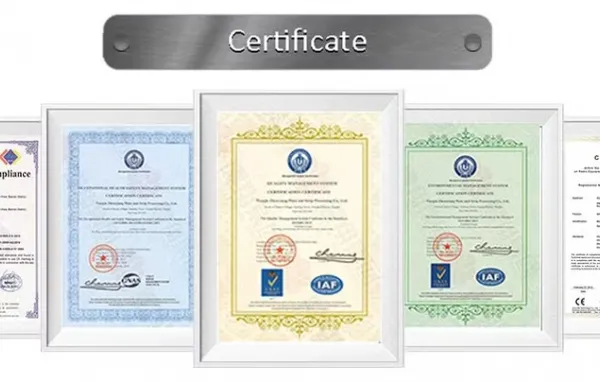

 Business License

How to carry out rust prevention treatment for 304 stainless steel seamless pipes after descaling
How to carry out rust prevention treatment for 304 stainless steel seamless pipes after descaling?
After the degreasing treatment of 304 stainless steel seamless pipes, the rust prevention treatment should be combined with the surface condition and the usage scenario. The common methods are as follows:
1. Cleaning and Drying
Thorough water washing: Wash away the remaining degreasing agent with deionized water or distilled water to avoid chemical residue causing electrochemical corrosion.
Drying treatment: Dry the surface through hot air drying (temperature 50-80℃), vacuum drying or compressed air blowing to ensure no moisture residue on the surface and to block the electrochemical corrosion conditions.
II. Passivation Treatment (Key Anti-Rust Method)
A dense oxide film (Cr₂O₃) is formed on the surface through chemical treatment, enhancing corrosion resistance.
Nitric acid passivation:
Formula: 60%-70% nitric acid solution (at room temperature or 40-60℃), immersion for 15-30 minutes, to remove surface free iron and other impurities, and promote the formation of the passivation film.
Advantages: Mature process, uniform film layer, suitable for most industrial scenarios.
Chromium-free passivation (environmentally friendly type):
Instead of using chromic acid, titanium salts, silanes, molybdate salts, etc. are used. For example, silane treatment (forming an organic-inorganic composite film) is adopted, which is environmentally friendly and has a rust prevention effect similar to that of traditional passivation.
III. Surface Protective Coating
Choose the coating based on the usage environment to isolate from external corrosive media.
Organic Coatings:
Paint / Coating: Epoxy paint, polyurethane paint, etc., suitable for humid or acidic/alkaline environments (such as outdoor pipelines), and surface sandblasting roughening is required to enhance adhesion.
Plastic Coating: PE, PP coating, formed by hot melting or spraying as an anti-corrosion layer, used in chemical, seawater, etc. strong corrosive scenarios.
Metal Coating:
Electroplated Nickel / Chromium: Enhances surface hardness and corrosion resistance, often used for decoration or wear resistance requirements;
Chemical Plated Nickel: No electrolytic deposition, uniform film layer, suitable for complex structure pipe materials.
IV. Electrochemical Protection
Anode Protection: For specific corrosive media (such as dilute sulfuric acid), by applying an external current, the pipe becomes the anode and remains in a passivated state.
Cathode Protection: Using a sacrificial anode (such as a zinc block) or an external current, the pipe becomes the cathode, suitable for long-term protection of large equipment or outdoor pipelines.
V. Rust Prevention Treatment
Short-term rust prevention: Apply a thin layer of dehydrated rust prevention oil (containing mineral oil + corrosion inhibitor). This is suitable for transportation or storage stages. Cleaning is required before use.
Gas-phase rust prevention: Place the package in gas-phase rust prevention paper or plastic bag. Release the corrosion-inhibiting gas and allow it to adsorb onto the surface, forming a molecular-level protective film.
VI. Environmental Control
Storage conditions: Store in a dry and ventilated place, avoiding contact with humid air, salt fog, and acid fog;
Transport protection: Wrap with moisture-proof paper and plastic film to prevent surface passivation film from being damaged due to bumps and impacts.
Anti-rust effect inspection
Salt spray test: Conduct a neutral salt spray (NSS) test in accordance with GB/T 10125 standards to evaluate the corrosion resistance duration;
Copper sulfate test: Apply copper sulfate solution and observe the color change time on the surface to determine the integrity of the passivation film.
Process selection suggestions:
Conventional industrial environment: Passivation treatment (nitric acid or chrome-free) + drying, low cost and reliable effect;
Severe corrosion scenarios: Passivation + organic coating (such as fluorocarbon paint) or metal coating (nickel-chromium) combined protection;
Short-term protection: Rust inhibitor oil + moisture-proof packaging;
Food / Medical industry: Chrome-free passivation + deionized water cleaning, avoiding chemical residues.
By adopting the combined strategy of "cleaning - passivation - coating (optional) - environmental control", the rust resistance of 304 stainless steel pipes after degreasing can be effectively enhanced, thereby prolonging their service life.
Recently Posted
-
Does the stainless steel welded pipe have specific temperature requirements during the solution heat
January 20, 2026Solution heat treatment involves heating stainless steel to a high temperature and then rapidly cooling it to achieve an oversatur Read More
 -
Can stainless steel welded pipes be made into thick pipes
January 20, 2026With the improvement of high-quality welding technology and increasingly strict weld inspection, the application fields of s Read More
 -
Three types of commonly available food-grade stainless steel on the market
January 20, 2026The common food-grade stainless steel pipes are mainly composed of iron, chromium and carbon and other elements. Household stainle Read More
 -
What are the requirements for stainless steel welding pipe production equipment
January 20, 2026As is well known, stainless steel welded pipes have been widely used in various industries such as machinery, chemical engineering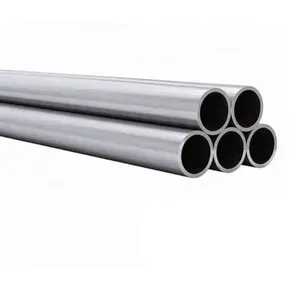 Read More

Contact Us
Recommended Products
-
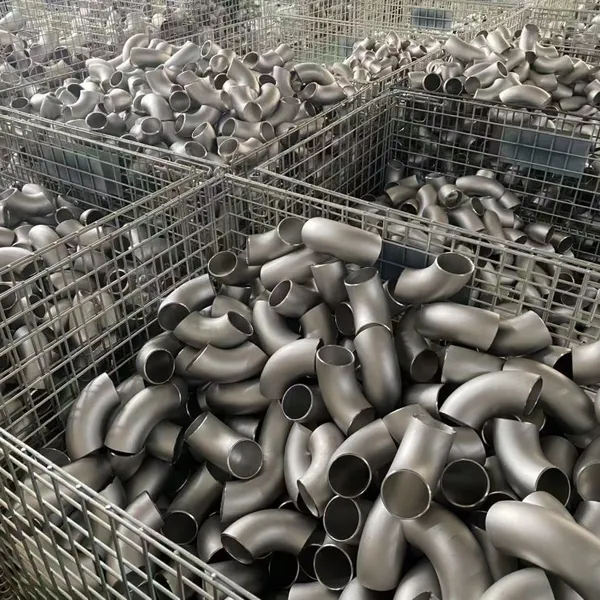
 Stainless Steel Elbow Welded Elbow 45/90/180-degree Seamless Pressed Elbow Long Radius Elbow Short Radius Elbow WholesaleNegotiableMOQ: 1 Piece
 -
316L/1.4405 Seamless Stainless Steel PipeNegotiableMOQ: 2 Meters
-
310s 440 Seamless Sanitary Piping Price 321 904l 201 20 Inch Seamless Steel Pipe A554 Stainless Steel PipeNegotiableMOQ: 1 Piece
-
China Brand ZZ Wholesale 304L 316 316L Welded Austenitic Piping Stainless Steel Pipe SupplierNegotiableMOQ: 2 Meters
-
304/304L/316/409/410/904L/2205/2507/310H Premium Stainless Steel Sheets Supplier Custom Sizes & FinishesUS$ 1.72MOQ: 1 Ton
-
Stainless Steel ASME B16.9 Sch 45 90 Degree Pipe Fittings ElbowUS$ 8MOQ: 1 Piece
-
China Brand Zz 304L 316/316L GB En JIS Standard Thin Wall Welded Stainless Steel Water Pipe/TubeNegotiableMOQ: 2 Meters
-
BA 4 Inch 6 Inch 8 Inch 201 304 304L 316 316L Welded Seamless Stainless Steel PipeNegotiableMOQ: 2 Meters
-
ASME B36.19M-2004 SCH40S Stainless Steel Pipe - Complies With EU 3.1 CertificationUS$ 1 - 650MOQ: 1 Piece
-
Factory TP309/TP309S/TP309H (UNS30900) Seamless Stainless Steel Pipe and Tube for Boiler BafflesUS$ 8MOQ: 200 Kilograms
-
TP347/TP347H/1.4961/S34709 Seamless Stainless Steel Pipe for UseNegotiableMOQ: 2 Meters
-
China 304 316 Stainless Steel Sanitary Welded Tube Food Grade Sanitary Grade Welded Pipe PolishingNegotiableMOQ: 1 Piece
-
China Manufacture Stainless Steel 316L Ba Seamless Welded Steel Pipe TubesUS$ 1760 - 1860MOQ: 5 Tons
-
316L/1.4405 Seamless Stainless Steel PipeNegotiableMOQ: 2 Meters
-
Stainless Steel Globe Valve – High Durability & Corrosion ResistanceNegotiableMOQ: 1 Piece
-
World's Most Affordable Color-Coated Steel Sheets - 0.3mm to 3mm Thickness - Mill Test Report IncludedUS$ 1102MOQ: 10 Kilograms
-
Color-Coated Steel Sheets With 15-Year Fade Warranty - JIS G 3322 Standard CompliantUS$ 1102MOQ: 10 Kilograms
-
Prefab Building Material - 0.4mm Color-Coated Corrugated Sheets - 100,000㎡ Monthly OutputUS$ 1102MOQ: 10 Kilograms
-
Industrial-Grade Color-Coated Sheets - 150-250g/m² Zinc Coating - Weather & UV ResistantUS$ 1102MOQ: 10 Kilograms
-
Factory-Direct Color-Coated Steel Plates - PVDF/Polyester Coating - 1220mm Standard WidthUS$ 1102MOQ: 10 Kilograms