
 Business License

What kind of impact will the welding performance of 316L stainless steel have after undergoing cold
After cold processing strengthening, the welding performance of 316L stainless steel will be affected by the combined influence of microstructure changes, stress states and composition segregation, which may lead to the following problems:
1. Increased risk of welding cracks
The influence of cold work hardening structure
Cold work leads to an increase in dislocation density and grain distortion. During welding, the heat input causes the grains in local areas (such as the heat affected zone HAZ) to grow rapidly, forming coarse martensite (residual α’ martensite resulting from strain-induced phase transformation), which increases brittleness and makes it prone to cold cracks (hydrogen-induced cracks) or hot cracks (pulling apart of low melting point eutectics).
Case: When welding pipes with cold drawing deformation exceeding 20%, the martensite content in the heat-affected zone can reach 15% to 20%, and the crack sensitivity significantly increases.
Residual stress superposition
The internal tensile stress remaining from cold processing and the welding stress (such as the cooling contraction stress of the weld seam) superimpose on each other, resulting in higher local stress concentration, which may cause **stress corrosion cracking (SCC)** or delayed cracks after welding.
II. Intensified intergranular corrosion tendency
Risk of carbide precipitation
Although 316L is a super-low carbon stainless steel (with C ≤ 0.03%), cold processing can cause lattice distortion, accelerating carbon diffusion during welding. If the welding heat input is too high (such as in multi-layer welding without controlling the interlayer temperature), Cr₂₃C₆ may precipitate in the HAZ within the sensitization temperature range (450 - 850℃), resulting in chromium deficiency at the grain boundaries (Cr <12%), and a decrease in the resistance to intergranular corrosion.
The indirect influence of martensitic phase transformation
The α’ martensite produced by cold working is ferromagnetic in nature and has a higher carbon content than austenite. During welding, the local carbon concentration gradient may promote the precipitation of carbides, further deteriorating the corrosion resistance.
III. Mechanical Performance Inhomogeneity
Performance Difference between Weld Seam and Base Material
The strength of the base material after cold processing (such as σb can reach 700 MPa) is higher than that of the conventional annealed state (σb is approximately 500 MPa). However, the welding filler material (such as ER316L) is usually matched in the annealed state, resulting in the weld metal having a lower strength than the base material, forming an inhomogeneous joint. Under stress, it is prone to plastic deformation at the weld or HAZ.
Decreased toughness
Cold working reduces the toughness of the base material (such as impact energy AKV) from the conventional state of 200J to 100-150J. The welding thermal cycle further reduces the toughness of the HAZ (especially in the coarse-grained zone), which may result in insufficient overall toughness of the joint.
IV. Suggestions for Welding Process Adjustment
To improve the weldability of cold-worked 316L stainless steel, the process needs to be optimized specifically:
Pre-welding treatment
If the cold deformation exceeds 15%, it is recommended to perform stress-relieving annealing (400-500℃ for 1 hour) before welding to reduce internal stress and the content of martensite.
Thoroughly clean the surface of oil stains and oxide scale to reduce the hydrogen source (to avoid cold cracks).
Welding parameter control
Employ low heat input techniques (such as TIG welding, pulsed current), maintaining the interlayer temperature below 100℃ to minimize grain coarsening and carbide precipitation.
The preferred filler materials are ultra-low carbon welding wires (such as ER316L) or high-nickel welding wires (such as ER317L), enhancing crack resistance and corrosion resistance.
Post-welding treatment
For important components, perform solution treatment (water quenching at 1050℃) to eliminate stress and cause the martensite to transform back into austenite; or use shot blasting treatment to introduce compressive stress on the surface to counteract the welding tensile stress.
Summary
Cold working strengthening will cause problems such as increased crack sensitivity, decreased corrosion resistance, and uneven mechanical properties when 316L stainless steel is welded. These issues can be comprehensively improved through measures such as pre-weld annealing, strict temperature control, optimization of filler metals, and post-weld treatment. In practical applications, when the cold deformation exceeds 25%, it is recommended to prioritize using the annealed base metal for welding to avoid performance deterioration.
Recently Posted
-
Common problems encountered in electrolytic polishing
January 15, 20261. Why do spots or small patches that appear as if not polished can be found on the surface after electro-polishing?Analysis: The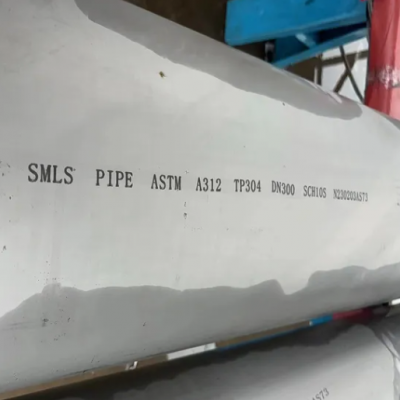 Read More
 -
Why can stainless steel resist corrosion
January 15, 2026When many metals react with oxygen in the atmosphere, an oxide film forms on their surfaces. Unfortunately, the iron oxide that fo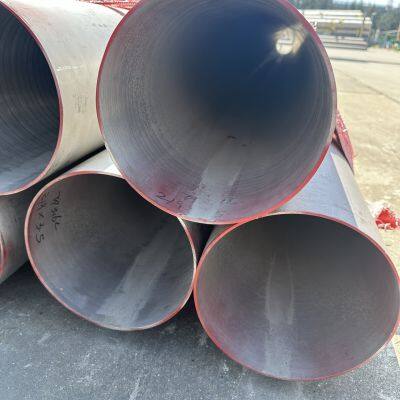 Read More
 -
What are the process methods for heat treatment of austenitic stainless steel
January 15, 2026The stainless steel undergoes heat treatment, which can effectively improve processing performance, prepare a good microstru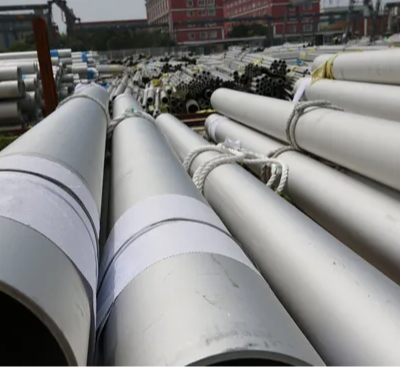 Read More
 -
Five Reasons for Choosing 304 Thin-Walled Stainless Steel Tubes
January 15, 2026In modern architecture and industry, the selection of pipes is of great significance. Water pipes, as an indispensable part of dai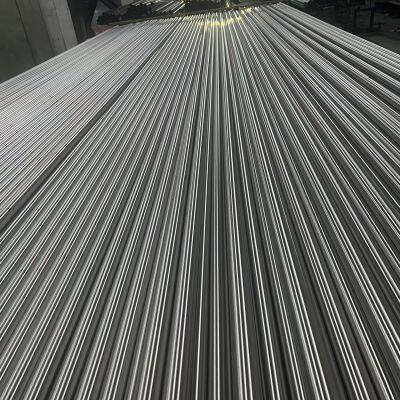 Read More

Contact Us
Recommended Products
-
 Stainless Steel Elbow Welded Elbow 45/90/180-degree Seamless Pressed Elbow Long Radius Elbow Short Radius Elbow WholesaleNegotiableMOQ: 1 Piece
 -
316L/1.4405 Seamless Stainless Steel PipeNegotiableMOQ: 2 Meters
-
310s 440 Seamless Sanitary Piping Price 321 904l 201 20 Inch Seamless Steel Pipe A554 Stainless Steel PipeNegotiableMOQ: 1 Piece
-
China Brand ZZ Wholesale 304L 316 316L Welded Austenitic Piping Stainless Steel Pipe SupplierNegotiableMOQ: 2 Meters
-
304/304L/316/409/410/904L/2205/2507/310H Premium Stainless Steel Sheets Supplier Custom Sizes & FinishesUS$ 1.72MOQ: 1 Ton

-
Stainless Steel ASME B16.9 Sch 45 90 Degree Pipe Fittings ElbowUS$ 8MOQ: 1 Piece
-
China Brand Zz 304L 316/316L GB En JIS Standard Thin Wall Welded Stainless Steel Water Pipe/TubeNegotiableMOQ: 2 Meters
-
BA 4 Inch 6 Inch 8 Inch 201 304 304L 316 316L Welded Seamless Stainless Steel PipeNegotiableMOQ: 2 Meters
-
ASME B36.19M-2004 SCH40S Stainless Steel Pipe - Complies With EU 3.1 CertificationUS$ 1 - 650MOQ: 1 Piece
-
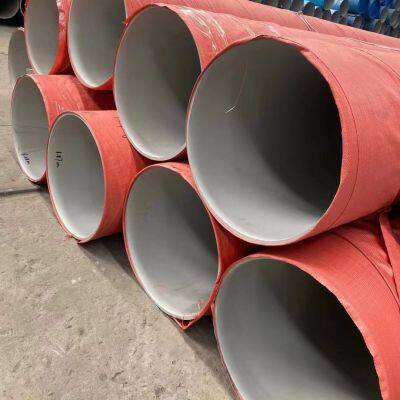
Factory TP309/TP309S/TP309H (UNS30900) Seamless Stainless Steel Pipe and Tube for Boiler BafflesUS$ 8MOQ: 200 Kilograms
-
201 304 316 310s Industrial-grade Stainless Steel Welded Pipe, Round Pipe, High-quality Welded Pipe 2205 Stainless Steel Heat Exchange TubesNegotiableMOQ: 1 Piece
-
Stainless Steel GOST 9940 904L/1.4539/N08904 Seamless Pipe and TubeNegotiableMOQ: 2 Meters
-
TP347/TP347H/1.4961/S34709 Seamless Stainless Steel Pipe for UseNegotiableMOQ: 2 Meters
-
China 304 316 Stainless Steel Sanitary Welded Tube Food Grade Sanitary Grade Welded Pipe PolishingNegotiableMOQ: 1 Piece
-
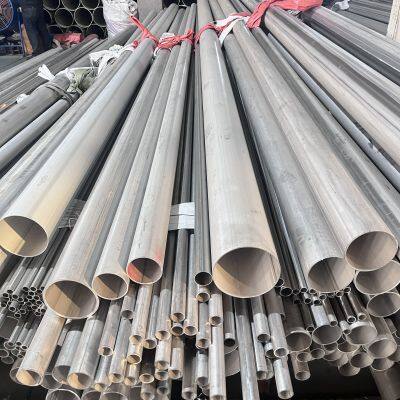
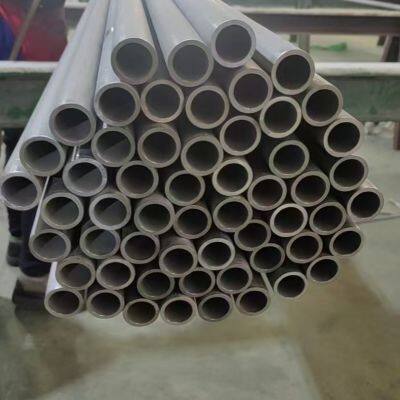
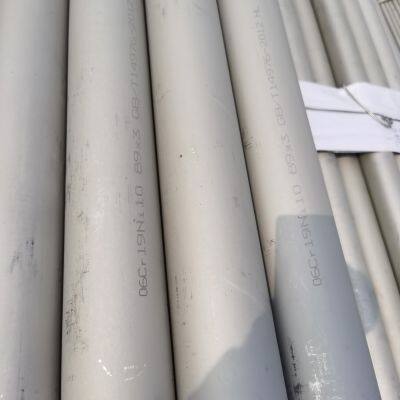
Chinese Brand Xtd 316 309 310 321 409 439 2205 2507 904L Stainless Steel Seamless Pipe Tube Sch40 Sch60 Sch80 Sch100 Sch120 Sch140 Sch160NegotiableMOQ: 2 Meters
-
SS304 SS304L SS310S SS321 SS316 SS316L SS410 2507 2205 Seamless Welding Stainless Steel Pipe Tubing Industrial Engineering Chemical EquipmentNegotiableMOQ: 1 Piece
-
High Strength, Corrosion-resistant, High Cost-effectiveness —— Stainless Steel Plate, the Preferred Choice for Industrial-grade QualityUS$ 1800 - 2500MOQ: 1 Ton
-
China Manufacture Stainless Steel 316L Ba Seamless Welded Steel Pipe TubesUS$ 1760 - 1860MOQ: 5 Tons
-
316L/1.4405 Seamless Stainless Steel PipeNegotiableMOQ: 2 Meters
-
Stainless Steel Globe Valve – High Durability & Corrosion ResistanceNegotiableMOQ: 1 Piece