
 Business License

What are the advantages and disadvantages of 314 stainless steel pipes compared to other types
314 Stainless Steel Tube Compared with Other Types of Stainless Steel Tubes
314 stainless steel (national standard: 0Cr25Ni20Si2/1Cr25Ni20Si2) demonstrates excellent performance in extreme environments such as high temperatures and strong corrosive conditions, but it also has certain limitations. The following analysis compares it with common stainless steels (304, 316, 309S, 310S) and nickel-based alloys (such as Incoloy 800H) from the perspectives of performance, cost, and processing:
1. Core Advantages: Unreplaceable Performance in Extreme Environments
1.1 High Temperature Resistance
Advantage Comparison:
◦ Compared with 304 (maximum 800°C oxidation resistance) and 316 (maximum 850°C), 314 can oxidize for a long time at 1100°C, with short-term temperature resistance up to 1200°C, and has better high-temperature strength (tensile strength ≥ 300 MPa at 800°C, while 304 is only about 150 MPa).
◦ Compared with 309S (22Cr-12Ni), 314 has a higher Si content (1.5-3.0%) and stronger thermal shock resistance (reduces crack risk by 50% during temperature fluctuations), suitable for furnace equipment with frequent start-stop.
• Typical Scenarios: Petrochemical cracking furnace tubes (replacing 309S, extending lifespan by 2 times), glass annealing kiln rollers (resistant to high-temperature glass liquid adhesion).
1.2 Strong Corrosion Resistance
Advantage Comparison:
◦ In **strong acids (such as 98% sulfuric acid, high-temperature phosphoric acid)**, corrosion resistance far exceeds 304 and 316 (314 corrosion rate <0.1mm, while 316 performs well in dilute acids but fails in strong acids).
◦ The increase in silicon content enhances the resistance to high-temperature sulfide corrosion (such as SO₂ and H₂S in waste incineration flue gas), superior to 310S (25Cr-20Ni, without silicon).
• Typical Scenarios: Transportation of acetic acid-coal catalyst in PTA production (resistant to intergranular corrosion), phosphate concentration pipelines in fertilizer plants (resistant to 85°C concentrated phosphoric acid).
1.3 Special Function Advantages
• Non-magnetic: Magnetic susceptibility ≈ 0, superior to 304 (weak magnetism), suitable for electronic devices and precision instruments with non-magnetic pipes.
• Surface Cleanliness: After polishing, it can reach food-grade standards (Ra ≤ 0.4 μm), meeting high cleanliness requirements for pharmaceutical and baking equipment (better than ordinary industrial-grade stainless steel).
2. Main Disadvantages: Cost and Processing Limitations
2.1 High Cost
• Alloy Composition: Contains 25% Cr, 20% Ni, and 3% Si, with a price approximately 3-4 times that of 304, even higher than 316 (about 2 times that of 304).
• Application Threshold: Only suitable for extreme conditions, while 314 for common corrosion-resistant or low-temperature scenarios (such as normal seawater, kitchen equipment) will significantly increase costs (low cost performance).
2.2 Poor Processing Performance
• Difficult Welding: High Ni content leads to low thermal conductivity and large linear expansion coefficient, prone to thermal cracks during welding (requires Nb-containing welding wire, such as ER314L, and controlling interlayer temperature <150°C).
• Difficult Cold Processing: High strength and toughness (hardness HB ≥ 180) make bending, expansion, and other forming processes require higher-tonnage equipment, and prone to processing hardening (requiring intermediate annealing treatment).
3. Limitations in Specific Environments
• Chloride Ion Stress Corrosion: In high-concentration Cl⁻ environments (such as areas with seawater splashing), corrosion resistance is inferior to duplex steel (such as 2205) or 316L (the critical Cl⁻ concentration of 314 is approximately 800 ppm, while 316L can reach 1500 ppm). • Maximum temperature limit: Long-term usage temperature <1150℃. When the temperature exceeds this limit, 310S (25Cr-20Ni, resistant to 1300℃) or nickel-based alloys (such as Incoloy 800H, resistant to 1200℃ and resistant to carbonization) should be selected.
III. Comprehensive comparison with common stainless steel types
(Attached Figure 1)
IV. Selection suggestions
• Scenarios for choosing 314:
◦ Working temperature 800-1100℃, with **strong acid (H₂SO₄, H₃PO₄), sulfides (SO₂, H₂S)** corrosion;
◦ Need for high cleanliness surface (food and medicine) or non-magnetic environment (precision instruments).
• Scenarios for not choosing 314:
◦ Normal or medium temperature (<600℃) ordinary corrosive environment (select 304/316, lower cost);
◦ High Cl⁻ stress corrosion environment (select duplex steel 2205);
◦ Ultra-high temperature (>1150℃) without strong corrosive scenarios (select 310S or nickel-based alloys).
Summary: 314 stainless steel is a "specialized" material for high-temperature and strong-corrosion scenarios. It achieves a balance of oxidation resistance, thermal shock resistance and resistance to strong acids through a high Cr-Ni-Si formula, but at the cost of higher cost and processing difficulty. Its core advantage lies in "reliability in extreme environments", while in conventional scenarios, 304/316 or other special alloys (such as duplex steel, nickel-based alloys) are often better choices due to their higher cost-effectiveness. When selecting, it is necessary to consider the "performance - cost" match based on the working temperature, corrosive nature of the medium, processing conditions and budget. Prioritize "performance - cost" compatibility.
Recently Posted
-
Does the stainless steel welded pipe have specific temperature requirements during the solution heat
January 20, 2026Solution heat treatment involves heating stainless steel to a high temperature and then rapidly cooling it to achieve an oversatur Read More
 -
Can stainless steel welded pipes be made into thick pipes
January 20, 2026With the improvement of high-quality welding technology and increasingly strict weld inspection, the application fields of s Read More
 -
Three types of commonly available food-grade stainless steel on the market
January 20, 2026The common food-grade stainless steel pipes are mainly composed of iron, chromium and carbon and other elements. Household stainle Read More
 -
What are the requirements for stainless steel welding pipe production equipment
January 20, 2026As is well known, stainless steel welded pipes have been widely used in various industries such as machinery, chemical engineering Read More

Contact Us
Recommended Products
-
 Stainless Steel Elbow Welded Elbow 45/90/180-degree Seamless Pressed Elbow Long Radius Elbow Short Radius Elbow WholesaleNegotiableMOQ: 1 Piece
 -
316L/1.4405 Seamless Stainless Steel PipeNegotiableMOQ: 2 Meters
-
310s 440 Seamless Sanitary Piping Price 321 904l 201 20 Inch Seamless Steel Pipe A554 Stainless Steel PipeNegotiableMOQ: 1 Piece
-
China Brand ZZ Wholesale 304L 316 316L Welded Austenitic Piping Stainless Steel Pipe SupplierNegotiableMOQ: 2 Meters
-
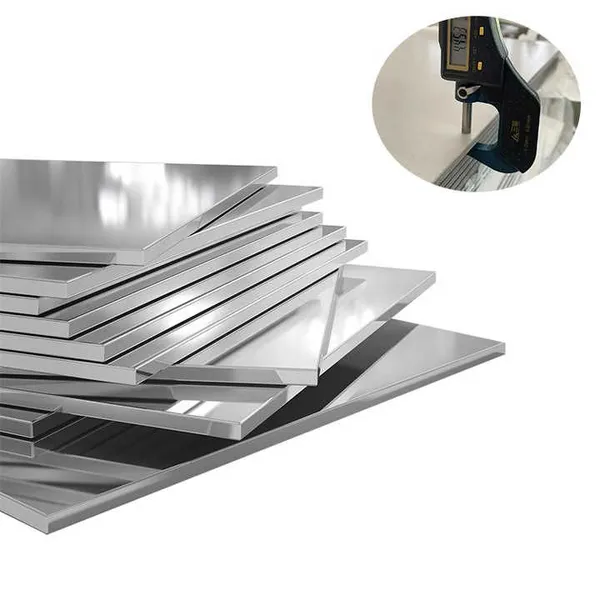
304/304L/316/409/410/904L/2205/2507/310H Premium Stainless Steel Sheets Supplier Custom Sizes & FinishesUS$ 1.72MOQ: 1 Ton
-
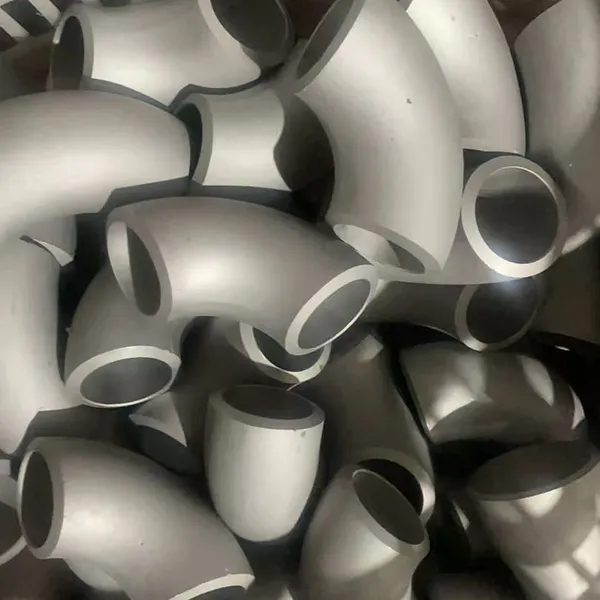
Stainless Steel ASME B16.9 Sch 45 90 Degree Pipe Fittings ElbowUS$ 8MOQ: 1 Piece
-
China Brand Zz 304L 316/316L GB En JIS Standard Thin Wall Welded Stainless Steel Water Pipe/TubeNegotiableMOQ: 2 Meters
-
BA 4 Inch 6 Inch 8 Inch 201 304 304L 316 316L Welded Seamless Stainless Steel PipeNegotiableMOQ: 2 Meters
-
ASME B36.19M-2004 SCH40S Stainless Steel Pipe - Complies With EU 3.1 CertificationUS$ 1 - 650MOQ: 1 Piece
-
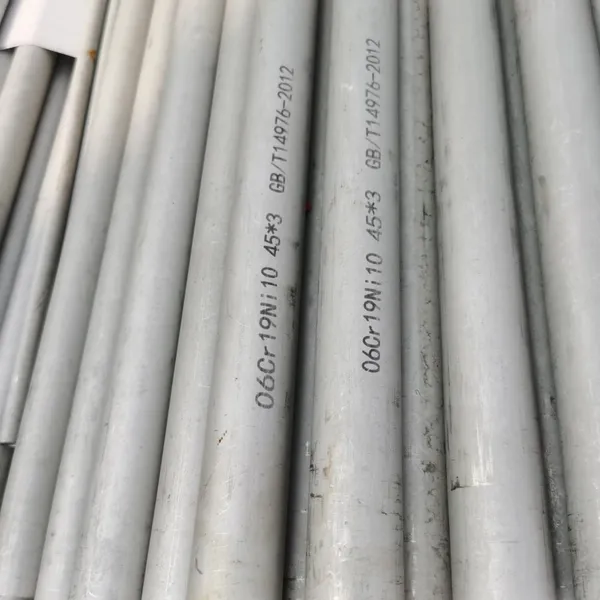
Factory TP309/TP309S/TP309H (UNS30900) Seamless Stainless Steel Pipe and Tube for Boiler BafflesUS$ 8MOQ: 200 Kilograms
-
TP347/TP347H/1.4961/S34709 Seamless Stainless Steel Pipe for UseNegotiableMOQ: 2 Meters
-
China 304 316 Stainless Steel Sanitary Welded Tube Food Grade Sanitary Grade Welded Pipe PolishingNegotiableMOQ: 1 Piece
-
China Manufacture Stainless Steel 316L Ba Seamless Welded Steel Pipe TubesUS$ 1760 - 1860MOQ: 5 Tons
-
316L/1.4405 Seamless Stainless Steel PipeNegotiableMOQ: 2 Meters
-
Stainless Steel Globe Valve – High Durability & Corrosion ResistanceNegotiableMOQ: 1 Piece
-
1.4529 Stainless Steel Flat Plate for Chemical Processing EquipmentUS$ 25 - 35MOQ: 1 Kilogram
-
Color Coated Steel Panels for Warehouse Partition Walls (Fireproof Grade)US$ 1 - 1.2MOQ: 50 Kilograms
-
Custom Width (600mm-1250mm) Colored Steel Coil With Scratch ResistanceUS$ 1 - 1.2MOQ: 50 Kilograms
-
0.5mm-3.0mm Colored Coated Steel Sheet With PVDF/Polyester CoatingUS$ 1 - 1.2MOQ: 50 Kilograms
-
JIS G 3322 Compliant Colored Coils With Third-Party Inspection ReportUS$ 1 - 1.2MOQ: 50 Kilograms