
 Business License

Today, let's take a look at "Two Common Polishing Methods for 304 Stainless Steel Pipes"
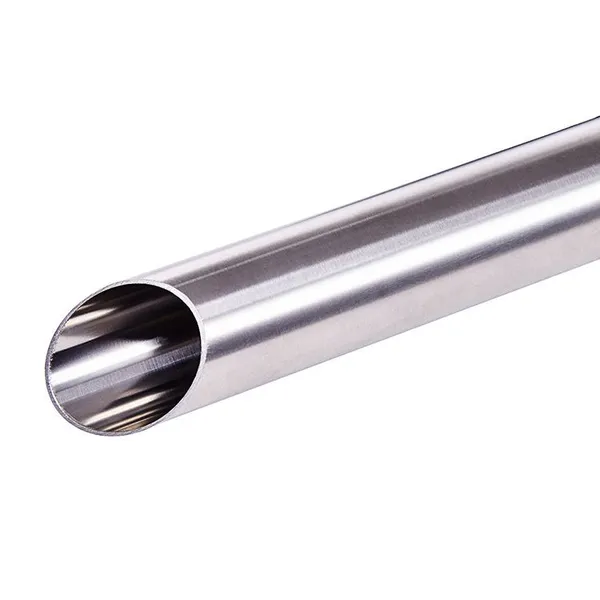
Let's first understand what polishing is. Polishing is a processing method that uses mechanical, chemical or electrochemical actions to reduce the roughness of a workpiece's surface, making it smooth and shiny. It is a process of fine processing the surface of the workpiece using a stainless steel pipe polishing machine and abrasive particles or other polishing media. Polishing does not increase the size or geometric accuracy of the workpiece, but is used to obtain a smooth surface or mirror-like luster.
There are many methods for polishing stainless steel pipes. Currently, the most commonly used ones are mechanical polishing and electrolytic polishing. There are some differences between these different polishing methods, and there are also certain differences in cost.
1. Mechanical Polishing
The main method of mechanical polishing is to perform internal surface grinding and polishing. The polishing rod is placed inside the 304 stainless steel tube, and the rotating disc inside can rotate at a high speed economically. During the continuous rotation process, the smooth surface inside the stainless steel tube can be polished. Generally, mechanical polishing is divided into rough polishing and fine polishing. Some products with higher requirements can undergo fine polishing. During fine polishing, the 304 stainless steel tube needs to be coated with an appropriate amount of polishing paste to increase the brightness of the surface. This polishing method will also have a relatively higher cost.
Mechanical polishing can make 304 stainless steel pipes have good flatness and brightness. However, it requires a high level of labor intensity, causes serious pollution, and cannot process complex parts. The investment and cost are high, and the glossiness lasts for a short time. It is prone to dulling and rusting.
2. Electrolytic Polishing
Compared to mechanical polishing, the electrolytic polishing method requires less manpower. However, we need electrolytic tools and equipment. We should use the 304 stainless steel tube to be polished as the anode, the insoluble metal side as the cathode, and then place both electrodes in the electrolytic tank simultaneously. Then, connect the power supply and conduct electrolytic polishing until we achieve the desired surface brightness effect. This polishing method is slightly more expensive in terms of cost, but the polishing effect is better than that of the mechanical polishing method. After the polishing process, the oxide layer on the surface of the stainless steel tube will be destroyed. Therefore, an acidic solution is needed to passivate the surface layer to maintain its anti-corrosion property. Otherwise, the surface layer of the stainless steel tube will be prone to rusting, which would be a waste of effort.
Recently Posted
-
Does the stainless steel welded pipe have specific temperature requirements during the solution heat
January 20, 2026Solution heat treatment involves heating stainless steel to a high temperature and then rapidly cooling it to achieve an oversatur Read More
 -
Can stainless steel welded pipes be made into thick pipes
January 20, 2026With the improvement of high-quality welding technology and increasingly strict weld inspection, the application fields of s Read More
 -
Three types of commonly available food-grade stainless steel on the market
January 20, 2026The common food-grade stainless steel pipes are mainly composed of iron, chromium and carbon and other elements. Household stainle Read More
 -
What are the requirements for stainless steel welding pipe production equipment
January 20, 2026As is well known, stainless steel welded pipes have been widely used in various industries such as machinery, chemical engineering Read More

Contact Us
Recommended Products
-
 Stainless Steel Elbow Welded Elbow 45/90/180-degree Seamless Pressed Elbow Long Radius Elbow Short Radius Elbow WholesaleNegotiableMOQ: 1 Piece
 -
316L/1.4405 Seamless Stainless Steel PipeNegotiableMOQ: 2 Meters
-
310s 440 Seamless Sanitary Piping Price 321 904l 201 20 Inch Seamless Steel Pipe A554 Stainless Steel PipeNegotiableMOQ: 1 Piece
-
China Brand ZZ Wholesale 304L 316 316L Welded Austenitic Piping Stainless Steel Pipe SupplierNegotiableMOQ: 2 Meters
-
304/304L/316/409/410/904L/2205/2507/310H Premium Stainless Steel Sheets Supplier Custom Sizes & FinishesUS$ 1.72MOQ: 1 Ton
-
Stainless Steel ASME B16.9 Sch 45 90 Degree Pipe Fittings ElbowUS$ 8MOQ: 1 Piece
-
China Brand Zz 304L 316/316L GB En JIS Standard Thin Wall Welded Stainless Steel Water Pipe/TubeNegotiableMOQ: 2 Meters
-
BA 4 Inch 6 Inch 8 Inch 201 304 304L 316 316L Welded Seamless Stainless Steel PipeNegotiableMOQ: 2 Meters
-
ASME B36.19M-2004 SCH40S Stainless Steel Pipe - Complies With EU 3.1 CertificationUS$ 1 - 650MOQ: 1 Piece
-
Factory TP309/TP309S/TP309H (UNS30900) Seamless Stainless Steel Pipe and Tube for Boiler BafflesUS$ 8MOQ: 200 Kilograms
-
TP347/TP347H/1.4961/S34709 Seamless Stainless Steel Pipe for UseNegotiableMOQ: 2 Meters
-
China 304 316 Stainless Steel Sanitary Welded Tube Food Grade Sanitary Grade Welded Pipe PolishingNegotiableMOQ: 1 Piece
-
China Manufacture Stainless Steel 316L Ba Seamless Welded Steel Pipe TubesUS$ 1760 - 1860MOQ: 5 Tons
-
316L/1.4405 Seamless Stainless Steel PipeNegotiableMOQ: 2 Meters
-
Stainless Steel Globe Valve – High Durability & Corrosion ResistanceNegotiableMOQ: 1 Piece
-
1.4529 Stainless Steel Flat Plate for Chemical Processing EquipmentUS$ 25 - 35MOQ: 1 Kilogram
-
Color Coated Steel Panels for Warehouse Partition Walls (Fireproof Grade)US$ 1 - 1.2MOQ: 50 Kilograms
-
Custom Width (600mm-1250mm) Colored Steel Coil With Scratch ResistanceUS$ 1 - 1.2MOQ: 50 Kilograms
-
0.5mm-3.0mm Colored Coated Steel Sheet With PVDF/Polyester CoatingUS$ 1 - 1.2MOQ: 50 Kilograms
-
JIS G 3322 Compliant Colored Coils With Third-Party Inspection ReportUS$ 1 - 1.2MOQ: 50 Kilograms