
 Business License

How to distinguish between hot-rolled stainless steel pipes and cold-rolled stainless steel pipes
Hot-rolled stainless steel pipes and cold-rolled stainless steel pipes are both processes of forming steel sections or stainless steel plates. They have a significant impact on the microstructure and properties of stainless steel. The rolling of stainless steel includes hot-rolled and cold-rolled stainless steel plates.
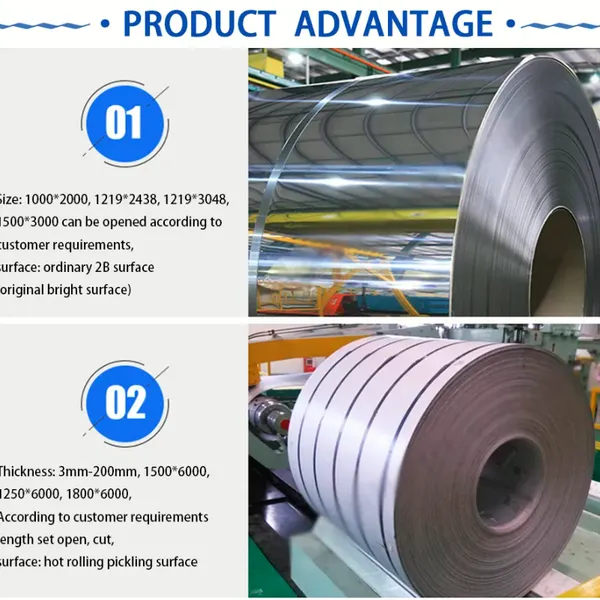
Hot-rolled stainless steel sheet
The advantages of hot-rolled stainless steel plates are that they can destroy the casting structure of the steel ingot, refine the grains of the stainless steel material, and eliminate the defects in the microstructure, thereby making the metallographic structure of the steel more dense and improving its mechanical properties. This improvement is usually mainly manifested along the rolling direction, thus making the stainless steel plates no longer be isotropic to a certain extent. At the same time, it can also weld together the bubbles, cracks and porosity formed during the previous casting process under high temperature and pressure.
However, hot-rolled stainless steel plates also have drawbacks. After undergoing hot rolling, the non-metallic inclusions (mostly sulfides, oxides, and silicates) within the stainless steel sheet will be compressed into thin sheets, resulting in a layering phenomenon. Layering significantly deteriorates the tensile properties of the steel along the thickness direction, and there is a possibility of inter-laminar tearing during weld shrinkage. The local strain induced by weld shrinkage often reaches several times the yield point strain, which is much stronger than the strain caused by loads. Secondly, uneven cooling during hot rolling can generate residual stress. Residual stress is the stress that is self-balanced internally without external force. Various sections of hot-rolled steel sections have this residual stress. Generally, the larger the cross-sectional size of the steel section, the greater the residual stress. Although residual stress is self-balancing, it still has an impact on the performance of stainless steel components under external forces. For example, it is unfavorable for the deformation, stability, and fatigue resistance of stainless steel.
Cold-rolled stainless steel sheet
The advantages of cold-rolled stainless steel plates are that they can be formed quickly and can be made into various cross-sectional shapes to meet the requirements of usage conditions; cold rolling can also cause significant plastic deformation in the steel, thereby increasing the yield point of the stainless steel plates.
However, its drawbacks do exist. Although the forming process did not involve hot plastic compression, residual stress still exists within the cross-section, which will inevitably affect the overall and local buckling characteristics of the stainless steel sheet; Secondly, the cold-rolled steel sections are generally of open cross-sections, resulting in a relatively low free torsional stiffness of the cross-section. During bending, torsion is prone to occur, and during compression, bending-torsion buckling is prone to happen, with poor torsional performance; Moreover, the wall thickness of cold-rolled formed steel is relatively small, and there is no thickening at the corner where the plates connect, which leads to the weak ability of the stainless steel sheet to bear local concentrated loads.
The main differences between hot-rolled stainless steel pipes and cold-rolled stainless steel pipes
Cold-rolled formed stainless steel pipes are allowed to have local buckling in their cross-sections, thereby enabling the full utilization of the post-buckling bearing capacity of the members. However, hot-rolled steel type steel pipes are not permitted to have local buckling in their cross-sections.
2. The causes of residual stress in hot-rolled steel sections and cold-rolled steel sections are different, resulting in significant differences in the distribution on the cross-sections. The distribution of residual stress on the cross-sections of cold-formed thin-walled steel sections is of the bending type, while the distribution of residual stress on the cross-sections of hot-rolled steel sections or welded steel sections is of the film type.
3. The free torsional stiffness of hot-rolled steel sections is higher than that of cold-rolled steel sections. Therefore, the torsional resistance of hot-rolled steel pipes is superior to that of cold-rolled steel.
Recently Posted
-
Does the stainless steel welded pipe have specific temperature requirements during the solution heat
January 20, 2026Solution heat treatment involves heating stainless steel to a high temperature and then rapidly cooling it to achieve an oversatur Read More
 -
Can stainless steel welded pipes be made into thick pipes
January 20, 2026With the improvement of high-quality welding technology and increasingly strict weld inspection, the application fields of s Read More
 -
Three types of commonly available food-grade stainless steel on the market
January 20, 2026The common food-grade stainless steel pipes are mainly composed of iron, chromium and carbon and other elements. Household stainle Read More
 -
What are the requirements for stainless steel welding pipe production equipment
January 20, 2026As is well known, stainless steel welded pipes have been widely used in various industries such as machinery, chemical engineering Read More

Contact Us
Recommended Products
-
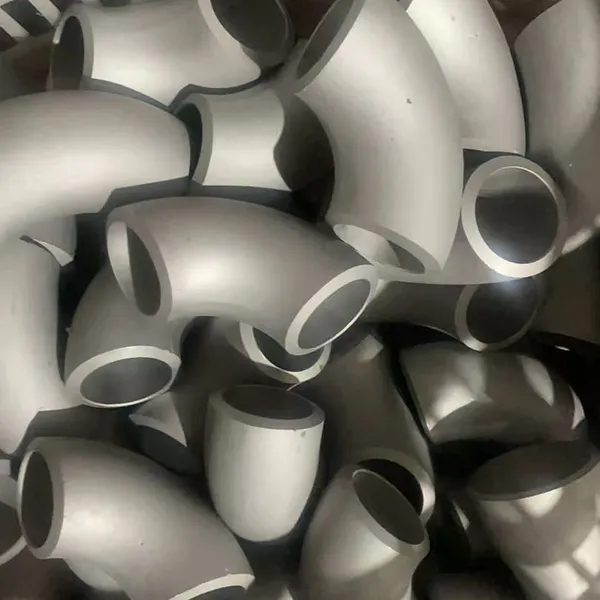
 Stainless Steel Elbow Welded Elbow 45/90/180-degree Seamless Pressed Elbow Long Radius Elbow Short Radius Elbow WholesaleNegotiableMOQ: 1 Piece
 -
316L/1.4405 Seamless Stainless Steel PipeNegotiableMOQ: 2 Meters
-
310s 440 Seamless Sanitary Piping Price 321 904l 201 20 Inch Seamless Steel Pipe A554 Stainless Steel PipeNegotiableMOQ: 1 Piece
-
China Brand ZZ Wholesale 304L 316 316L Welded Austenitic Piping Stainless Steel Pipe SupplierNegotiableMOQ: 2 Meters
-
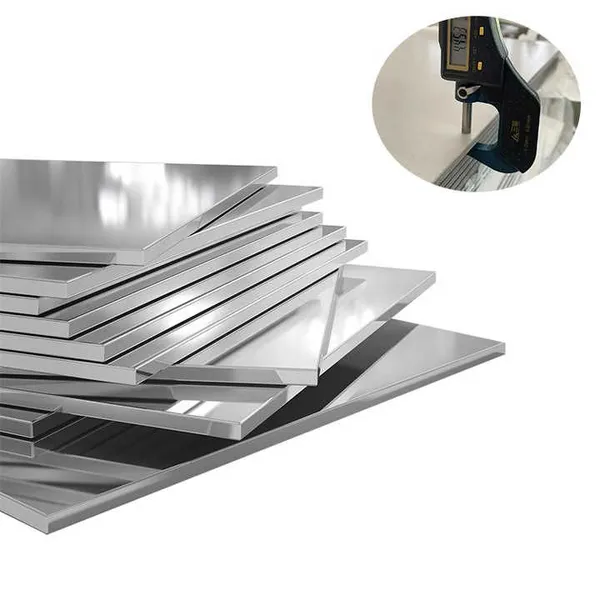
304/304L/316/409/410/904L/2205/2507/310H Premium Stainless Steel Sheets Supplier Custom Sizes & FinishesUS$ 1.72MOQ: 1 Ton
-
Stainless Steel ASME B16.9 Sch 45 90 Degree Pipe Fittings ElbowUS$ 8MOQ: 1 Piece
-
China Brand Zz 304L 316/316L GB En JIS Standard Thin Wall Welded Stainless Steel Water Pipe/TubeNegotiableMOQ: 2 Meters
-
BA 4 Inch 6 Inch 8 Inch 201 304 304L 316 316L Welded Seamless Stainless Steel PipeNegotiableMOQ: 2 Meters
-
ASME B36.19M-2004 SCH40S Stainless Steel Pipe - Complies With EU 3.1 CertificationUS$ 1 - 650MOQ: 1 Piece
-
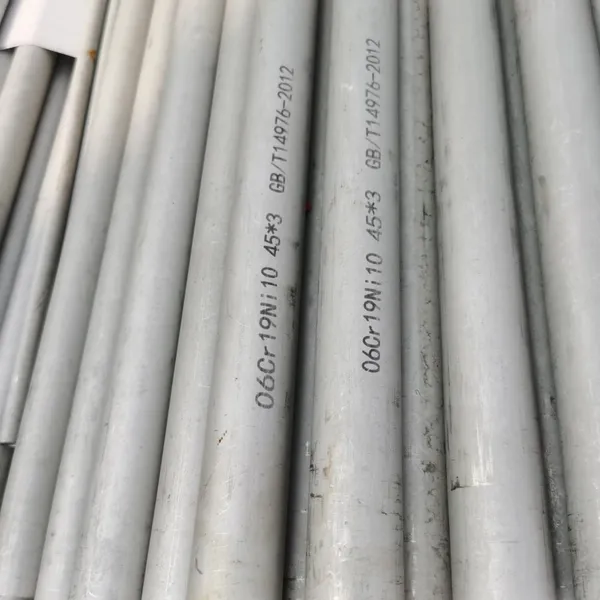
Factory TP309/TP309S/TP309H (UNS30900) Seamless Stainless Steel Pipe and Tube for Boiler BafflesUS$ 8MOQ: 200 Kilograms
-
TP347/TP347H/1.4961/S34709 Seamless Stainless Steel Pipe for UseNegotiableMOQ: 2 Meters
-
China 304 316 Stainless Steel Sanitary Welded Tube Food Grade Sanitary Grade Welded Pipe PolishingNegotiableMOQ: 1 Piece
-
China Manufacture Stainless Steel 316L Ba Seamless Welded Steel Pipe TubesUS$ 1760 - 1860MOQ: 5 Tons
-
316L/1.4405 Seamless Stainless Steel PipeNegotiableMOQ: 2 Meters
-
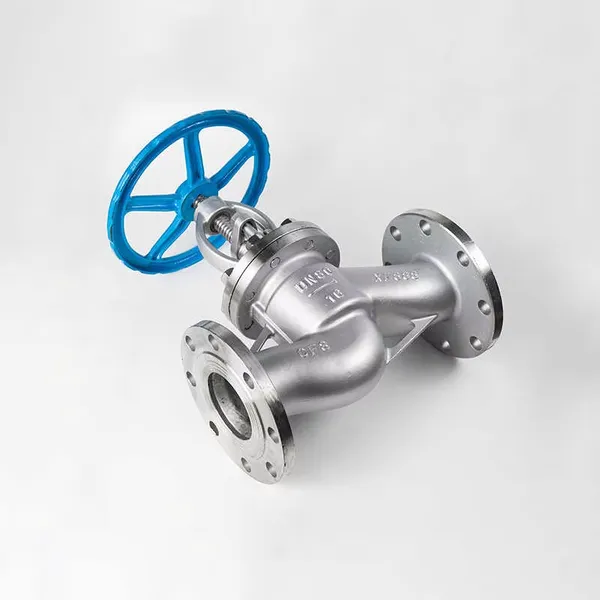
Stainless Steel Globe Valve – High Durability & Corrosion ResistanceNegotiableMOQ: 1 Piece
-
1.4529 Stainless Steel Flat Plate for Chemical Processing EquipmentUS$ 25 - 35MOQ: 1 Kilogram
-
Color Coated Steel Panels for Warehouse Partition Walls (Fireproof Grade)US$ 1 - 1.2MOQ: 50 Kilograms
-
Custom Width (600mm-1250mm) Colored Steel Coil With Scratch ResistanceUS$ 1 - 1.2MOQ: 50 Kilograms
-
0.5mm-3.0mm Colored Coated Steel Sheet With PVDF/Polyester CoatingUS$ 1 - 1.2MOQ: 50 Kilograms
-
JIS G 3322 Compliant Colored Coils With Third-Party Inspection ReportUS$ 1 - 1.2MOQ: 50 Kilograms