
 Business License

The construction techniques of EP and BA pipes
With the advancement and development of technology, more and more new technologies, new materials and new processes are widely applied in industries such as microelectronics, medicine and bioengineering, thereby significantly improving the quality of products.
Due to the high integration of microelectronics and the high cleanliness requirements of medicine and bioengineering, it is necessary in the production process to ensure that the inner surface of the pipeline for transporting the medium is of high smoothness and cleanliness. This is to guarantee the cleanliness of the ultra-pure medium used in the electronics industry and prevent the accumulation and bacterial growth of the medium in the pipeline for transporting medicine and bioengineering. To achieve this requirement, it is necessary to use stainless steel pipes with high surface smoothness and high cleanliness on the inner surface (referred to as EP/BA pipes), and at the same time, there must be piping and welding processes with very high cleanliness requirements. Only in this way can the cleanliness be ensured inside the pipe, and the welds at the joints are uniform and smooth, allowing the medium to flow smoothly within the pipe, which is conducive to improving the installation quality of the project and the qualification rate and excellence rate of the products.
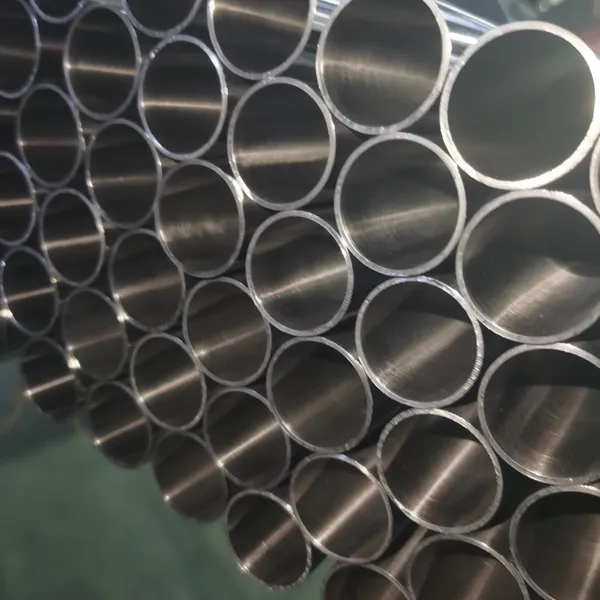
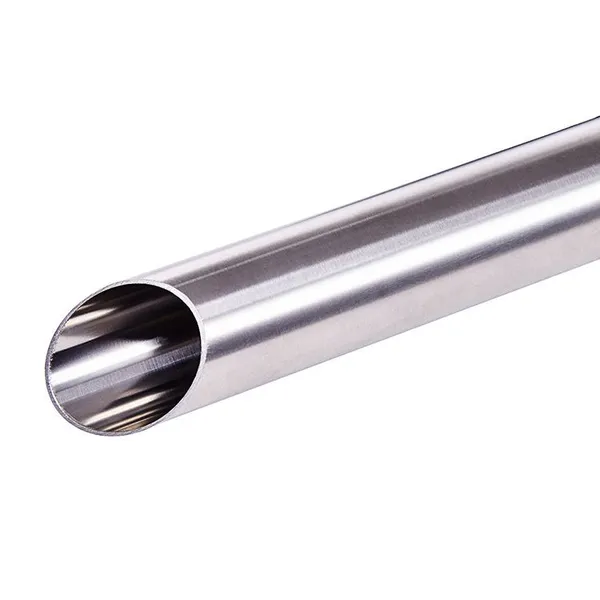
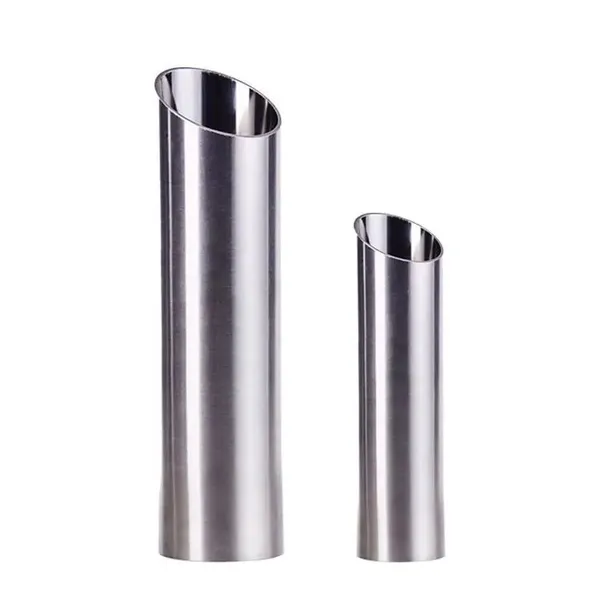
EP pipes are made of 316L stainless steel, with thin walls (usually with wall thicknesses of 0.89mm, 1.25mm, 1.65mm, 2.1mm, 2.8mm), and have very high inner surface smoothness. They are made through electrolytic polishing based on chemical principles. Therefore, EP pipes are also called electrolytic polished thin-walled stainless steel pipes. BA pipes are made of 316L or 304L stainless steel, with thin walls (usually with wall thicknesses of 0.89mm, 1.25mm, 1.65mm, 2.1mm, 2.8mm), and have slightly lower inner surface smoothness than EP pipes. They are made through mechanical grinding. Due to the high inner surface smoothness and cleanliness of EP/BA pipes, the cost is also higher, and they are mainly imported from abroad. Therefore, in engineering, they are mainly used for key parts with high cleanliness requirements for transporting media. Thus, the requirements for construction environment, construction techniques, and detection methods are also relatively higher. Given that there are no corresponding quotas or specifications for EP/BA pipe construction in China at present, when conducting EP/BA pipe construction, we mainly follow the successful cooperation experience with certain companies engaged in EP/BA pipe construction in the United States and Japan in the past for construction. The specific construction process is as follows:
1. Construction Preparation
Before entering the construction site, one should carefully read the drawings and relevant requirements of national standards, understand the project overview, formulate the corresponding material plan, compile the construction organization design, reasonably arrange the construction personnel, verify the qualifications of the workers (operators engaged in EP/BA pipe construction must undergo strict training and assessment, and can only start working after passing the assessment), sort out all kinds of machinery and equipment, and have the technical personnel conduct technical briefings to the construction teams, and then prepare to start construction on the site.
2. Inspection before storage
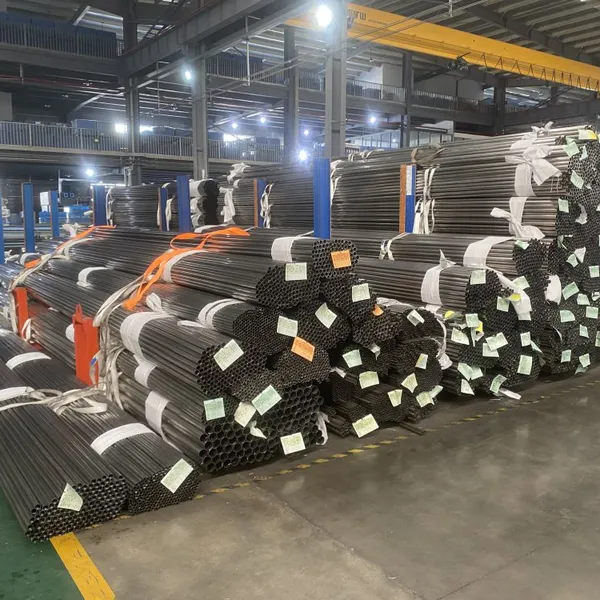
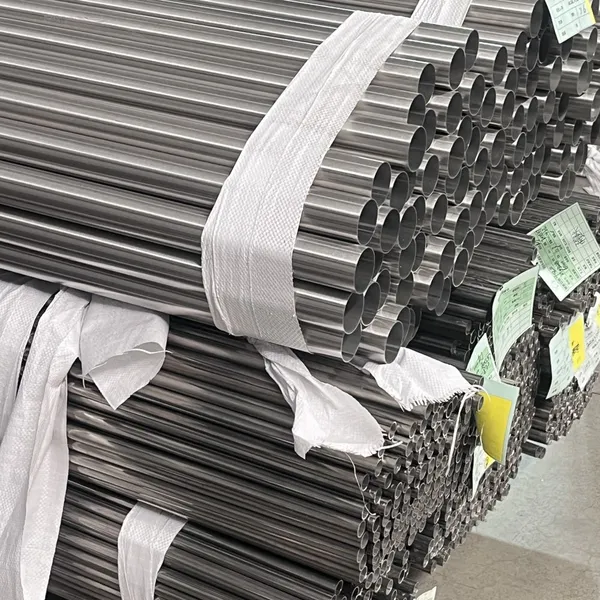
All EP/BA pipe materials and accessories should be packaged with double-layer plastic film. The end of the pipe should be covered with a polytetrafluoroethylene plastic cover. Therefore, before storage, it is necessary to check whether the double-layer plastic film packaging is damaged and whether the surface of the pipe materials and accessories has scratches or indentations. If so, it should be immediately reported to the competent department and the client, and corresponding remedial measures should be taken. Otherwise, they cannot be stored.
3 Pre-Installation Inspection
Due to the high cleanliness requirements of the EP/BA tubes themselves, the construction of these tubes must be carried out in a clean environment. They cannot be directly unpacked and opened in the open air. Therefore, before the construction of EP/BA tubes, a construction prefabrication room with an area of no less than 25 square meters and a cleanliness level of at least 10,000 should be built near the factory. This can meet the cleanliness requirements of both the tubes themselves and the engineering requirements. Before the pipe materials and accessories enter the prefabrication room, the first layer of plastic film packaging should be removed. After entering the prefabrication room, the second layer of plastic film packaging and the cap can be removed. The construction personnel should operate with dust-free and clean gloves and must not touch the tube end and inner wall with bare hands. After removing the tube end cover, use a micro flashlight to inspect the inner wall of the tube to check for scratches and particle impurities. If there are scratches, the tube in that area should be cut off and cannot be used; if it is found that there are more particles and impurities on the inner wall (beyond the warranty range), then the tube must be cleaned. The method is to repeatedly clean with ultra-pure water and dust-free anti-static clean cloth until it is qualified, then blow dry with high-purity argon or nitrogen, cover the cap, and proceed to the next process.
4 Cutting and Dismantling
All cutting and dismantling operations should be completed in the prefabrication room. According to the requirements of the drawings, based on the length of the required pipes, the construction personnel use special tools to cut the inspected qualified pipes. First, fix the pipe with a tripod. Due to the thin wall of the pipe, when fixing the pipe, it is strictly forbidden to clamp it too tightly to prevent deformation or leaving marks. Then, respectively fill high-purity argon or nitrogen gas into both ends of the pipe at an appropriate flow rate. This is to blow out the iron filings from the cutting edge during the cutting process, and then proceed with the cutting. After the cutting is completed, first check whether the inner surface of the cut pipe is clean. If it is clean, use a small piece of clean cloth respectively inserted 20-30mm away from the pipe end into the pipe, and then use the special scraping tool (flat machine) to scrape the end face until it is smooth and flat. Then, seal the pipe opening with a clean plastic cover. If there are iron filings, oil stains, etc. inside the pipe after scraping, it is necessary to clean the inner and outer walls of the pipe with clean cloth and industrial alcohol or acetone, then dry it with high-purity argon or nitrogen gas, and cover it with the plastic end cover, and then flow into the next process.
5 Welding
The quality of welding directly affects the construction quality of the project, especially the formation of the inner surface welds which affects the flow of the medium inside the pipe. If the weld is too high, too low, or unevenly formed, it is easy for impurities to accumulate during the flow process, thereby affecting the quality of the product. Therefore, the quality of welding is particularly important.
We use a fully automatic pulsed argon arc welding equipment. We have previously used French-made model PS-254 welding equipment, American-made models ARCMACHINEINC107A and 207A, and model CWS-D100 welding equipment. These equipment are all fully computer-controlled programs and do not require filler wire. They use the base material to melt and form, with stable arcs and uniform and beautiful welds. First, the cut pipe is placed in the welding head, clamped, aligned, and the center of the tungsten rod is aligned with the center of the pipe gap. The pipe opening must not have misalignment, and the smaller the gap, the better. At the same time, high-purity argon gas is introduced into the pipe, and the gas flow rate is adjusted. Then, check whether the circuits of each part of the welding equipment are correct, especially the power supply must not be connected wrongly. After all are correct, connect the power supply, use the welding function keys in the welding equipment, adjust the corresponding welding specification parameters, and then press the welding function key in the welding equipment to start welding. After welding, immediately clean the weld surface with a stainless steel wire brush. It is worth noting that before the formal welding each day, a weld test must be conducted. The weld test sample should be the same as the pipe material, pipe diameter, and wall thickness used for the formal welding. After the inspector confirms the sample is qualified, the formal welding can be carried out. For the same specification of pipes, if the test is, the formal welding is absolutely not allowed until the weld test is qualified. After the welding of the same specification of pipes is completed, a weld end test must be conducted, and it can only be qualified. If it is, all the welds of this specification of pipes that have been welded are, and they must be reworked and re-welded according to the above procedures.
7 Inspection
After the entire pipeline system is installed, it is first purged with high-purity gas of the same medium. Then, according to the technical requirements in the drawings and the corresponding specifications, pressure resistance tests, air tightness tests, particle tests, oil content tests and dew point tests are conducted.
Recently Posted
-
Does the stainless steel welded pipe have specific temperature requirements during the solution heat
January 20, 2026Solution heat treatment involves heating stainless steel to a high temperature and then rapidly cooling it to achieve an oversatur Read More
 -
Can stainless steel welded pipes be made into thick pipes
January 20, 2026With the improvement of high-quality welding technology and increasingly strict weld inspection, the application fields of s Read More
 -
Three types of commonly available food-grade stainless steel on the market
January 20, 2026The common food-grade stainless steel pipes are mainly composed of iron, chromium and carbon and other elements. Household stainle Read More
 -
What are the requirements for stainless steel welding pipe production equipment
January 20, 2026As is well known, stainless steel welded pipes have been widely used in various industries such as machinery, chemical engineering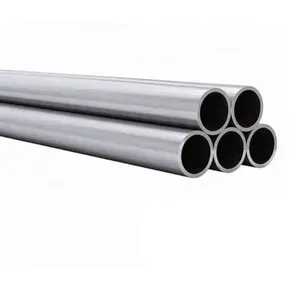 Read More

Contact Us
Recommended Products
-
 Stainless Steel Elbow Welded Elbow 45/90/180-degree Seamless Pressed Elbow Long Radius Elbow Short Radius Elbow WholesaleNegotiableMOQ: 1 Piece
 -
316L/1.4405 Seamless Stainless Steel PipeNegotiableMOQ: 2 Meters
-
310s 440 Seamless Sanitary Piping Price 321 904l 201 20 Inch Seamless Steel Pipe A554 Stainless Steel PipeNegotiableMOQ: 1 Piece
-
China Brand ZZ Wholesale 304L 316 316L Welded Austenitic Piping Stainless Steel Pipe SupplierNegotiableMOQ: 2 Meters
-
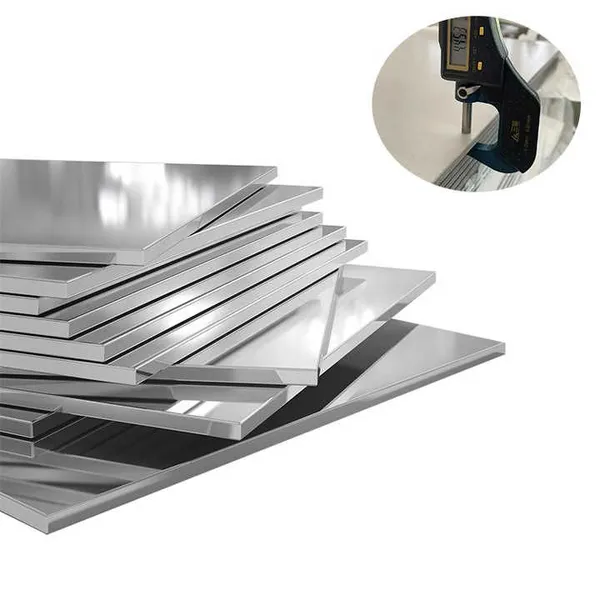
304/304L/316/409/410/904L/2205/2507/310H Premium Stainless Steel Sheets Supplier Custom Sizes & FinishesUS$ 1.72MOQ: 1 Ton
-
Stainless Steel ASME B16.9 Sch 45 90 Degree Pipe Fittings ElbowUS$ 8MOQ: 1 Piece
-
China Brand Zz 304L 316/316L GB En JIS Standard Thin Wall Welded Stainless Steel Water Pipe/TubeNegotiableMOQ: 2 Meters
-
BA 4 Inch 6 Inch 8 Inch 201 304 304L 316 316L Welded Seamless Stainless Steel PipeNegotiableMOQ: 2 Meters
-
ASME B36.19M-2004 SCH40S Stainless Steel Pipe - Complies With EU 3.1 CertificationUS$ 1 - 650MOQ: 1 Piece
-
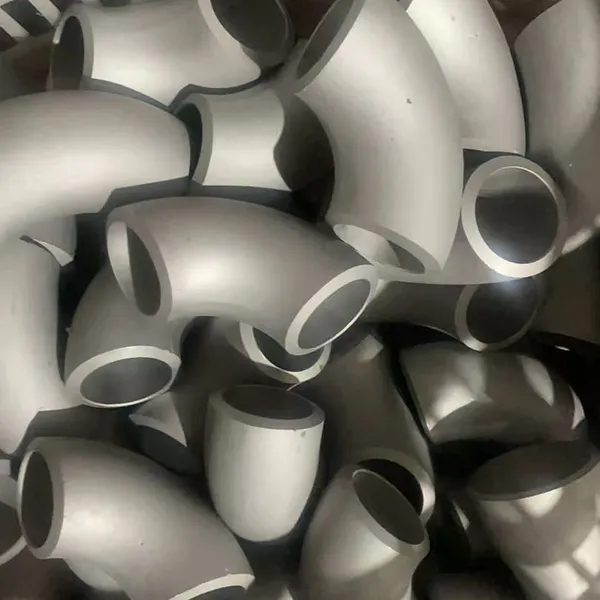
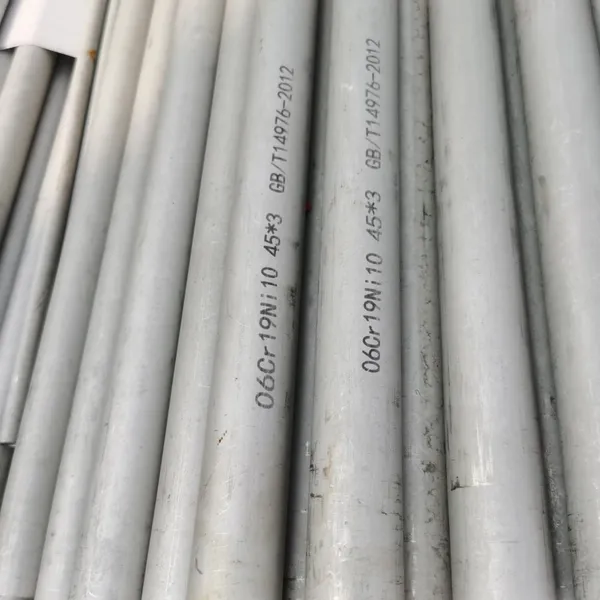
Factory TP309/TP309S/TP309H (UNS30900) Seamless Stainless Steel Pipe and Tube for Boiler BafflesUS$ 8MOQ: 200 Kilograms
-
TP347/TP347H/1.4961/S34709 Seamless Stainless Steel Pipe for UseNegotiableMOQ: 2 Meters
-
China 304 316 Stainless Steel Sanitary Welded Tube Food Grade Sanitary Grade Welded Pipe PolishingNegotiableMOQ: 1 Piece
-
China Manufacture Stainless Steel 316L Ba Seamless Welded Steel Pipe TubesUS$ 1760 - 1860MOQ: 5 Tons
-
316L/1.4405 Seamless Stainless Steel PipeNegotiableMOQ: 2 Meters
-
Stainless Steel Globe Valve – High Durability & Corrosion ResistanceNegotiableMOQ: 1 Piece
-
1.4529 Stainless Steel Flat Plate for Chemical Processing EquipmentUS$ 25 - 35MOQ: 1 Kilogram
-
Color Coated Steel Panels for Warehouse Partition Walls (Fireproof Grade)US$ 1 - 1.2MOQ: 50 Kilograms
-
Custom Width (600mm-1250mm) Colored Steel Coil With Scratch ResistanceUS$ 1 - 1.2MOQ: 50 Kilograms
-
0.5mm-3.0mm Colored Coated Steel Sheet With PVDF/Polyester CoatingUS$ 1 - 1.2MOQ: 50 Kilograms
-
JIS G 3322 Compliant Colored Coils With Third-Party Inspection ReportUS$ 1 - 1.2MOQ: 50 Kilograms