
 Business License

Standard system of commonly used flange pipes for pressure pipelines
At present, most pressure pipelines and their components have been standardized and are supported by corresponding application standards. Therefore, when designing pressure pipeline materials, the first issue to be considered is the selection of the standard series for pressure pipelines and their components.
Application standard system: A collection of series standards used for each component in a pipeline system (route). These standards should include pipe series standards, pipe fitting series standards, flange and its connection component series standards, valve standards, etc. They are applied in a pipeline system through certain rules, and they are interconnected and coordinated with each other, thereby determining the basic parameters of the pipeline and its components.
The standards applied by countries around the world can generally be divided into two major categories.
◆Pipe - that is, the series of outer diameters of steel pipes
It is divided into the international standard series (large outer diameter series) and imperial pipe.
Domestic standard series (small outer diameter series) Metric pipe (or metric tube)
◆Flange: European flange and American flange
Pressure level:
PN0.1 0.25 0.6 1.0 1.6 2.5 4.0 6.3 10.0 16.0 25.0 40.0 MPa European flange (DIN)
PN2.0 5.0 6.8 10.0 15.0 25.0 42.0 MPa American flange (ANSI)
CL150 300 400 600 900 1500 2500 Psi
From this, it can be seen that regardless of whether it is a flange or a pipe, the two series or two systems mentioned above cannot be used together.
ANSI - American National Standards Institute
ASTM - American Society of Testing Materials, the American Materials Testing Association
◆ Method for indicating the wall thickness of steel pipes
The methods for indicating the wall thickness of steel pipes include pipe number, pipe wall thickness dimension, and pipe weight.
1) The wall thickness is indicated by the pipe designation "Sch".
The pipe number is the ratio of the material's allowable stress at the design pressure and design temperature of the pipe, multiplied by 1000, and then rounded off to the nearest whole number.
That is: Sch = P / [σ]t × 100
ANSI B36.10 Wall Thickness Grades: There are ten grades including Sch10, Sch20, Sch30, Sch40, Sch60, Sch80, Sch100, Sch120, Sch140, and Sch160.
ANSIB36.19 Wall Thickness Grade: There are four grades: Sch5s, Sch10s, Sch40s, and Sch80s.
2) Represented by the wall thickness of the steel pipe
Some steel pipe standards of China, ISO and Japan are adopted.
3) It is expressed in terms of the weight of the pipe.
It divides the pipe wall thickness into three types:
a. Standard weight tube, represented by "STD"
b. Thickened tube, represented by "XS"
c. Extra-thick tube, represented by XXS.
For pipes with a diameter (DN) of 250mm or less, Sch40 is equivalent to STD, and for pipes with a diameter less than 200mm, Sch80 is equivalent to XS.
Recently Posted
-
Does the stainless steel welded pipe have specific temperature requirements during the solution heat
January 20, 2026Solution heat treatment involves heating stainless steel to a high temperature and then rapidly cooling it to achieve an oversatur Read More
 -
Can stainless steel welded pipes be made into thick pipes
January 20, 2026With the improvement of high-quality welding technology and increasingly strict weld inspection, the application fields of s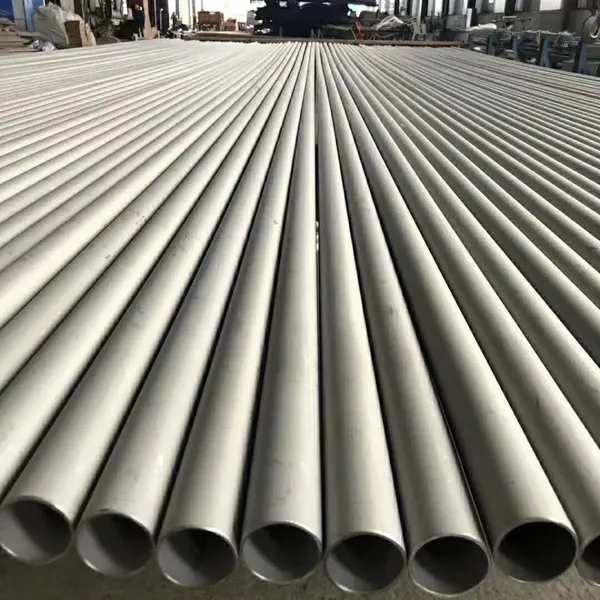 Read More
 -
Three types of commonly available food-grade stainless steel on the market
January 20, 2026The common food-grade stainless steel pipes are mainly composed of iron, chromium and carbon and other elements. Household stainle Read More
 -
What are the requirements for stainless steel welding pipe production equipment
January 20, 2026As is well known, stainless steel welded pipes have been widely used in various industries such as machinery, chemical engineering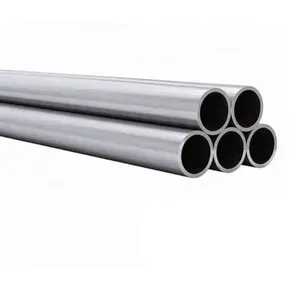 Read More

Contact Us
Recommended Products
-
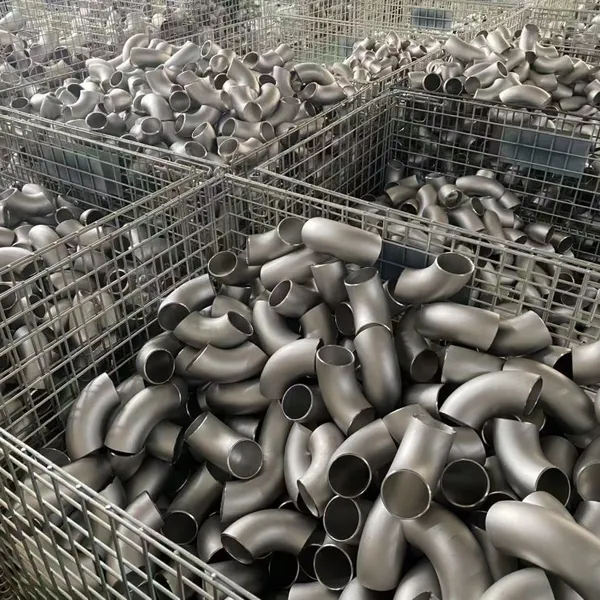
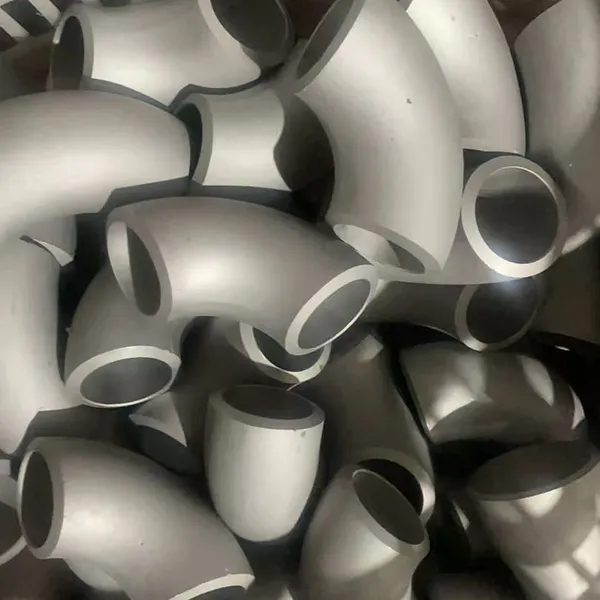
 Stainless Steel Elbow Welded Elbow 45/90/180-degree Seamless Pressed Elbow Long Radius Elbow Short Radius Elbow WholesaleNegotiableMOQ: 1 Piece
 -
316L/1.4405 Seamless Stainless Steel PipeNegotiableMOQ: 2 Meters
-
310s 440 Seamless Sanitary Piping Price 321 904l 201 20 Inch Seamless Steel Pipe A554 Stainless Steel PipeNegotiableMOQ: 1 Piece
-
China Brand ZZ Wholesale 304L 316 316L Welded Austenitic Piping Stainless Steel Pipe SupplierNegotiableMOQ: 2 Meters
-
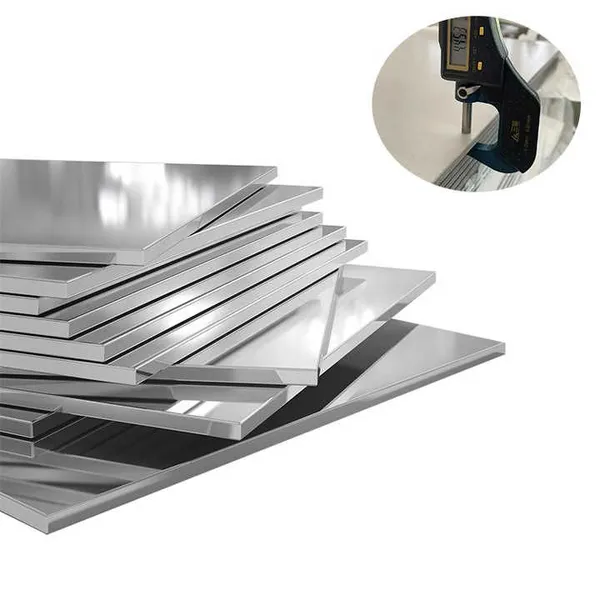
304/304L/316/409/410/904L/2205/2507/310H Premium Stainless Steel Sheets Supplier Custom Sizes & FinishesUS$ 1.72MOQ: 1 Ton
-
Stainless Steel ASME B16.9 Sch 45 90 Degree Pipe Fittings ElbowUS$ 8MOQ: 1 Piece
-
China Brand Zz 304L 316/316L GB En JIS Standard Thin Wall Welded Stainless Steel Water Pipe/TubeNegotiableMOQ: 2 Meters
-
BA 4 Inch 6 Inch 8 Inch 201 304 304L 316 316L Welded Seamless Stainless Steel PipeNegotiableMOQ: 2 Meters
-
ASME B36.19M-2004 SCH40S Stainless Steel Pipe - Complies With EU 3.1 CertificationUS$ 1 - 650MOQ: 1 Piece
-
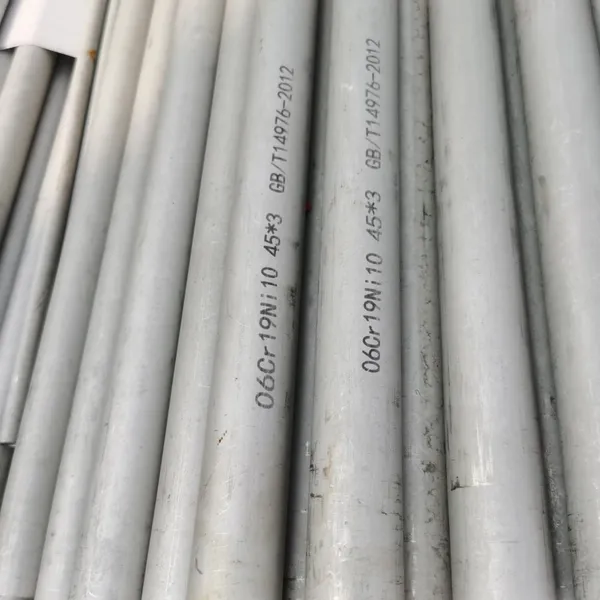
Factory TP309/TP309S/TP309H (UNS30900) Seamless Stainless Steel Pipe and Tube for Boiler BafflesUS$ 8MOQ: 200 Kilograms
-
TP347/TP347H/1.4961/S34709 Seamless Stainless Steel Pipe for UseNegotiableMOQ: 2 Meters
-
China 304 316 Stainless Steel Sanitary Welded Tube Food Grade Sanitary Grade Welded Pipe PolishingNegotiableMOQ: 1 Piece
-
China Manufacture Stainless Steel 316L Ba Seamless Welded Steel Pipe TubesUS$ 1760 - 1860MOQ: 5 Tons
-
316L/1.4405 Seamless Stainless Steel PipeNegotiableMOQ: 2 Meters
-
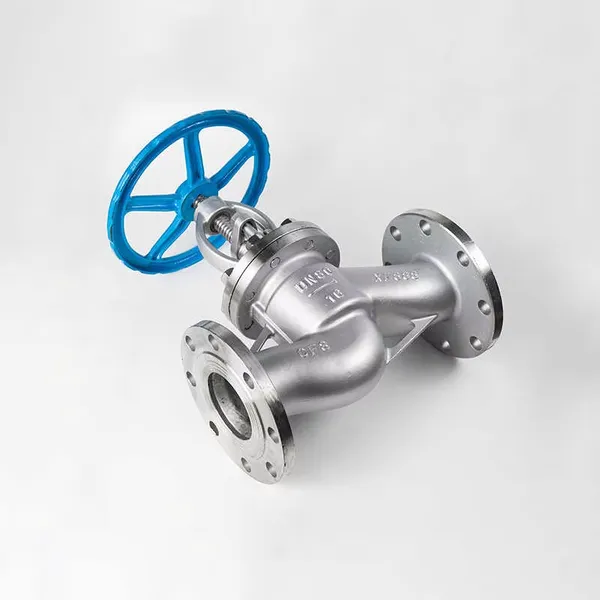
Stainless Steel Globe Valve – High Durability & Corrosion ResistanceNegotiableMOQ: 1 Piece
-
1.4529 Stainless Steel Flat Plate for Chemical Processing EquipmentUS$ 25 - 35MOQ: 1 Kilogram
-
Color Coated Steel Panels for Warehouse Partition Walls (Fireproof Grade)US$ 1 - 1.2MOQ: 50 Kilograms
-
Custom Width (600mm-1250mm) Colored Steel Coil With Scratch ResistanceUS$ 1 - 1.2MOQ: 50 Kilograms
-
0.5mm-3.0mm Colored Coated Steel Sheet With PVDF/Polyester CoatingUS$ 1 - 1.2MOQ: 50 Kilograms
-
JIS G 3322 Compliant Colored Coils With Third-Party Inspection ReportUS$ 1 - 1.2MOQ: 50 Kilograms