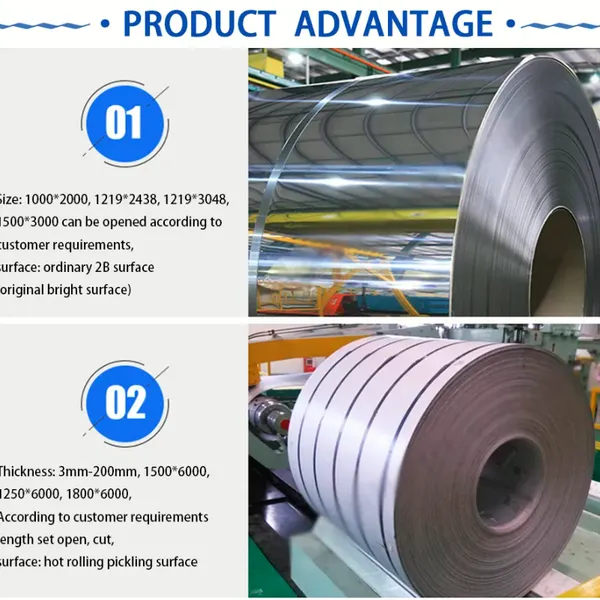

 Business License

The application of partition-type heat exchangers
(1) Tubular Heat Exchangers
1. Coiled Tube Heat Exchangers
(1) Immersed Coiled Tube Heat Exchanger: Immersed coiled tube heat exchangers can be used for cooling of high-pressure corrosive media. With a slight modification, they can be used as a tubular reactor or as a reaction delay device. (2) Spray-Type Heat Exchanger: Mostly used as a cooler, generally for preheating and recovery of flue gas. This equipment is often placed in outdoor air circulation areas, and when the cooling water vaporizes in the air, it can take away some heat to improve the cooling effect.
2. Jacketed Heat Exchangers: Jacketed heat exchangers have a simple structure and can withstand high pressure. They are also convenient to use (the number of tube sections can be increased or decreased as needed). Especially because jacketed heat exchangers have the advantages of high heat transfer coefficient, high heat transfer driving force, and the ability to withstand high pressure, in ultra-high pressure production processes (such as the high-pressure polyethylene production process with an operating pressure of 3000 atmospheres), almost all the heat exchangers used are jacketed type. In summary, when the required heat transfer area is not too large and the pressure is high or the heat transfer effect is better, jacketed heat exchangers should be used.
3. Tubular Heat Exchangers In petrochemical production, especially large heat exchangers such as those for high temperature and high pressure, the main choice is tubular heat exchangers. Their heat transfer coefficient is generally 800 - 1000 W/㎡*℃. (1) Fixed Tube Sheet Heat Exchanger: This type of heat exchanger is suitable for situations where the temperature difference between the two media is not large, or the temperature difference is large but the pressure in the shell is not high, and the shell medium is clean and not prone to scaling. (2) U-Tube Heat Exchanger: Suitable for high-temperature and high-pressure conditions. The fluid inside the tube should be clean. (3) Head-Type Heat Exchanger: Suitable for situations where the temperature difference between the shell and the tube bundle is large or the shell medium is prone to scaling.
(2) Finned Heat Exchangers
1. Finned Tube Heat Exchanger: Finned tube heat exchangers are mainly used for heating or cooling of gases. The common finned tube heat exchanger is the air cooler used in oil refineries.
2. Finned Plate Heat Exchanger: Due to the high thermal conductivity of aluminum alloy and its improved ductility and tensile strength at low temperatures, it has a wide operating range and can be used within the temperature range of -200°C to 200°C, suitable for low and ultra-low temperature conditions. It also has strong adaptability and can be used for various heat exchanges, evaporation or condensation. The operation mode can be countercurrent, parallel flow, cross-flow or cross-counterflow simultaneously. In addition, it can also be used for heat exchange of different media in the same equipment.
(3) Jacketed Heat Exchanger
Jacketed heat exchangers are widely used for heating and cooling in reaction processes. The heat transfer coefficient is generally 300 - 400 W/㎡*℃.
(4) Plate Heat Exchanger
Plate heat exchangers have higher heat transfer efficiency, less floor space, lighter weight, and are cheaper than shell-and-tube type. However, plate heat exchangers are limited by temperature and pressure, and are not suitable for media containing particles. They are prone to blockage of flow channels. Their heat transfer coefficient is generally 3000 - 5000 W/㎡*℃.
(5) Spiral Plate Heat Exchanger
The reforming heat exchangers in small and medium-sized ammonia synthesis plants and the heat exchangers at the bottom of the synthesis towers have been replaced by spiral plate heat exchangers in place of shell-and-tube heat exchangers. Spiral plate heat exchangers are more commonly used in electrolyte heatingers and coolingers of concentrated alkaline solutions in soda ash plants. They are also often used for tower top condensation, fuming sulfuric acid cooling, and fatty acid cooling. Due to their closed structure, they are suitable for working conditions of flammable, explosive, toxic, and valuable fluids. However, due to the structure limitations, they are not suitable for high-pressure conditions. Their heat transfer coefficient is generally 1000 - 2000 W/㎡*℃.
Recently Posted
-
Does the stainless steel welded pipe have specific temperature requirements during the solution heat
January 20, 2026Solution heat treatment involves heating stainless steel to a high temperature and then rapidly cooling it to achieve an oversatur Read More
 -
Can stainless steel welded pipes be made into thick pipes
January 20, 2026With the improvement of high-quality welding technology and increasingly strict weld inspection, the application fields of s Read More
 -
Three types of commonly available food-grade stainless steel on the market
January 20, 2026The common food-grade stainless steel pipes are mainly composed of iron, chromium and carbon and other elements. Household stainle Read More
 -
What are the requirements for stainless steel welding pipe production equipment
January 20, 2026As is well known, stainless steel welded pipes have been widely used in various industries such as machinery, chemical engineering Read More

Contact Us
Recommended Products
-
 Stainless Steel Elbow Welded Elbow 45/90/180-degree Seamless Pressed Elbow Long Radius Elbow Short Radius Elbow WholesaleNegotiableMOQ: 1 Piece
 -
316L/1.4405 Seamless Stainless Steel PipeNegotiableMOQ: 2 Meters
-
310s 440 Seamless Sanitary Piping Price 321 904l 201 20 Inch Seamless Steel Pipe A554 Stainless Steel PipeNegotiableMOQ: 1 Piece
-
China Brand ZZ Wholesale 304L 316 316L Welded Austenitic Piping Stainless Steel Pipe SupplierNegotiableMOQ: 2 Meters
-
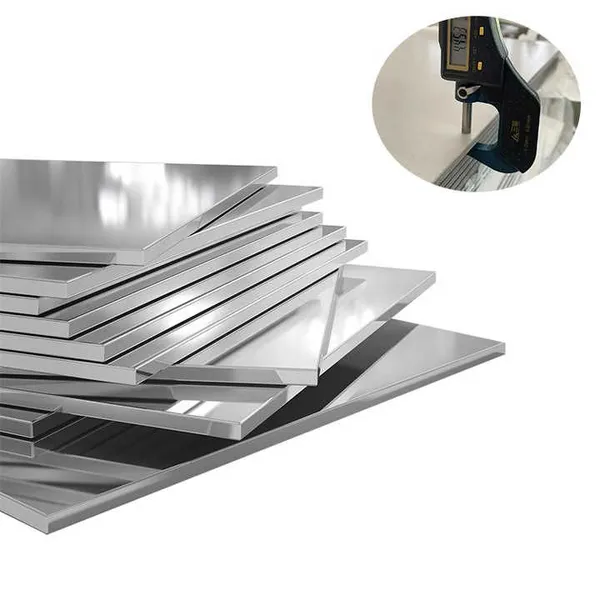
304/304L/316/409/410/904L/2205/2507/310H Premium Stainless Steel Sheets Supplier Custom Sizes & FinishesUS$ 1.72MOQ: 1 Ton
-
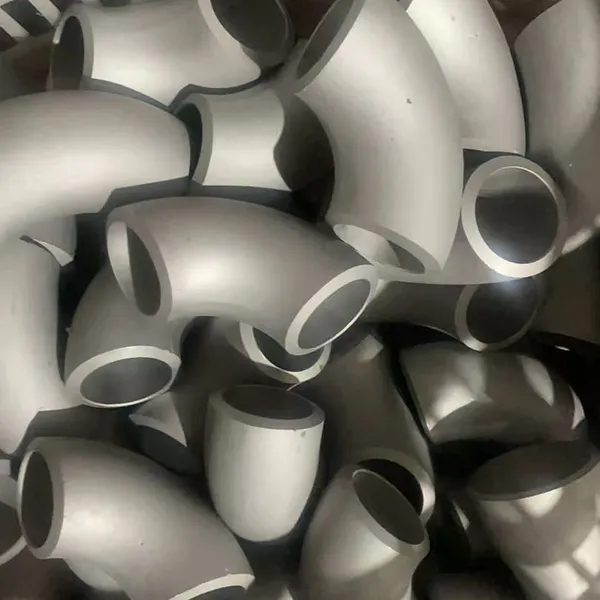
Stainless Steel ASME B16.9 Sch 45 90 Degree Pipe Fittings ElbowUS$ 8MOQ: 1 Piece
-
China Brand Zz 304L 316/316L GB En JIS Standard Thin Wall Welded Stainless Steel Water Pipe/TubeNegotiableMOQ: 2 Meters
-
BA 4 Inch 6 Inch 8 Inch 201 304 304L 316 316L Welded Seamless Stainless Steel PipeNegotiableMOQ: 2 Meters
-
ASME B36.19M-2004 SCH40S Stainless Steel Pipe - Complies With EU 3.1 CertificationUS$ 1 - 650MOQ: 1 Piece
-
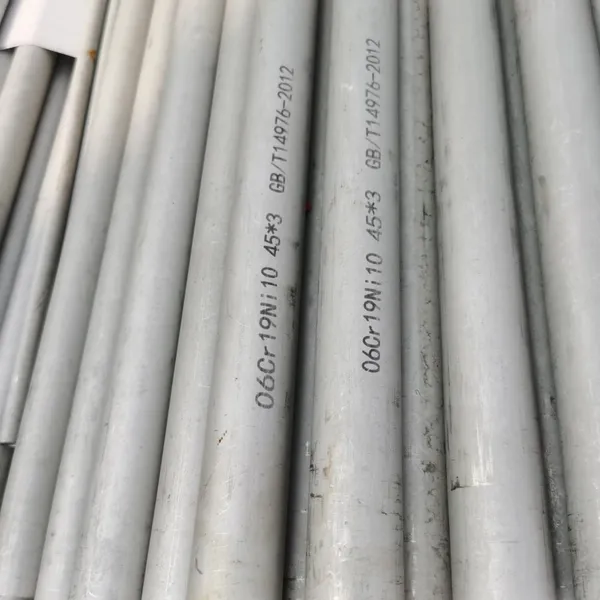
Factory TP309/TP309S/TP309H (UNS30900) Seamless Stainless Steel Pipe and Tube for Boiler BafflesUS$ 8MOQ: 200 Kilograms
-
TP347/TP347H/1.4961/S34709 Seamless Stainless Steel Pipe for UseNegotiableMOQ: 2 Meters
-
China 304 316 Stainless Steel Sanitary Welded Tube Food Grade Sanitary Grade Welded Pipe PolishingNegotiableMOQ: 1 Piece
-
China Manufacture Stainless Steel 316L Ba Seamless Welded Steel Pipe TubesUS$ 1760 - 1860MOQ: 5 Tons
-
316L/1.4405 Seamless Stainless Steel PipeNegotiableMOQ: 2 Meters
-
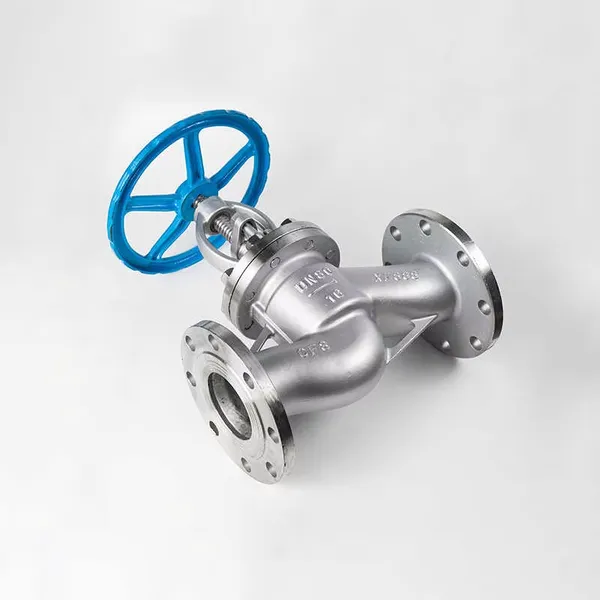
Stainless Steel Globe Valve – High Durability & Corrosion ResistanceNegotiableMOQ: 1 Piece
-
1.4529 Stainless Steel Flat Plate for Chemical Processing EquipmentUS$ 25 - 35MOQ: 1 Kilogram
-
Color Coated Steel Panels for Warehouse Partition Walls (Fireproof Grade)US$ 1 - 1.2MOQ: 50 Kilograms
-
Custom Width (600mm-1250mm) Colored Steel Coil With Scratch ResistanceUS$ 1 - 1.2MOQ: 50 Kilograms
-
0.5mm-3.0mm Colored Coated Steel Sheet With PVDF/Polyester CoatingUS$ 1 - 1.2MOQ: 50 Kilograms
-
JIS G 3322 Compliant Colored Coils With Third-Party Inspection ReportUS$ 1 - 1.2MOQ: 50 Kilograms