
 Business License

What are the effects of alloying elements on ferrite
Most alloying elements are added to low-carbon steel to produce solid solution hardened steel that resists deformation at certain environmental temperatures, increasing the lattice friction stress δi. However, it is currently impossible to predict the lower yield stress solely using formulas unless the grain size is known. Although the determining factors for yield stress are the annealing temperature and cooling rate, this research method is still important because it can predict the range within which a single alloying element can reduce the toughness of the steel by increasing δi.
There are no reports on the regression analysis of the non-plastic transformation (NDT) temperature and the Charpy transition temperature of ferritic steel to date. However, these are only qualitative discussions on the effect of adding a single alloying element on toughness. The following is a brief introduction to the effects of several alloying elements on the properties of steel.
1) Manganese. The majority of manganese content is approximately 0.5%. As a deoxidizer or sulfur-fixing agent, it can prevent hot cracking of the steel and has the following effects in low-carbon steel.
For steel with a carbon content of 0.05%, after air cooling or furnace cooling, there is a tendency to reduce the formation of carbide films at the grain boundaries.
It can slightly reduce the size of ferrite grains.
It can produce a large number of fine pearlite particles.
The first two effects indicate that the NDT temperature decreases as the manganese content increases, while the latter two effects cause the peak of the Charpy curve to become sharper.
When the carbon content of the steel is high, manganese can significantly reduce the transformation temperature by approximately 50%. The reason for this might be due to the higher amount of pearlite, rather than the distribution of cementite at the boundary. It must be noted that if the carbon content of the steel is higher than 0.15%, the high manganese content plays a decisive role in the impact performance of the normalized steel. Because the high quenchability of the steel causes the austenite to transform into brittle upper bainite instead of ferrite or pearlite.
2) Nickel. The effect of adding nickel to the steel is similar to that of manganese, which can improve the toughness of the iron-carbon alloy. The extent of its effect depends on the carbon content and heat treatment. In steel with a very low carbon content (about 0.02%), a content of 2% can prevent the formation of carbides at the grain boundaries of hot-rolled and normalized steel, while substantially lowering the starting transformation temperature TS and raising the peak of the Charpy impact curve.
Further increasing the nickel content reduces the improvement in impact toughness. If the carbon content is low enough (to the point where no carbides appear after normalizing), the effect of nickel on the transformation temperature will become very limited. In normalized steel with a carbon content of approximately 0.10%, adding nickel has the greatest benefit of refining grains and reducing the free nitrogen content, although the mechanism is currently unclear. It may be due to nickel acting as a stabilizer for austenite, thereby lowering the temperature at which austenite decomposes.
3) Phosphorus. In a pure iron-phosphorus alloy, phosphorus segregation at the ferrite grain boundaries reduces the tensile strength Rm, causing brittleness between grains. Additionally, since phosphorus is also a stabilizer for ferrite, adding it to the steel will significantly increase the δi value and the size of ferrite grains. The combined effects will make phosphorus an extremely harmful embrittler, leading to transgranular fracture.
4) Silicon. Adding silicon to the steel is for deoxidation and is beneficial for improving impact performance. If there is both manganese and aluminum in the steel, most of the silicon dissolves in ferrite and increases the δi through the solid solution hardening effect. The combined effect of this action and the increase in δi due to adding silicon is that, in a stable iron-carbon alloy with grain size, adding silicon by weight percentage raises the 50% transformation temperature by approximately 44°C. Additionally, silicon is similar to phosphorus, being a stabilizer for ferrite, which can promote the growth of ferrite grains. Adding silicon by weight percentage to normalized steel will increase the average energy conversion temperature by approximately 60°C.
5) Aluminum. The reasons for adding aluminum as an alloying and deoxidizing agent to the steel are as follows: First, it forms AlN with nitrogen in the melt to remove free nitrogen; second, the formation of AlN refines the ferrite grains. The result of these two effects is that for every 0.1% increase in aluminum, the transformation temperature will decrease by approximately 40°C. However, when the addition of aluminum exceeds the required amount, the effect of "fixing" free nitrogen will weaken.
6) Oxygen. Oxygen in the steel will cause segregation at the grain boundaries, leading to intergranular fracture of the iron alloy. When the oxygen content in the steel reaches 0.01%, the fracture will occur along the continuous channels formed by the brittle grain boundaries. Even if the oxygen content in the steel is very low, cracks will concentrate nucleation at the grain boundaries and then spread through the grain. The solution to the problem of oxygen embrittlement is to add deoxidizing agents such as carbon, manganese, silicon, aluminum, and zirconium, which combine with oxygen to form oxide particles and remove oxygen from the grain boundaries.
Recently Posted
-
Does the stainless steel welded pipe have specific temperature requirements during the solution heat
January 20, 2026Solution heat treatment involves heating stainless steel to a high temperature and then rapidly cooling it to achieve an oversatur Read More
 -
Can stainless steel welded pipes be made into thick pipes
January 20, 2026With the improvement of high-quality welding technology and increasingly strict weld inspection, the application fields of s Read More
 -
Three types of commonly available food-grade stainless steel on the market
January 20, 2026The common food-grade stainless steel pipes are mainly composed of iron, chromium and carbon and other elements. Household stainle Read More
 -
What are the requirements for stainless steel welding pipe production equipment
January 20, 2026As is well known, stainless steel welded pipes have been widely used in various industries such as machinery, chemical engineering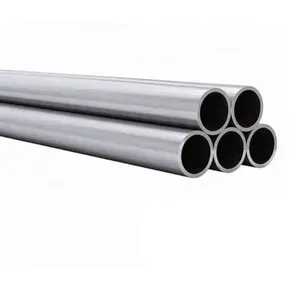 Read More

Contact Us
Recommended Products
-
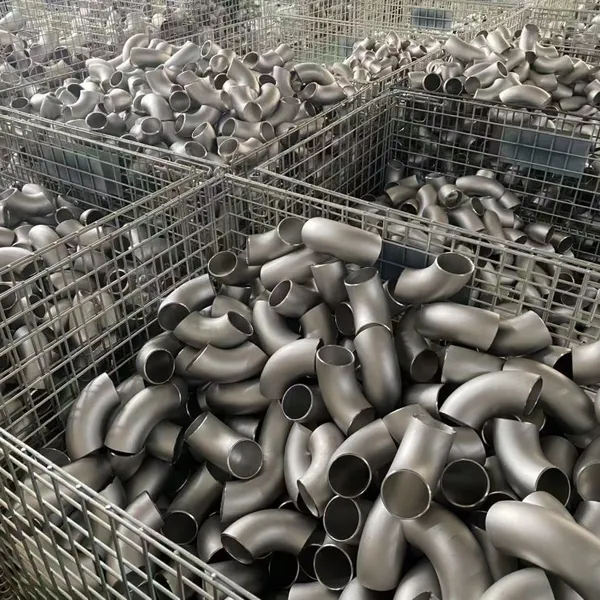
 Stainless Steel Elbow Welded Elbow 45/90/180-degree Seamless Pressed Elbow Long Radius Elbow Short Radius Elbow WholesaleNegotiableMOQ: 1 Piece
 -
316L/1.4405 Seamless Stainless Steel PipeNegotiableMOQ: 2 Meters
-
310s 440 Seamless Sanitary Piping Price 321 904l 201 20 Inch Seamless Steel Pipe A554 Stainless Steel PipeNegotiableMOQ: 1 Piece
-
China Brand ZZ Wholesale 304L 316 316L Welded Austenitic Piping Stainless Steel Pipe SupplierNegotiableMOQ: 2 Meters
-
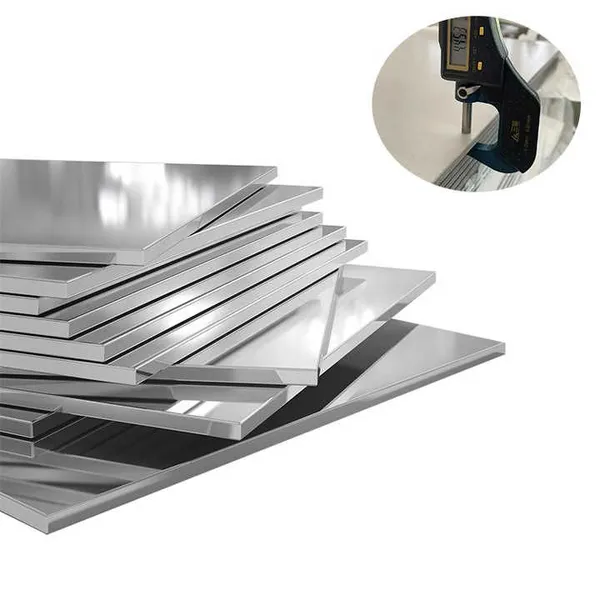
304/304L/316/409/410/904L/2205/2507/310H Premium Stainless Steel Sheets Supplier Custom Sizes & FinishesUS$ 1.72MOQ: 1 Ton
-
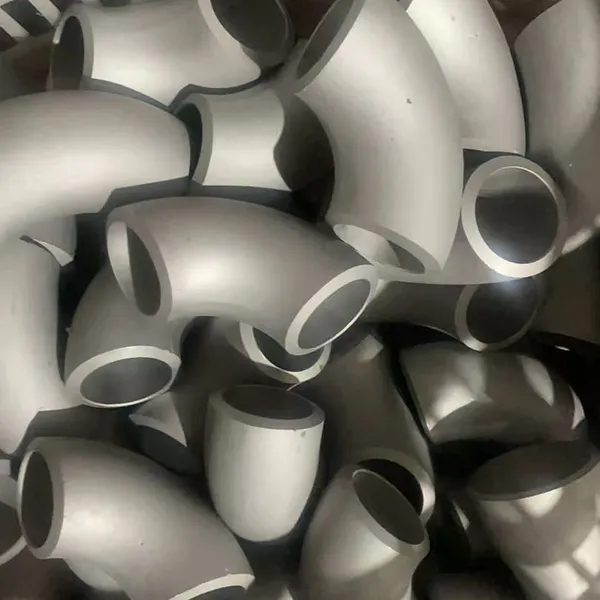
Stainless Steel ASME B16.9 Sch 45 90 Degree Pipe Fittings ElbowUS$ 8MOQ: 1 Piece
-
China Brand Zz 304L 316/316L GB En JIS Standard Thin Wall Welded Stainless Steel Water Pipe/TubeNegotiableMOQ: 2 Meters
-
BA 4 Inch 6 Inch 8 Inch 201 304 304L 316 316L Welded Seamless Stainless Steel PipeNegotiableMOQ: 2 Meters
-
ASME B36.19M-2004 SCH40S Stainless Steel Pipe - Complies With EU 3.1 CertificationUS$ 1 - 650MOQ: 1 Piece
-
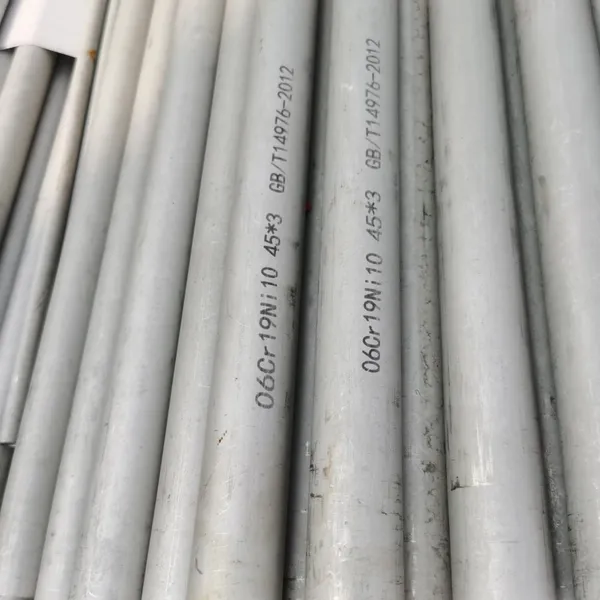
Factory TP309/TP309S/TP309H (UNS30900) Seamless Stainless Steel Pipe and Tube for Boiler BafflesUS$ 8MOQ: 200 Kilograms
-
TP347/TP347H/1.4961/S34709 Seamless Stainless Steel Pipe for UseNegotiableMOQ: 2 Meters
-
China 304 316 Stainless Steel Sanitary Welded Tube Food Grade Sanitary Grade Welded Pipe PolishingNegotiableMOQ: 1 Piece
-
China Manufacture Stainless Steel 316L Ba Seamless Welded Steel Pipe TubesUS$ 1760 - 1860MOQ: 5 Tons
-
316L/1.4405 Seamless Stainless Steel PipeNegotiableMOQ: 2 Meters
-
Stainless Steel Globe Valve – High Durability & Corrosion ResistanceNegotiableMOQ: 1 Piece
-
1.4529 Stainless Steel Flat Plate for Chemical Processing EquipmentUS$ 25 - 35MOQ: 1 Kilogram
-
Color Coated Steel Panels for Warehouse Partition Walls (Fireproof Grade)US$ 1 - 1.2MOQ: 50 Kilograms
-
Custom Width (600mm-1250mm) Colored Steel Coil With Scratch ResistanceUS$ 1 - 1.2MOQ: 50 Kilograms
-
0.5mm-3.0mm Colored Coated Steel Sheet With PVDF/Polyester CoatingUS$ 1 - 1.2MOQ: 50 Kilograms
-
JIS G 3322 Compliant Colored Coils With Third-Party Inspection ReportUS$ 1 - 1.2MOQ: 50 Kilograms