
 Business License

What are the advantages and disadvantages of eddy current testing and magnetic particle testing when
Advantages and disadvantages of eddy current testing and magnetic particle testing for stainless steel seamless pipes:
I. Advantages and Disadvantages of Eddy Current Testing (ET) Advantages
Non-contact, no need for coupling agent, facilitating high-speed and automated online inspection, suitable for large-scale pipe screening; applicable to conductive metals (including ferromagnetic and non-ferromagnetic stainless steels).
Highly sensitive to surface and near-surface defects (such as cracks, folds, inclusions, holes, etc.), can provide defect location and relative size, and can achieve digital recording and storage.
Can be used for conductivity measurement, evaluation of film/coating thickness and sheet thickness, with strong functional expansion capability.
Can be detected in high-temperature or narrow areas, with good adaptability.
Limitations
Only applicable to conductive materials; insensitive to deep internal defects, usually used for surface/near-surface detection.
Sensitive to factors such as material conductivity/magnetic conductivity, geometric shape, separation, temperature, etc., qualitative/quantitative interpretation is relatively difficult, and reasonable setting of frequency and filtering is required.
The detection consistency decreases for complex shapes/areas with large curvature changes; the results are mainly in the form of electrical signals, and the intuitiveness is not as good as MT.
II. Advantages and Disadvantages of Magnetic Particle Inspection (MT) Advantages
It has extremely high sensitivity to surface and near-surface cracks and other defects in ferromagnetic materials. The magnetic traces are clearly visible, making it easy to locate, determine the shape/size/location.
The operation is simple and the cost is low. It is suitable for rapid on-site screening and large-scale component inspection; it can also be applied to complex geometric components.
It can be combined with fluorescent magnetic powder and ultraviolet to improve the detection rate of tiny cracks. The application range is wide (pipes, rods, welds, forgings, etc.).
Limitations
It is only applicable to ferromagnetic materials (such as carbon steel, low alloy steel, some martensitic/precipitation hardening stainless steel); it is not applicable to austenitic stainless steel (such as 304, 316).
It can only detect surface/near-surface defects and is powerless against internal deep defects; it is sensitive to the direction of the defect (too small angle with the magnetic lines makes it difficult to detect).
It has a high requirement for surface conditions (pre-treatment of oil stains, rust, coatings is necessary); false defects may occur (scratches, magnetic writing, etc.); some workpieces need demagnetization and post-cleaning.
III. Recommendations for Selection on Stainless Steel Seamless Pipes
Austenitic stainless steel seamless pipes (such as 304/316): Preferentially use ET for online/offline surface and near-surface defect screening; for internal defect assessment, switch to UT.
Ferritic stainless steel or martensitic/ferritic stainless steel seamless pipes: Surface/near-surface cracks are prioritized with MT (intuitive and efficient); for high-speed 100% online screening or material/electrical conductivity sorting, ET can be combined.
Confirmation of surface cracks at stress concentration areas such as pipe ends and threaded zones: MT has a more intuitive advantage; ET can be used for rapid preliminary screening and process control.
In scenarios where only the tightness (not strength) is verified, water pressure testing or ET can be considered as alternatives; if strength verification is involved, water pressure testing cannot be substituted.
Recently Posted
-
Does the stainless steel welded pipe have specific temperature requirements during the solution heat
January 20, 2026Solution heat treatment involves heating stainless steel to a high temperature and then rapidly cooling it to achieve an oversatur Read More
 -
Can stainless steel welded pipes be made into thick pipes
January 20, 2026With the improvement of high-quality welding technology and increasingly strict weld inspection, the application fields of s Read More
 -
Three types of commonly available food-grade stainless steel on the market
January 20, 2026The common food-grade stainless steel pipes are mainly composed of iron, chromium and carbon and other elements. Household stainle Read More
 -
What are the requirements for stainless steel welding pipe production equipment
January 20, 2026As is well known, stainless steel welded pipes have been widely used in various industries such as machinery, chemical engineering Read More

Contact Us
Recommended Products
-
 Stainless Steel Elbow Welded Elbow 45/90/180-degree Seamless Pressed Elbow Long Radius Elbow Short Radius Elbow WholesaleNegotiableMOQ: 1 Piece
 -
316L/1.4405 Seamless Stainless Steel PipeNegotiableMOQ: 2 Meters
-
310s 440 Seamless Sanitary Piping Price 321 904l 201 20 Inch Seamless Steel Pipe A554 Stainless Steel PipeNegotiableMOQ: 1 Piece
-
China Brand ZZ Wholesale 304L 316 316L Welded Austenitic Piping Stainless Steel Pipe SupplierNegotiableMOQ: 2 Meters
-
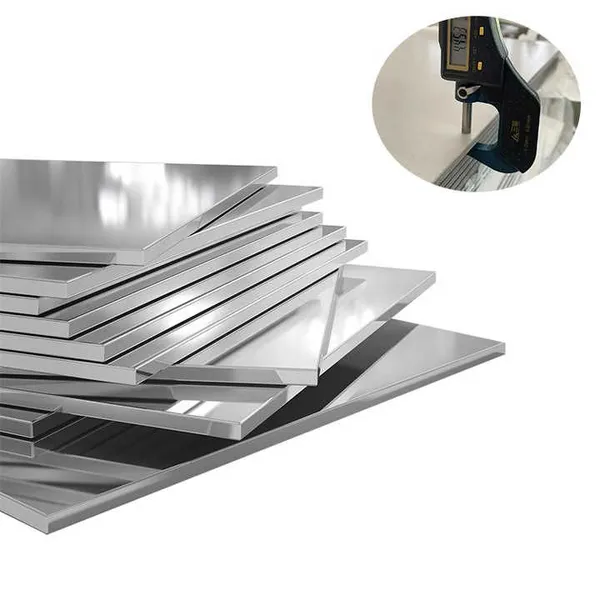
304/304L/316/409/410/904L/2205/2507/310H Premium Stainless Steel Sheets Supplier Custom Sizes & FinishesUS$ 1.72MOQ: 1 Ton
-
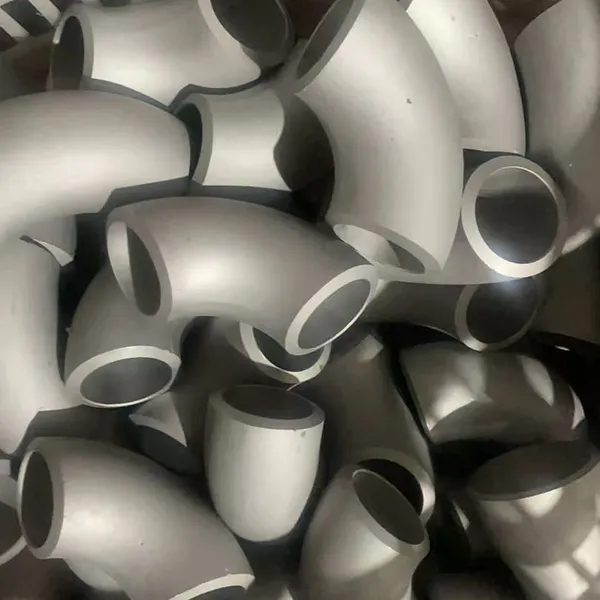
Stainless Steel ASME B16.9 Sch 45 90 Degree Pipe Fittings ElbowUS$ 8MOQ: 1 Piece
-
China Brand Zz 304L 316/316L GB En JIS Standard Thin Wall Welded Stainless Steel Water Pipe/TubeNegotiableMOQ: 2 Meters
-
BA 4 Inch 6 Inch 8 Inch 201 304 304L 316 316L Welded Seamless Stainless Steel PipeNegotiableMOQ: 2 Meters
-
ASME B36.19M-2004 SCH40S Stainless Steel Pipe - Complies With EU 3.1 CertificationUS$ 1 - 650MOQ: 1 Piece
-
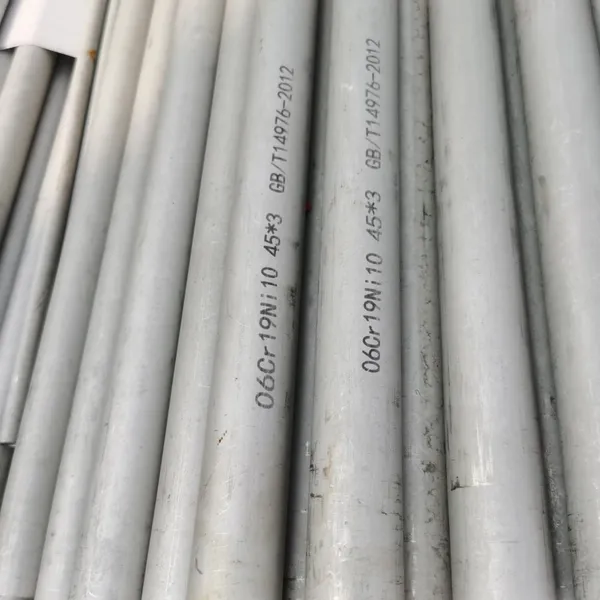
Factory TP309/TP309S/TP309H (UNS30900) Seamless Stainless Steel Pipe and Tube for Boiler BafflesUS$ 8MOQ: 200 Kilograms
-
TP347/TP347H/1.4961/S34709 Seamless Stainless Steel Pipe for UseNegotiableMOQ: 2 Meters
-
China 304 316 Stainless Steel Sanitary Welded Tube Food Grade Sanitary Grade Welded Pipe PolishingNegotiableMOQ: 1 Piece
-
China Manufacture Stainless Steel 316L Ba Seamless Welded Steel Pipe TubesUS$ 1760 - 1860MOQ: 5 Tons
-
316L/1.4405 Seamless Stainless Steel PipeNegotiableMOQ: 2 Meters
-
Stainless Steel Globe Valve – High Durability & Corrosion ResistanceNegotiableMOQ: 1 Piece
-
1.4529 Stainless Steel Flat Plate for Chemical Processing EquipmentUS$ 25 - 35MOQ: 1 Kilogram
-
Color Coated Steel Panels for Warehouse Partition Walls (Fireproof Grade)US$ 1 - 1.2MOQ: 50 Kilograms
-
Custom Width (600mm-1250mm) Colored Steel Coil With Scratch ResistanceUS$ 1 - 1.2MOQ: 50 Kilograms
-
0.5mm-3.0mm Colored Coated Steel Sheet With PVDF/Polyester CoatingUS$ 1 - 1.2MOQ: 50 Kilograms
-
JIS G 3322 Compliant Colored Coils With Third-Party Inspection ReportUS$ 1 - 1.2MOQ: 50 Kilograms