
 Business License

What are the industry standards and specifications for ultrasonic testing of stainless steel seamles
The industry standards and specifications for ultrasonic testing of stainless steel seamless pipes cover technical requirements at the international, national and industry levels. The following is a classification and analysis of the core standards:
I. International Standards (ISO/EN)
1. Ultrasonic Testing (UT) ISO 10893-11:2020
It stipulates the automated ultrasonic transverse wave testing method for the welds of seamless steel pipes, applicable to submerged arc welding (SAW) and resistance welding (EW) steel pipes, capable of detecting longitudinal and transverse defects. The standard requires that the comparison test block be of the same specification as the pipe under test, and defines four acceptance grades U2-U5 (defect depth 5% - 15% of the wall thickness). The 2020 revised version (A1) expands the application scope of phased array technology. EN ISO 17635:2025
General rules for non-destructive testing of metal welds, the 2025 edition adds ultrasonic phased array (UT-PA) and full focusing technology (UT-TFM), and clearly states that for thin-walled steel parts (wall thickness <3mm), the ISO 4761 standard must be referenced. For stainless steel seamless pipes, the detection level should be selected in accordance with the B-level quality requirements of ISO 5817.
2. Eddy current testing (ET) ISO 10893-2:2011
The standard for automated eddy current testing of seamless steel pipes and welded steel pipes (except for submerged arc welding) stipulates the sensitivity calibration method and acceptance grades of the testing equipment. The testing range covers steel pipes with an outer diameter of ≥ 4mm, and can detect surface and near-surface cracks, scratches, and other defects.
3. Magnetic Particle Testing (MT) ISO 9934-1:2016
General principles of magnetic particle inspection specify the inspection procedures for surface and near-surface defects in ferromagnetic materials, including magnetization techniques (such as axial current application, coil magnetization), selection of magnetic suspensions, and interpretation of defect indications. Austenitic stainless steel is not applicable to this standard as it is non-magnetic.
II. Chinese National Standard (GB/T)
1. Ultrasonic Testing GB/T 5777-2008
The ultrasonic testing method for pipeline steel pipes is applicable to seamless steel pipes with an outer diameter of 6-76mm and a wall thickness of 0.5-6mm. It uses an A-type pulse-reflective flaw detector to detect longitudinal defects (such as cracks and inclusions). The standard requires that the comparison test block be machined with U-shaped grooves or flat-bottomed holes, and the defect evaluation is based on the reflection equivalent. GB/T XXXX-XXXX
(Proposed Draft) Ultrasonic testing method for pipe ends, for the 300mm area at both ends of the seamless steel pipe, uses phased array technology to detect edge defects (such as delamination, transverse cracks), with the requirement that the detection blind zone be ≤ 100mm, and the scanning speed ≤ V (calculated by formula).
2. Eddy current testing GB/T 7735-2016
The automatic eddy current testing standards for seamless and welded steel pipes, which are equivalent to ISO 10893-2:2011, specify the detection frequency range (1-15 MHz) and the acceptance grade (Grade A being the highest). They are applicable for in-line detection on production lines and can detect surface defects with a depth of ≥ 0.1 mm.
3. Magnetic Particle Inspection
GB/T 15822.1-2024
General Requirements for Magnetic Particle Testing, the 2024 revised version strengthens safety requirements (such as the environmental friendliness of the magnetic suspension fluid) and the magnetic verification process, and clearly states that wet fluorescent magnetic particle testing is required for ferromagnetic stainless steel (such as 430, 410), while austenitic stainless steel (such as 304, 316) is not applicable.
III. American Standards (ASTM/ASME)
1. Ultrasonic Testing ASTM A388/A388M-11
Standard for ultrasonic testing of steel forgings, applicable to the raw material inspection of stainless steel seamless pipe billets. It employs longitudinal and transverse wave technologies, and requires that the amplitude of defect signals be ≥ 50% of the reflection wave height of a φ3mm flat-bottomed hole. ASME BPVC VIII-2
Pressure vessel specifications stipulate that welds of stainless steel seamless pipes with a wall thickness of ≥ 16mm must undergo 100% ultrasonic testing (UT). The acceptance criteria refer to ASME Volume V. The defect size must not exceed 10% of the wall thickness.
2. Eddy current testing ASTM E243-24
The standard for eddy current testing of copper and copper alloy tubes is mainly applicable to non-ferrous metals. However, for stainless steel tubes, the coil design (such as the inner-coated probe) and signal analysis methods can be referred to. It is necessary to pay attention to the sensitivity adjustment due to material differences.
3. Magnetic particle inspection ASTM E709-24
Magnetic Particle Inspection Guide, applicable to welds and structural components of ferromagnetic stainless steel. It requires that inspectors hold ASNT SNT-TC-1A certification. Defects with a display length of ≥ 3mm shall be rated as unqualified.
IV. Industry-specific Standards
1. Petroleum and Natural Gas Industry (API) API 5L-44
Pipeline steel pipe specification, for PSL2 level, requires 100% ultrasonic testing (UT) and eddy current testing (ET) for seamless steel pipes. UT needs to cover longitudinal defects on both inner and outer walls, and ET needs to detect surface cracks with a depth of ≥ 0.5mm. The comparison test block needs to be machined with N5 grade grooves (depth 5% of wall thickness).
2. Aerospace industry (AMS) AMS 2631
The non-destructive testing standards for titanium alloy and stainless steel seamless pipes stipulate that for ultrasonic testing, a focused probe with a frequency of 5-10 MHz should be used to detect internal pores with a diameter of ≥ 0.8 mm; for eddy current testing, multi-frequency technology should be employed to eliminate interference caused by material unevenness.
V. Key Parameter Comparison Table
Image 1
VI. Selection Suggestions
High-pressure pressure-bearing pipelines (such as oil and gas transportation pipelines): Preferentially adopt the combined detection of GB/T 5777-2008 (UT) + API 5L-44 (ET) to ensure full coverage of internal and surface defects.
Stainless steel pressure vessel welds: Follow ASME BPVC VIII-2, use UT-PA (phase array) to detect internal defects, and MT (GB/T 15822.1-2024) to detect surface cracks of the welds.
Thin-walled medical stainless steel tubes: Select ISO 10893-2:2011 (ET) for 100% online detection, which can detect micro-pore defects of φ0.2mm.
Ferromagnetic stainless steel structural components (such as valves): Implement ASTM E709-24, use wet fluorescent magnetic powder, and observe defect display under black light.
VII. Latest Standard Updates
The newly added UT-TFM full-focus technology in ISO 17635:2025 enables three-dimensional defect imaging and is suitable for the detection of stainless steel seamless pipes with complex geometries.
The draft of GB/T 5777-2024 introduces electromagnetic ultrasonic (EMAT) technology, which can detect high-temperature steel pipes (≤500℃) without the need for coupling agents and is expected to be officially implemented in 2026.
ASTM E243-24 has added the application of machine learning algorithms in the analysis of eddy current signals, enabling automatic identification of defect types (such as cracks, pits).
In practical applications, it is recommended to formulate targeted inspection plans based on the purpose of the steel pipe, material (such as austenitic / ferritic), and customer requirements, and to regularly verify the reliability of the detection system through blind sample tests. For export products, special attention should be paid to the certification requirements of the target market (such as EU CE, ASME steel stamp in the United States).
Recently Posted
-
Does the stainless steel welded pipe have specific temperature requirements during the solution heat
January 20, 2026Solution heat treatment involves heating stainless steel to a high temperature and then rapidly cooling it to achieve an oversatur Read More
 -
Can stainless steel welded pipes be made into thick pipes
January 20, 2026With the improvement of high-quality welding technology and increasingly strict weld inspection, the application fields of s Read More
 -
Three types of commonly available food-grade stainless steel on the market
January 20, 2026The common food-grade stainless steel pipes are mainly composed of iron, chromium and carbon and other elements. Household stainle Read More
 -
What are the requirements for stainless steel welding pipe production equipment
January 20, 2026As is well known, stainless steel welded pipes have been widely used in various industries such as machinery, chemical engineering Read More

Contact Us
Recommended Products
-
 Stainless Steel Elbow Welded Elbow 45/90/180-degree Seamless Pressed Elbow Long Radius Elbow Short Radius Elbow WholesaleNegotiableMOQ: 1 Piece
 -
316L/1.4405 Seamless Stainless Steel PipeNegotiableMOQ: 2 Meters
-
310s 440 Seamless Sanitary Piping Price 321 904l 201 20 Inch Seamless Steel Pipe A554 Stainless Steel PipeNegotiableMOQ: 1 Piece
-
China Brand ZZ Wholesale 304L 316 316L Welded Austenitic Piping Stainless Steel Pipe SupplierNegotiableMOQ: 2 Meters
-
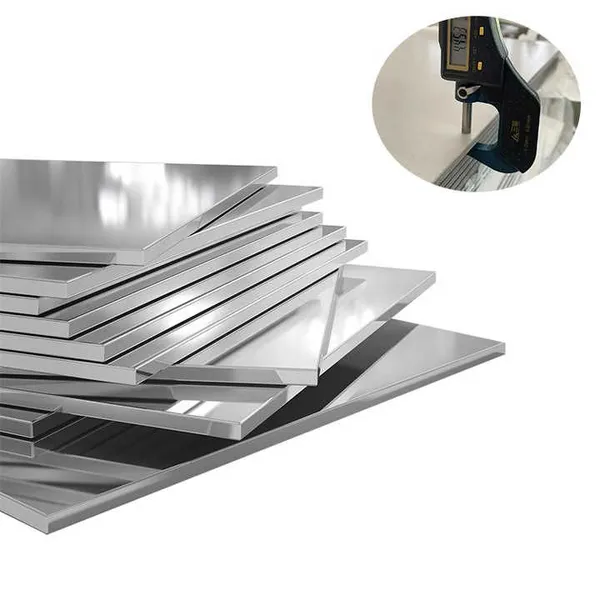
304/304L/316/409/410/904L/2205/2507/310H Premium Stainless Steel Sheets Supplier Custom Sizes & FinishesUS$ 1.72MOQ: 1 Ton
-
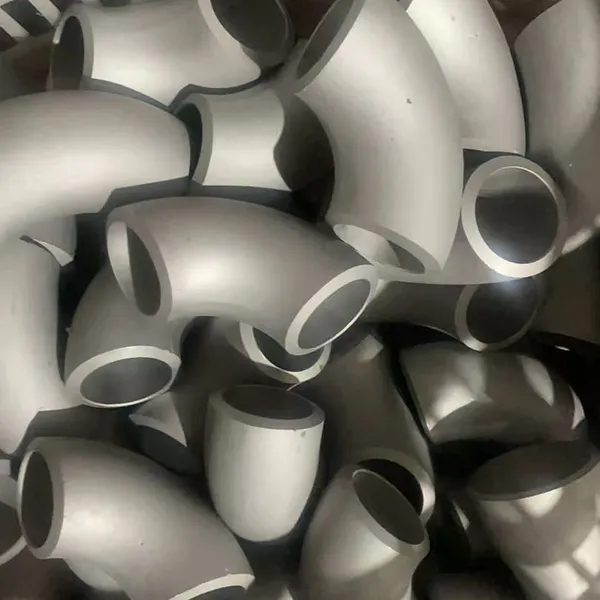
Stainless Steel ASME B16.9 Sch 45 90 Degree Pipe Fittings ElbowUS$ 8MOQ: 1 Piece
-
China Brand Zz 304L 316/316L GB En JIS Standard Thin Wall Welded Stainless Steel Water Pipe/TubeNegotiableMOQ: 2 Meters
-
BA 4 Inch 6 Inch 8 Inch 201 304 304L 316 316L Welded Seamless Stainless Steel PipeNegotiableMOQ: 2 Meters
-
ASME B36.19M-2004 SCH40S Stainless Steel Pipe - Complies With EU 3.1 CertificationUS$ 1 - 650MOQ: 1 Piece
-
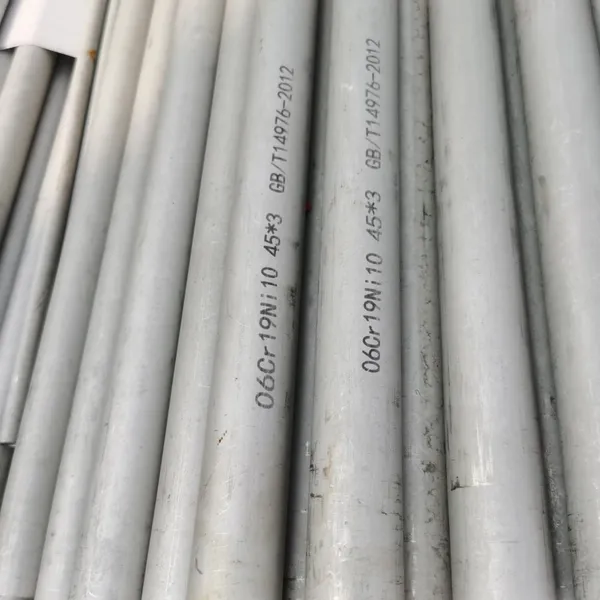
Factory TP309/TP309S/TP309H (UNS30900) Seamless Stainless Steel Pipe and Tube for Boiler BafflesUS$ 8MOQ: 200 Kilograms
-
TP347/TP347H/1.4961/S34709 Seamless Stainless Steel Pipe for UseNegotiableMOQ: 2 Meters
-
China 304 316 Stainless Steel Sanitary Welded Tube Food Grade Sanitary Grade Welded Pipe PolishingNegotiableMOQ: 1 Piece
-
China Manufacture Stainless Steel 316L Ba Seamless Welded Steel Pipe TubesUS$ 1760 - 1860MOQ: 5 Tons
-
316L/1.4405 Seamless Stainless Steel PipeNegotiableMOQ: 2 Meters
-
Stainless Steel Globe Valve – High Durability & Corrosion ResistanceNegotiableMOQ: 1 Piece
-
1.4529 Stainless Steel Flat Plate for Chemical Processing EquipmentUS$ 25 - 35MOQ: 1 Kilogram
-
Color Coated Steel Panels for Warehouse Partition Walls (Fireproof Grade)US$ 1 - 1.2MOQ: 50 Kilograms
-
Custom Width (600mm-1250mm) Colored Steel Coil With Scratch ResistanceUS$ 1 - 1.2MOQ: 50 Kilograms
-
0.5mm-3.0mm Colored Coated Steel Sheet With PVDF/Polyester CoatingUS$ 1 - 1.2MOQ: 50 Kilograms
-
JIS G 3322 Compliant Colored Coils With Third-Party Inspection ReportUS$ 1 - 1.2MOQ: 50 Kilograms