
 Business License

What are the common processes for seamless treatment of stainless steel pipes
The core objective of the seamless treatment process for stainless steel pipes is to eliminate weld defects in the pipes, optimize the mechanical properties, improve the dimensional accuracy and surface quality. The applicable scenarios for different processes (such as pipe diameter, material, and performance requirements) vary significantly. They can mainly be classified into four categories: thermal processing type, cold processing type, internal weld repair type, and auxiliary heat treatment type. The following is a detailed breakdown of 7 mainstream seamless processing methods, including their principles, core steps, key parameters, applicable scenarios, and advantages and disadvantages:
I. Hot Expansion Seamless Process
The hot expansion seamless process is the preferred method for manufacturing large-diameter stainless steel welded pipes (DN200-DN1000). Through a combined treatment of "heating - expansion - annealing", the weld seam and the base material are fully integrated, eliminating welding internal stresses, enhancing pressure resistance and toughness, and it can be used as an alternative to large-diameter seamless pipes for high-pressure transportation scenarios.
1. Process Principle
The welded pipe is heated to the austenitizing temperature (900-1100℃, 304/316L), and the expansion head (conical or cylindrical) is pushed through the pipe body using hydraulic or mechanical force to expand the pipe diameter to the target size. At the same time, through high-temperature annealing, welding internal stresses are eliminated, and the weld seam structure is improved (grain refinement, elimination of σ phase).
2. Core Steps and Key Parameters
Picture 1
3. Application Scenarios and Advantages and Disadvantages
Application Scenarios: Large-diameter high-pressure pipelines (such as municipal water supply main pipes, chemical park steam pipes), pipelines in low-temperature areas (-40℃ cold-resistant); Advantages:
It can handle large-diameter pipes (DN200-DN1000), making up for the difficulty in producing large-diameter seamless pipes;
High-temperature annealing improves the structure, and has excellent low-temperature toughness (impact energy at -40℃ ≥ 60J). Disadvantages:
The dimensional accuracy is moderate (wall thickness deviation ±5%), which cannot meet the requirements of precision applications;
The energy consumption is high (heating requires a large amount of electricity), and the cost is higher than that of the cold processing method.
II. Cold Drawing Seamless Process
The cold drawing seamless process is the core technology for small-diameter precision stainless steel welded pipes (DN10-DN150). Through "multiple passes of cold drawing + sizing", it improves dimensional accuracy (wall thickness deviation ≤ ±3%) and surface finish (Ra ≤ 0.8 μm), while enhancing tensile strength through cold working hardening, suitable for precision scenarios such as medical devices and semiconductor applications.
1. Process Principle
At room temperature, the welded pipe is drawn through a mold (sizing mold + mandrel) multiple times. The plastic deformation of the metal eliminates small defects (gas pores, porosity) inside the weld seam and refines the grain size (grain size from 50 μm to 10 μm). The sizing mold controls the pipe diameter and wall thickness. Finally, after low-temperature annealing, some cold working hardening is eliminated to balance strength and toughness.
2. Core Steps and Key Parameters
Figure 2
3. Application Scenarios and Advantages and Disadvantages
Application Scenarios: Precision pipes (medical device pipelines, semiconductor ultra-pure water pipelines), high-pressure hydraulic pipelines (pressure ≤ 31.5 MPa); Advantages:
The dimensional accuracy is extremely high (wall thickness deviation ±3%), and the surface finish is excellent (Ra ≤ 0.8 μm);
The cold working hardening enhances the strength (tensile strength is 20%-30% higher than that of welded pipes). Disadvantages:
This method is only applicable to small-diameter pipes (DN ≤ 150). It is difficult to perform drawing for large-diameter pipes.
The multi-pass treatment has low efficiency and the cost is higher than that of the hot expansion process.
III. Internal Weld Grinding Process
Internal weld grinding is a key process for eliminating the protrusions of weld beads on the inner wall of the welded pipe. It uses a special inner wall grinding tool to remove the excess weld beads on the inner side of the weld (typically 0.2 - 1.0 mm), making the inner wall smooth and preventing an increase in resistance and accumulation of dirt during fluid transportation. It is a core pre-treatment process for sanitary and low-resistance conveying pipes.
1. Process Principle
Fix the welded pipe and drive the inner wall grinding head (with a grinding wheel or a perforated wheel) along the length of the pipe. The grinding head is in contact with the inner side of the weld, selectively grinding the protrusions of the weld beads, while controlling the grinding depth (typically 0.1 - 0.3 mm) to ensure no damage to the substrate. The final inner wall roughness is reduced to Ra 1.6 - 3.2 μm.
2. Core Steps and Key Parameters
Picture 3
3. Application Scenarios and Advantages and Disadvantages
Application Scenarios: Food / Pharmaceutical conveying pipes (no dirt accumulation on the inner wall), low-resistance fluid pipes (such as air conditioning water pipes); Advantages:
Specifically designed to remove weld bead protrusions, the inner wall has good flatness and the fluid resistance is reduced by more than 30%.
The cost is low (only requiring grinding equipment), and it can be combined with other processes (such as acid washing and polishing). Disadvantages:
Only processing the inner wall weld seams cannot improve the internal structure of the weld (such as intergranular corrosion tendency);
For long pipes (over 6 meters), grinding is very difficult and needs to be handled in sections.
IV. Internal Polishing Process
Internal polishing is an "upgraded process" for internal welding grooves. Through precise polishing (such as cloth wheel polishing, electrolytic polishing), the roughness of the inner wall is reduced to Ra 0.2-0.8 μm, meeting the extremely high requirements for surface smoothness and cleanliness (no microbial breeding sites) in hygienic scenarios (food, pharmaceuticals, semiconductors).
1. Process Principle (Taking Mechanical Internal Polishing as an Example)
A combination of "flexible cloth wheel + polishing paste" is used. The cloth wheel is driven by a mechanical arm to rotate and move axially along the inner wall of the pipe. The polishing paste (such as white wax, green wax) fills the microscopic pits on the inner wall to achieve "mirror-like" smoothness; for higher precision (Ra ≤ 0.2 μm), electrolytic internal polishing (principle the same as electrolytic polishing, with dedicated inner wall electrodes) is adopted.
2. Core Steps and Key Parameters (Mechanical Internal Polishing)
Figure 4
3. Application Scenarios and Advantages and Disadvantages
Application Scenarios: Pharmaceutical water pipes (injection water), food juice conveying pipes, semiconductor ultra-pure water pipelines; Advantages:
The inner wall has an extremely high smoothness (Ra ≤ 0.8 μm), without any microbial breeding sites, and complies with GMP/FDA standards;
Reduces fluid residue and improves cleaning efficiency by 50% (CIP cleaning time is shortened to 30 minutes). Disadvantages:
High cost (consumption of polishing paste is large, and the equipment investment is 2-3 times that of internal grinding);
Only applicable to small pipe diameters (DN ≤ 100), and it is difficult to polish the inner walls of large-diameter pipes.
V. Overall Annealing Process
Overall annealing is an auxiliary seamlessening process, usually used in conjunction with processes such as hot expansion and cold drawing. Its core function is to "eliminate internal stress, improve weld joint structure, and balance mechanical properties", preventing the welded pipe from cracking or corroding due to concentrated internal stress.
1. Process Principle
Place the welded pipe (or the pipe body that has undergone preliminary seamlessening treatment) into the annealing furnace, heat it to a temperature above Ac3 (for 304 steel, 850-900℃; for duplex steel, 950-1050℃), hold for a certain period of time, and then slowly cool it (either in the furnace or slowly cool down). This process converts the hardened structure in the weld zone (such as martensite, Cr carbides) into uniform austenite/ferrite structure, while eliminating the welding internal stress (reducing the internal stress from 300MPa to below 50MPa).
2. Key Parameters and Applicable Scenarios
Picture 5
3. Process Characteristics
Non-independent process: It needs to be combined with hot expansion and cold drawing (such as annealing after cold drawing to eliminate cold work hardening, and annealing after hot expansion to refine the structure);
Broad applicability: This process is required for all stainless steel welded pipe seamlessening treatments, and it is a "basic step" for ensuring performance.
VI. Cold Rolling Seamless Process
The cold rolling seamless process is a specialized technique for thick-walled stainless steel welded pipes (with a wall thickness of ≥ 3mm). It uses "cold plastic deformation of the rolling head" to flatten the welds and fill the depressions, while strengthening the surface (forming a cold work hardened layer), enhancing wear resistance and pressure resistance, and being suitable for high-pressure hydraulic and structural pipe applications.
1. Process Principle
Fix the welded pipe, insert the rolling head (containing 3-4 hard alloy rollers) into the pipe, and apply radial pressure through hydraulic drive (pressure 30-50 MPa). Simultaneously, the rolling head moves along the length of the pipe, causing the weld and surrounding metal to undergo plastic deformation - the protrusions are flattened, the depressions are filled with metal, and the inner wall becomes smooth (Ra 1.6-3.2 μm), with the surface hardness increasing by 15%-30%.
2. Core Parameters and Applicable Scenarios
Key parameters: Rolling pressure 30-50 MPa, feed speed 50-100 mm/min, rolling times 1-2, inner wall Ra 1.6-3.2 μm;
Applicable scenarios: Thick-walled high-pressure pipes (such as main pipes for hydraulic systems, coal mine hydraulic support pipes), structural pipes (such as equipment support pipes);
Advantages: No material removal (wall thickness is not reduced), good surface strengthening effect (hardness up to HV250-300);
Disadvantages: Only applicable to thick-walled pipes (wall thickness ≥ 3mm), unable to handle thin-walled pipes (easily deformed).
VII. Laser Cladding Seamless Process
Laser cladding seamless technology is a precise process for high-end stainless steel welded pipes (such as corrosion-resistant alloy pipes). It involves using a laser to deposit alloy powder (such as nickel-based alloys, stainless steel powder) on the weld surface to fill in weld defects (such as pores, cracks), forming a "seamless layer" that is metallurgically bonded to the base material, thereby enhancing corrosion resistance and strength, and being suitable for extreme corrosive scenarios (such as offshore oil and gas, strong acid transportation).
1. Process Principle
A high-power laser (such as fiber laser, with a power of 1000-3000W) is used to irradiate the weld area, while simultaneously feeding alloy powder (with a particle size of 50-150μm). The powder melts rapidly under the laser's effect and fuses with the weld metal, cooling and forming a uniform cladding layer (thickness 0.2-0.5mm), eliminating weld defects and improving surface corrosion resistance.
2. Core Parameters and Applicable Scenarios
Key parameters: Laser power 1500-2500W, scanning speed 5-10mm/s, powder feeding rate 10-20g/min, cladding layer hardness HV300-350;
Applicable scenarios: Extremely corrosive pipes (such as H₂S-containing oil and gas transportation pipes, concentrated hydrochloric acid transportation pipes), high-temperature pipes (such as boiler superheater pipes);
Advantages: The cladding layer is metallurgically bonded to the base material, with excellent corrosion resistance (corrosion rate ≤ 0.005mm/a), and can repair weld cracks;
Disadvantages: High equipment investment (laser equipment in the range of millions of yuan), low efficiency (processing time for a DN100 pipe ≥ 1h), and high cost.
VIII. Comparison and Selection Logic of Mainstream Seamless Processing Methods
The applicable scenarios of different processing methods vary significantly. A comprehensive selection should be made based on pipe diameter, wall thickness, material, performance requirements, and cost. The core comparisons are as follows:
Image 6
Core Summary
The seamless processing of stainless steel pipes does not have an "absolute optimal" method. It should follow the principle of "scenario adaptation":
For large-diameter and high-pressure applications: choose hot expansion seamless processing;
For small-diameter and precision requirements: choose cold drawing seamless processing;
For sanitary grade and low residue requirements: choose internal polishing (combined with cold drawing);
For thick walls and wear resistance: choose cold rolling;
For extreme corrosion and high-end applications: choose laser cladding.
At the same time, all processes must be combined with overall annealing to ensure the elimination of internal stress, improvement of the structure, and ultimately achieve the core goal of "seamless welding pipe performance".
Recently Posted
-
Does the stainless steel welded pipe have specific temperature requirements during the solution heat
January 20, 2026Solution heat treatment involves heating stainless steel to a high temperature and then rapidly cooling it to achieve an oversatur Read More
 -
Can stainless steel welded pipes be made into thick pipes
January 20, 2026With the improvement of high-quality welding technology and increasingly strict weld inspection, the application fields of s Read More
 -
Three types of commonly available food-grade stainless steel on the market
January 20, 2026The common food-grade stainless steel pipes are mainly composed of iron, chromium and carbon and other elements. Household stainle Read More
 -
What are the requirements for stainless steel welding pipe production equipment
January 20, 2026As is well known, stainless steel welded pipes have been widely used in various industries such as machinery, chemical engineering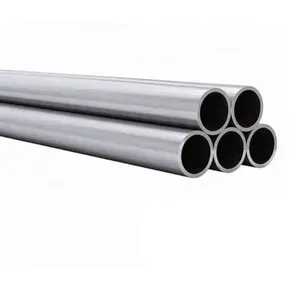 Read More

Contact Us
Recommended Products
-
 Stainless Steel Elbow Welded Elbow 45/90/180-degree Seamless Pressed Elbow Long Radius Elbow Short Radius Elbow WholesaleNegotiableMOQ: 1 Piece
 -
316L/1.4405 Seamless Stainless Steel PipeNegotiableMOQ: 2 Meters
-
310s 440 Seamless Sanitary Piping Price 321 904l 201 20 Inch Seamless Steel Pipe A554 Stainless Steel PipeNegotiableMOQ: 1 Piece
-
China Brand ZZ Wholesale 304L 316 316L Welded Austenitic Piping Stainless Steel Pipe SupplierNegotiableMOQ: 2 Meters
-
304/304L/316/409/410/904L/2205/2507/310H Premium Stainless Steel Sheets Supplier Custom Sizes & FinishesUS$ 1.72MOQ: 1 Ton
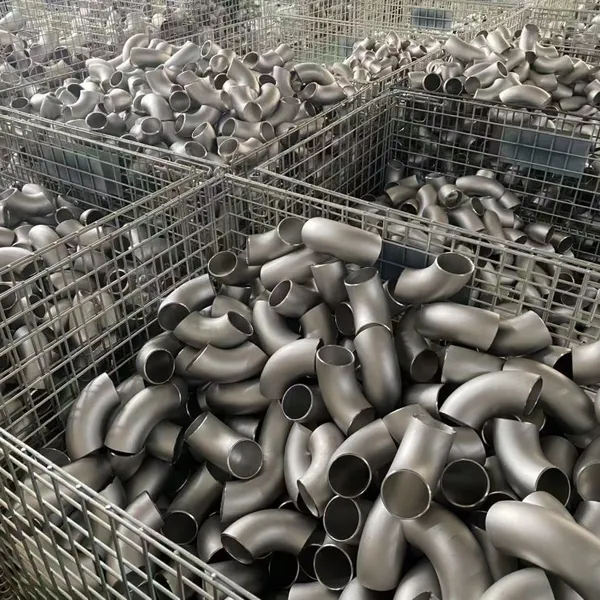
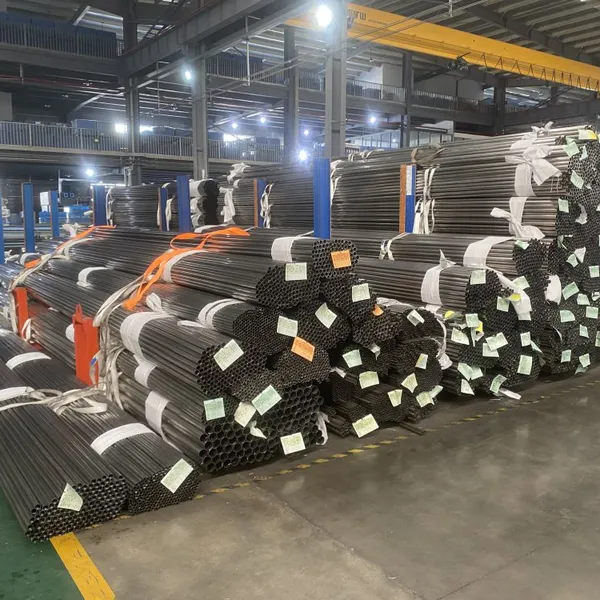
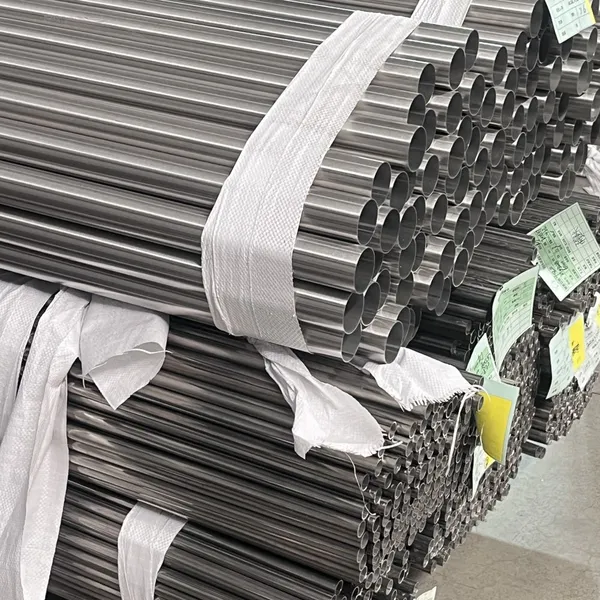
-
Stainless Steel ASME B16.9 Sch 45 90 Degree Pipe Fittings ElbowUS$ 8MOQ: 1 Piece
-
China Brand Zz 304L 316/316L GB En JIS Standard Thin Wall Welded Stainless Steel Water Pipe/TubeNegotiableMOQ: 2 Meters
-
BA 4 Inch 6 Inch 8 Inch 201 304 304L 316 316L Welded Seamless Stainless Steel PipeNegotiableMOQ: 2 Meters
-
ASME B36.19M-2004 SCH40S Stainless Steel Pipe - Complies With EU 3.1 CertificationUS$ 1 - 650MOQ: 1 Piece
-
Factory TP309/TP309S/TP309H (UNS30900) Seamless Stainless Steel Pipe and Tube for Boiler BafflesUS$ 8MOQ: 200 Kilograms
-
TP347/TP347H/1.4961/S34709 Seamless Stainless Steel Pipe for UseNegotiableMOQ: 2 Meters
-
China 304 316 Stainless Steel Sanitary Welded Tube Food Grade Sanitary Grade Welded Pipe PolishingNegotiableMOQ: 1 Piece
-
China Manufacture Stainless Steel 316L Ba Seamless Welded Steel Pipe TubesUS$ 1760 - 1860MOQ: 5 Tons
-
316L/1.4405 Seamless Stainless Steel PipeNegotiableMOQ: 2 Meters
-
Stainless Steel Globe Valve – High Durability & Corrosion ResistanceNegotiableMOQ: 1 Piece
-
1.4529 Stainless Steel Flat Plate for Chemical Processing EquipmentUS$ 25 - 35MOQ: 1 Kilogram
-
Color Coated Steel Panels for Warehouse Partition Walls (Fireproof Grade)US$ 1 - 1.2MOQ: 50 Kilograms
-
Custom Width (600mm-1250mm) Colored Steel Coil With Scratch ResistanceUS$ 1 - 1.2MOQ: 50 Kilograms
-
0.5mm-3.0mm Colored Coated Steel Sheet With PVDF/Polyester CoatingUS$ 1 - 1.2MOQ: 50 Kilograms
-
JIS G 3322 Compliant Colored Coils With Third-Party Inspection ReportUS$ 1 - 1.2MOQ: 50 Kilograms