
 Business License

Detailed explanation of the application scenarios of stainless steel pipes in the ship fire
The ship fire protection system is the core emergency system for ensuring the safety of the vessel, and it needs to cover all areas of the ship (engine room, cargo hold, deck, living area) and different types of fires (solid fire, oil fire, gas fire). Stainless steel pipes serve as the core conveying components and need to be adapted to different application scenarios based on the functions of the subsystems, the characteristics of the medium, and the environmental conditions. The application scenarios can be divided into two lines: "system type" and "cabin area". Each scenario corresponds to a clear functional positioning, working conditions requirements, and the selection logic of stainless steel pipes. The following provides a detailed explanation:
I. Classified by fire subsystems: Core scenarios and function adaptation
The ship's fire protection system is classified based on the fire extinguishing medium and coverage area into four major categories: high-pressure fire water system, foam fire extinguishing system, local emergency fire extinguishing system, and special medium fire extinguishing system. The application scenarios of stainless steel pipes vary significantly in each system:
Scenario 1: High-pressure fire water system (the main fire suppression system of the entire ship, the most widely used)
Function positioning
As the "first line of fire suppression" for the ship, it delivers high-pressure water (freshwater / seawater) through fire pumps to cover all areas such as the engine room, cargo hold, deck, and living quarters, extinguishing solid fires (such as cables, wood) and general liquid fires (such as diesel leakage fires), and is the core scenario where stainless steel pipes are most widely used.
Stainless steel pipe application details
Pipeline coverage:
Starting from the bottom fire pump compartment (main pump + emergency pump) of the ship, it is divided into "vertical main pipe" (running longitudinally along the hull, DN100-DN200) and "horizontal branch pipe" (extending to each compartment, DN50-DN80), ultimately connecting to the deck fire hydrant (DN65), compartment spray head (DN25-DN40), and portable fire hose interface (DN50).
Operating conditions:
Pressure: Design pressure 1.0-2.5 MPa (main pump outlet pressure 2.0-2.5 MPa, end fire hydrant pressure ≥ 0.8 MPa);
Medium: Open system uses seawater (Cl⁻ concentration 1.8-3.5%), closed system uses fresh water (Cl⁻ ≤ 50 mg/L);
Environment: Cabin section (high temperature in the engine room 40-80℃, oil mist; cargo hold damp), deck section (salt spray, wind, temperature fluctuations).
Stainless steel pipe selection requirements:
Material: Must be 316L austenitic stainless steel (PREN ≥ 24, resistant to seawater pitting corrosion; low carbon to prevent high-temperature embrittlement), prohibited to use 304 (seawater corrosion perforation within 2-3 years);
Process: Seamless pipe (ASTM A312/GB/T 14976), pressure resistance ≥ 515 MPa (316L tensile strength), avoid weld pipe leakage;
Specification: Main pipe DN100-DN200 (wall thickness 4.0-6.0 mm), branch pipe DN50-DN80 (wall thickness 3.5-4.5 mm), ports need to be machined (verticality ≤ 0.5°), compatible with flange connection.
Key precautions:
The pipe in the engine room needs to be fire-resistant encapsulation (ceramic fibers, thickness ≥ 30 mm), in line with IMO SOLAS A-level fire resistance requirements, and does not fail within 30 minutes in case of fire;
The slope of the seawater system pipeline ≥ 1.5‰, a drainage valve is set at the lowest point to avoid seawater stagnation leading to local corrosion;
The pipe outlet from the pump needs to be equipped with a metal bellows flexible joint (316L material), absorbing vibration and preventing weld cracking.
Scenario 2: Foam fire extinguishing system (specific for oil ships / chemical ships, core for extinguishing oil fires)
Function positioning
For oil fires in the cargo hold, chemical ship liquid cargo hold, and fuel tank of the engine room (such as diesel, crude oil), it delivers "water + foam liquid" mixture (such as AFFF water film foam) through stainless steel pipes to form a covering layer to isolate oxygen for fire extinguishing, which is a necessary system for flammable and explosive ships.
Stainless steel pipe application details
Pipeline coverage:
Divided into "foam liquid supply pipe" (from the foam tank to the mixer, DN40-DN80) and "foam mixture supply pipe" (from the mixer to the cargo hold foam generator / engine room foam nozzle, DN80-DN150), some systems contain "foam recovery pipe" (DN50-DN65, recovering unused foam liquid).
Operating conditions: Pressure: Pressure of foam liquid pipe: 0.8 - 1.2 MPa; Pressure of mixed liquid pipe: 1.5 - 2.0 MPa;
Medium: Foam liquid (AFFF/FFFP type, containing surfactants, slightly corrosive) + seawater / fresh water;
Environment: Cargo hold area (high salt spray, potential oil leakage), engine room fuel area (high temperature, oil mist).
Requirements for stainless steel pipe selection:
Material: 316L stainless steel (resistant to foam liquid corrosion + seawater corrosion, avoiding pitting caused by Cl⁻ in foam liquid);
Process: Seamless pipe (high-pressure mixed liquid, welded pipe prone to leakage), inner wall needs to be degreased (remove rolling oil to avoid contamination of foam liquid and affect fire extinguishing effect);
Connection: Foam generator interface uses "quick connector" (316L material), convenient for emergency connection; Flange sealing gasket uses oil-resistant polytetrafluoroethylene gasket (avoiding foam liquid penetration leading to gasket aging).
Key precautions:
After each use, the pipeline should be rinsed with fresh water (10 - 15 minutes) to remove residual foam liquid (to avoid long-term stagnation causing corrosion of the inner wall);
Foam liquid pipe should avoid direct sunlight (to prevent foam liquid from deteriorating), the exposed section should be insulated and shaded, the outer wall of the stainless steel pipe should be painted with weather-resistant paint;
Regularly (every 6 months) test the pipeline sealing performance (hydrostatic test pressure 1.2 times the design pressure), to prevent foam liquid leakage leading to insufficient fire extinguishing dosage.
Scene 3: Local emergency fire extinguishing system (engine room / generator room / battery room, rapid response)
Function positioning
For "high-risk small areas" of ships (such as main engine room, generator room, battery room of new energy ships), when a local fire occurs (such as cable short circuit, bearing overheating), through small stainless steel pipelines to quickly deliver fire extinguishing medium, achieving "early fire extinguishing, avoiding spread", common types include fine water mist fire extinguishing system and local CO₂ fire extinguishing system (pipeline part).
Details of stainless steel pipe application (taking fine water mist system as an example, the most commonly used)
Pipeline coverage:
Starting from the on-board small emergency pump (or main system branch), using "miniature branch pipes" (DN20-DN40), densely arranged at key equipment positions (such as main engine cylinder head, generator winding, battery module), and connected to fine water mist nozzles (diameter 0.5 - 2mm, misting angle 60° - 120°).
Operating conditions:
Pressure: High-pressure fine water mist (8 - 12 MPa), low-pressure fine water mist (1.2 - 2.0 MPa);
Medium: Fresh water (closed system) or seawater (open system), partially containing rust inhibitor;
Environment: High temperature in engine room (up to 100 - 150°C near the main engine), vibration (main engine operating frequency 10 - 1000Hz), oil contamination.
Requirements for stainless steel pipe selection:
Material: High-pressure system uses 316L seamless pipe (wall thickness 2.5 - 3.5mm, tensile strength ≥ 515 MPa, resistant to high-pressure impact); Low-pressure system can use 316L welded pipe (TIG welding, 100% UT inspection);
Specification: DN20-DN40 (fine water mist flow rate is small, no need for large pipe diameter), pipe wall roughness Ra ≤ 3.2 μm (to avoid water scale accumulation blocking the nozzle);
Installation: Pipeline is laid along the equipment support, fixed with stainless steel pipe clips (spacing ≤ 1.5m), avoiding displacement of the pipeline due to vibration; Connected to the nozzle using "threaded connection" (PT thread, sealant selected for temperature resistance).
Key precautions:
High-pressure fine water mist pipeline needs 100% "hydrostatic test" (pressure 1.5 times the design pressure, hold pressure for 30 minutes), without leakage;
Regularly (every 3 months) use compressed air to blow the pipeline to prevent nozzle blockage (fine water mist nozzle diameter is small, impurities are prone to clog); The battery compartment piping needs to be "anti-corrosion strengthened" (the battery leaks electrolyte containing acid, and the outer wall of the stainless steel pipe is coated with an acid-resistant coating).
Scenario 4: Special ship-specific fire protection scenario (LNG ship / polar vessel, extreme conditions)
Function positioning
For special ships such as LNG ships (in low-temperature environments), polar vessels (-40℃ or below), and large container ships (with high-stack cargo holds), the fire protection system needs to be adapted to extreme conditions, and the stainless steel pipes need to meet special requirements such as "low-temperature toughness", "high-temperature fire resistance", and "long-distance transportation".
Details of stainless steel pipe application (by type)
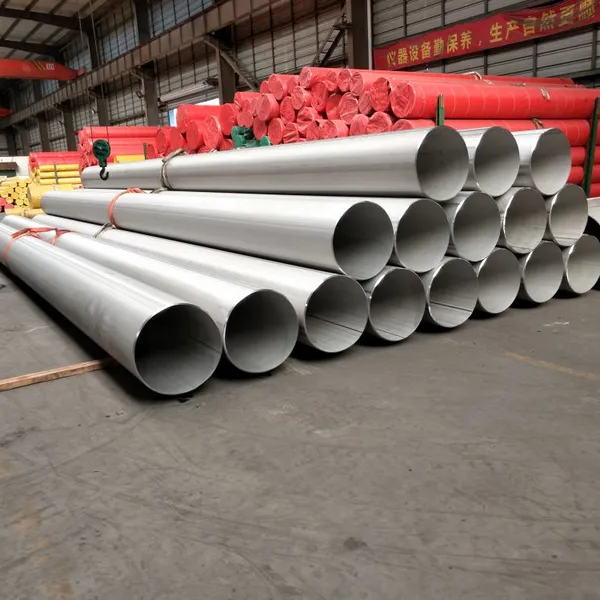
Picture 1
II. By compartment area classification: Environmental Adaptation and Scene Differences
The temperatures, media, and risk types vary in different compartments. The application of stainless steel pipes needs to be tailored accordingly. The core differences are as follows:
1. Engine room area (highest risk, strictest requirements for stainless steel pipes)
Environmental characteristics: high temperature (40-150℃), high-frequency vibration (main engine / generator), oil mist + oil and gas leakage, narrow space;
Application scenarios: high-pressure fire water branch pipes (DN50-DN80), fine water mist pipelines (DN20-DN40), foam mixture pipelines (DN80-DN100);
Core requirements for stainless steel pipes:
Material: 316L (resistant to oil mist corrosion + high-temperature stability);
Process: seamless pipe + 100% RT inspection (no weld defects);
Protection: outer wall is made of fire-resistant coating (ceramic fibers + fire-resistant paint), and the distance from fuel pipes is ≥ 100mm (to avoid fuel leakage igniting the pipeline).
2. Cargo area (great differences in media, suitable for different fire suppression needs)
Bulk carrier cargo hold: humid environment + salt fog, application of high-pressure fire water branch pipes (DN65-DN100), 316L seamless pipe, slope ≥ 1.5‰ (to drain seawater);
Oil tanker cargo hold: high risk of oil and gas leakage, application of foam mixture pipelines (DN100-DN150), 316L seamless pipe, inner wall degreasing (to prevent contamination by foam liquid);
Container cargo hold: high stacking + solid fire, application of spray pipeline (DN80-DN120), 316L seamless pipe, every 2m set of spray heads (full coverage).
3. Deck and superstructure (open-air environment, high requirements for weather resistance)
Deck area: salt fog + wind and rain + high and low temperatures (-20℃ - 60℃), application of fire water main pipes (DN100-DN200), fire hydrant interface pipes (DN65);
Living area: densely populated + solid fire (such as furniture, cables), application of spray branch pipes (DN40-DN50), 316L seamless pipe, inner wall polished (Ra ≤ 1.6μm, hygienic grade);
Core requirements for stainless steel pipes:
Outer wall coated with weather-resistant paint (to avoid direct corrosion by salt fog);
Open-air pipelines equipped with drainage valves (to avoid water accumulation and freezing expansion);
Living area pipelines and electrical conduits are spaced ≥ 50mm (to avoid mutual influence during a fire).
III. Summary of Commonalities and Core Principles of Application Scenarios
Regardless of whether classified by system or region, the application of stainless steel pipes in the ship fire protection system follows three core principles:
1. Material cannot be compromised: In all scenarios, 316L stainless steel is preferred. For extreme environments (low temperature/high temperature), material optimization is carried out, and 304 or carbon steel is prohibited;
2. Process is adapted to the working conditions: For high-pressure systems (fire water/foam), seamless pipes are used; for low-pressure local systems (fine water mist low-pressure section), welded pipes can be used (100% non-destructive testing is required);
3. Environment is adapted for protection: In seawater environments, "drainage + passivation" is emphasized; in high-temperature environments, "fire-resistant coating" is emphasized; in low-temperature environments, "low-temperature toughness + drainage anti-expansion" is emphasized.
The essence of these principles is "Scenario requirements determine the selection" - through the corrosion resistance, pressure resistance, and environmental adaptability of stainless steel pipes, ensure that the fire protection system can reliably deliver fire-fighting media in "emergency situations", which is the core bottom line of ship safety.
Recently Posted
-
Does the stainless steel welded pipe have specific temperature requirements during the solution heat
January 20, 2026Solution heat treatment involves heating stainless steel to a high temperature and then rapidly cooling it to achieve an oversatur Read More
 -
Can stainless steel welded pipes be made into thick pipes
January 20, 2026With the improvement of high-quality welding technology and increasingly strict weld inspection, the application fields of s Read More
 -
Three types of commonly available food-grade stainless steel on the market
January 20, 2026The common food-grade stainless steel pipes are mainly composed of iron, chromium and carbon and other elements. Household stainle Read More
 -
What are the requirements for stainless steel welding pipe production equipment
January 20, 2026As is well known, stainless steel welded pipes have been widely used in various industries such as machinery, chemical engineering Read More

Contact Us
Recommended Products
-
 Stainless Steel Elbow Welded Elbow 45/90/180-degree Seamless Pressed Elbow Long Radius Elbow Short Radius Elbow WholesaleNegotiableMOQ: 1 Piece
 -
316L/1.4405 Seamless Stainless Steel PipeNegotiableMOQ: 2 Meters
-
310s 440 Seamless Sanitary Piping Price 321 904l 201 20 Inch Seamless Steel Pipe A554 Stainless Steel PipeNegotiableMOQ: 1 Piece
-
China Brand ZZ Wholesale 304L 316 316L Welded Austenitic Piping Stainless Steel Pipe SupplierNegotiableMOQ: 2 Meters
-
304/304L/316/409/410/904L/2205/2507/310H Premium Stainless Steel Sheets Supplier Custom Sizes & FinishesUS$ 1.72MOQ: 1 Ton
-
Stainless Steel ASME B16.9 Sch 45 90 Degree Pipe Fittings ElbowUS$ 8MOQ: 1 Piece
-
China Brand Zz 304L 316/316L GB En JIS Standard Thin Wall Welded Stainless Steel Water Pipe/TubeNegotiableMOQ: 2 Meters
-
BA 4 Inch 6 Inch 8 Inch 201 304 304L 316 316L Welded Seamless Stainless Steel PipeNegotiableMOQ: 2 Meters
-
ASME B36.19M-2004 SCH40S Stainless Steel Pipe - Complies With EU 3.1 CertificationUS$ 1 - 650MOQ: 1 Piece
-
Factory TP309/TP309S/TP309H (UNS30900) Seamless Stainless Steel Pipe and Tube for Boiler BafflesUS$ 8MOQ: 200 Kilograms
-
TP347/TP347H/1.4961/S34709 Seamless Stainless Steel Pipe for UseNegotiableMOQ: 2 Meters
-
China 304 316 Stainless Steel Sanitary Welded Tube Food Grade Sanitary Grade Welded Pipe PolishingNegotiableMOQ: 1 Piece
-
China Manufacture Stainless Steel 316L Ba Seamless Welded Steel Pipe TubesUS$ 1760 - 1860MOQ: 5 Tons
-
316L/1.4405 Seamless Stainless Steel PipeNegotiableMOQ: 2 Meters
-
Stainless Steel Globe Valve – High Durability & Corrosion ResistanceNegotiableMOQ: 1 Piece
-
1.4529 Stainless Steel Flat Plate for Chemical Processing EquipmentUS$ 25 - 35MOQ: 1 Kilogram
-
Color Coated Steel Panels for Warehouse Partition Walls (Fireproof Grade)US$ 1 - 1.2MOQ: 50 Kilograms
-
Custom Width (600mm-1250mm) Colored Steel Coil With Scratch ResistanceUS$ 1 - 1.2MOQ: 50 Kilograms
-
0.5mm-3.0mm Colored Coated Steel Sheet With PVDF/Polyester CoatingUS$ 1 - 1.2MOQ: 50 Kilograms
-
JIS G 3322 Compliant Colored Coils With Third-Party Inspection ReportUS$ 1 - 1.2MOQ: 50 Kilograms