
 Business License

The service life of stainless steel pipes in ship fire protection systems is generally how long
The service life of stainless steel pipes in ship fire protection systems is not a fixed value. It is dynamically influenced by four core factors: material selection, usage environment, maintenance level, and manufacturing process. Generally, it fluctuates within the range of 10 to 20 years. If there are issues such as "material mismatch, lack of maintenance, and extreme conditions", the lifespan may be shortened to within 5 years. Conversely, if the design is standardized and maintenance is meticulous, it can be extended to over 25 years. The following provides a detailed explanation from three aspects: "Influencing Factors", "Life Span Range", and "Life Span Termination Judgment".
I. Core Influencing Factors: Key Variables Determining Lifespan
1. Material Selection: 316L is the "Lifespan Benchmark"
The material is the foundation for determining lifespan. Fire protection systems must use 316L austenitic stainless steel (containing 2%-3% Mo and C ≤ 0.03%), as its corrosion resistance (PREN ≥ 24) and high-temperature stability ensure lifespan:
Compliant selection (316L): In freshwater / seawater systems, it can effectively resist point corrosion and crevice corrosion caused by Cl⁻, and the low-carbon design avoids carbide precipitation at high temperatures (fire short-term high temperature does not cause brittleness), providing a "more than 10 years" basic guarantee for lifespan;
Incorrect selection (304 / carbon steel): If 304 stainless steel (PREN ≈ 18-20) is mistakenly used, point corrosion perforation occurs in seawater environment within 2-3 years; if carbon steel is used, it will rust and fail within 6-12 months, directly causing a cliff-like reduction in lifespan.
2. Operating Environment: Seawater > Freshwater, Engine Room > Deck
The medium and the environment of the fire protection system directly accelerate or slow down the corrosion rate:
Medium differences:
Seawater system (open fire pump): Cl⁻ concentration is 1.8-3.5%, the corrosion rate is 3-5 times that of freshwater system. If seawater is retained for a long time (not emptied), the contact areas of bends and supports are prone to form "local corrosion cells", reducing the lifespan by 30%-50% compared to the freshwater system;
Freshwater system (closed pressure stabilizing tank): Cl⁻ content is ≤ 50mg/L, the corrosion rate is low, and the lifespan can approach the theoretical upper limit of the material (20 years +);
Cabin / Boiler Area: High temperature (40-80℃) + oil mist + vibration, accelerate the aging of the stainless steel passivation film, and vibration is prone to cause stress corrosion cracking of welds, reducing the lifespan by 20%-30% compared to the deck area;
Deck / Superstructure: Exposed only to salt fog environment, without high temperature or oil mist interference, the corrosion rate is relatively stable, and the lifespan is longer.
3. Maintenance Level: "Standard Maintenance" can extend lifespan by 50%
Maintenance is the core means to extend lifespan. If the previously mentioned "regular passivation, water drainage, wall thickness inspection" are strictly implemented, corrosion can be significantly slowed down; conversely, the lack of maintenance will lead to a "halving" of lifespan:
Standard maintenance scenarios: Acid washing and passivation every 6 months (repairing the passivation film), monthly drainage of water (avoiding stagnant water corrosion), annual wall thickness inspection (timely detection of corrosion), the lifespan of 316L steel pipes in seawater systems can reach 15-20 years, and in freshwater systems can reach 20-25 years;
Maintenance absence scenarios: Long-term non-emptying of seawater (retaining for more than 1 month), never doing passivation treatment, and not repairing weld seam corrosion in time, the 316L steel pipe may develop a wall thickness reduction to less than 80% of the design value within 5-8 years, or weld leakage, requiring early replacement.
4. Manufacturing and Installation Process: Seamless Pipe + Defect-Free Welding is "Lifespan Guarantee"
Manufacturing process: Seamless pipe (ASTM A312 standard) has a lifespan 5-8 years longer than welded pipe (such as TIG welding) —— If the weld of the welded pipe has defects such as incomplete fusion and pores, it will become the "corrosion starting point", Cl⁻ is prone to accumulate at the defect site, accelerating crevice corrosion;
Installation quality: If no weld passivation is done after welding (the damaged passivation film is not repaired), leakage at the flange sealing surface (long-term water stains), direct contact between dissimilar metals (stainless steel and carbon steel supports without insulating gaskets), will form "local corrosion channels", reducing the lifespan by 30%-40%.
II. Lifespan Range in Different Scenarios (Industry Practice Data)
Taking the above factors into consideration, the actual lifespan range of 316L stainless steel pipes in different usage scenarios is as follows:
Image 1
III. Criteria for determining "lifetime termination": It is not "replace when the time limit is reached", but "evaluate based on the condition".
In the industry, "fixed time limit for mandatory replacement" is not adopted; instead, whether "lifetime termination" has been reached is determined through condition assessment. The core criteria are as follows:
Excessive wall thickness reduction: Ultrasonic thickness measurement shows that the minimum wall thickness of the pipeline is ≤ 80% of the designed wall thickness (for example, if the designed wall thickness is 4mm, the actual value is ≤ 3.2mm) - at this point, the pipeline's pressure resistance capacity decreases, and there is a risk of rupture under high pressure;
Irreparable corrosion / leakage: Occurrence of through-type pitting (leakage), weld crack (unable to be repaired by welding), corrosion deformation of the flange sealing surface (leakage still occurs even after replacing the gasket);
Mechanical performance degradation: Low-temperature impact test (-20℃) shows that the impact energy Akv is <27J (for polar ships, it should be <34J), or permanent deformation occurs during the water pressure test (pressure drop exceeds the standard);
Fire resistance performance failure: Failure of the fire protection coating that cannot be repaired, or cracking and leakage of the pipeline during the fire resistance test (840℃/30 minutes).
IV. Core Measures for Extending Service Life (Summary)
Material non-negotiable: Mandatory use of 316L stainless steel, prohibition of 304 / carbon steel, for special scenarios (polar regions, high temperatures), upgrade to 310S or duplex steel 2205;
Maintenance "Three Musts": Must perform acid washing and passivation every 6 months, must drain accumulated water (seawater system) monthly, must conduct wall thickness inspection + non-destructive testing (weld seams) annually;
Installation "Strict Standards": Use seamless pipes + TIG welding (100% RT inspection), re-passivate after welding, add polytetrafluoroethylene insulation gaskets at the interface between stainless steel and carbon steel;
Operating Conditions "Control Risks": Avoid long-term retention of seawater, apply insulation layers on the outer side of pipes in high-temperature areas of the engine room (lowering the temperature to below 50°C), add flexible joints at vibration sources (reducing stress corrosion).
Summary
The lifespan of stainless steel pipes in ship fire protection systems is essentially the combined result of "material + environment + maintenance": 316L seamless pipes serve as the "basic guarantee", regular maintenance is the "key to extension", and harsh environments (seawater, high temperatures, vibrations) are the "factors that reduce lifespan". In practical applications, the lifespan should be dynamically determined through "regular inspections + condition assessment" instead of relying on fixed years; as long as the core factors are controllable, 316L steel pipes can fully meet the fire protection needs of the entire ship's life cycle (typically 20-25 years), and no replacement is necessary during the process.
Recently Posted
-
Does the stainless steel welded pipe have specific temperature requirements during the solution heat
January 20, 2026Solution heat treatment involves heating stainless steel to a high temperature and then rapidly cooling it to achieve an oversatur Read More
 -
Can stainless steel welded pipes be made into thick pipes
January 20, 2026With the improvement of high-quality welding technology and increasingly strict weld inspection, the application fields of s Read More
 -
Three types of commonly available food-grade stainless steel on the market
January 20, 2026The common food-grade stainless steel pipes are mainly composed of iron, chromium and carbon and other elements. Household stainle Read More
 -
What are the requirements for stainless steel welding pipe production equipment
January 20, 2026As is well known, stainless steel welded pipes have been widely used in various industries such as machinery, chemical engineering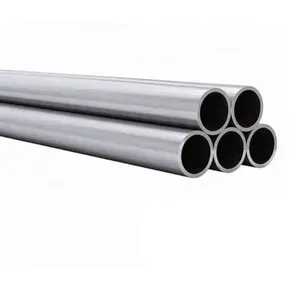 Read More

Contact Us
Recommended Products
-
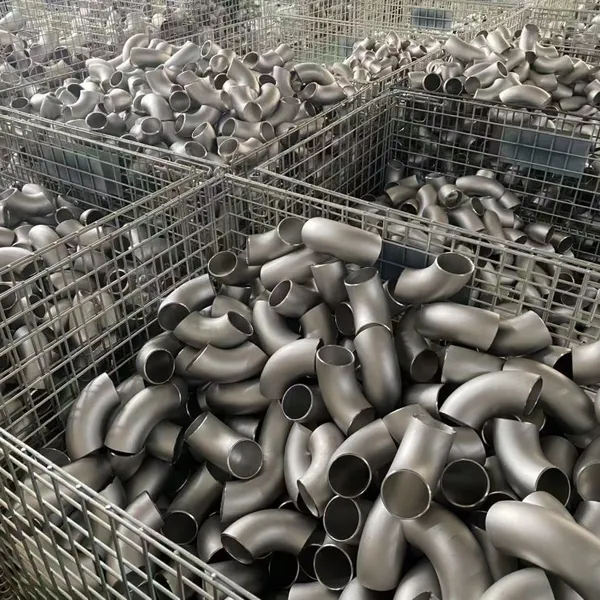
 Stainless Steel Elbow Welded Elbow 45/90/180-degree Seamless Pressed Elbow Long Radius Elbow Short Radius Elbow WholesaleNegotiableMOQ: 1 Piece
 -
316L/1.4405 Seamless Stainless Steel PipeNegotiableMOQ: 2 Meters
-
310s 440 Seamless Sanitary Piping Price 321 904l 201 20 Inch Seamless Steel Pipe A554 Stainless Steel PipeNegotiableMOQ: 1 Piece
-
China Brand ZZ Wholesale 304L 316 316L Welded Austenitic Piping Stainless Steel Pipe SupplierNegotiableMOQ: 2 Meters
-
304/304L/316/409/410/904L/2205/2507/310H Premium Stainless Steel Sheets Supplier Custom Sizes & FinishesUS$ 1.72MOQ: 1 Ton
-
Stainless Steel ASME B16.9 Sch 45 90 Degree Pipe Fittings ElbowUS$ 8MOQ: 1 Piece
-
China Brand Zz 304L 316/316L GB En JIS Standard Thin Wall Welded Stainless Steel Water Pipe/TubeNegotiableMOQ: 2 Meters
-
BA 4 Inch 6 Inch 8 Inch 201 304 304L 316 316L Welded Seamless Stainless Steel PipeNegotiableMOQ: 2 Meters
-
ASME B36.19M-2004 SCH40S Stainless Steel Pipe - Complies With EU 3.1 CertificationUS$ 1 - 650MOQ: 1 Piece
-
Factory TP309/TP309S/TP309H (UNS30900) Seamless Stainless Steel Pipe and Tube for Boiler BafflesUS$ 8MOQ: 200 Kilograms
-
TP347/TP347H/1.4961/S34709 Seamless Stainless Steel Pipe for UseNegotiableMOQ: 2 Meters
-
China 304 316 Stainless Steel Sanitary Welded Tube Food Grade Sanitary Grade Welded Pipe PolishingNegotiableMOQ: 1 Piece
-
China Manufacture Stainless Steel 316L Ba Seamless Welded Steel Pipe TubesUS$ 1760 - 1860MOQ: 5 Tons
-
316L/1.4405 Seamless Stainless Steel PipeNegotiableMOQ: 2 Meters
-
Stainless Steel Globe Valve – High Durability & Corrosion ResistanceNegotiableMOQ: 1 Piece
-
1.4529 Stainless Steel Flat Plate for Chemical Processing EquipmentUS$ 25 - 35MOQ: 1 Kilogram
-
Color Coated Steel Panels for Warehouse Partition Walls (Fireproof Grade)US$ 1 - 1.2MOQ: 50 Kilograms
-
Custom Width (600mm-1250mm) Colored Steel Coil With Scratch ResistanceUS$ 1 - 1.2MOQ: 50 Kilograms
-
0.5mm-3.0mm Colored Coated Steel Sheet With PVDF/Polyester CoatingUS$ 1 - 1.2MOQ: 50 Kilograms
-
JIS G 3322 Compliant Colored Coils With Third-Party Inspection ReportUS$ 1 - 1.2MOQ: 50 Kilograms