
 Business License

What are the standards and requirements for the stainless steel pipes used in the stainless steel
The stainless steel lifting post, as a key equipment for security and traffic control scenarios, its core component - the stainless steel pipe - directly affects the stability, durability and safety of the lifting post. The following summarizes the main standards and requirements for the stainless steel pipe from aspects such as material standards, mechanical properties, dimensional accuracy, surface quality, corrosion resistance requirements, and industry-specific norms:
I. Material Standards (Core Foundation)
The material of the stainless steel pipe must meet the requirements of corrosion resistance and high strength. The mainstream materials and corresponding standards are as follows:
1. Common Materials:
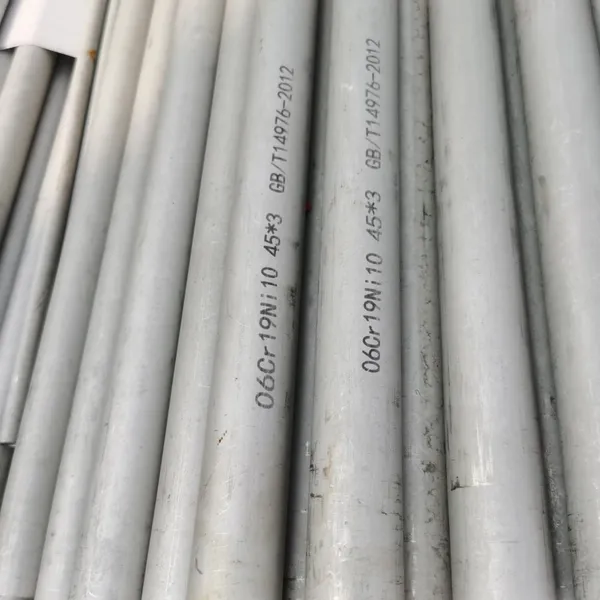
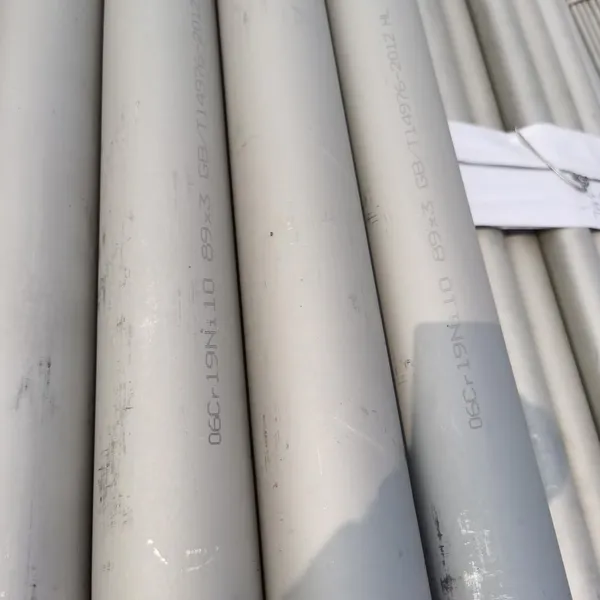
304 Stainless Steel (06Cr19Ni10): Suitable for general environments (such as urban roads, parks), with strong resistance to neutral salt spray;
316 Stainless Steel (06Cr17Ni12Mo2): Suitable for highly corrosive environments (such as coastal areas, chemical zones), as it contains molybdenum, its resistance to chloride ion corrosion is better than 304.
2. Material Standards:
National Standard: GB/T 14976-2012 "Stainless Steel Seamless Pipes for Fluid Transportation" (core standard for seamless pipes, stipulates material chemical composition, mechanical properties, etc.);
International Standard: ASTM A312 (American standard, corresponding to 304, 316, etc. seamless pipes);
Material certificates (such as smelting composition reports) need to be provided to ensure that the contents of key elements such as Cr, Ni, Mo meet the standards (such as Cr ≥ 18% for 304, Ni ≥ 8%);
II. Mechanical Performance Requirements (Ensuring Structural Strength)
The lifting column needs to withstand vehicle impacts and its own lifting load. The mechanical properties of the stainless steel tube must meet the following requirements:
Tensile strength (σb): For 304 stainless steel, ≥ 520 MPa; for 316 stainless steel, ≥ 515 MPa (refer to GB/T 14976);
Yield strength (σ0.2): For 304 stainless steel, ≥ 205 MPa; for 316 stainless steel, ≥ 170 MPa;
Elongation (δ5): ≥ 40% (to ensure that the pipe does not break easily under stress).
III. Dimension Accuracy (Ensuring Lifting Stability)
The dimensional accuracy of the stainless steel pipe, including outer diameter, wall thickness, straightness, etc., directly affects the assembly and operation stability of the lifting column. The requirements are as follows:
Outer diameter tolerance: Seamless pipes usually range from ±0.2mm to ±0.5mm (depending on the pipe diameter, refer to "Ordinary Grade" or "Advanced Grade" accuracy in GB/T 14976);
Wall thickness tolerance: When the wall thickness is ≤ 10mm, the tolerance is generally ±10% (for example, if the wall thickness is 5mm, it is allowed to be ±0.5mm);
Straightness: The curvature per meter ≤ 1mm (to avoid sticking during lifting);
Length tolerance: According to the designed height of the lifting column, the length deviation ≤ ±2mm.
IV. Surface Quality (Enhancing Corrosion Resistance and Aesthetics)
The surface of stainless steel pipes should be free of defects and need to be treated to enhance corrosion resistance:
1. Surface Condition:
Typically, "acid pickling and passivation" treatment is applied (removing oxide scale and forming a passivation film), with no cracks, folds, pockmarks, scratches, etc. on the surface;
For higher aesthetic requirements, polishing treatment can be performed (e.g., Ra ≤ 0.8 μm), but note that the polishing process must not damage the passivation film.
2. Corrosion Resistance Test:
Salt Spray Test: 304 stainless steel must pass the 48-hour neutral salt spray test (GB/T 10125), with no red rust on the surface; 316 stainless steel must pass for more than 1000 hours.
V. Welding Quality (For Welded Stainless Steel Pipes)
If using welded stainless steel pipes (such as in large-diameter scenarios), the welding area must meet the following requirements:
Welding Strength: The tensile strength of the welded joint should be no less than 90% of the base material;
Welding Quality: There should be no defects such as pores, slag inclusions, incomplete penetration, etc., and it should pass non-destructive testing (such as eddy current testing GB/T 7735 or ultrasonic testing JB/T 4730);
Post-Welding Treatment: The weld seam needs to undergo acid pickling and passivation to ensure consistent corrosion resistance with the base material.
VI. Industry-Specific Specifications (Combined with the Usage of Lift Columns)
It must comply with the requirements for pipe materials in the relevant industry standards for lift columns, such as:
Security Field: GA/T 1343-2016 "Anti-Terrorism Lift-Type Anti-Car Barrier" stipulates that the main material of the barrier (including stainless steel pipes) must be able to "operate normally in the range of -40℃ to +70℃", and the impact resistance must meet the grade requirements (such as B-level barriers must withstand a 5-ton vehicle impact at 30 km/h);
Transport Field: It needs to be combined with JT/T 1217 (Highway Traffic Safety Facilities) for the corrosion resistance requirements of metal components.
Summary
The stainless steel tubes used for the stainless steel lifting columns need to simultaneously meet the material standards (such as GB/T 14976), mechanical properties, dimensional accuracy, surface quality, and be selected based on the application scenarios (corrosive environment, impact load). For 304 or 316 materials, the final choice should comply with the industry norms for lifting columns (such as GA/T 1343). During actual procurement, the supplier is required to provide material certificates, performance test reports, and third-party flaw detection reports to ensure that the design requirements are met.
Recently Posted
-
Does the stainless steel welded pipe have specific temperature requirements during the solution heat
January 20, 2026Solution heat treatment involves heating stainless steel to a high temperature and then rapidly cooling it to achieve an oversatur Read More
 -
Can stainless steel welded pipes be made into thick pipes
January 20, 2026With the improvement of high-quality welding technology and increasingly strict weld inspection, the application fields of s Read More
 -
Three types of commonly available food-grade stainless steel on the market
January 20, 2026The common food-grade stainless steel pipes are mainly composed of iron, chromium and carbon and other elements. Household stainle Read More
 -
What are the requirements for stainless steel welding pipe production equipment
January 20, 2026As is well known, stainless steel welded pipes have been widely used in various industries such as machinery, chemical engineering Read More

Contact Us
Recommended Products
-
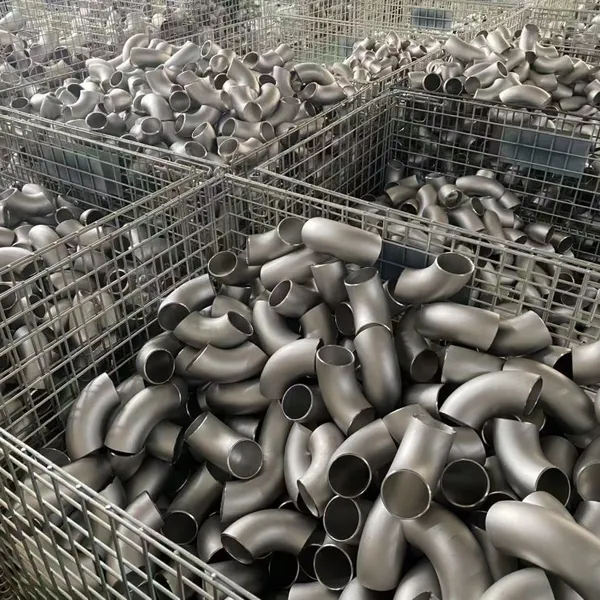
 Stainless Steel Elbow Welded Elbow 45/90/180-degree Seamless Pressed Elbow Long Radius Elbow Short Radius Elbow WholesaleNegotiableMOQ: 1 Piece
 -
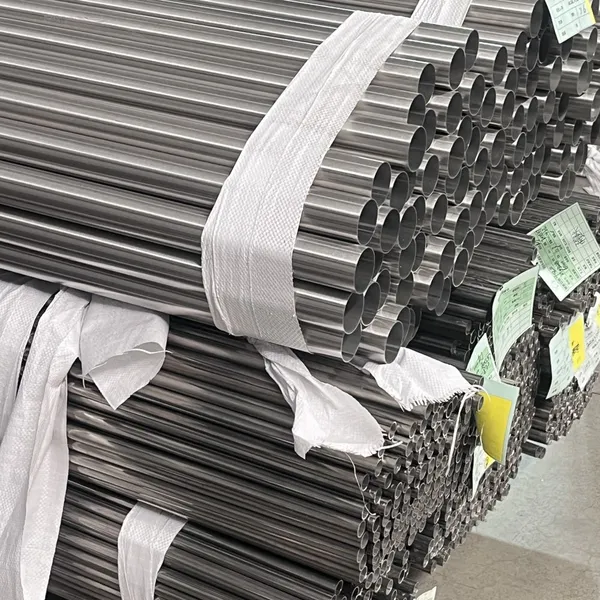
316L/1.4405 Seamless Stainless Steel PipeNegotiableMOQ: 2 Meters
-
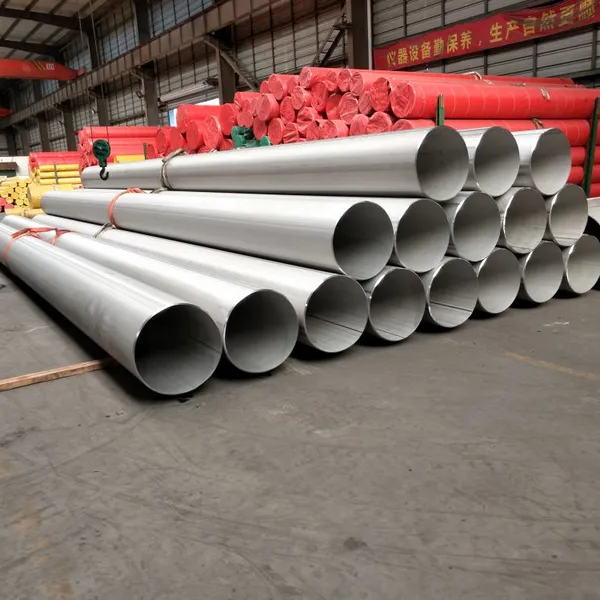
310s 440 Seamless Sanitary Piping Price 321 904l 201 20 Inch Seamless Steel Pipe A554 Stainless Steel PipeNegotiableMOQ: 1 Piece
-
China Brand ZZ Wholesale 304L 316 316L Welded Austenitic Piping Stainless Steel Pipe SupplierNegotiableMOQ: 2 Meters
-
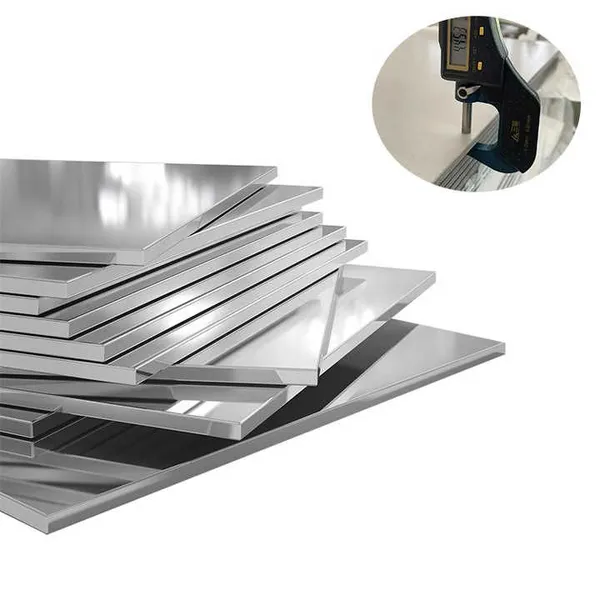
304/304L/316/409/410/904L/2205/2507/310H Premium Stainless Steel Sheets Supplier Custom Sizes & FinishesUS$ 1.72MOQ: 1 Ton
-
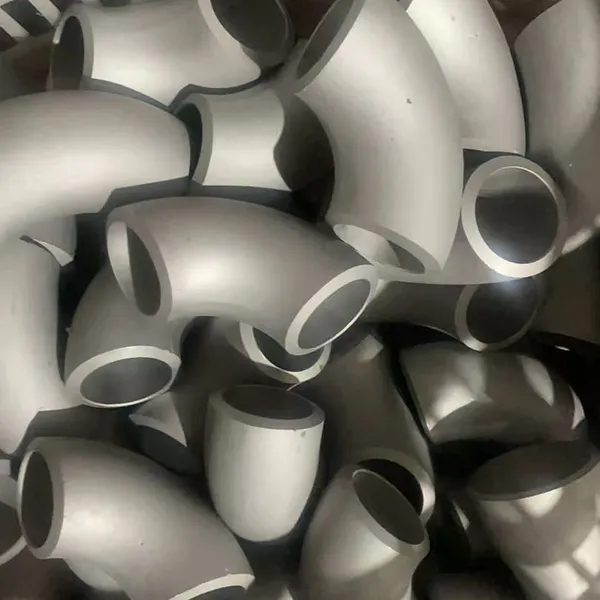
Stainless Steel ASME B16.9 Sch 45 90 Degree Pipe Fittings ElbowUS$ 8MOQ: 1 Piece
-
China Brand Zz 304L 316/316L GB En JIS Standard Thin Wall Welded Stainless Steel Water Pipe/TubeNegotiableMOQ: 2 Meters
-
BA 4 Inch 6 Inch 8 Inch 201 304 304L 316 316L Welded Seamless Stainless Steel PipeNegotiableMOQ: 2 Meters
-
ASME B36.19M-2004 SCH40S Stainless Steel Pipe - Complies With EU 3.1 CertificationUS$ 1 - 650MOQ: 1 Piece
-
Factory TP309/TP309S/TP309H (UNS30900) Seamless Stainless Steel Pipe and Tube for Boiler BafflesUS$ 8MOQ: 200 Kilograms
-
TP347/TP347H/1.4961/S34709 Seamless Stainless Steel Pipe for UseNegotiableMOQ: 2 Meters
-
China 304 316 Stainless Steel Sanitary Welded Tube Food Grade Sanitary Grade Welded Pipe PolishingNegotiableMOQ: 1 Piece
-
China Manufacture Stainless Steel 316L Ba Seamless Welded Steel Pipe TubesUS$ 1760 - 1860MOQ: 5 Tons
-
316L/1.4405 Seamless Stainless Steel PipeNegotiableMOQ: 2 Meters
-
Stainless Steel Globe Valve – High Durability & Corrosion ResistanceNegotiableMOQ: 1 Piece
-
1.4529 Stainless Steel Flat Plate for Chemical Processing EquipmentUS$ 25 - 35MOQ: 1 Kilogram
-
Color Coated Steel Panels for Warehouse Partition Walls (Fireproof Grade)US$ 1 - 1.2MOQ: 50 Kilograms
-
Custom Width (600mm-1250mm) Colored Steel Coil With Scratch ResistanceUS$ 1 - 1.2MOQ: 50 Kilograms
-
0.5mm-3.0mm Colored Coated Steel Sheet With PVDF/Polyester CoatingUS$ 1 - 1.2MOQ: 50 Kilograms
-
JIS G 3322 Compliant Colored Coils With Third-Party Inspection ReportUS$ 1 - 1.2MOQ: 50 Kilograms