
 Business License

Which factors will affect the applicable temperature range of stainless steel pipes in a liquid nitr
The applicable temperature range of stainless steel tubes in a liquid nitrogen environment (-196℃) is not a fixed value. It is influenced by multiple factors such as material properties, processing techniques, and environmental conditions. These factors directly determine the lowest safe temperature that the material can withstand by altering its low-temperature toughness, structural stability, or mechanical properties. The following are the key influencing factors and their mechanisms:
I. Composition and crystal structure of the material
The chemical composition and crystal structure of the material are the core basis determining its suitability at low temperatures, directly influencing the toughness and brittle transition behavior at low temperatures.
1. Alloy element content
Nickel (Ni): The "stability core" of austenitic stainless steel. Nickel is a key element for expanding the austenitic zone. Insufficient content will cause the austenite to be unstable at low temperatures and easily transform into brittle martensite (for example, 304 steel with 8-10.5% Ni can stabilize the austenite; if Ni is less than 8%, martensitic transformation may occur at -196℃, and toughness will sharply decrease).
Chromium (Cr): Enhances corrosion resistance, but excessive amounts will promote the formation of ferrite (for example, when Cr is greater than 20%, ferrite may precipitate in austenite, increasing the risk of low-temperature embrittlement). Molybdenum (Mo): Enhances resistance to pitting (for example, 316 steel with 2-3% Mo), but high Mo slightly reduces the stability of austenite, requiring a higher Ni content to balance (for example, the Ni content of 316L is slightly higher than that of 304, ensuring the stability of austenite at -196℃).
Carbon (C): Low carbon (such as 304L/C ≤ 0.03%) can reduce intergranular corrosion during welding, but excessive C will form carbides, reducing low-temperature toughness (for example, when the C content of 304 steel is greater than 0.08%, the impact energy at -196℃ may be lower than 27J).
2. Crystal structure type
Austenite (body-centered cubic, FCC): No low-temperature toughness-brittleness transition. At low temperatures, the atoms are closely arranged, with many slip systems, and the toughness is excellent (such as 304 and 316). The applicable temperature can be as low as -269℃ (liquid helium temperature).
Ferrite (body-centered cubic, BCC): Has a definite transition temperature for toughness-brittleness (such as the transformation temperature of 430 steel is approximately -50℃), the impact energy drops sharply below -100℃ (<10J), and it cannot be used in liquid nitrogen environment.
Martensite (body-centered tetragonal): Inherently brittle at low temperatures (impact energy <5J). Even through heat treatment improvement, it is still prone to brittle fracture at -50℃, and is completely not applicable to liquid nitrogen.
II. Processing Techniques and Heat Treatment Conditions
The processing process alters the microstructure of the material (such as grain size, residual stress), thereby affecting the low-temperature properties.
1. Cold processing deformation
Cold processing (such as cold rolling, cold drawing) introduces residual stress, causing the austenite to transform into martensite (“strain-induced martensite”). For example: when the cold deformation of 304 steel exceeds 20%, the impact energy at -196℃ may drop from ≥40J to <20J, and the applicable temperature limit is forced to increase (i.e., it cannot withstand -196℃).
Cold processing also refines the grain size, but excessive deformation can lead to dislocation accumulation, increasing the risk of low-temperature brittleness (which needs to be eliminated through subsequent heat treatment).
2. Heat treatment process
Solution treatment: Heating stainless steel to 1050-1150℃ and water cooling can dissolve carbides, eliminate stress, and stabilize austenite (for example, after 304 steel is solution treated at 1080℃, the impact energy at -196℃ can increase by 15-20%). If the solution temperature is insufficient (such as <1000℃), the carbides are not fully dissolved, which will reduce the low-temperature toughness.
Ageing treatment: Some high-alloy stainless steels (such as 904L) need low-temperature ageing (300-400℃) to eliminate residual stress, but excessive ageing may cause brittle phases (such as σ phases) to precipitate, resulting in a decrease in -196℃ toughness.
Welding quality
The weld heat-affected zone (HAZ) may have coarse grains or local ferrite precipitation due to rapid cooling after high-temperature heating (such as for 304 steel welding, the stability of austenite in the HAZ of 304 steel decreases, and the impact energy at -196℃ may be 30% lower than that of the base material).
Incompatible welding materials (such as using low-Ni welding rods to weld 316 steel) can cause instability of austenite in the weld zone, making it prone to brittle fracture at low temperatures, directly reducing the applicable temperature range.
III. Mechanical Stress and Load Conditions
The actual bearing capacity (stress level) of the material at low temperatures significantly affects its applicable temperature. High stress may cause "low-temperature brittle fracture" to occur prematurely.
1. Working Pressure and Static Stress
According to the design specification of GB 50316, the allowable stress of low-temperature pipelines decreases slightly with the decrease in temperature (for austenitic steel - the allowable stress at -196℃ is approximately 1.2 times that at normal temperature). However, when the actual stress exceeds 60% of the yield strength, even if the temperature is not lower than the theoretical applicable value, the material may fracture due to "stress embrittlement" (for example, for 304 steel at -196℃ with a stress greater than 300 MPa, the impact energy will decrease by 20-30%).
2. Dynamic Load and Fatigue Cycles
Pressure fluctuations and vibrations (such as pump body vibration) during liquid nitrogen transportation generate alternating stress. If the stress amplitude is greater than 100 MPa and the number of cycles is greater than 10⁴ times, the material may experience "low-temperature fatigue" and its toughness may decrease, resulting in a narrower applicable temperature range (for example, after fatigue, the impact energy of 316L steel at -196℃ may drop from 35 J to less than 25 J).
IV. Medium Characteristics and Environmental Impurities
The purity of liquid nitrogen and impurities in the environment can affect the performance of materials through corrosion, wear, or chemical reactions.
1. Purity of Liquid Nitrogen
If the liquid nitrogen contains moisture (>0.1%), it will freeze into ice crystals at low temperatures, causing "grain wear" inside the pipeline, resulting in surface defects (such as scratches with a depth of >0.1mm), which become stress concentration points, reducing the actual fracture resistance of the material (the applicable temperature at the defect site may be 20-30℃ higher than that in the defect-free area).
Excessive oxygen content (>0.5%) will react with the stainless steel surface at low temperatures to form an oxide layer, and long-term service may lead to "low-temperature oxidation embrittlement", especially for 304 steel, the effect is more significant.
2. Corrosive Impurities
If the liquid nitrogen contains trace amounts of chloride ions (Cl⁻>10ppm), it will destroy the passivation film on the stainless steel surface, causing pitting corrosion. At -196℃, pitting pits will become crack sources, leading to material fracture at higher temperatures (such as -180℃) (316L, due to its Mo content, has a stronger resistance to Cl⁻ and is less affected).
V. Surface Condition and Defects
The integrity of the material's surface directly affects the sensitivity to stress concentration at low temperatures.
1. Surface Roughness
When the inner wall roughness Ra is greater than 3.2 μm, the turbulence caused by liquid nitrogen flow will exacerbate local stress concentration (especially at elbows and tees), and the stress concentration coefficient of the rough surface at -196°C can reach 1.5-2.0, causing the material to fracture prematurely at the theoretical applicable temperature.
2. Macroscopic Defects
Surface cracks (length > 0.5mm), folds, peeling, etc. will significantly reduce the low-temperature toughness (for example, when 304 steel has a 0.3mm deep crack, the impact energy at -196°C will drop from 30J to less than 15J), and the actual applicable temperature must be raised to above -150°C to ensure safety.
VI. Standards and Test Verification
The applicable temperature range of the material needs to be confirmed through rigorous low-temperature performance tests. The test standards and methods directly affect the determination results.
1. Low-temperature Impact Test
Performed according to GB/T 229 or ASTM A370 - 196℃ Schaeffler V-notch impact test. If the impact energy KV₂ is less than 27J (as required by GB/T 18984), the material cannot be used in the liquid nitrogen environment (even if the composition meets the austenitic standard).
The impact energy of the weld seam and the heat affected zone needs to be ≥ 70% of the base material; otherwise, the welded joint will become a weak link, limiting the applicable temperature of the entire pipeline.
2. Low-temperature Tensile Test
The elongation at -196℃ is less than 30% (for 304 steel, it should be ≥ 35%). When the plasticity is insufficient, brittle fracture is prone to occur, and the applicable temperature needs to be increased (for example, when the elongation is 25%, it is recommended that the maximum operating temperature should not be lower than -180℃).
Summary: Core Impact Logic
The applicable temperature of stainless steel pipes in the liquid nitrogen environment is the result of the balance between the material's low-temperature toughness (anti-crack ability) and external conditions (stress, defects, impurities). Among them, the stability of austenite (determined by the Ni content and crystal structure) is the foundation, while the processing technology (cold deformation, welding) and stress level are the key adjustment factors, and the medium impurities and surface defects are risk factors that reduce the safety threshold. In practical applications, through component control, process optimization (such as solution treatment, smooth surface), stress control (such as setting compensators), and strict test verification, it is possible to ensure its safe operation at -196℃.
Recently Posted
-
Does the stainless steel welded pipe have specific temperature requirements during the solution heat
January 20, 2026Solution heat treatment involves heating stainless steel to a high temperature and then rapidly cooling it to achieve an oversatur Read More
 -
Can stainless steel welded pipes be made into thick pipes
January 20, 2026With the improvement of high-quality welding technology and increasingly strict weld inspection, the application fields of s Read More
 -
Three types of commonly available food-grade stainless steel on the market
January 20, 2026The common food-grade stainless steel pipes are mainly composed of iron, chromium and carbon and other elements. Household stainle Read More
 -
What are the requirements for stainless steel welding pipe production equipment
January 20, 2026As is well known, stainless steel welded pipes have been widely used in various industries such as machinery, chemical engineering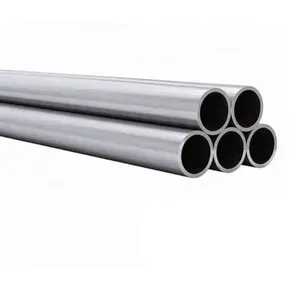 Read More

Contact Us
Recommended Products
-
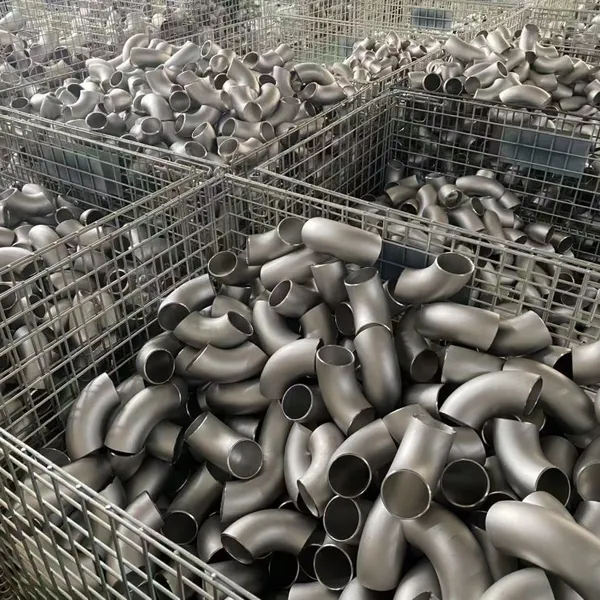
 Stainless Steel Elbow Welded Elbow 45/90/180-degree Seamless Pressed Elbow Long Radius Elbow Short Radius Elbow WholesaleNegotiableMOQ: 1 Piece
 -
316L/1.4405 Seamless Stainless Steel PipeNegotiableMOQ: 2 Meters
-
310s 440 Seamless Sanitary Piping Price 321 904l 201 20 Inch Seamless Steel Pipe A554 Stainless Steel PipeNegotiableMOQ: 1 Piece
-
China Brand ZZ Wholesale 304L 316 316L Welded Austenitic Piping Stainless Steel Pipe SupplierNegotiableMOQ: 2 Meters
-
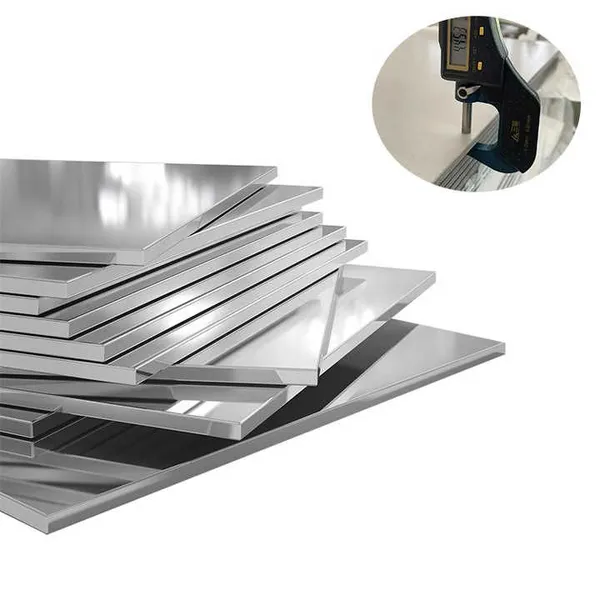
304/304L/316/409/410/904L/2205/2507/310H Premium Stainless Steel Sheets Supplier Custom Sizes & FinishesUS$ 1.72MOQ: 1 Ton
-
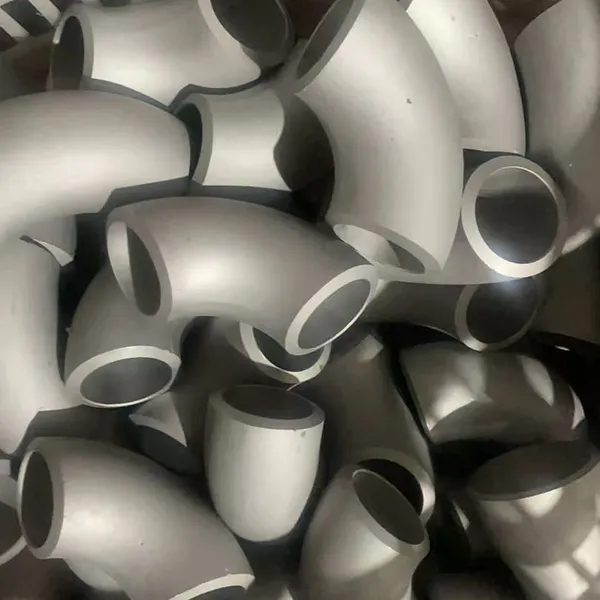
Stainless Steel ASME B16.9 Sch 45 90 Degree Pipe Fittings ElbowUS$ 8MOQ: 1 Piece
-
China Brand Zz 304L 316/316L GB En JIS Standard Thin Wall Welded Stainless Steel Water Pipe/TubeNegotiableMOQ: 2 Meters
-
BA 4 Inch 6 Inch 8 Inch 201 304 304L 316 316L Welded Seamless Stainless Steel PipeNegotiableMOQ: 2 Meters
-
ASME B36.19M-2004 SCH40S Stainless Steel Pipe - Complies With EU 3.1 CertificationUS$ 1 - 650MOQ: 1 Piece
-
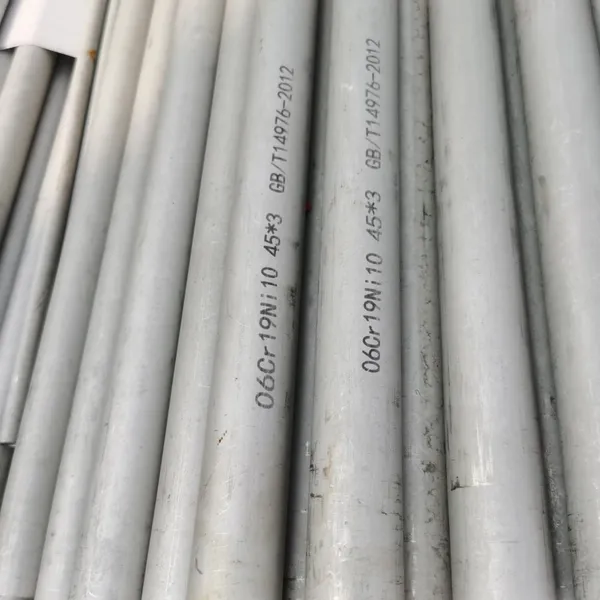
Factory TP309/TP309S/TP309H (UNS30900) Seamless Stainless Steel Pipe and Tube for Boiler BafflesUS$ 8MOQ: 200 Kilograms
-
TP347/TP347H/1.4961/S34709 Seamless Stainless Steel Pipe for UseNegotiableMOQ: 2 Meters
-
China 304 316 Stainless Steel Sanitary Welded Tube Food Grade Sanitary Grade Welded Pipe PolishingNegotiableMOQ: 1 Piece
-
China Manufacture Stainless Steel 316L Ba Seamless Welded Steel Pipe TubesUS$ 1760 - 1860MOQ: 5 Tons
-
316L/1.4405 Seamless Stainless Steel PipeNegotiableMOQ: 2 Meters
-
Stainless Steel Globe Valve – High Durability & Corrosion ResistanceNegotiableMOQ: 1 Piece
-
1.4529 Stainless Steel Flat Plate for Chemical Processing EquipmentUS$ 25 - 35MOQ: 1 Kilogram
-
Color Coated Steel Panels for Warehouse Partition Walls (Fireproof Grade)US$ 1 - 1.2MOQ: 50 Kilograms
-
Custom Width (600mm-1250mm) Colored Steel Coil With Scratch ResistanceUS$ 1 - 1.2MOQ: 50 Kilograms
-
0.5mm-3.0mm Colored Coated Steel Sheet With PVDF/Polyester CoatingUS$ 1 - 1.2MOQ: 50 Kilograms
-
JIS G 3322 Compliant Colored Coils With Third-Party Inspection ReportUS$ 1 - 1.2MOQ: 50 Kilograms