
 Business License

Standard and requirements for stainless steel pipes for liquid nitrogen use
Liquid nitrogen (with a boiling point of approximately -196℃) is a very low-temperature medium. The stainless steel pipes used for its transportation must meet core requirements such as low-temperature mechanical properties, sealing performance, and corrosion resistance. At the same time, they must comply with relevant national standards or international standards. The following are the specific standards and requirements:
I. Core Material Selection
For the liquid nitrogen pipes, austenitic stainless steel should be preferred as it maintains good toughness even at extremely low temperatures (no low-temperature brittleness), while ferritic or martensitic stainless steel is prone to brittle deformation below -100°C and is not suitable. Common grades include:
304 (06Cr19Ni10): Basic austenitic stainless steel, with high cost-effectiveness, suitable for general low-temperature conditions;
316 (06Cr17Ni12Mo2): Contains molybdenum, with stronger corrosion resistance, suitable for low-temperature scenarios with trace impurities or humid environments;
304L/316L: Low-carbon versions, reducing the risk of intergranular corrosion during welding, suitable for welded structures.
II. Main Execution Standards
It is necessary to comply with the special standards for low-temperature pipelines or stainless steel seamless pipes. Common ones are as follows:
Domestic Standards
1. GB/T 14976-2012 "Stainless Steel Seamless Pipes for Fluid Transportation"
It stipulates the basic requirements such as size tolerances, mechanical properties, and surface quality for stainless steel pipes, applicable to pipelines for transporting various fluids including low-temperature fluids;
Additional requirements for low-temperature impact tests (not directly stipulated in the standard, needs to be supplemented in combination with the special standard for low-temperature) are also needed.
2. GB/T 18984-2003 "Stainless Steel Seamless Pipes for Low-Temperature Pipelines"
The material must pass the -196℃ low-temperature impact test (V-shaped notch), with the impact absorption energy KV₂ ≥ 27J;
Mechanical properties: tensile strength ≥ 520MPa, yield strength ≥ 205MPa, elongation ≥ 35% (taking 304 as an example).
This is a standard specifically for low-temperature pipelines ranging from -40℃ to -196℃, clearly requiring:
3. GB 50235-2010 "Industrial Metal Pipeline Construction Specifications"
It involves construction requirements such as welding, installation, and inspection for low-temperature pipelines, such as 100% non-destructive testing (radiographic or ultrasonic) for welding joints.
International Standards
1. ASME B36.19M "Stainless Steel Seamless Pipes"
An American Mechanical Engineers Association standard, stipulates the size and wall thickness grades (such as SCH 10S, SCH 40S, etc.) for stainless steel pipes, applicable to low-temperature high-pressure scenarios.
2. ASME BPVC Section VIII Div.1 "Pressure Vessel Specifications"
It involves design requirements for low-temperature vessels and pipelines, stipulates the allowable stress of austenitic stainless steel at -196℃, and the exemption conditions for impact tests (such as when the thickness is ≤ 6mm, it can be exempted, but material proof is required).
3. ASTM A312 "Austenitic Stainless Steel Seamless Pipes and Welded Pipes"
Corresponding to domestic grades such as 304/316, it clearly stipulates the mechanical properties and welding requirements under low-temperature conditions, and needs to supplement the -196℃ impact test (performed according to ASTM A370 standard).
III. Key Technical Requirements
1. Low Temperature Mechanical Properties
Impact Toughness: Must pass the -196℃ impact test to ensure the material does not fracture at liquid nitrogen temperature (core indicator, such as GB/T 18984 requires KV₂ ≥ 27J);
Strength and Plasticity: The tensile strength and yield strength at room temperature must meet the standards (such as 304 steel tensile ≥ 520MPa, yield ≥ 205MPa), and the elongation rate ≥ 35%, ensuring the plastic deformation ability at low temperatures.
2. Dimensions and Tolerances
Outer Diameter Tolerance: Ordinary grade ±0.75mm, high grade ±0.5mm (to ensure connection sealing);
Wall Thickness Tolerance: ±10% (need to calculate the minimum wall thickness based on working pressure, formula reference GB 50316 "Industrial Metal Pipeline Design Code");
Straightness: ≤1mm per meter, avoiding installation stress concentration.
3. Surface Quality
Inner Wall Needs to Be Smooth (Ra ≤ 1.6μm), Reducing Liquid Nitrogen Flow Resistance and Impurity Accumulation;
No Cracks, Folding, Peeling, etc. on the Inner and Outer Surfaces, Need to Be Acid Washed and Passivated (remove oxide layer, form passivation film, enhance corrosion resistance).
4. Welding Requirements
Welding Materials Need to Match the Base Material (such as 304 use E308L welding rod), Avoiding Carbon Migration Leading to Intergranular Corrosion;
Welding Joints Need to Pass -196℃ Low Temperature Impact Test (impact energy not less than 70% of the base material);
Use Argon Arc Welding as Base Layer + Electro Arc Welding as Fill Layer, Ensure Root Penetration, After Welding, Need to Conduct 100% Radiographic Testing (RT) or Ultrasonic Testing (UT), No defects such as incomplete penetration, cracks, etc. are allowed.
5. Sealing and Pressure Resistance
Pipeline Connections Preferentially Use Welding (Reduce Leakage Points), Flange Connections Need to Use Low Temperature Sealing Gaskets (such as copper-coated asbestos, stainless steel wrapped gaskets, prohibit using rubber gaskets, avoid low-temperature cracking);
Need to Conduct Pressure Tests: Room Temperature Hydrostatic Test (test pressure is 1.5 times the design pressure), or Pneumatic Test (1.15 times the design pressure), Maintain Pressure for 30 Minutes without Leakage.
6. Low Temperature Strain Control
During Pipeline Installation, Consider the Low Temperature Shrinkage Amount (the linear expansion coefficient of austenitic stainless steel is approximately 17×10⁻⁶/℃, the shrinkage amount at -196℃ is significant), Need to Set Compensation Devices (such as bellows compensation devices), Avoid Cracking Due to Excessive Stress.
IV. Supplementary Application Scenarios
If used for liquid nitrogen storage equipment (such as the outlet pipe of the storage tank), it must also comply with the additional requirements for cryogenic vessels stipulated in GB 150 "Pressure Vessels";
For hygiene-level scenarios such as food and medical applications, it is necessary to additionally meet the requirements of internal wall electrolytic polishing (Ra ≤ 0.8 μm) and non-angled design, in accordance with GB 16798 "Stainless Steel Pipes for Food Industry".
In conclusion, the core of using stainless steel pipes for liquid nitrogen is the material's toughness (low-temperature impact resistance), sealing performance, and welding quality. Specific pipe grades need to be selected based on the specific working conditions (pressure, temperature, purity of the medium), and the relevant standards for low-temperature pipelines must be strictly followed.
Recently Posted
-
Does the stainless steel welded pipe have specific temperature requirements during the solution heat
January 20, 2026Solution heat treatment involves heating stainless steel to a high temperature and then rapidly cooling it to achieve an oversatur Read More
 -
Can stainless steel welded pipes be made into thick pipes
January 20, 2026With the improvement of high-quality welding technology and increasingly strict weld inspection, the application fields of s Read More
 -
Three types of commonly available food-grade stainless steel on the market
January 20, 2026The common food-grade stainless steel pipes are mainly composed of iron, chromium and carbon and other elements. Household stainle Read More
 -
What are the requirements for stainless steel welding pipe production equipment
January 20, 2026As is well known, stainless steel welded pipes have been widely used in various industries such as machinery, chemical engineering Read More

Contact Us
Recommended Products
-
 Stainless Steel Elbow Welded Elbow 45/90/180-degree Seamless Pressed Elbow Long Radius Elbow Short Radius Elbow WholesaleNegotiableMOQ: 1 Piece
 -
316L/1.4405 Seamless Stainless Steel PipeNegotiableMOQ: 2 Meters
-
310s 440 Seamless Sanitary Piping Price 321 904l 201 20 Inch Seamless Steel Pipe A554 Stainless Steel PipeNegotiableMOQ: 1 Piece
-
China Brand ZZ Wholesale 304L 316 316L Welded Austenitic Piping Stainless Steel Pipe SupplierNegotiableMOQ: 2 Meters
-
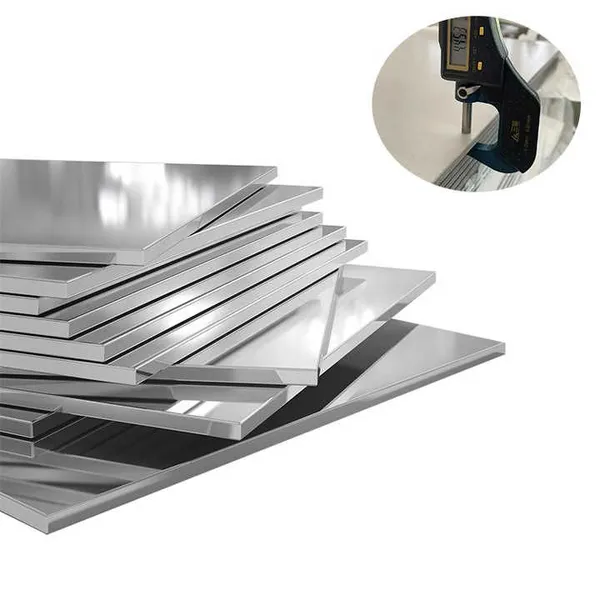
304/304L/316/409/410/904L/2205/2507/310H Premium Stainless Steel Sheets Supplier Custom Sizes & FinishesUS$ 1.72MOQ: 1 Ton
-
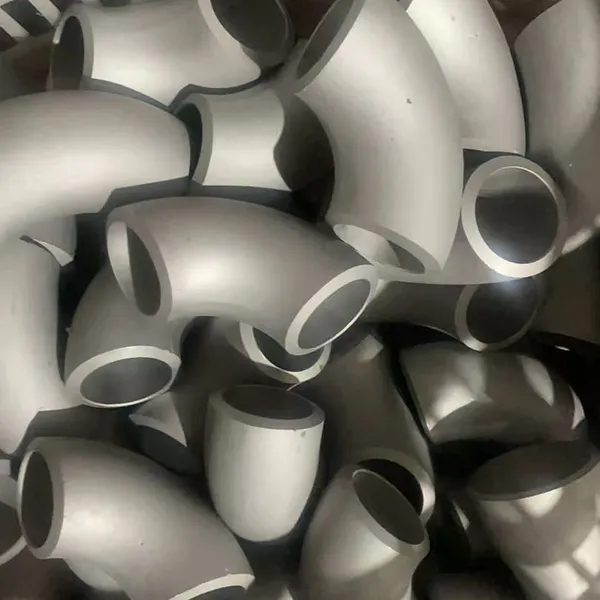
Stainless Steel ASME B16.9 Sch 45 90 Degree Pipe Fittings ElbowUS$ 8MOQ: 1 Piece
-
China Brand Zz 304L 316/316L GB En JIS Standard Thin Wall Welded Stainless Steel Water Pipe/TubeNegotiableMOQ: 2 Meters
-
BA 4 Inch 6 Inch 8 Inch 201 304 304L 316 316L Welded Seamless Stainless Steel PipeNegotiableMOQ: 2 Meters
-
ASME B36.19M-2004 SCH40S Stainless Steel Pipe - Complies With EU 3.1 CertificationUS$ 1 - 650MOQ: 1 Piece
-
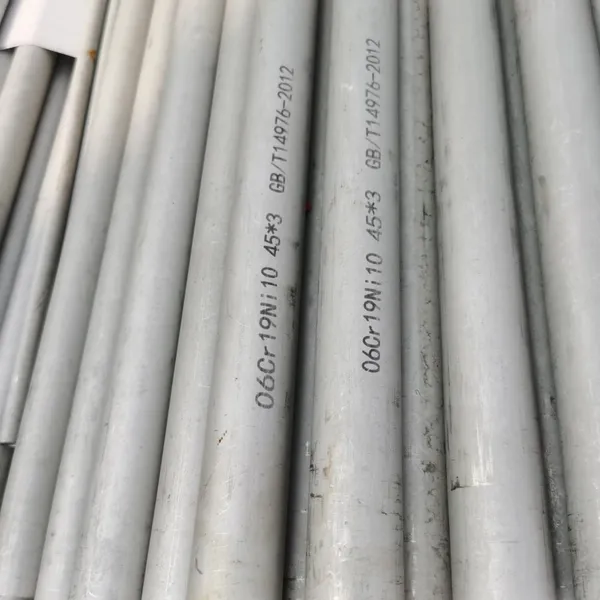
Factory TP309/TP309S/TP309H (UNS30900) Seamless Stainless Steel Pipe and Tube for Boiler BafflesUS$ 8MOQ: 200 Kilograms
-
TP347/TP347H/1.4961/S34709 Seamless Stainless Steel Pipe for UseNegotiableMOQ: 2 Meters
-
China 304 316 Stainless Steel Sanitary Welded Tube Food Grade Sanitary Grade Welded Pipe PolishingNegotiableMOQ: 1 Piece
-
China Manufacture Stainless Steel 316L Ba Seamless Welded Steel Pipe TubesUS$ 1760 - 1860MOQ: 5 Tons
-
316L/1.4405 Seamless Stainless Steel PipeNegotiableMOQ: 2 Meters
-
Stainless Steel Globe Valve – High Durability & Corrosion ResistanceNegotiableMOQ: 1 Piece
-
1.4529 Stainless Steel Flat Plate for Chemical Processing EquipmentUS$ 25 - 35MOQ: 1 Kilogram
-
Color Coated Steel Panels for Warehouse Partition Walls (Fireproof Grade)US$ 1 - 1.2MOQ: 50 Kilograms
-
Custom Width (600mm-1250mm) Colored Steel Coil With Scratch ResistanceUS$ 1 - 1.2MOQ: 50 Kilograms
-
0.5mm-3.0mm Colored Coated Steel Sheet With PVDF/Polyester CoatingUS$ 1 - 1.2MOQ: 50 Kilograms
-
JIS G 3322 Compliant Colored Coils With Third-Party Inspection ReportUS$ 1 - 1.2MOQ: 50 Kilograms