
 Business License

What is the applicable temperature range for different types of stainless steel tubes in a liquid ni
The applicable temperature range of different types of stainless steel tubes in a liquid nitrogen environment (-196℃) is closely related to their material composition, crystal structure, and low-temperature toughness. The following is a detailed classification explanation based on material characteristics, standard specifications, and experimental data:
1. Austenitic Stainless Steel: The Core Choice for Liquid Nitrogen Environments
Austenitic stainless steel, with its face-centered cubic (FCC) crystal structure, has no transition from ductile to brittle behavior at low temperatures and is the preferred material for liquid nitrogen pipelines. Its applicable temperature range covers the entire temperature range of liquid nitrogen (-196℃), and some models can extend to even lower temperatures:
1. 304/304L Stainless Steel
Applicable temperature: -196℃ (boiling point of liquid nitrogen) and above.
Performance basis:
Low-temperature toughness: Impact energy ≥ 27J at -196℃ (GB/T 18984-2003), and no risk of martensite transformation.
Standard support: ASTM A312 allows TP304/304L to be tested without impact at -250℃.
Application cases: Liquid nitrogen storage tank outlet pipes, low-temperature pipeline systems.
2. 316/316L Stainless Steel
Applicable temperature: -196℃ to -269℃ (temperature of liquid helium).
Performance basis:
Nickel content advantage: 10-14% Ni strengthens the stability of austenite, impact energy ≥ 34J at -196℃ (ASME BPVC requirement).
Extreme low-temperature verification: 316L maintains 36% elongation at liquid helium temperature (-269℃).
Special scenarios: Low-temperature structural materials for nuclear fusion superconducting magnets (such as the ITER project).
3. 310S (25Cr-20Ni) Stainless Steel
Applicable temperature: -196℃ and below.
Performance basis:
High nickel-chromium combination: 20% Ni inhibits martensite transformation at low temperatures, stable magnetic permeability at liquid helium temperature (-269℃).
Experimental data: Tensile strength reaches 1248MPa at -196℃, suitable for high magnetic field environments.
4. Super Austenitic Stainless Steel (such as 904L, 254SMO)
Applicable temperature: -196℃ and above.
Performance characteristics:
Corrosion resistance priority: 904L (25Ni-4.5Mo) performs well in low-temperature media containing chloride ions, but low-temperature toughness data is limited.
Special design: 254SMO (6Mo) is suitable for high-pressure liquid nitrogen environments at -196℃, but impact performance needs additional verification.
II. Restrictions on Other Types of Stainless Steels
1. Ferritic Stainless Steels (such as 430, 008Cr30Mo2)
Limiting Temperature: Above -100℃.
Failure Mechanism:
Hardenability-Crystallinity Transition: The impact toughness of ferritic steel drops sharply below -40℃ (e.g., 008Cr30Mo2 exhibits brittle fracture at -40℃).
Standard Prohibition: GB/T 18984 explicitly excludes ferritic steel for use in -196℃ scenarios.
2. Martensitic Stainless Steels (such as 410, 420)
Limiting Temperature: Above -50℃.
Risk Analysis:
Low Temperature Brittleness: Insufficient impact energy of less than 10J below -50℃, prone to brittle fracture.
Application Prohibition: Prohibited for use in liquid nitrogen pipelines, only suitable as an alternative to carbon steel for non-critical low-temperature components above -50℃.
3. Duplex Stainless Steels (such as 2205, 2507)
Limiting Temperature: Above -40℃.
Performance Limitations:
Percentage of Ferrite Phase: Approximately 50% ferrite leads to a decrease in toughness below -40℃, with impact energy ≤ 20J.
Special Treatment: Requires passing a -40℃ impact test to be used in LNG tanks (-162℃).
III. Key Influencing Factors and Verification Requirements
1. Material Composition and Heat Treatment
Carbon content control: Low carbon (≤0.03%) can prevent intergranular corrosion. The loss of low-temperature toughness after 304L/316L welding at low temperatures is ≤30%.
Cold processing impact: Cold-rolled 316L has a strength increase of 15% at -196℃, but this needs to be verified through -196℃ impact tests.
2. Standards and Test Requirements
Domestic Standards:
GB/T 18984 requires -196℃ impact energy ≥27J, and the impact energy of the weld heat-affected zone should be ≥70% of the base material.
GB/T 150-2024 stipulates that austenitic vessels with a design temperature ≤-196℃ need additional verification.
International Standards:
ASME BPVC allows 304/316 to be tested without impact tests at -250℃, but material certification is required.
ASTM A312 requires the low-temperature impact energy of welded pipes to be ≥20J (-196℃).
3. Engineering Verification Methods
Low-temperature Impact Test: The Schmidle V-notch impact energy (KV₂) is the core indicator. Austenitic steel at -196℃ should be ≥27J.
Strain Control: The linear expansion coefficient of austenitic steel is 17×10⁻⁶/℃, and a bellows compensator needs to be set to absorb the contraction at -196℃.
IV. Summary and Selection Suggestions
Picture 1
Notes:
1. The liquid nitrogen pipelines should preferentially use seamless pipes (ASTM A312 seamless grade), and welded pipes should undergo 100% radiographic testing.
2. When the design pressure is greater than 10 MPa, the wall thickness of 316L needs to be ≥ 3mm, and a -196℃ burst test must be passed.
3. For pipelines with long-term service (>10 years), the stability of the carburized layer needs to be regularly tested (for example, after low-temperature carburization of 316L, 300℃ aging verification is required).
By combining material properties, standard specifications, and engineering verification, the long-term reliability of stainless steel pipes in the liquid nitrogen environment can be ensured.
Recently Posted
-
Does the stainless steel welded pipe have specific temperature requirements during the solution heat
January 20, 2026Solution heat treatment involves heating stainless steel to a high temperature and then rapidly cooling it to achieve an oversatur Read More
 -
Can stainless steel welded pipes be made into thick pipes
January 20, 2026With the improvement of high-quality welding technology and increasingly strict weld inspection, the application fields of s Read More
 -
Three types of commonly available food-grade stainless steel on the market
January 20, 2026The common food-grade stainless steel pipes are mainly composed of iron, chromium and carbon and other elements. Household stainle Read More
 -
What are the requirements for stainless steel welding pipe production equipment
January 20, 2026As is well known, stainless steel welded pipes have been widely used in various industries such as machinery, chemical engineering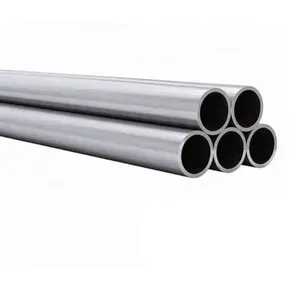 Read More

Contact Us
Recommended Products
-
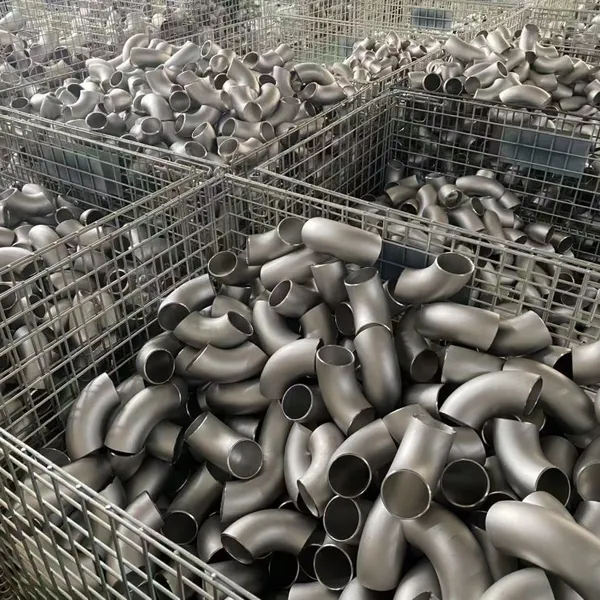
 Stainless Steel Elbow Welded Elbow 45/90/180-degree Seamless Pressed Elbow Long Radius Elbow Short Radius Elbow WholesaleNegotiableMOQ: 1 Piece
 -
316L/1.4405 Seamless Stainless Steel PipeNegotiableMOQ: 2 Meters
-
310s 440 Seamless Sanitary Piping Price 321 904l 201 20 Inch Seamless Steel Pipe A554 Stainless Steel PipeNegotiableMOQ: 1 Piece
-
China Brand ZZ Wholesale 304L 316 316L Welded Austenitic Piping Stainless Steel Pipe SupplierNegotiableMOQ: 2 Meters
-
304/304L/316/409/410/904L/2205/2507/310H Premium Stainless Steel Sheets Supplier Custom Sizes & FinishesUS$ 1.72MOQ: 1 Ton
-
Stainless Steel ASME B16.9 Sch 45 90 Degree Pipe Fittings ElbowUS$ 8MOQ: 1 Piece
-
China Brand Zz 304L 316/316L GB En JIS Standard Thin Wall Welded Stainless Steel Water Pipe/TubeNegotiableMOQ: 2 Meters
-
BA 4 Inch 6 Inch 8 Inch 201 304 304L 316 316L Welded Seamless Stainless Steel PipeNegotiableMOQ: 2 Meters
-
ASME B36.19M-2004 SCH40S Stainless Steel Pipe - Complies With EU 3.1 CertificationUS$ 1 - 650MOQ: 1 Piece
-
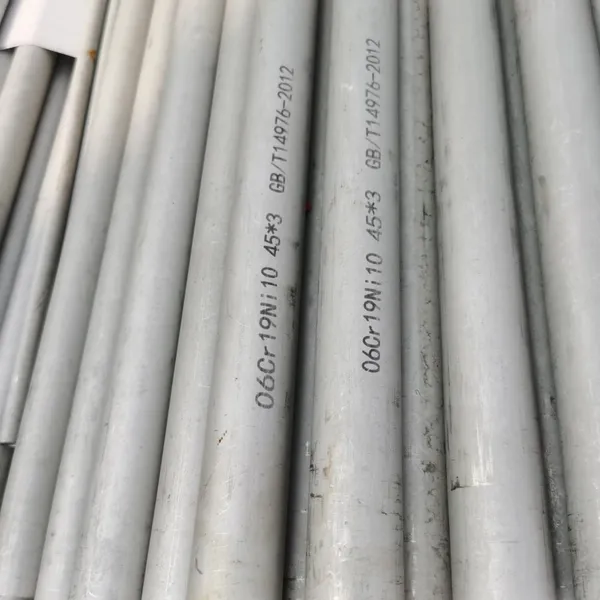
Factory TP309/TP309S/TP309H (UNS30900) Seamless Stainless Steel Pipe and Tube for Boiler BafflesUS$ 8MOQ: 200 Kilograms
-
TP347/TP347H/1.4961/S34709 Seamless Stainless Steel Pipe for UseNegotiableMOQ: 2 Meters
-
China 304 316 Stainless Steel Sanitary Welded Tube Food Grade Sanitary Grade Welded Pipe PolishingNegotiableMOQ: 1 Piece
-
China Manufacture Stainless Steel 316L Ba Seamless Welded Steel Pipe TubesUS$ 1760 - 1860MOQ: 5 Tons
-
316L/1.4405 Seamless Stainless Steel PipeNegotiableMOQ: 2 Meters
-
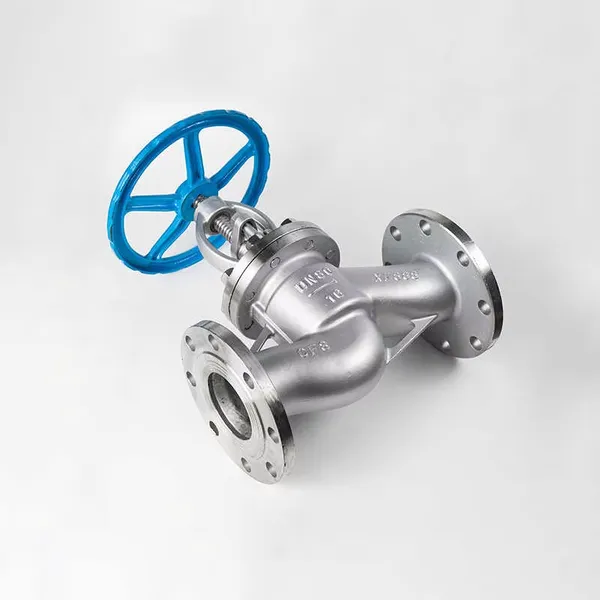
Stainless Steel Globe Valve – High Durability & Corrosion ResistanceNegotiableMOQ: 1 Piece
-
1.4529 Stainless Steel Flat Plate for Chemical Processing EquipmentUS$ 25 - 35MOQ: 1 Kilogram
-
Color Coated Steel Panels for Warehouse Partition Walls (Fireproof Grade)US$ 1 - 1.2MOQ: 50 Kilograms
-
Custom Width (600mm-1250mm) Colored Steel Coil With Scratch ResistanceUS$ 1 - 1.2MOQ: 50 Kilograms
-
0.5mm-3.0mm Colored Coated Steel Sheet With PVDF/Polyester CoatingUS$ 1 - 1.2MOQ: 50 Kilograms
-
JIS G 3322 Compliant Colored Coils With Third-Party Inspection ReportUS$ 1 - 1.2MOQ: 50 Kilograms