
 Business License

Which factors will influence the selection of the size of stainless steel pipes used for the sanitar
The selection of stainless steel pipes for sanitary water supply equipment on rail vehicles needs to take into account multiple factors such as system functions, vehicle characteristics, environmental conditions, and standards and regulations. The core is to achieve a balance among "safety and reliability, meeting hygiene standards, space compatibility, and lightweight". The following is a detailed analysis of the key influencing factors:
I. Hydraulic Parameters: Core Constraints of Flow and Pressure
Hydraulic characteristics form the basis for pipe diameter selection, directly determining whether the pipeline can meet the water supply requirements and avoid energy waste or system failures.
1. Design Flow
The total flow needs to be calculated based on the number of water usage points (such as bathrooms, kitchens, cleaning equipment) and peak water usage periods (such as morning and evening rush hours). For example, the peak water supply flow for an 8-car train set is approximately 15-20 m³/h, corresponding to a main water supply pipe diameter of ≥ DN50 (flow velocity ≤ 1.5 m/s to avoid noise and pipe wear caused by turbulence).
The relationship between flow and pipe diameter can be derived using the formula (Q = v imes A) (Q is flow, v is flow velocity, A is the cross-sectional area of the pipe): Excessive flow velocity (> 2.0 m/s) will intensify inner wall erosion and vibration noise, while too low flow velocity (<0.6 m/s) may cause water stagnation and bacterial growth (hygienic equipment should avoid dead water areas).
2. System Pressure and Pressure Loss
Working Pressure: The pressure of the rail vehicle water supply system is typically 0.6-1.6 MPa. A too small pipe diameter will result in excessive pressure loss along the route (pressure loss is proportional to the square of the flow velocity), and the resistance can be reduced by increasing the pipe diameter. For example, a DN32 pipe has a 100m along-route loss of approximately 0.15 MPa; if the flow rate remains the same, a DN40 pipe can reduce the loss to 0.08 MPa, which is more suitable for long-distance water supply (such as the entire train's pipe).
Local Resistance: Accessories such as elbows and valves will cause local pressure loss. The pipe diameter should reserve 10%-20% of pressure redundancy (such as when the design pressure is 1.0 MPa, the actual selection should be calculated based on 1.2 MPa) to avoid insufficient pressure at the end-user's water usage point.
II. Installation Space and Vehicle Structure Constraints
The interior space of rail vehicles is compact (especially for EMU sets and subway carriages, the underframe and ceiling compartments). The piping layout needs to be adapted to the vehicle structure, and the size is limited by the following factors:
1. Space Layout
Piping must avoid load-bearing beams, cable trays, braking systems and other equipment, and the bending radius (for cold-formed pipes, it is usually 3-5 times the pipe diameter) must meet the installation path requirements. For example, the pipe spacing within the bathroom module needs to be ≥ 50mm (for easy maintenance), if the space only allows a width of 100mm, DN25 (outer diameter 32mm) is more suitable than DN32 (outer diameter 38mm).
Lightweighting requirements for vehicles: If the pipe diameter and wall thickness are too large, the self-weight will increase (for every meter of DN50×3.0 stainless steel pipe, it is approximately 3.8kg, and for DN65×3.5, it is approximately 6.2kg), and the minimum feasible size must be selected through topology optimization (for example, replacing DN50 with DN40 and increasing the wall thickness to meet the strength requirements).
2. Modular Design
The water supply system often adopts modular integration (such as kitchen units, bathroom modules), and the pipe size must match the module interface. For example, the standard interface of a certain EMU bathroom module is DN20 (outer diameter 25.4mm), then the connecting pipe must match this size to avoid leakage risks caused by additional connections.
III. Hygiene Safety and Fluid Characteristics
The requirements for pipe dimensions for hygiene-level equipment need to take into account both "anti-pollution" and "easy cleaning". The key influencing factors include:
1. Flow rate and hygiene risk
A flow rate lower than 0.6m/s (too low) will cause water stagnation, and the inner wall is prone to biofilm growth; a flow rate higher than 1.5m/s (too high) will intensify turbulence, which may wash away the inner wall and cause particle contamination. Therefore, the pipe diameter should be determined through hydraulic calculations to keep the flow rate stable at 0.8-1.2m/s (for a design flow rate of 5m³/h, the flow rate in a DN32 pipe is approximately 1.0m/s, which meets hygiene requirements).
2. Cleanability and disinfection feasibility
The inner diameter of the pipe must ensure that cleaning tools (such as sponge balls, endoscopes) can pass through. For example, DN15 (inner diameter ≥ 13mm) needs to be compatible with a φ10mm cleaning ball; if the pipe diameter is too small (such as DN10), it may not be able to be thoroughly cleaned and should avoid being used for long-term water supply pipes.
The roughness of the inner wall (Ra ≤ 0.8μm) is related to the pipe diameter: small-diameter pipes (DN15-DN25) are more likely to achieve high smoothness through electrolytic polishing, while large-diameter pipes (DN65 and above) need to control the flatness of the welding seam to avoid cleaning dead corners.
IV. Material Properties and Connection Methods
The material properties and connection techniques of stainless steel pipes directly constrain the selection of dimensions:
1. Material Strength and Wall Thickness
The tensile strength of austenitic stainless steel (304/316) (≥ 520 MPa) determines the matching between wall thickness and pressure resistance. For example, when the system pressure is 1.6 MPa, a DN50 pipe requires a wall thickness of ≥ 2.5 mm (verified through water pressure test, no leakage under 20 MPa pressure retention); if 316 stainless steel (with better corrosion resistance but slightly lower strength) is used, the wall thickness needs to increase by 10%-15%.
2. Dimension Adaptation for Connection Methods
Clamp connection (DIN 11851): The pipe diameter tolerance should be ≤ ±0.3 mm (for DN50 with an outer diameter of 57 mm, the deviation should be ≤ ±0.3 mm), otherwise the sealing ring cannot effectively seal, so small-diameter pipes (DN15-DN50) are more suitable for clamp connection.
Welding connection (TIG argon arc welding): For large-diameter pipes (DN65 and above), a beveling space needs to be reserved (bevel angle 30°-37.5°), and if the pipe diameter is too small (such as DN15), the welding quality may deteriorate due to insufficient operation space, so threaded or clamp connection is preferred.
Threaded connection: The tooth depth of British thread (G1/2" corresponding to DN15) determines the minimum wall thickness (for DN20 threaded pipe, the wall thickness needs to be ≥ 2.0 mm to avoid pipe wall penetration during thread processing).
V. Operating Environment and Durability Requirements
The special operating environment of rail vehicles (vibration, corrosion, temperature fluctuations) significantly affects the durability of dimensions:
1. Vibration and Fatigue Strength
During vehicle operation, there is low-frequency vibration (10-50Hz). The pipe diameter and wall thickness need to be analyzed through modal analysis to avoid resonance (the resonance frequency should be more than ±20% away from the commonly used vibration frequency). For example, if the natural frequency of a DN40×2.5 pipe is 30Hz, it should be adjusted to below 24Hz or above 36Hz to prevent weld cracking caused by long-term vibration.
The vibration stress is inversely proportional to the pipe diameter (at the same flow rate, a smaller pipe diameter has a higher flow velocity and greater vibration stress), so in areas with severe vibration (such as pipes near the bogie), the pipe diameter should be appropriately increased (to reduce flow velocity) or the wall thickness should be increased (to enhance fatigue resistance).
2. Wall Thickness Reserve in Corrosion Environments
In coastal or high-humidity areas (such as subways, cross-sea trains), chloride ions can cause pitting corrosion, and a reserve for corrosion should be reserved (usually 0.5-1.0mm). For example, in a conventional environment, a DN32 pipe with a wall thickness of 1.5mm is sufficient, while in coastal areas, it should be increased to 2.0-2.5mm to ensure that the remaining wall thickness is ≥ the design value during the service period (15-20 years).
3. Temperature Fluctuations
For hot water systems (60-80℃) with pipes, thermal expansion needs to be considered (the expansion coefficient of stainless steel is 17×10-6/℃). The larger the pipe diameter, the greater the thermal expansion (for a DN80 pipe with a length of 10m and a temperature difference of 50℃, the expansion amount is approximately 8.5mm). Expansion compensation should be provided through expansion joints, so in high-temperature areas, smaller pipe diameters (DN50 or below) should be preferred to reduce expansion stress.
VI. Standards, Specifications and Certification Requirements
The selection of dimensions must comply with industry standards and certification rules to avoid compliance risks:
1. Domestic Standards
TB/T 3350.2-2014 stipulates the dimensional accuracy of stainless steel tubes used in EMU (such as the outer diameter tolerance of the advanced PH grade ≤ ±0.1mm). If the project requires CRCC certification, the pipe diameter deviation must be strictly controlled within the standard range.
GB/T 17219-1998 requires that the inner wall of drinking water pipes be smooth (Ra ≤ 0.8μm). Small-diameter pipes (DN15-DN32) are more likely to meet the polishing accuracy, while large-diameter pipes (DN65 and above) need to undergo electrolytic polishing verification.
2. International Standards
EN 10216-5 sets minimum requirements for the wall thickness of pressure pipelines (such as the minimum wall thickness of DN65 pipeline 2.0mm). Vehicles exporting to the EU must meet these requirements.
FDA 21 CFR 177.2400 stipulates that the inner surface of food-contact pipes must not have depressions. Therefore, the welding seam of large-diameter pipes (DN50 and above) needs to be ground smooth, and the dimension selection must consider the feasibility of subsequent processing.
VII. Maintenance and Life Cycle Cost
When selecting the size, it is necessary to consider both the convenience of future maintenance and cost control:
1. Maintenance Space
The spacing between pipes should be ≥ 1.5 times the pipe diameter (for example, the spacing for DN50 pipes should be ≥ 75mm), to facilitate the operation of wrenches; if the space is limited, a smaller pipe diameter (such as using DN40 instead of DN50) should be chosen to reduce the difficulty of maintenance.
2. Commonality of Spare Parts
Prioritize choosing industry-standard sizes (such as DN15, DN25, DN50), to reduce the cost of custom spare parts; special sizes (such as DN28) may lead to an extended procurement cycle for spare parts (3-6 months), increasing the maintenance risk.
3. Energy Consumption and Cost Balance
A pipe diameter that is too large will increase material costs (the cost of DN65 pipe is approximately 40% higher than DN50 pipe), while a pipe diameter that is too small will increase the energy consumption of the pump (excessive flow rate leads to an increase in pump head, and energy consumption rises by 15%-20%); the optimal size should be selected through a life cycle cost analysis.
Summary
The selection of the size for the sanitary-grade stainless steel water supply pipes for rail vehicles is a multi-objective optimization process involving "hydraulic performance, space constraints, hygiene safety, environmental adaptability, and compliance with standards". In the actual selection process, fluid simulation (such as CFD simulation of flow velocity distribution), structural mechanics analysis (vibration stress verification), and full life cycle cost accounting are required to ultimately determine a size scheme that can not only meet the water supply requirements but also fit the vehicle characteristics. For example: for the branch pipe of the toilet in a high-speed EMU, after comprehensive analysis, DN20×1.5 (304 stainless steel) was selected, which not only ensures a flow velocity of 1.0 m/s (hygiene requirements), but also meets a vibration stress of ≤ 180 MPa (fatigue strength requirements), and at the same time fits the module interface size (saving space).
Recently Posted
-
Does the stainless steel welded pipe have specific temperature requirements during the solution heat
January 20, 2026Solution heat treatment involves heating stainless steel to a high temperature and then rapidly cooling it to achieve an oversatur Read More
 -
Can stainless steel welded pipes be made into thick pipes
January 20, 2026With the improvement of high-quality welding technology and increasingly strict weld inspection, the application fields of s Read More
 -
Three types of commonly available food-grade stainless steel on the market
January 20, 2026The common food-grade stainless steel pipes are mainly composed of iron, chromium and carbon and other elements. Household stainle Read More
 -
What are the requirements for stainless steel welding pipe production equipment
January 20, 2026As is well known, stainless steel welded pipes have been widely used in various industries such as machinery, chemical engineering Read More

Contact Us
Recommended Products
-
 Stainless Steel Elbow Welded Elbow 45/90/180-degree Seamless Pressed Elbow Long Radius Elbow Short Radius Elbow WholesaleNegotiableMOQ: 1 Piece
 -
316L/1.4405 Seamless Stainless Steel PipeNegotiableMOQ: 2 Meters
-
310s 440 Seamless Sanitary Piping Price 321 904l 201 20 Inch Seamless Steel Pipe A554 Stainless Steel PipeNegotiableMOQ: 1 Piece
-
China Brand ZZ Wholesale 304L 316 316L Welded Austenitic Piping Stainless Steel Pipe SupplierNegotiableMOQ: 2 Meters
-
304/304L/316/409/410/904L/2205/2507/310H Premium Stainless Steel Sheets Supplier Custom Sizes & FinishesUS$ 1.72MOQ: 1 Ton
-
Stainless Steel ASME B16.9 Sch 45 90 Degree Pipe Fittings ElbowUS$ 8MOQ: 1 Piece
-
China Brand Zz 304L 316/316L GB En JIS Standard Thin Wall Welded Stainless Steel Water Pipe/TubeNegotiableMOQ: 2 Meters
-
BA 4 Inch 6 Inch 8 Inch 201 304 304L 316 316L Welded Seamless Stainless Steel PipeNegotiableMOQ: 2 Meters
-
ASME B36.19M-2004 SCH40S Stainless Steel Pipe - Complies With EU 3.1 CertificationUS$ 1 - 650MOQ: 1 Piece
-
Factory TP309/TP309S/TP309H (UNS30900) Seamless Stainless Steel Pipe and Tube for Boiler BafflesUS$ 8MOQ: 200 Kilograms
-
TP347/TP347H/1.4961/S34709 Seamless Stainless Steel Pipe for UseNegotiableMOQ: 2 Meters
-
China 304 316 Stainless Steel Sanitary Welded Tube Food Grade Sanitary Grade Welded Pipe PolishingNegotiableMOQ: 1 Piece
-
China Manufacture Stainless Steel 316L Ba Seamless Welded Steel Pipe TubesUS$ 1760 - 1860MOQ: 5 Tons
-
316L/1.4405 Seamless Stainless Steel PipeNegotiableMOQ: 2 Meters
-
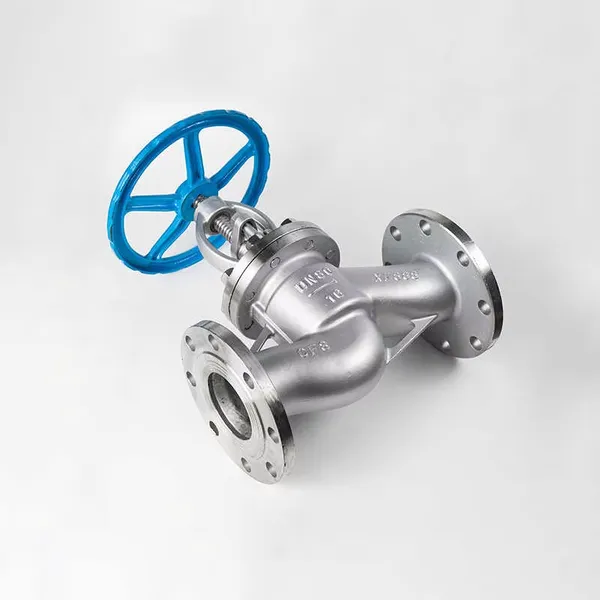
Stainless Steel Globe Valve – High Durability & Corrosion ResistanceNegotiableMOQ: 1 Piece
-
1.4529 Stainless Steel Flat Plate for Chemical Processing EquipmentUS$ 25 - 35MOQ: 1 Kilogram
-
Color Coated Steel Panels for Warehouse Partition Walls (Fireproof Grade)US$ 1 - 1.2MOQ: 50 Kilograms
-
Custom Width (600mm-1250mm) Colored Steel Coil With Scratch ResistanceUS$ 1 - 1.2MOQ: 50 Kilograms
-
0.5mm-3.0mm Colored Coated Steel Sheet With PVDF/Polyester CoatingUS$ 1 - 1.2MOQ: 50 Kilograms
-
JIS G 3322 Compliant Colored Coils With Third-Party Inspection ReportUS$ 1 - 1.2MOQ: 50 Kilograms