
 Business License

How to select the appropriate size of stainless steel tubes based on the operating environment of ra
The operating environment of rail vehicles (such as vibration intensity, corrosion degree, temperature fluctuations, space constraints, etc.) directly affects the size compatibility of the sanitary-grade stainless steel pipes for water supply. The core lies in the targeted design of pipe diameter and wall thickness to balance the three goals of "environmental tolerance, system efficiency, and hygiene safety". The following is the specific analysis and selection method:
1. Vibration Environment: Must match anti-fatigue and turbulence control
When the railway vehicles are in operation (especially high-speed EMUs and subways), there is continuous low-frequency vibration (10-50Hz). The vibration sources include wheel-rail contact and the movement of the bogie, which can easily cause fatigue cracking of pipelines or loosening of joints. The size selection should pay particular attention to:
1. The relationship between vibration intensity and pipe diameter
Severe vibration area (such as the bottom frame pipes near the bogie): If the flow velocity is too high (>1.5m/s), it will intensify turbulent vibration. The pipe diameter should be increased to reduce the flow velocity (recommend a flow velocity of ≤1.2m/s). For example, the flushing water pipe near the bogie of a certain EMU train, the original design was DN25 (flow velocity 1.8m/s), and the vibration noise exceeded the standard. It was changed to DN32 (flow velocity 1.1m/s), and the vibration stress decreased from 220MPa to 160MPa (lower than the fatigue limit of 180MPa for 304 stainless steel).
Relatively gentle vibration area (such as the ceiling cavity of the passenger compartment): The pipe diameter can be appropriately reduced (such as DN20 replacing DN25), but the flow velocity must be ≥0.8m/s (to avoid the breeding of bacteria in stagnant water).
In the vibration environment, the wall thickness needs to meet "vibration stress ≤ allowable stress of the material (304 stainless steel takes 200MPa)". Through the formula
Picture 1
(K is the vibration coefficient, ρ is the fluid density, v is the flow velocity) Calculation:
High-frequency vibration (30-50Hz) area: The wall thickness needs to be increased by 10%-20% compared to the static environment. For example: For a DN40 pipeline in a static environment, the wall thickness is 2.0mm. In the vibration area, it needs to be increased to 2.2-2.4mm. By increasing the stiffness, the resonance risk can be reduced.
II. Corrosive Environment: Reserve Wall Thickness Margin and Optimize Flow Rate
The corrosive environment (such as chloride ions in coastal areas, condensate water in damp tunnels, and corrosive gases in chemical zones) can accelerate pitting or intergranular corrosion of stainless steel pipes. The selection of dimensions should focus on "corrosion allowance" and "ability to resist biofilm":
1. Chloride Ion Concentration and Wall Thickness Margin
Coastal / Cross-sea trains (chloride ion concentration > 50mg/m³): Reserve 0.5-1.0mm corrosion margin. For example: For DN32 pipes in normal conditions, the wall thickness is 1.5mm. In coastal areas, it should be increased to 2.0-2.5mm (316 stainless steel) to ensure that the remaining wall thickness is ≥ 1.0mm within a 15-year service period (meeting pressure requirements).
Damp inland areas (chloride ion concentration <20mg/m³): The corrosion margin can be reduced to 0.3-0.5mm. Optimize the pipe diameter (such as replacing DN25×2.0 with DN25×1.8) to achieve lightweight.
2. Flow Rate and Biofilm Control
The damp environment is prone to bacterial growth, so the flow rate should be ensured to be between 0.8-1.2m/s (suppressing the attachment of biofilms). For example: The original design of a subway bathroom branch pipe was DN15 (flow rate 0.6m/s), but due to the damp environment, the inner wall bacterial film exceeded the standard. It was changed to DN12 (flow rate 1.0m/s, requiring 316 material corrosion resistance) and met the standard after that.
III. Temperature Environment: Must Adapt to Thermal Expansion and Contraction and System Stability
The operating environment temperature of rail vehicles fluctuates greatly (-40°C to 50°C, such as in high-altitude areas or tropical routes), and it is necessary to control thermal stress through pipe diameter and wall thickness:
1. High-temperature environment (>30°C, such as in tropical routes)
Hot water system (60-80°C): The expansion coefficient of stainless steel is 17×10⁻⁶/°C, and the thermal expansion of large pipe diameters is greater (for example, a 10-meter-long DN80 pipe, with a temperature difference of 50°C, expands by 8.5mm), which can easily cause pipe deformation. Therefore, in high-temperature areas, small pipe diameters below DN50 (such as DN40) are preferred, and expansion joints are used for compensation to reduce thermal stress.
Wall thickness selection: The strength of the material slightly decreases at high temperatures (for 304 stainless steel, the strength decreases by 5% at 50°C), and the wall thickness should be appropriately increased (for a DN40 pipe, from 2.0mm to 2.2mm).
2. Low-temperature environment (<-20°C, such as in high-altitude areas)
Low temperatures can increase the brittleness of the pipes, and small pipe diameters (DN15 and below) should avoid cold brittle fracture due to too thin wall thickness (<1.0mm). It is recommended that the minimum wall thickness be ≥1.2mm (such as DN15×1.2).
Anti-freezing requirements: If the pipes may come into contact with ice and snow, the pipe diameter should be increased (such as from DN20 to DN25) to reserve space for the insulation layer (the insulation layer thickness should be ≥20mm), to avoid cracking from freezing.
IV. Altitude and Air Pressure Environment: Balance Pressure Loss and Cavitation Risk
In high-altitude areas (such as plateau railways, with an altitude of > 2000m), the air pressure is low (less than 80kPa), which will cause the boiling point of water to decrease and the flow rate to fluctuate. When selecting the size, the following points should be considered:
1. The influence of air pressure on flow rate
In high-altitude areas, the pump's head decreases (for every 1000m increase in altitude, the head decreases by approximately 10%), and it is necessary to increase the pipe diameter to reduce the pressure loss along the pipeline. For example, in plain areas, a DN50 pipe can meet a flow rate of 10m³/h, while in high-altitude areas, it needs to be increased to DN65 (the pressure loss along the pipeline decreases from 0.1MPa to 0.06MPa), ensuring that the terminal pressure is ≥ 0.3MPa.
2. Cavitation prevention
Under low air pressure, water flow is prone to generating bubbles (cavitation), which will scour the inner wall of the pipeline. It is necessary to limit the flow rate ≤ 1.0m/s (20% lower than in plain areas). For example, the main water supply pipe of the plateau EMU train, originally DN65 (flow rate 1.3m/s) was severely cavitated, and after changing to DN80 (flow rate 0.9m/s), the fault was eliminated.
V. Coupling of Space and Environment: Dimensional Compromise in Constrained Environments
The interior space of rail vehicles is constrained by the environment (such as the limits of subway tunnels and the space of EMU bogies), and a compromise must be made between "environmental adaptability" and "space compatibility":
1. Underground metro (narrow space + humid)
The pipeline layout needs to avoid cable trenches and brake pipelines, with a spacing of ≤ 30mm. Thin-walled small pipe diameters (such as DN25×1.5) are preferred, but the insufficient wall thickness for corrosion resistance needs to be compensated by material upgrading (316 stainless steel).
To avoid stagnant water in humid environments, the pipe diameter must meet a minimum flow rate with a velocity of ≥ 0.7m/s (such as the minimum DN15 branch pipe for the bathroom, corresponding flow rate ≥ 0.5m³/h).
2. Double-layer EMU (lower space is low)
The height of the upper water supply pipeline is limited (≤ 200mm). Flat elliptical pipes (such as DN32 elliptical pipes, with a long axis of 50mm and a short axis of 30mm) are used instead of circular pipes to meet the flow rate (equivalent to circular DN32), adapt to the space, and ensure compressive strength by increasing the wall thickness (2.5mm).
VI. Selection Process and Verification Methods
1. Collection of Environmental Parameters
Identify the vibration frequency / acceleration, chloride ion concentration, temperature range, altitude, and spatial size limitations (such as the width of the pipeline installation channel) of the operating area, and create the "Environmental Parameter Table".
2. Hydraulic and Structural Simulation
Use CFD software (such as Fluent) to simulate the flow velocity and pressure loss under different pipe diameters (matching the environmental pressure);
Use finite element software (such as ANSYS) to analyze the vibration stress (ensuring ≤ material fatigue limit) and thermal stress (stress ≤ 150 MPa when the temperature difference is 50°C).
3. Redundancy Design Verification
Corrosive environment: Wall thickness = design wall thickness + corrosion allowance (0.3 - 1.0 mm);
Vibration environment: The pipe diameter is designed at 1.2 times the maximum flow rate (to avoid exceeding the flow velocity at peak flow).
Summary
The core logic of selecting the size of stainless steel pipes based on the operating environment is as follows: using environmental parameters as input, the flow rate and pressure are regulated by the pipe diameter, the corrosion resistance and fatigue resistance are enhanced by the wall thickness, and finally, the adaptability of the size is verified through simulation and experiments. For example: the main water supply pipe of the coastal high-speed EMU needs to simultaneously meet the requirements of "resistance to chloride ion corrosion (wall thickness 3.0mm + 316 material), low vibration stress (DN65, flow rate 1.0m/s), and space adaptation (outer diameter ≤ 76mm)". After comprehensive verification, the size is determined as DN65×3.0 (outer diameter 76mm), which not only conforms to the TB/T 3350.2 standard but also can withstand the high humidity and high salt environment in the coastal area.
Recently Posted
-
Does the stainless steel welded pipe have specific temperature requirements during the solution heat
January 20, 2026Solution heat treatment involves heating stainless steel to a high temperature and then rapidly cooling it to achieve an oversatur Read More
 -
Can stainless steel welded pipes be made into thick pipes
January 20, 2026With the improvement of high-quality welding technology and increasingly strict weld inspection, the application fields of s Read More
 -
Three types of commonly available food-grade stainless steel on the market
January 20, 2026The common food-grade stainless steel pipes are mainly composed of iron, chromium and carbon and other elements. Household stainle Read More
 -
What are the requirements for stainless steel welding pipe production equipment
January 20, 2026As is well known, stainless steel welded pipes have been widely used in various industries such as machinery, chemical engineering Read More

Contact Us
Recommended Products
-
 Stainless Steel Elbow Welded Elbow 45/90/180-degree Seamless Pressed Elbow Long Radius Elbow Short Radius Elbow WholesaleNegotiableMOQ: 1 Piece
 -
316L/1.4405 Seamless Stainless Steel PipeNegotiableMOQ: 2 Meters
-
310s 440 Seamless Sanitary Piping Price 321 904l 201 20 Inch Seamless Steel Pipe A554 Stainless Steel PipeNegotiableMOQ: 1 Piece
-
China Brand ZZ Wholesale 304L 316 316L Welded Austenitic Piping Stainless Steel Pipe SupplierNegotiableMOQ: 2 Meters
-
304/304L/316/409/410/904L/2205/2507/310H Premium Stainless Steel Sheets Supplier Custom Sizes & FinishesUS$ 1.72MOQ: 1 Ton
-
Stainless Steel ASME B16.9 Sch 45 90 Degree Pipe Fittings ElbowUS$ 8MOQ: 1 Piece
-
China Brand Zz 304L 316/316L GB En JIS Standard Thin Wall Welded Stainless Steel Water Pipe/TubeNegotiableMOQ: 2 Meters
-
BA 4 Inch 6 Inch 8 Inch 201 304 304L 316 316L Welded Seamless Stainless Steel PipeNegotiableMOQ: 2 Meters
-
ASME B36.19M-2004 SCH40S Stainless Steel Pipe - Complies With EU 3.1 CertificationUS$ 1 - 650MOQ: 1 Piece
-
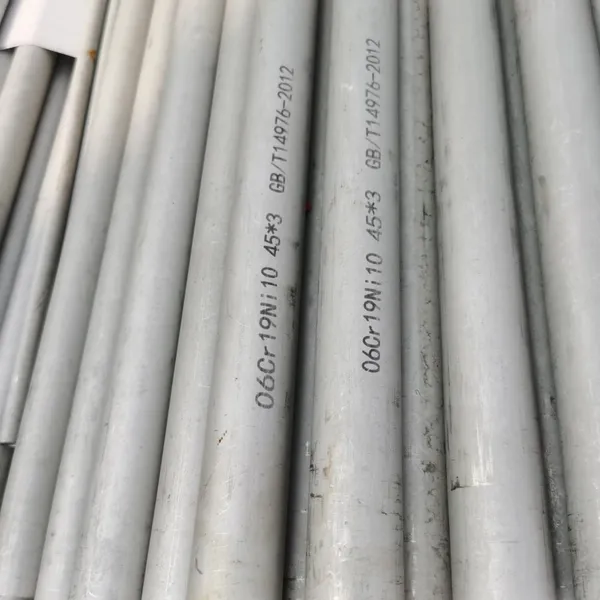
Factory TP309/TP309S/TP309H (UNS30900) Seamless Stainless Steel Pipe and Tube for Boiler BafflesUS$ 8MOQ: 200 Kilograms
-
TP347/TP347H/1.4961/S34709 Seamless Stainless Steel Pipe for UseNegotiableMOQ: 2 Meters
-
China 304 316 Stainless Steel Sanitary Welded Tube Food Grade Sanitary Grade Welded Pipe PolishingNegotiableMOQ: 1 Piece
-
China Manufacture Stainless Steel 316L Ba Seamless Welded Steel Pipe TubesUS$ 1760 - 1860MOQ: 5 Tons
-
316L/1.4405 Seamless Stainless Steel PipeNegotiableMOQ: 2 Meters
-
Stainless Steel Globe Valve – High Durability & Corrosion ResistanceNegotiableMOQ: 1 Piece
-
1.4529 Stainless Steel Flat Plate for Chemical Processing EquipmentUS$ 25 - 35MOQ: 1 Kilogram
-
Color Coated Steel Panels for Warehouse Partition Walls (Fireproof Grade)US$ 1 - 1.2MOQ: 50 Kilograms
-
Custom Width (600mm-1250mm) Colored Steel Coil With Scratch ResistanceUS$ 1 - 1.2MOQ: 50 Kilograms
-
0.5mm-3.0mm Colored Coated Steel Sheet With PVDF/Polyester CoatingUS$ 1 - 1.2MOQ: 50 Kilograms
-
JIS G 3322 Compliant Colored Coils With Third-Party Inspection ReportUS$ 1 - 1.2MOQ: 50 Kilograms