
 Business License

What are the national standards for stainless steel pipes used in natural gas pipelines
The national standards for stainless steel pipes used in natural gas pipelines mainly cover material properties, design specifications, and construction requirements. The following is a systematic overview of the core standards (as of August 2025):
I. Material Standards (Requirements for Pipe Bodies)
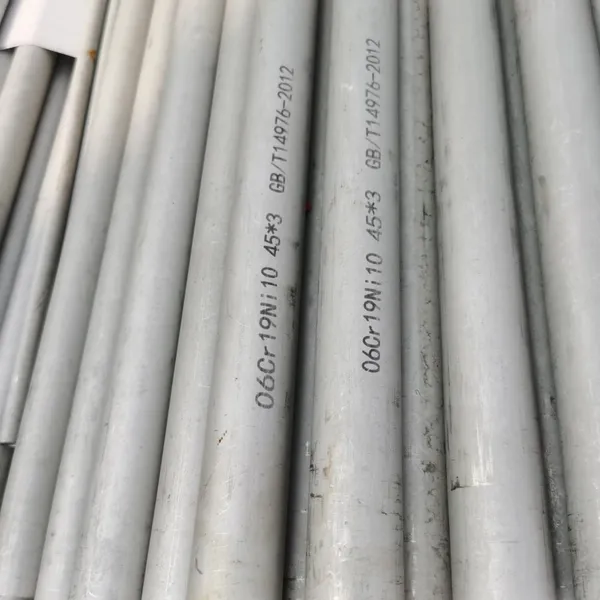
1. GB/T 14976-2012 "Stainless Steel Seamless Pipes for Fluid Transportation"
Scope of Application: Covers the dimensions, mechanical properties (tensile strength ≥ 515 MPa, elongation ≥ 30%), corrosion resistance requirements (intergranular corrosion test passes GB/T 4334), and hydraulic test (1.5 times the design pressure) of seamless stainless steel pipes.
Typical Grades: 304, 316L, etc. Austenitic stainless steel, suitable for medium and high-pressure natural gas transportation.
Update Information: GB/T 14976-2025, to be released in 2025, will be implemented in February 2026. It will integrate the standards for LNG pipes (original GB/T 38810-2020) and add special environmental requirements such as hydrogen-induced cracking (HIC).
2. GB/T 12771-2019 "Stainless Steel Welded Pipes for Fluid Transportation"
Scope of Application: Dimension tolerances (wall thickness ±10%), welding process (mainly argon arc welding), and non-destructive testing (X-ray inspection), suitable for low-pressure or medium-pressure natural gas pipelines.
Revised Points: 12 new steel grades (such as 316L) are added, the requirements for weld tensile strength are clarified, and the calculation rules for hydraulic test pressure are optimized.
3. GB/T 30065-2013 "Stainless Steel Seamless Pipes for Sulfur-containing Natural Gas Transportation"
Special Scenario: Specifically for natural gas environments containing H₂S, higher requirements for stress corrosion cracking resistance (verified by slow tensile test) are imposed. The content of Mo is ≥ 2.5% to resist sulfide corrosion.
Typical Applications: Shale gas, acidic natural gas transportation pipelines.
4. GB/T 38810-2020 "Stainless Steel Seamless Pipes for Liquefied Natural Gas"
Low Temperature Environment: Suitable for LNG transportation at -196°C, requiring low-temperature impact toughness (-196°C impact energy ≥ 34J) and extremely low thermal expansion coefficient. Commonly used grades are 304L, 316L.
Replacement Plan: Will be integrated by GB/T 14976-2025 in 2026, but is still an effective standard at present.
II. Design and Construction Specifications
1. GB 50251-2015 "Design Specifications for Gas Pipeline Engineering"
Core Requirements: Clearly define the selection principles for stainless steel pipes (such as pressure grade matching, corrosion environment compatibility), and stipulate that high-pressure pipelines (design pressure ≥ 10 MPa) must use 316L and other high-strength stainless steel, and increase wall thickness redundancy.
Environmental Adaptation: For buried pipelines, the soil corrosivity needs to be evaluated. If necessary, 3PE coating or cathodic protection (stainless steel should avoid excessive protection to prevent hydrogen embrittlement) should be adopted.
2. GB 50235-2010 "Construction Specifications for Industrial Metal Pipelines"
Construction Details: It is stipulated that the welding of stainless steel pipes must use high-purity argon gas protection (purity ≥ 99.99%), and 100% radiographic testing must be conducted for the welds (GB/T 3323), and carbon steel tools must not come into contact to prevent iron contamination.
Acceptance Standards: The entire pipeline must pass a gas tightness test (helium leak detection or pressure decay method), with a leakage rate of ≤ 1×10⁻⁹ mbar·L/s.
III. Supplementary Standards for Special Scenarios
1. YB/T 4370-2023 "Stainless Steel Welded Pipes for Urban Gas Transportation"
Urban gas: Applicable to user gas pipelines with a nominal pressure of ≤ 0.4 MPa. The sealing requirements for ring-pressed connections are stipulated (leakage rate ≤ 5×10⁻⁷ Pa·m³/s). Commonly used thin-walled stainless steel pipes (wall thickness 1.0 - 2.0 mm).
Process requirements: The welded joints must pass the flattening test (flattened to H = 0.3D without cracks) and the expansion test (expansion rate ≥ 15%).
2. GB/T 21447-2018 "Specification for External Corrosion Control of Steel Pipelines"
Corrosion protection support: Although not a direct pipe material standard, it clearly stipulates that stainless steel buried pipelines should adopt insulation coatings (such as fused epoxy powder) combined with cathodic protection, with an electrode potential controlled between - 0.85V and - 1.25V.
IV. Standard Updates and Implementation Dynamics
GB/T 14976-2025: The upcoming new version will integrate standards for LNG pipes, oxygen pipes, etc., and add test requirements for hydrogen-induced cracking (HIC) and stress-induced hydrogen-induced cracking (SOHIC), applicable to the national standard information public service platform for complex environments such as shale gas.
Replacement Relationship: GB/T 38810-2020, GB/T 40317-2021 (oxygen pipes) will be abolished, and attention should be paid to the applicability of the standards during the transition period.
V. Selection and Compliance Recommendations
1. Scenario Matching:
High-pressure sulfur-containing natural gas: Preferentially select 316L seamless pipes in accordance with GB/T 30065-2013, combined with anti-sulfur design in GB 50251-2015.
LNG transportation: Use 304L seamless pipes in accordance with GB/T 38810-2020, and verify the low-temperature impact toughness.
Urban gas: Select welded pipes in accordance with YB/T 4370-2023, and pay attention to the sealing performance of ring pressure connection.
2. Material Verification:
Require suppliers to provide intergranular corrosion test reports (GB/T 4334), mechanical property test reports (tensile strength, yield strength), and non-destructive testing records (UT/RT).
For sulfur-containing environments, additional hydrogen sulfide stress corrosion tests (NACE TM0177) are required.
3. Construction Compliance:
Welding personnel must hold certificates (such as AWS D18.2 certification), and the welding materials must match the base material (such as ER316L welding wire).
After pipeline installation, 100% weld seam testing is required, with a focus on the intergranular corrosion sensitivity in the heat affected zone (HAZ).
Summary
The national standard system for stainless steel pipes used in natural gas pipelines is based on GB/T 14976 and GB/T 12771, combined with the design and construction specifications of GB 50251 and GB 50235, covering the entire process from material performance to project acceptance. Special scenarios (such as sulfur-containing and low-temperature conditions) require the addition of dedicated standards (such as GB/T 30065 and GB/T 38810), and attention should be paid to the standard integration after the implementation of GB/T 14976-2025 in 2026. In practical applications, the appropriate grade should be selected based on the working conditions, and the welding process and testing requirements should be strictly followed to ensure the long-term safe operation of the pipeline.
Recently Posted
-
Does the stainless steel welded pipe have specific temperature requirements during the solution heat
January 20, 2026Solution heat treatment involves heating stainless steel to a high temperature and then rapidly cooling it to achieve an oversatur Read More
 -
Can stainless steel welded pipes be made into thick pipes
January 20, 2026With the improvement of high-quality welding technology and increasingly strict weld inspection, the application fields of s Read More
 -
Three types of commonly available food-grade stainless steel on the market
January 20, 2026The common food-grade stainless steel pipes are mainly composed of iron, chromium and carbon and other elements. Household stainle Read More
 -
What are the requirements for stainless steel welding pipe production equipment
January 20, 2026As is well known, stainless steel welded pipes have been widely used in various industries such as machinery, chemical engineering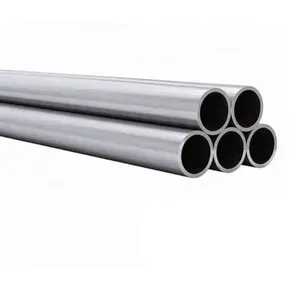 Read More

Contact Us
Recommended Products
-
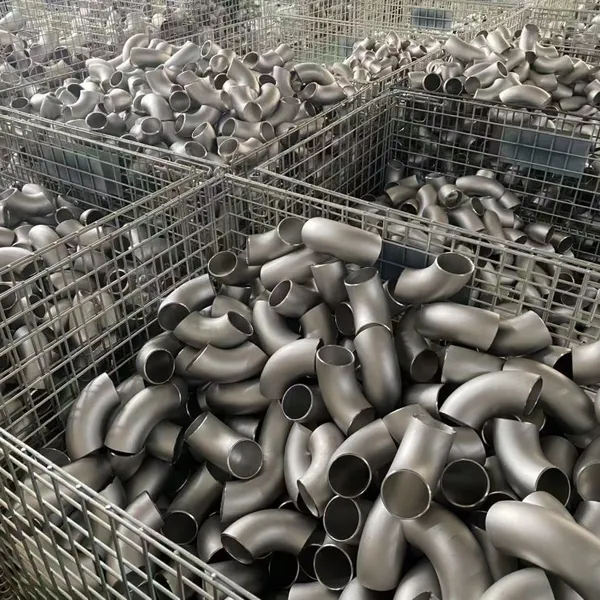
 Stainless Steel Elbow Welded Elbow 45/90/180-degree Seamless Pressed Elbow Long Radius Elbow Short Radius Elbow WholesaleNegotiableMOQ: 1 Piece
 -
316L/1.4405 Seamless Stainless Steel PipeNegotiableMOQ: 2 Meters
-
310s 440 Seamless Sanitary Piping Price 321 904l 201 20 Inch Seamless Steel Pipe A554 Stainless Steel PipeNegotiableMOQ: 1 Piece
-
China Brand ZZ Wholesale 304L 316 316L Welded Austenitic Piping Stainless Steel Pipe SupplierNegotiableMOQ: 2 Meters
-
304/304L/316/409/410/904L/2205/2507/310H Premium Stainless Steel Sheets Supplier Custom Sizes & FinishesUS$ 1.72MOQ: 1 Ton
-
Stainless Steel ASME B16.9 Sch 45 90 Degree Pipe Fittings ElbowUS$ 8MOQ: 1 Piece
-
China Brand Zz 304L 316/316L GB En JIS Standard Thin Wall Welded Stainless Steel Water Pipe/TubeNegotiableMOQ: 2 Meters
-
BA 4 Inch 6 Inch 8 Inch 201 304 304L 316 316L Welded Seamless Stainless Steel PipeNegotiableMOQ: 2 Meters
-
ASME B36.19M-2004 SCH40S Stainless Steel Pipe - Complies With EU 3.1 CertificationUS$ 1 - 650MOQ: 1 Piece
-
Factory TP309/TP309S/TP309H (UNS30900) Seamless Stainless Steel Pipe and Tube for Boiler BafflesUS$ 8MOQ: 200 Kilograms
-
TP347/TP347H/1.4961/S34709 Seamless Stainless Steel Pipe for UseNegotiableMOQ: 2 Meters
-
China 304 316 Stainless Steel Sanitary Welded Tube Food Grade Sanitary Grade Welded Pipe PolishingNegotiableMOQ: 1 Piece
-
China Manufacture Stainless Steel 316L Ba Seamless Welded Steel Pipe TubesUS$ 1760 - 1860MOQ: 5 Tons
-
316L/1.4405 Seamless Stainless Steel PipeNegotiableMOQ: 2 Meters
-
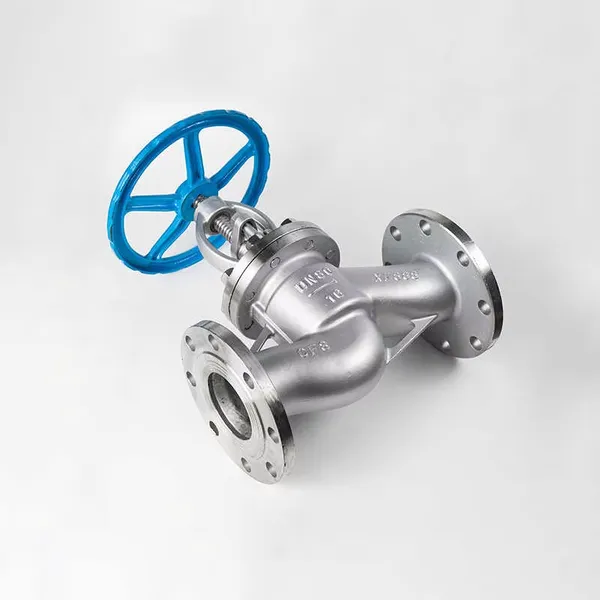
Stainless Steel Globe Valve – High Durability & Corrosion ResistanceNegotiableMOQ: 1 Piece
-
1.4529 Stainless Steel Flat Plate for Chemical Processing EquipmentUS$ 25 - 35MOQ: 1 Kilogram
-
Color Coated Steel Panels for Warehouse Partition Walls (Fireproof Grade)US$ 1 - 1.2MOQ: 50 Kilograms
-
Custom Width (600mm-1250mm) Colored Steel Coil With Scratch ResistanceUS$ 1 - 1.2MOQ: 50 Kilograms
-
0.5mm-3.0mm Colored Coated Steel Sheet With PVDF/Polyester CoatingUS$ 1 - 1.2MOQ: 50 Kilograms
-
JIS G 3322 Compliant Colored Coils With Third-Party Inspection ReportUS$ 1 - 1.2MOQ: 50 Kilograms