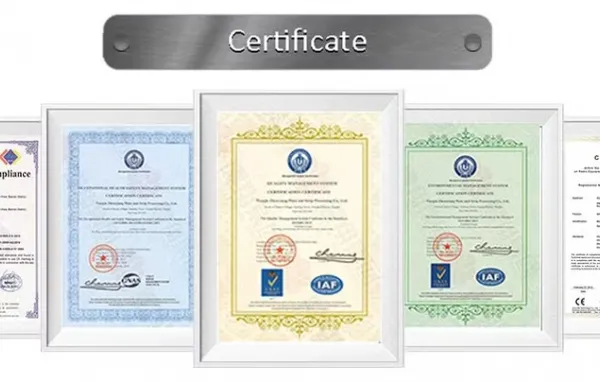

 Business License

What causes LNG stainless steel pipes to leak
In the LNG (liquefied natural gas, operating at -162℃) system, the causes of stainless steel pipe leakage can be dissected from four core dimensions: material properties, manufacturing and installation, operation and maintenance, and external environment. Each cause is directly related to the specificities of LNG conditions such as low temperature, high pressure, and corrosive nature of the medium (trace acidic gases). The specific classifications and mechanisms are as follows:
1. Material-related reasons: Failure of material properties under low-temperature conditions
The commonly used stainless steel (such as 304L, 316L) in the LNG system has low-temperature toughness, but defects in the material itself or improper selection can directly lead to leakage. The core issues include:
1. Material composition / performance not up to standard
1) If the carbon content in stainless steel is too high (such as non-"L" type low-carbon steel), intergranular corrosion is prone to occur at low temperatures: The trace amounts of acidic gases like CO₂ and H₂S in LNG, combined with water, will form corrosion channels at the grain boundaries. Over a long period of operation, the corrosion depth increases, eventually causing the pipe wall to leak.
2) Insufficient low-temperature toughness of the material (for example, the impact energy Akv does not meet the specification requirements, typically for LNG pipelines, -196℃ requires Akv ≥ 27J): At low temperatures, the material becomes brittle, and when subjected to vibration or pressure fluctuations, it is prone to develop micro-cracks. Once the cracks expand, leakage occurs.
2. Internal defects of the material
Defects such as inclusions, pores, and layering left during the manufacturing process of the pipe material will become stress concentration points under low-temperature and high-pressure conditions: The low temperature reduces the plasticity of the material, and the stress at the defect site exceeds the material's tensile strength, gradually expanding into a through-crack, which leads to leakage.
II. Manufacturing and Installation Phases: Process Defects Lay the Foundation for Leakage Hazards
Improper process control during the installation stage is a frequent cause of LNG pipeline leaks, especially the handling of low-temperature welding and connection structures which directly affect the sealing performance:
Welding quality defects (the most crucial reason)
The LNG pipeline has extremely high requirements for the low-temperature toughness and sealing performance of the weld. Deviation in the welding process can lead to various fatal defects:
1) Lack of penetration / incomplete fusion: There are gaps at the root of the weld or between layers, forming a "channel-like" leakage path. Under low temperatures, the medium is prone to seep through these gaps.
2) Welding cracks: These include low-temperature cold cracks (caused by rapid cooling after welding and excessive hydrogen content), and hot cracks (cracking of intergranular low-melting-point eutectics). The cracks will continue to expand during operation as a result of temperature cycling and pressure fluctuations.
3) Weld porosity / slag inclusion: Porosity will damage the tightness of the weld, while slag inclusion leads to uneven mechanical properties of the weld. At low temperatures, it is prone to fracture and leak at the defect site.
2. Failure of connection structure seal
1) Flange connection issue: Damage to the flange sealing surface (scratches, deformation), incorrect selection of gasket (such as using non-low-temperature specific gaskets, like ordinary rubber gaskets which crack at low temperatures), uneven tightening of bolts (thermal contraction at low temperatures leads to insufficient local sealing pressure), all of which can cause the sealing of the flange surface to fail and result in leakage of the medium.
2) Thread connection issues: Insufficient processing accuracy of the threads (such as tooth shape deviation, loose / tight fit), improper application of sealant / raw material tape (not covering all threads or blocking the channels), and the thread gap expands due to thermal contraction at low temperatures, resulting in seal failure and leakage.
3. Pipeline deformation or stress concentration
Improper installation of pipeline supports (such as no special sliding supports for low-temperature applications), insufficient compensation for thermal expansion and contraction during cold and hot states: During LNG filling, the pipeline undergoes rapid cooling (from normal temperature to -162℃). If the constraints are too strong or the displacement space is insufficient, it will generate low-temperature thermal stress, causing cracks in the pipeline welds and loosening of the interfaces, and subsequently leading to leakage.
III. Improper operation and maintenance: Accelerating leakage risk
Even if the installation is correct, operational and maintenance errors during long-term operation can also trigger leakage:
1. Damage caused by improper operation
1) Low-temperature impact: During LNG filling, the flow rate is too fast (exceeding the specified requirement of 1-3 m/s), no pre-cooling is performed or the pre-cooling rate is too fast (typically ≤ 5℃/min), resulting in a sudden drop in local pipe temperature, generating intense thermal stress, and causing cracks in the weld or the pipe material.
2) Pressure shock: If the system is pressurized too rapidly, or if the pressure relief valve jumps and then fails to return to its normal position stably, the pipeline will be subjected to an instantaneous high-pressure shock that exceeds the load capacity of the material or weld seam, resulting in leakage.
2. Lack or improper maintenance
1) Omission of regular inspections: Failure to conduct regular non-destructive testing on pipelines in accordance with standards (such as UT ultrasonic testing for welds, MT magnetic particle testing for surface cracks), leakage detection (such as helium mass spectrometry leak detection, soap solution leak detection), early micro-cracks or leaks were not detected in time, and gradually developed into severe leaks.
2) Improper Maintenance: During the repair process, non-low-temperature compatible spare parts were used (such as replacing the gasket with a common asbestos gasket), and when performing welding repairs, the original low-temperature welding process was not replicated (such as not controlling the interlayer temperature or not conducting post-weld heat treatment), resulting in the repaired area becoming a new leakage point.
IV. External Environmental Factors: Indirect Causing of Leakage
The long-term effects of the external environment can damage the integrity of the pipeline structure, indirectly leading to leakage:
Mechanical damage
External construction collisions (such as when surrounding projects dig and come into contact with pipeline supports), and equipment vibration transmission (such as the vibration of pumps and compressors not being effectively isolated and being continuously transmitted to the pipeline), result in pipeline deformation, weld cracking or interface loosening.
2. Environmental Corrosion
In open-air or humid environments, the outer surface of stainless steel pipes is prone to electrochemical corrosion (such as chloride ion corrosion in coastal areas). Although LNG pipelines often have anti-corrosion coatings (such as 3PE anti-corrosion coatings), if the anti-corrosion coating is damaged and not repaired in time, it will cause the pipe wall to thin, and eventually lead to leakage under low-temperature and high-pressure conditions.
In conclusion, the causes of LNG stainless steel pipe leakage have the characteristics of "multiple links and multiple factors overlapping". The core logic is: Under low-temperature conditions, material defects, process errors, and stress issues are exacerbated. Therefore, strict control must be implemented throughout the entire life cycle of material selection, manufacturing and installation, and operation and maintenance to reduce the risk of leakage.
Recently Posted
-
Does the stainless steel welded pipe have specific temperature requirements during the solution heat
January 20, 2026Solution heat treatment involves heating stainless steel to a high temperature and then rapidly cooling it to achieve an oversatur Read More
 -
Can stainless steel welded pipes be made into thick pipes
January 20, 2026With the improvement of high-quality welding technology and increasingly strict weld inspection, the application fields of s Read More
 -
Three types of commonly available food-grade stainless steel on the market
January 20, 2026The common food-grade stainless steel pipes are mainly composed of iron, chromium and carbon and other elements. Household stainle Read More
 -
What are the requirements for stainless steel welding pipe production equipment
January 20, 2026As is well known, stainless steel welded pipes have been widely used in various industries such as machinery, chemical engineering Read More

Contact Us
Recommended Products
-
 Stainless Steel Elbow Welded Elbow 45/90/180-degree Seamless Pressed Elbow Long Radius Elbow Short Radius Elbow WholesaleNegotiableMOQ: 1 Piece
 -
316L/1.4405 Seamless Stainless Steel PipeNegotiableMOQ: 2 Meters
-
310s 440 Seamless Sanitary Piping Price 321 904l 201 20 Inch Seamless Steel Pipe A554 Stainless Steel PipeNegotiableMOQ: 1 Piece
-
China Brand ZZ Wholesale 304L 316 316L Welded Austenitic Piping Stainless Steel Pipe SupplierNegotiableMOQ: 2 Meters
-
304/304L/316/409/410/904L/2205/2507/310H Premium Stainless Steel Sheets Supplier Custom Sizes & FinishesUS$ 1.72MOQ: 1 Ton
-
Stainless Steel ASME B16.9 Sch 45 90 Degree Pipe Fittings ElbowUS$ 8MOQ: 1 Piece
-
China Brand Zz 304L 316/316L GB En JIS Standard Thin Wall Welded Stainless Steel Water Pipe/TubeNegotiableMOQ: 2 Meters
-
BA 4 Inch 6 Inch 8 Inch 201 304 304L 316 316L Welded Seamless Stainless Steel PipeNegotiableMOQ: 2 Meters
-
ASME B36.19M-2004 SCH40S Stainless Steel Pipe - Complies With EU 3.1 CertificationUS$ 1 - 650MOQ: 1 Piece
-
Factory TP309/TP309S/TP309H (UNS30900) Seamless Stainless Steel Pipe and Tube for Boiler BafflesUS$ 8MOQ: 200 Kilograms
-
TP347/TP347H/1.4961/S34709 Seamless Stainless Steel Pipe for UseNegotiableMOQ: 2 Meters
-
China 304 316 Stainless Steel Sanitary Welded Tube Food Grade Sanitary Grade Welded Pipe PolishingNegotiableMOQ: 1 Piece
-
China Manufacture Stainless Steel 316L Ba Seamless Welded Steel Pipe TubesUS$ 1760 - 1860MOQ: 5 Tons
-
316L/1.4405 Seamless Stainless Steel PipeNegotiableMOQ: 2 Meters
-
Stainless Steel Globe Valve – High Durability & Corrosion ResistanceNegotiableMOQ: 1 Piece
-
World's Most Affordable Color-Coated Steel Sheets - 0.3mm to 3mm Thickness - Mill Test Report IncludedUS$ 1102MOQ: 10 Kilograms
-
Color-Coated Steel Sheets With 15-Year Fade Warranty - JIS G 3322 Standard CompliantUS$ 1102MOQ: 10 Kilograms
-
Prefab Building Material - 0.4mm Color-Coated Corrugated Sheets - 100,000㎡ Monthly OutputUS$ 1102MOQ: 10 Kilograms
-
Industrial-Grade Color-Coated Sheets - 150-250g/m² Zinc Coating - Weather & UV ResistantUS$ 1102MOQ: 10 Kilograms
-
Factory-Direct Color-Coated Steel Plates - PVDF/Polyester Coating - 1220mm Standard WidthUS$ 1102MOQ: 10 Kilograms