
 Business License

What are the characteristics of BA grade stainless steel pipes
What are the characteristics of BA grade stainless steel pipes?
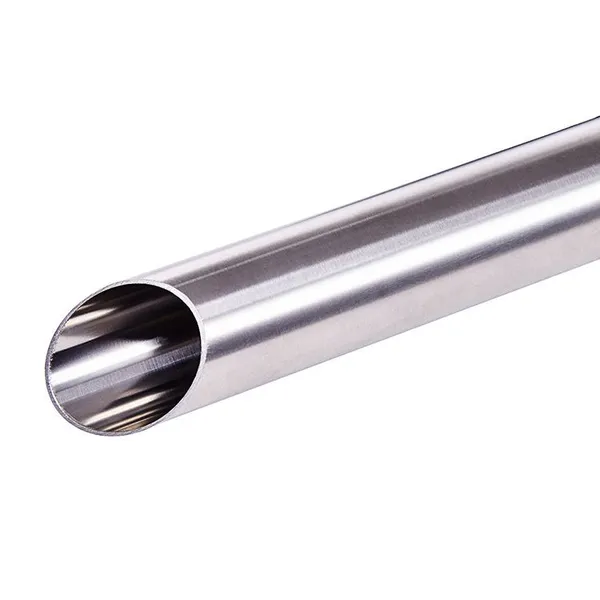
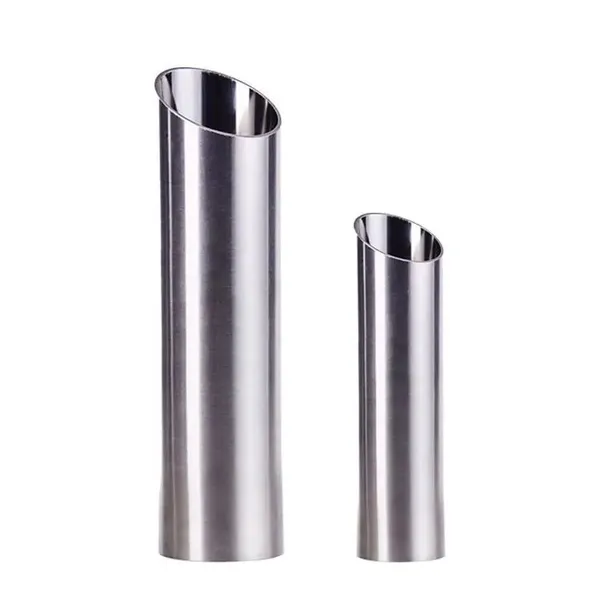
BA grade stainless steel welded pipes refer to stainless steel welded pipes that have undergone bright annealing treatment. They possess the forming advantages of welded pipes and the bright surface characteristics. They are widely used in precision manufacturing, food and medicine, semiconductor and other fields that have high requirements for surface quality and corrosion resistance. The following provides a detailed explanation from the aspects of definition, characteristics, production processes, and application scenarios:
I. Core Characteristics of BA Grade Stainless Steel Pipes
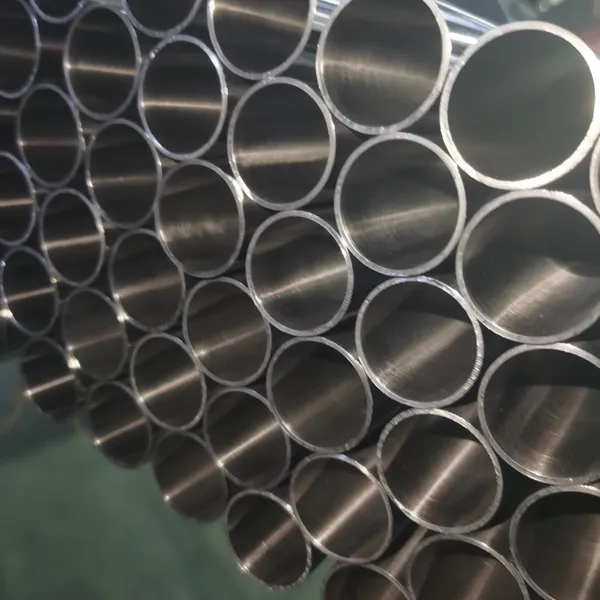
Surface Quality: The surface roughness is extremely low (Ra ≤ 0.4 μm), presenting a uniform silver-white mirror-like effect, without oxide scales, oil stains, etc. It can be visually inspected without obvious scratches or color differences, and complies with the "BA Surface" smoothness standard in ASTM A480/A480M.
Corrosion Resistance: The bright annealing process is completed under the protection of inert gases (such as hydrogen, nitrogen), avoiding surface oxidation. The chromium-nickel elements retain a complete passivation film (Cr₂O₃ thickness ≥ 3 nm), and the salt spray resistance (neutral salt spray test) can reach over 1000 hours without rust.
Dimensional Accuracy: After welding, it is calibrated by cold rolling or cold drawing, with an outer diameter tolerance of ≤ ±0.1 mm, a wall thickness tolerance of ≤ ±5%, a straightness of ≤ 1 mm/m, meeting the requirements for precise assembly.
II. Key Production Processes
Welding Process: TIG (Tungsten Inert Gas Shielded Welding) is mostly used. The weld seams undergo online brightening treatment to ensure consistency between the weld and the base material surface, avoiding weld marks that may be produced during subsequent polishing.
Bright Annealing: At a temperature range of 850-1100°C, high-purity inert gas (with oxygen content <50 ppm) is introduced, and rapid cooling (cooling rate ≥ 50°C/s) is carried out to inhibit the precipitation of carbides and ensure the corrosion resistance of the base material.
Surface Treatment: After annealing, electrolytic polishing or chemical polishing is performed to further reduce the surface roughness and remove the micro-bumps (height ≤ 0.02mm) remaining from the welding.
III. Comparison with Other Grade Stainless Steel Pipes
BA Grade Welded Pipe
Surface Treatment: Bright Annealing + Fine Polishing
Roughness Ra (μm): ≤ 0.4
Typical Application Scenarios: Semiconductor High-Purity Gas Pipelines, Medical Infusion Tubes
2B grade welded pipe
Surface treatment: Cold rolling + annealing + pickling
Roughness Ra (μm): 0.4 - 1.0
Typical application scenarios: Food processing equipment, general fluid pipelines
Mirror-finish welded pipe
Surface treatment: Multiple passes of polishing
Roughness Ra (μm): ≤ 0.02
Typical application scenarios: Decorative parts, shells of precision instruments
IV. Application Areas and Requirements
Semiconductor Industry: Used for the transportation of ultra-high purity gases (such as NF₃, SiH₄), the inner surface particle size must be ≤ 10 per ft³ (particle size > 0.1μm), to avoid contamination affecting the chip manufacturing process.
Biopharmaceuticals: The pipelines in contact with the drug solution must pass the USP Class VI biocompatibility test, with no bacterial adsorption points on the surface (detected by ATP test <10RLU).
High-end Hydraulic Systems: The smoothness of the inner wall reduces fluid resistance, and the pressure loss is 15%-20% less than that of ordinary welded pipes, suitable for precision machine tool hydraulic pipelines.
V. Key Points of Quality Inspection
Surface Defects: Use fluorescent flaw detection (sensitivity ≥ 50 μm) to detect tiny cracks or pinholes.
Cleanliness: Analyze with ion chromatography, and the content of anions such as Cl⁻ and F⁻ remaining should be ≤ 1 ppm.
Welding Quality: Conduct X-ray flaw detection (ASTM E1742) to ensure that the weld seam has no pores or inclusions, and the tensile strength should be ≥ 90% of the pipe body's strength.
The core advantage of BA grade stainless steel welded pipes lies in the balance between the economic cost of welding and the high-precision surface performance. They are a cost-effective alternative to seamless pipes in the high-end manufacturing industry (with a cost 20%-30% lower than seamless pipes of the same specification).
Recently Posted
-
Does the stainless steel welded pipe have specific temperature requirements during the solution heat
January 20, 2026Solution heat treatment involves heating stainless steel to a high temperature and then rapidly cooling it to achieve an oversatur Read More
 -
Can stainless steel welded pipes be made into thick pipes
January 20, 2026With the improvement of high-quality welding technology and increasingly strict weld inspection, the application fields of s Read More
 -
Three types of commonly available food-grade stainless steel on the market
January 20, 2026The common food-grade stainless steel pipes are mainly composed of iron, chromium and carbon and other elements. Household stainle Read More
 -
What are the requirements for stainless steel welding pipe production equipment
January 20, 2026As is well known, stainless steel welded pipes have been widely used in various industries such as machinery, chemical engineering Read More

Contact Us
Recommended Products
-
 Stainless Steel Elbow Welded Elbow 45/90/180-degree Seamless Pressed Elbow Long Radius Elbow Short Radius Elbow WholesaleNegotiableMOQ: 1 Piece
 -
316L/1.4405 Seamless Stainless Steel PipeNegotiableMOQ: 2 Meters
-
310s 440 Seamless Sanitary Piping Price 321 904l 201 20 Inch Seamless Steel Pipe A554 Stainless Steel PipeNegotiableMOQ: 1 Piece
-
China Brand ZZ Wholesale 304L 316 316L Welded Austenitic Piping Stainless Steel Pipe SupplierNegotiableMOQ: 2 Meters
-
304/304L/316/409/410/904L/2205/2507/310H Premium Stainless Steel Sheets Supplier Custom Sizes & FinishesUS$ 1.72MOQ: 1 Ton
-
Stainless Steel ASME B16.9 Sch 45 90 Degree Pipe Fittings ElbowUS$ 8MOQ: 1 Piece
-
China Brand Zz 304L 316/316L GB En JIS Standard Thin Wall Welded Stainless Steel Water Pipe/TubeNegotiableMOQ: 2 Meters
-
BA 4 Inch 6 Inch 8 Inch 201 304 304L 316 316L Welded Seamless Stainless Steel PipeNegotiableMOQ: 2 Meters
-
ASME B36.19M-2004 SCH40S Stainless Steel Pipe - Complies With EU 3.1 CertificationUS$ 1 - 650MOQ: 1 Piece
-
Factory TP309/TP309S/TP309H (UNS30900) Seamless Stainless Steel Pipe and Tube for Boiler BafflesUS$ 8MOQ: 200 Kilograms
-
TP347/TP347H/1.4961/S34709 Seamless Stainless Steel Pipe for UseNegotiableMOQ: 2 Meters
-
China 304 316 Stainless Steel Sanitary Welded Tube Food Grade Sanitary Grade Welded Pipe PolishingNegotiableMOQ: 1 Piece
-
China Manufacture Stainless Steel 316L Ba Seamless Welded Steel Pipe TubesUS$ 1760 - 1860MOQ: 5 Tons
-
316L/1.4405 Seamless Stainless Steel PipeNegotiableMOQ: 2 Meters
-
Stainless Steel Globe Valve – High Durability & Corrosion ResistanceNegotiableMOQ: 1 Piece
-
1.4529 Stainless Steel Flat Plate for Chemical Processing EquipmentUS$ 25 - 35MOQ: 1 Kilogram
-
Color Coated Steel Panels for Warehouse Partition Walls (Fireproof Grade)US$ 1 - 1.2MOQ: 50 Kilograms
-
Custom Width (600mm-1250mm) Colored Steel Coil With Scratch ResistanceUS$ 1 - 1.2MOQ: 50 Kilograms
-
0.5mm-3.0mm Colored Coated Steel Sheet With PVDF/Polyester CoatingUS$ 1 - 1.2MOQ: 50 Kilograms
-
JIS G 3322 Compliant Colored Coils With Third-Party Inspection ReportUS$ 1 - 1.2MOQ: 50 Kilograms