
 Business License

What safety precautions should be taken during the polishing process of stainless steel seamless
What safety precautions should be taken during the polishing process of stainless steel seamless pipes?
When processing stainless steel seamless pipes for polishing, the following safety precautions should be observed, covering aspects such as equipment operation, protective measures, and environmental management:
1. Equipment safety operation
Pre-start inspection: Ensure that the torque of the fixing bolts for the polishing wheel is ≥ 30N・m, the strength of the protective cover is sufficient to withstand 80m/s projectiles, and the response time of the emergency stop button is ≤ 0.5 seconds.
Speed limit: The linear speed of the grinding wheel ≤ 35m/s, the rotational speed of the abrasive belt machine ≤ 1800rpm. The automatic shutdown device must be sensitive when it exceeds the limit.
Power-off maintenance: When replacing grinding media or conducting maintenance, cut off the main power supply and hang a "Do Not Close Switch" sign. The discharge time of the capacitor should be ≥ 5 minutes.
2. Personnel protection requirements
Eye protection - Impact-resistant goggles (ANSI Z87.1 certified), a transparent protective screen (thickness ≥ 6mm acrylic) should be added in the polishing area.
Respiratory protection - For dry polishing, wear an N95 mask (filtration efficiency ≥ 95%), use a full-face respirator when the dust concentration is > 10mg/m³.
Hand protection - Cut-resistant gloves (EN 388 Level 5), add nitrile rubber gloves when in contact with corrosive polishing solutions (resistant to pH 1-14).
Body protection - Fly-splash apron (PVC coating), wear anti-shock safety shoes (impact resistance ≥ 15kN) for the feet.
III. Hazardous Operations Control
Flammable and Explosive Environments:
When the polishing solution contains alcohol (concentration > 10%), open flames are prohibited in the workshop, and the static grounding resistance should be ≤ 100Ω.
When the dust concentration exceeds the explosion lower limit (aluminum powder <37g/m³), the explosion-proof dust removal system (wind speed ≥ 10m/s) must be activated.
Chemical Injury Prevention:
When in contact with nitrate-based polishing solution (concentration > 20%), a 2% sodium bicarbonate rinse solution must be provided. If splashed into the eyes, immediately rinse for 15 minutes and seek medical attention.
During electrolytic polishing, the grounding voltage of the tank ≤ 36V, and when the anode current density > 20A/dm², forced cooling (water temperature ≤ 35℃) is required.
IV. Emergency and Environmental Management
Fire Extinguishing: When the polishing wheel catches fire due to friction, use ABC type dry powder fire extinguisher (with a range of ≥ 3m). Water is prohibited for extinguishing oil-based polishing liquid fires.
Waste Liquid Treatment: Polishing waste liquid containing heavy metals (Cr⁶+ > 0.5mg/L) must undergo neutralization and precipitation (with pH adjusted to 8-9) before being discharged.
Noise Control: Polishing machines must be equipped with sound insulation covers (with noise reduction of ≥ 25dB). When operators continuously work for more than 8 hours, the noise exposure limit should be ≤ 85dB (A).
V. Special Operating Conditions Notes
Inner Hole Polishing: When using magnetic grinding, the grinding needle diameter should be <0.8mm, and the magnetic field strength should be ≤ 1200Gs to prevent steel pipes from being adsorbed and deformed.
Thin-Walled Tube Processing: When the wall thickness is <1.5mm, the polishing pressure should be ≤ 0.15MPa to avoid finger injuries or workpiece splashing (a protective net should be added when the kinetic energy is > 10J).
Strictly implementing the above measures can reduce the incidence of safety accidents by more than 80%, meeting the requirements of the ISO 45001 occupational health and safety management system.
Recently Posted
-
Does the stainless steel welded pipe have specific temperature requirements during the solution heat
January 20, 2026Solution heat treatment involves heating stainless steel to a high temperature and then rapidly cooling it to achieve an oversatur Read More
 -
Can stainless steel welded pipes be made into thick pipes
January 20, 2026With the improvement of high-quality welding technology and increasingly strict weld inspection, the application fields of s Read More
 -
Three types of commonly available food-grade stainless steel on the market
January 20, 2026The common food-grade stainless steel pipes are mainly composed of iron, chromium and carbon and other elements. Household stainle Read More
 -
What are the requirements for stainless steel welding pipe production equipment
January 20, 2026As is well known, stainless steel welded pipes have been widely used in various industries such as machinery, chemical engineering Read More

Contact Us
Recommended Products
-
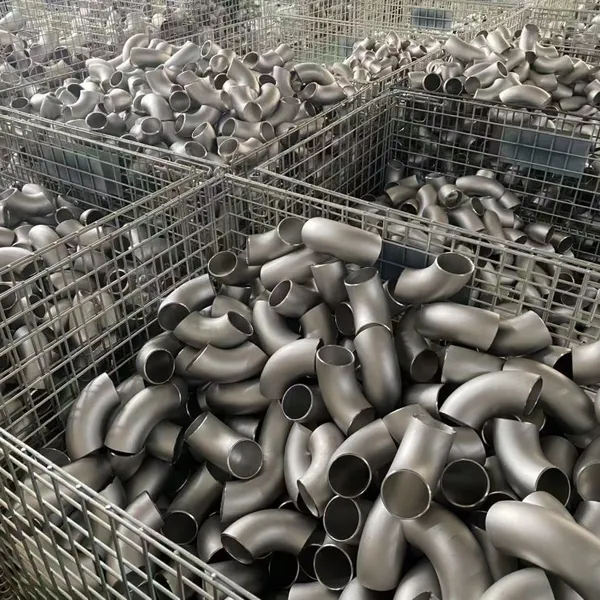
 Stainless Steel Elbow Welded Elbow 45/90/180-degree Seamless Pressed Elbow Long Radius Elbow Short Radius Elbow WholesaleNegotiableMOQ: 1 Piece
 -
316L/1.4405 Seamless Stainless Steel PipeNegotiableMOQ: 2 Meters
-
310s 440 Seamless Sanitary Piping Price 321 904l 201 20 Inch Seamless Steel Pipe A554 Stainless Steel PipeNegotiableMOQ: 1 Piece
-
China Brand ZZ Wholesale 304L 316 316L Welded Austenitic Piping Stainless Steel Pipe SupplierNegotiableMOQ: 2 Meters
-
304/304L/316/409/410/904L/2205/2507/310H Premium Stainless Steel Sheets Supplier Custom Sizes & FinishesUS$ 1.72MOQ: 1 Ton
-
Stainless Steel ASME B16.9 Sch 45 90 Degree Pipe Fittings ElbowUS$ 8MOQ: 1 Piece
-
China Brand Zz 304L 316/316L GB En JIS Standard Thin Wall Welded Stainless Steel Water Pipe/TubeNegotiableMOQ: 2 Meters
-
BA 4 Inch 6 Inch 8 Inch 201 304 304L 316 316L Welded Seamless Stainless Steel PipeNegotiableMOQ: 2 Meters
-
ASME B36.19M-2004 SCH40S Stainless Steel Pipe - Complies With EU 3.1 CertificationUS$ 1 - 650MOQ: 1 Piece
-
Factory TP309/TP309S/TP309H (UNS30900) Seamless Stainless Steel Pipe and Tube for Boiler BafflesUS$ 8MOQ: 200 Kilograms
-
TP347/TP347H/1.4961/S34709 Seamless Stainless Steel Pipe for UseNegotiableMOQ: 2 Meters
-
China 304 316 Stainless Steel Sanitary Welded Tube Food Grade Sanitary Grade Welded Pipe PolishingNegotiableMOQ: 1 Piece
-
China Manufacture Stainless Steel 316L Ba Seamless Welded Steel Pipe TubesUS$ 1760 - 1860MOQ: 5 Tons
-
316L/1.4405 Seamless Stainless Steel PipeNegotiableMOQ: 2 Meters
-
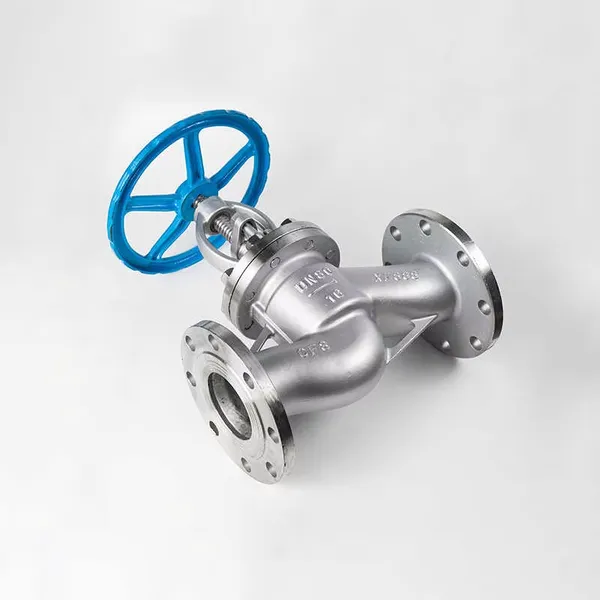
Stainless Steel Globe Valve – High Durability & Corrosion ResistanceNegotiableMOQ: 1 Piece
-
1.4529 Stainless Steel Flat Plate for Chemical Processing EquipmentUS$ 25 - 35MOQ: 1 Kilogram
-
Color Coated Steel Panels for Warehouse Partition Walls (Fireproof Grade)US$ 1 - 1.2MOQ: 50 Kilograms
-
Custom Width (600mm-1250mm) Colored Steel Coil With Scratch ResistanceUS$ 1 - 1.2MOQ: 50 Kilograms
-
0.5mm-3.0mm Colored Coated Steel Sheet With PVDF/Polyester CoatingUS$ 1 - 1.2MOQ: 50 Kilograms
-
JIS G 3322 Compliant Colored Coils With Third-Party Inspection ReportUS$ 1 - 1.2MOQ: 50 Kilograms