
 Business License

How can one determine whether the quality of stainless steel seamless pipes is suitable for solution
To determine whether stainless steel seamless pipes are suitable for solution treatment, a comprehensive assessment needs to be conducted from four aspects: material composition, processing state, defect risk, and performance requirements. This ensures that the treated pipes meet the requirements for corrosion resistance, mechanical properties, and dimensional accuracy. The following are the key points for judgment:
1. Material Composition Compatibility
Carbon Content Limitation
For austenitic stainless steels (such as 304, 316L), the carbon content should be ≤ 0.08% (for conventional cases) or ≤ 0.03% (for ultra-low carbon cases). For high-carbon materials (such as 420, 431 martensitic steel), after solution treatment, carbonitrides are prone to precipitate, so careful assessment is required.
If containing stabilizing elements (such as Ti, Nb, like 321, 347), it is necessary to confirm whether the composition meets the standards (such as GB/T 14976), to avoid intergranular corrosion caused by insufficient stabilizing elements.
Homogeneity of alloy elements
The content and homogeneity of elements such as Cr, Ni, and Mo are detected through spectroscopic analysis (such as direct reading spectrometer). If there is segregation (such as local deficiency of Cr), solid solution may exacerbate the unevenness of corrosion resistance. Therefore, homogenization annealing should be carried out first.
II. Processing Status and Stress Level
Cold deformation degree
For cold-drawn / cold-rolled tubes with deformation exceeding 15% - 20%, during the solution treatment, stress concentration may cause abnormal grain growth or cracking of the crystals. Therefore, intermediate annealing (such as at approximately 850°C for 304 steel) should be performed first to eliminate the stress.
For hot-processed tubes (such as hot-rolled or hot-extruded ones), if the final rolling temperature is too high (greater than 1100℃), the grains will be coarse. It is necessary to assess the grain refinement effect after solution treatment (the target grain size should be ≥ 5 grades, in accordance with GB/T 6394).
Surface and internal defects
Visual or non-destructive testing (UT/ET) checks for the presence of folds, cracks, deep scratches, etc.:
If the depth of surface defects is greater than 5% of the wall thickness, the solution treatment may cause the cracks at the defect site to expand due to stress concentration, and in such cases, the part should be ground or scrapped.
Internal cracks (such as rolling cracks) cannot be eliminated by solution treatment; they must be removed in advance through flaw detection.
III. Adaptability of Solidification Process
Heating temperature and holding time
The conventional solidification temperature for austenitic steel is 1050 - 1100℃ (for example, 304 steel at 1080℃), and it is necessary to confirm whether σ phase precipitation will occur in the material within this range (for example, high Cr-Ni steel will easily form σ phase when held for a long time at > 950℃, resulting in embrittlement).
For thick-walled pipes with a wall thickness greater than 10mm, the insulation time needs to be calculated (usually at 1-2 minutes per millimeter). This ensures that the core reaches the solution temperature and avoids the presence of undissolved carbides.
Cooling rate
It needs rapid water cooling (cooling rate > 50℃/s). If the cooling is too slow (such as air cooling), carbides may precipitate along the grain boundaries, resulting in a decrease in corrosion resistance. Thin-walled tubes can be cooled directly with water, while thick-walled tubes need to ensure the capacity of the cooling equipment.
IV. Performance Requirements and Inspection Standards
Target Performance Matching
If high strength is required, it is necessary to assess whether the strength after solution treatment meets the requirements (for example, σb of 304 steel in solution state ≥ 520 MPa); if it is used in a corrosive environment, the sensitization tendency should be verified through intergranular corrosion tests (such as GB/T 4334).
For pipe materials with specific requirements for high-temperature creep performance (such as those used in boilers), it is necessary to confirm whether the grain size and the distribution of carbides after solution treatment meet the design standards.
Dimensional accuracy requirements
Solution treatment may cause deformation of the pipe material to be greater than 1% - 3% (especially for thin-walled pipes), and the difficulty of subsequent straightening needs to be evaluated. If the dimensional tolerance requirements are extremely high (such as for aviation pipes), process tests should be conducted first to verify the deformation amount.
Simple judgment process
Component verification: Spectral analysis confirms that elements such as C, Cr, and Ni meet the standards, with no obvious segregation.
Defect detection: UT/ET tests for internal defects, visual inspection for surface quality, and grinding to eliminate shallow defects.
Stress assessment: When the cold deformation exceeds 20%, stress relief annealing should be performed first; for hot-processed tubes, the final rolling temperature and grain structure should be confirmed.
Process test: Take samples of the same furnace batch for simulated solution treatment, test hardness (HB ≤ 200), grain size, and corrosion resistance. Only when qualified can they be processed in batches.
By following these steps, it is possible to determine whether the stainless steel seamless pipe is suitable for solution treatment, thus avoiding failure of the treatment due to material or process issues.
Recently Posted
-
Does the stainless steel welded pipe have specific temperature requirements during the solution heat
January 20, 2026Solution heat treatment involves heating stainless steel to a high temperature and then rapidly cooling it to achieve an oversatur Read More
 -
Can stainless steel welded pipes be made into thick pipes
January 20, 2026With the improvement of high-quality welding technology and increasingly strict weld inspection, the application fields of s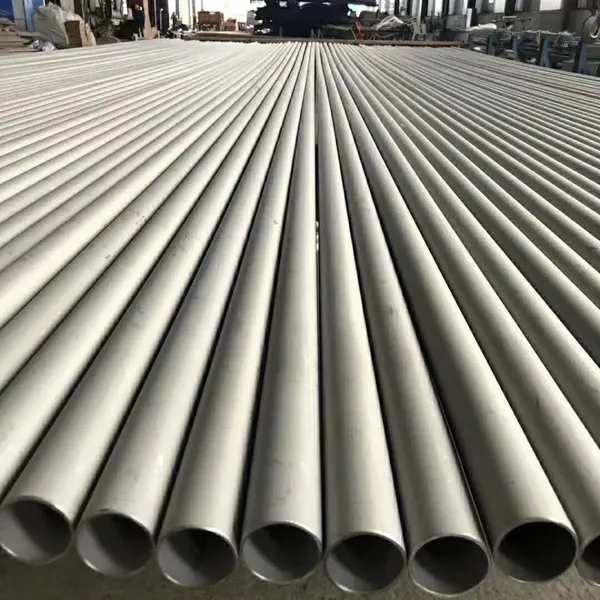 Read More
 -
Three types of commonly available food-grade stainless steel on the market
January 20, 2026The common food-grade stainless steel pipes are mainly composed of iron, chromium and carbon and other elements. Household stainle Read More
 -
What are the requirements for stainless steel welding pipe production equipment
January 20, 2026As is well known, stainless steel welded pipes have been widely used in various industries such as machinery, chemical engineering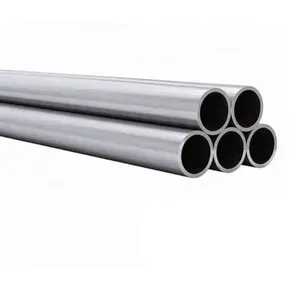 Read More

Contact Us
Recommended Products
-
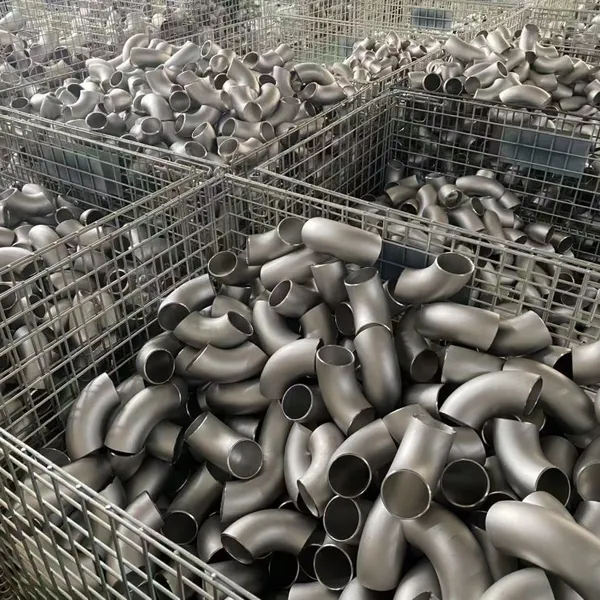
 Stainless Steel Elbow Welded Elbow 45/90/180-degree Seamless Pressed Elbow Long Radius Elbow Short Radius Elbow WholesaleNegotiableMOQ: 1 Piece
 -
316L/1.4405 Seamless Stainless Steel PipeNegotiableMOQ: 2 Meters
-
310s 440 Seamless Sanitary Piping Price 321 904l 201 20 Inch Seamless Steel Pipe A554 Stainless Steel PipeNegotiableMOQ: 1 Piece
-
China Brand ZZ Wholesale 304L 316 316L Welded Austenitic Piping Stainless Steel Pipe SupplierNegotiableMOQ: 2 Meters
-
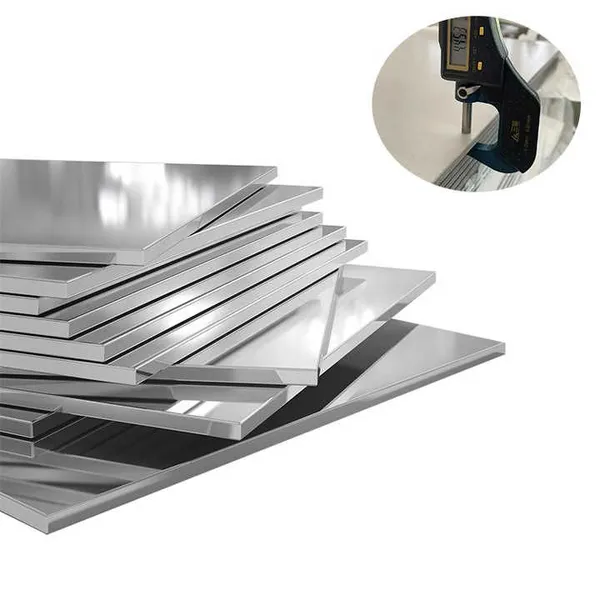
304/304L/316/409/410/904L/2205/2507/310H Premium Stainless Steel Sheets Supplier Custom Sizes & FinishesUS$ 1.72MOQ: 1 Ton
-
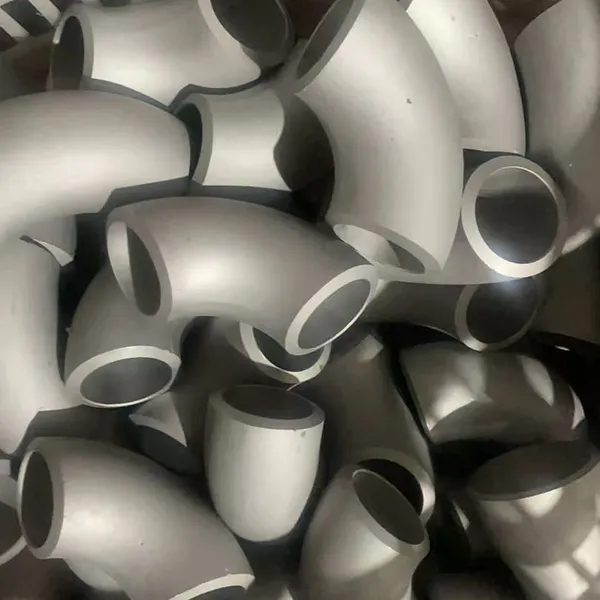
Stainless Steel ASME B16.9 Sch 45 90 Degree Pipe Fittings ElbowUS$ 8MOQ: 1 Piece
-
China Brand Zz 304L 316/316L GB En JIS Standard Thin Wall Welded Stainless Steel Water Pipe/TubeNegotiableMOQ: 2 Meters
-
BA 4 Inch 6 Inch 8 Inch 201 304 304L 316 316L Welded Seamless Stainless Steel PipeNegotiableMOQ: 2 Meters
-
ASME B36.19M-2004 SCH40S Stainless Steel Pipe - Complies With EU 3.1 CertificationUS$ 1 - 650MOQ: 1 Piece
-
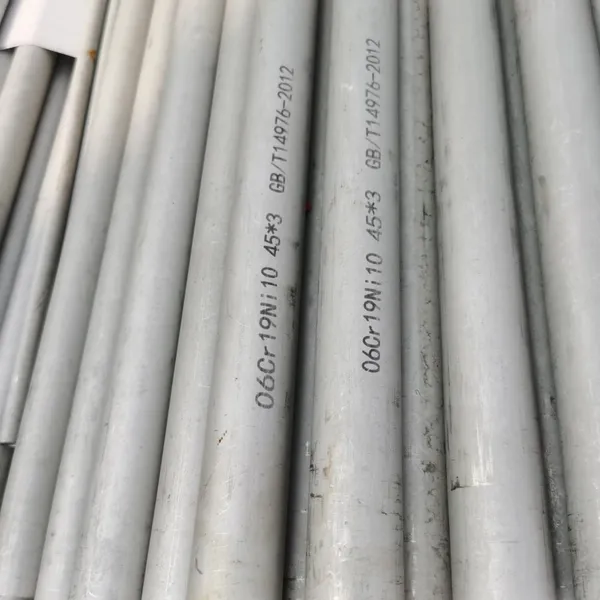
Factory TP309/TP309S/TP309H (UNS30900) Seamless Stainless Steel Pipe and Tube for Boiler BafflesUS$ 8MOQ: 200 Kilograms
-
TP347/TP347H/1.4961/S34709 Seamless Stainless Steel Pipe for UseNegotiableMOQ: 2 Meters
-
China 304 316 Stainless Steel Sanitary Welded Tube Food Grade Sanitary Grade Welded Pipe PolishingNegotiableMOQ: 1 Piece
-
China Manufacture Stainless Steel 316L Ba Seamless Welded Steel Pipe TubesUS$ 1760 - 1860MOQ: 5 Tons
-
316L/1.4405 Seamless Stainless Steel PipeNegotiableMOQ: 2 Meters
-
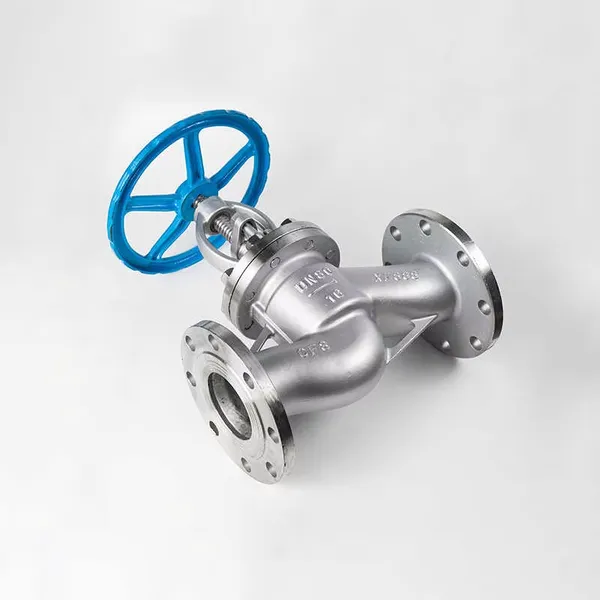
Stainless Steel Globe Valve – High Durability & Corrosion ResistanceNegotiableMOQ: 1 Piece
-
1.4529 Stainless Steel Flat Plate for Chemical Processing EquipmentUS$ 25 - 35MOQ: 1 Kilogram
-
Color Coated Steel Panels for Warehouse Partition Walls (Fireproof Grade)US$ 1 - 1.2MOQ: 50 Kilograms
-
Custom Width (600mm-1250mm) Colored Steel Coil With Scratch ResistanceUS$ 1 - 1.2MOQ: 50 Kilograms
-
0.5mm-3.0mm Colored Coated Steel Sheet With PVDF/Polyester CoatingUS$ 1 - 1.2MOQ: 50 Kilograms
-
JIS G 3322 Compliant Colored Coils With Third-Party Inspection ReportUS$ 1 - 1.2MOQ: 50 Kilograms